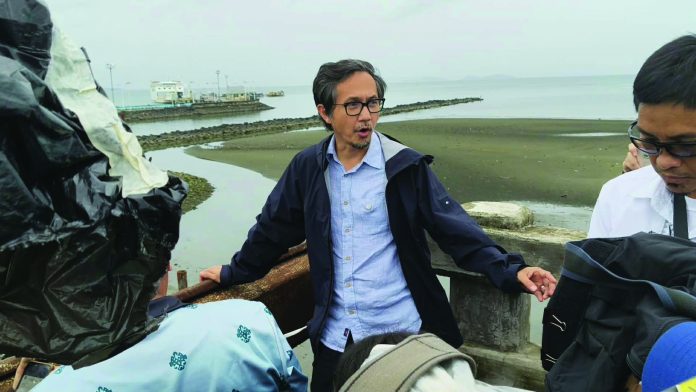
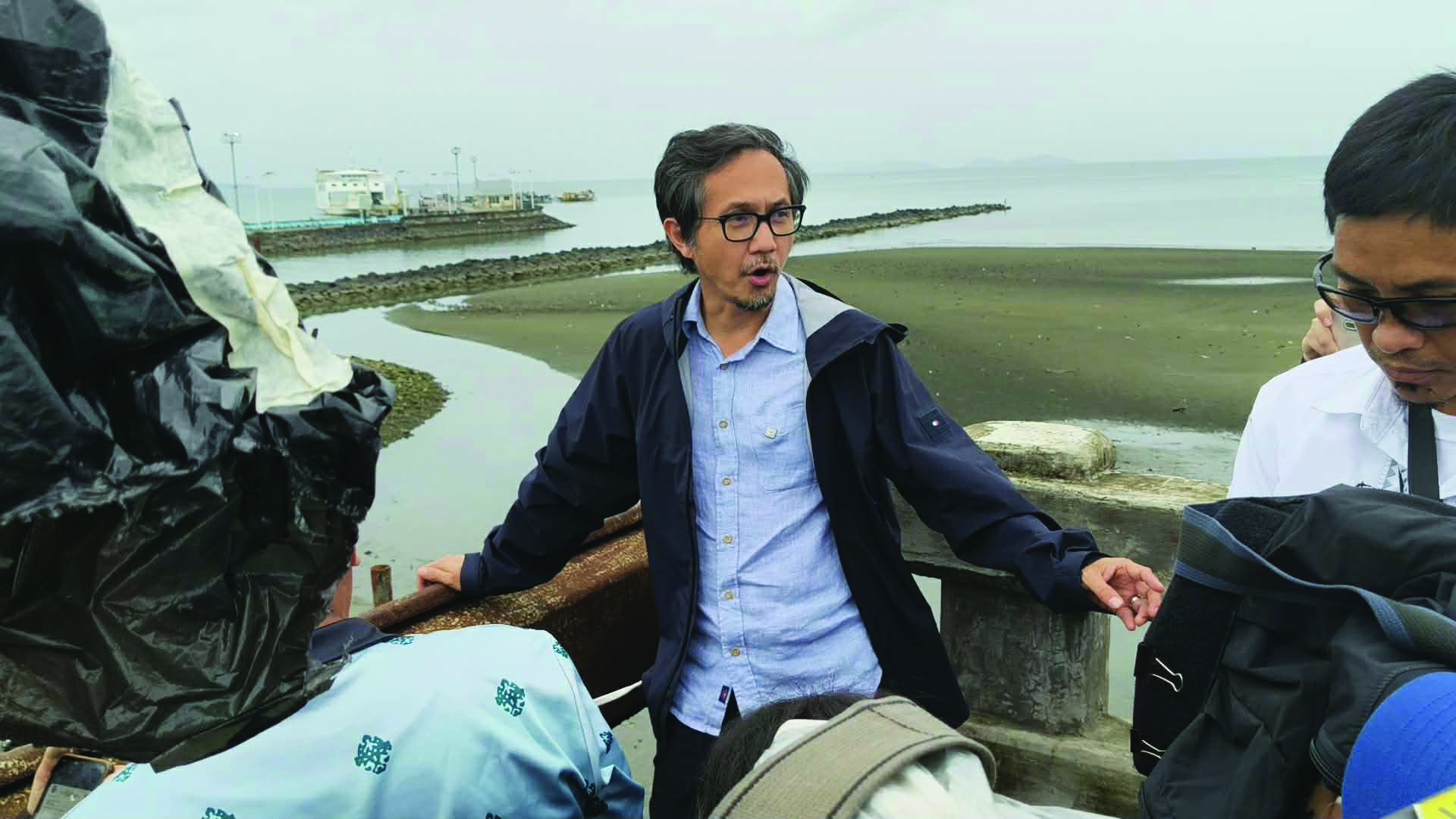
ENVIRONMENTAL SUMMIT. The provincial government of Northern Samar initiated an environmental summit which aims to combat the growing challenges of climate crises by making the communities more resilient. Among those present during the event was provincial disaster risk reduction management officer Rei Josiah Echano.
(THE PROVINCIAL GOVERNEMNT OF NORTHERN SAMAR)
ENVIRONMENTAL SUMMIT. The provincial government of Northern Samar initiated an environmental summit which aims to combat the growing challenges of climate crises by making the communities more resilient. Among those present during the event was provincial disaster risk reduction management officer Rei Josiah Echano. (THE PROVINCIAL GOVERNEMNT OF NORTHERN SAMAR)
CATARMAN, Northern Samar– Northern Samar is taking bold steps to combat the growing challenges of climate crises, pushing for nature-based solutions to build resilient communities during the two-day Environmental Summit 2025 participated by municipal environment and natural resources officers, municipal disaster risk reduction management officers, Sangguniang Kabataan officials, civil society organizations, and provincial environment and natural resources office(PENRO).
The summit, held on Dec.15, and spearheaded by the Provincial Government Environment and Natural Resources Office (PGENRO), centered on crafting Nature-Based Solutions (NbS) such as reforestation, mangrove rehabilitation, and sustainable watershed management as key approaches to protect communities from floods, storms, and soil erosion while promoting biodiversity. Discussions also emphasized the importance of disaster risk reduction, climate adaptation, and integrated environmental management, highlighting how NbS can complement broader strategies to safeguard the lives and livelihoods of every Nortehanon.
Key officials were present during the event: Sangguniang Panlalawigan Chairperson on Committee on Environment Arturo T. Dubongco Jr., PDRRMO Officer Rei Josiah A. Echano, CSO Development Alliance of Northern Samar Executive Director Maybelle Camps, UEP College of Science Dean Dr. Anelita M. Obrar, PENRO’s representative Rogelio M. Caparal, Provincial SK Federation President Gerardo Gerard A. Miranda and League of Northern Samar Environment and Natural Resources Officers President Jesus Acebuche.
NOT FOR POLITICAL PATRONAGE. Tingog party-list Rep. Jude Acidre decried allegation that politicians have used the medical assistance programs of the government for political patronage.
(FILE PHOTO)
NOT FOR POLITICAL PATRONAGE. Tingog party-list Rep. Jude Acidre decried allegation that politicians have used the medical assistance programs of the government for political patronage. (FILE PHOTO)
TACLOBAN CITY — Tingog party-list Rep. Jude Acidre said government medical assistance programs have become a critical safety net for patients burdened by high hospital costs, citing what he described as the inadequate and declining coverage of PhilHealth, especially for serious and life-threatening illnesses.
Acidre dismissed allegations that medical assistance is being used for political patronage, stressing that the aid has become necessary due to widening gaps in PhilHealth coverage as medical expenses increase.
“The aid has become necessary because PhilHealth coverage gets smaller the higher the hospital bill becomes,” Acidre said.
The lawmaker explained that while PhilHealth covers about 70 to 74 percent of hospital bills below P50,000, the coverage sharply declines for higher-cost treatments. For hospital expenses ranging from P100,000 to P300,000, PhilHealth pays only about 10 percent, while bills between P300,000 and P500,000 receive around five percent coverage. For expenses exceeding P500,000, PhilHealth shoulders only about three percent, he added.
Patients undergoing cancer treatment, prolonged intensive care, dialysis, and major surgeries are among those most affected, Acidre said, noting that these are often the cases where financial support is most urgently needed.
“The more serious the illness becomes, the thinner the protection actually gets,” he said.
Acidre also pointed out that more patients are now turning to government hospitals such as the Eastern Visayas Medical Center (EVMC), where the number of confined patients has doubled over the past four years due to the rising cost of treatment in private hospitals.
He questioned where patients could seek help if not from the government, given the limited assistance provided by PhilHealth for high-cost medical cases.
Responding to concerns about politicization, Acidre said the Department of Health (DOH) has issued an administrative order governing the implementation of the medical assistance program, emphasizing that no political endorsement is required to avail of the aid.
He added that the funds are released directly to hospitals and do not pass through politicians, underscoring safeguards meant to ensure transparency and prevent political influence.
TACLOBAN CITY — In a gesture aimed at promoting reconciliation and community healing, the Philippine Army’s 802nd Infantry Brigade hosted a special Christmas celebration for former members of the New People’s Army (NPA) and their families in Ormoc City.
Nineteen former rebels, together with their relatives, were honored during the event, which underscored the military’s continuing efforts to support reintegration and encourage former insurgents to embrace a peaceful and productive civilian life.
The highlight of the gathering was the distribution of Christmas packages and cash assistance personally led by Brigade Commander Brig. Gen. Pompeyo Jason Almagro. Army officials said the assistance was meant to provide immediate relief while symbolizing the community’s acceptance of former rebels who have chosen to return to the fold of the law.
More than simple handouts, the gifts were the product of a collective community effort. The funds were raised through Christmas caroling activities organized by the 802nd Infantry Brigade, with support from local peace advocates. Contributions from these activities were directly used to prepare assistance for the former rebels and their families, particularly their children.
The initiative forms part of the brigade’s peace-building and reintegration programs in Leyte and Biliran provinces, which aim to strengthen trust and cooperation between the military, local communities, and former members of armed groups.
In his message, Brig. Gen. Almagro said the Christmas season serves as a reminder of hope and renewal.
“Christmas reminds us that reconciliation is possible, dignity is worth restoring, and every person holds the capacity to rebuild and change his future,” he said.
Almagro added that while the packages were tangible tokens of goodwill, the broader goal was to provide lasting encouragement for former rebels to remain on the path of peace and to actively contribute to building safer and more resilient communities.
CRUISE TOURISM DESTINATION. The small island town of Maripipi, Biliran is fast emerging as haven for international cruise ship tourism. Just this week, Maripipi played host to international tourists who were on board of Coral Geographer, an Australian expedition cruise ship. (ROEL T. AMAZONA)
MARIPIPI, Biliran — The third port call of an international cruise ship to this island town has reinforced the local government’s confidence that it is now ready to welcome more visitors and scale up its tourism industry.
Mayor Joseph Caingcoy said the Tuesday (Dec.16) visit of the Coral Geographer, an Australian expedition cruise ship, reflects growing international interest in Maripipi as an emerging destination in Eastern Visayas.
“For 2026 onward, we are looking not only at foreign tourists but also at offering tour packages for local travelers to further level up our tourism activities,” Caingcoy said.
Maripipi is one of the eight municipalities of Biliran province and the only one located off the mainland. The island is known for its natural attractions, including pristine beaches, forested landscapes, and rich cultural traditions. It is also home to Sambawan Island, one of Biliran’s fast-emerging tourism sites.
Local officials said increased tourist arrivals are expected to generate livelihood opportunities for residents and attract investors, contributing to the town’s economic growth.
“More tourists mean additional sources of income for our people. Some can earn as tour guides or through other livelihood activities,” Caingcoy said. He added that the municipal government is strengthening its partnership with barangays to ensure communities are prepared to host visitors and showcase local attractions and culture.
On Tuesday, 76 passengers from the Coral Geographer were welcomed by residents as they toured the island and immersed themselves in local traditions and daily life.
The visitors began their tour at Candol Beach, where they observed and participated in nito weaving, a traditional craft practiced by residents of Barangay Agutay and passed down through generations.
They were also treated to local delicacies such as biko (sweet rice cake), kabkab (a crispy snack made from grated cassava), banana chips, and nilupak. Some guests even joined in the preparation process, including pounding bananas using a mortar and pestle.
The group later visited Barangay Cansibang, the town’s pottery center, where they learned how clay collected from the island’s mountains is transformed into traditional earthenware.
For lunch, the visitors sampled local dishes including paksiw nga isda (fish stewed in vinegar), humba (braised pork), adobong baboy (pork adobo), puto nga bilanghoy (cassava cake), and lechon (roasted pig).
The tour concluded with a visit to Sambawan Island, an emerging tourism destination known for its clear waters, white sand beaches, rock formations, and rich marine life. The island features hiking trails, scenic viewpoints, and a marine sanctuary ideal for snorkeling and diving.
Local officials said the successful visit underscores Maripipi’s potential as a sustainable island destination and strengthens efforts to position the town on both the domestic and international tourism map.
TACLOBAN CITY — Farmers in the upland barangays of Borongan City are expected to gain new and sustainable sources of income following the launch of an integrated floriculture and apiculture project designed to strengthen livelihoods while promoting environmental sustainability.
The initiative, formally titled “Integrating Apiculture and Floriculture for Enhancing Livelihoods and Sustainable Income Generation in Marginalized Upland Communities,” combines flower production and beekeeping in a single farming system that maximizes both economic and ecological benefits. The project targets members of the Borongan Integrated Apiculture and Floriculture Farmers Association (BIAFFA), equipping them with the skills and resources to cultivate high-demand ornamental plants and raise stingless bees for honey production.
Project proponents said the model creates a mutually reinforcing cycle: flowering plants supply nectar and pollen essential for bee colonies, while bees enhance crop yield and quality through natural pollination. This approach not only improves farm productivity but also contributes to biodiversity conservation in upland areas.
The project was officially launched during a ceremony at the City Disaster Risk Reduction and Management Office (CDRRMO) Conference Room, followed by a symbolic groundbreaking in Barangay Hebacong.
Speaking on behalf of Acting City Mayor Emmanuel Tiu Sonco, Atty. Orland Jerico Cordero said the initiative reflects the city government’s commitment to bringing livelihood opportunities closer to communities, particularly in geographically isolated upland barangays.
Meanwhile, Department of Environment and Natural Resources–Ecosystems Research and Development Bureau (DENR-ERDB) Director Lormelyn Claudio said the project fulfills a long-standing commitment to Borongan City by providing farmers with practical, site-specific skills that can transform local natural resources into sustainable income.
To jumpstart implementation, the Agroforestry Research and Extension Center (ARDEC) distributed various high-value planting materials, including anthuriums and fruit-bearing trees such as mangosteen, durian, and jackfruit.
By focusing on marginalized upland communities, the project aims to narrow income disparities faced by farmers who often have limited access to markets and support services. Beyond providing planting materials, the initiative also emphasizes capacity-building and technical training to ensure farmers can sustainably manage both floriculture and apiculture ventures over the long term.
The Bacolod Plant of Coca-Cola radiates with Christmas magic with the return of the bottling giant’s tradition of honoring its people for their role in uplifting communities across the country.
Christmas is a cherished tradition in the Philippines that embodies joy, hope, and togetherness. It’s a time when families reunite, communities come alive with parol and carols, and even the simplest gatherings become moments of magic.
Staying true to the spirit of spreading happiness all year round, Coca-Cola Europacific Aboitiz Philippines (CCEAP)—the bottling partner and official distributor of Coca-Cola products in the country—brings to life its highly anticipated annual Christmas light-up across its sites.
This year, over 30 CCEAP sites in Luzon, Visayas, and Mindanao shines bright with the theme “Bituin ng Pag-asa: Guiding Light for a Brighter Future.” Each lighted site serves as a beacon of festive cheer and Filipino spirit, celebrating the enduring hope that binds communities and uplifts spirits.
This long-standing tradition honors the total beverage company’s nearly 9,000-strong workforce, whose dedication ensures that Coca-Cola products reach homes and its customers—keeping communities refreshed every single day.
The annual Christmas light-up has turned Coca-Cola’s sites into local attractions nationwide, drawing visitors and hosting shared moments among friends and families. Among the sites are Naga, Santa Rosa, Calasiao, Iloilo, Misamis Oriental, and Davao. In Santa Rosa, the light-up complements its iconic landmark of giant Coca-Cola cans, making it a must-see destination during the holidays.
Each light-up installation was conceptualized by CCEAP associates, and uses ornaments handcrafted using recycled and upcycled materials. These displays reflect what makes a Filipino Christmas truly special: making celebrations meaningful by finding joy in the simple act of coming together. Adding to the festive spirit, the iconic Coca-Cola Christmas Truck continues its journey across the country, spreading the magic of Christmas wherever it goes.
In celebrating Christmas, CCEAP also honors the passion and perseverance that carried communities through challenging times, including the numerous natural disasters that the country has faced this year. CCEAP stands alongside the communities it serves in times of need by mobilizing relief efforts, ensuring the safety of its people, and delivering safe drinking water and essential supplies to those affected.
“In every challenge Filipinos faced this year, there was always a reason to hold on to hope, and we are deeply grateful for the dedication and support of our people and the communities we serve,” said Gareth McGeown, President and CEO of CCEAP. “As we continue the Coca-Cola tradition of lighting up our sites, we aim to spark joy and serve as a beacon of hope not just for the holidays, but as we look ahead to a brighter, more promising tomorrow. Because even in the most difficult times, hope shines brightest when people come together,” added McGeown.
Having been woven into the fabric of Filipino culture for over 113 years, CCEAP has been an integral part of Filipino festivities—from beloved beverages enjoyed during everyday occasions to delivering refreshment, sparking shared moments, and bringing an extra light to life during the holidays.
CCEAP is locally rooted and deeply connected to the communities it serves, with products proudly made by Filipinos, for Filipinos. With a vast footprint spanning 18 manufacturing sites, and nearly 70 distribution and sales offices, CCEAP remains committed to uplifting communities nationwide all year round. (PR)