24.6 C
Tacloban City
November 16, 2026 - Monday | 1:35 AM
Home Blog Page 254

Calbayog City moves forward with plan for city college

0

TACLOBAN CITY — The Calbayog city government has taken initial steps toward establishing the proposed Calbayog City College, advancing both a feasibility study and the drafting of a city ordinance to formalize the institution.

Mayor Raymund Uy said the initiative aims to broaden access to higher education for residents, particularly students who face financial or geographic barriers to studying outside the city.

On February 16, 2026, a strategic session was held at the City Mayor’s Office Conference Room, where officials and stakeholders reviewed a regional assessment of higher education in Eastern Visayas. The report highlighted challenges such as low household incomes, limited local government funding for higher education, and the migration of students to Cebu and the National Capital Region. It also noted opportunities, including high-performing institutions in the region that could support partnerships.

The feasibility study, conducted in partnership with Northwest Samar State University, is evaluating student demand, available resources, and the long-term sustainability of the proposed college.

Mayor Uy and the city’s RCU Developmental Team are also working on a city ordinance to provide the legal basis for the establishment of the institution, in line with the 1987 Philippine Constitution and the Local Government Code of 1991, which authorize local government units to create local universities and colleges.

City officials said the proposed Calbayog City College is envisioned as an accessible and affordable option for higher education, allowing more Calbayognons to pursue degrees without leaving their hometown. Consultations and technical studies will continue as part of the planning process.

(ROEL T. AMAZONA)

Mayor Romualdez dismisses claims of widespread business closures

0
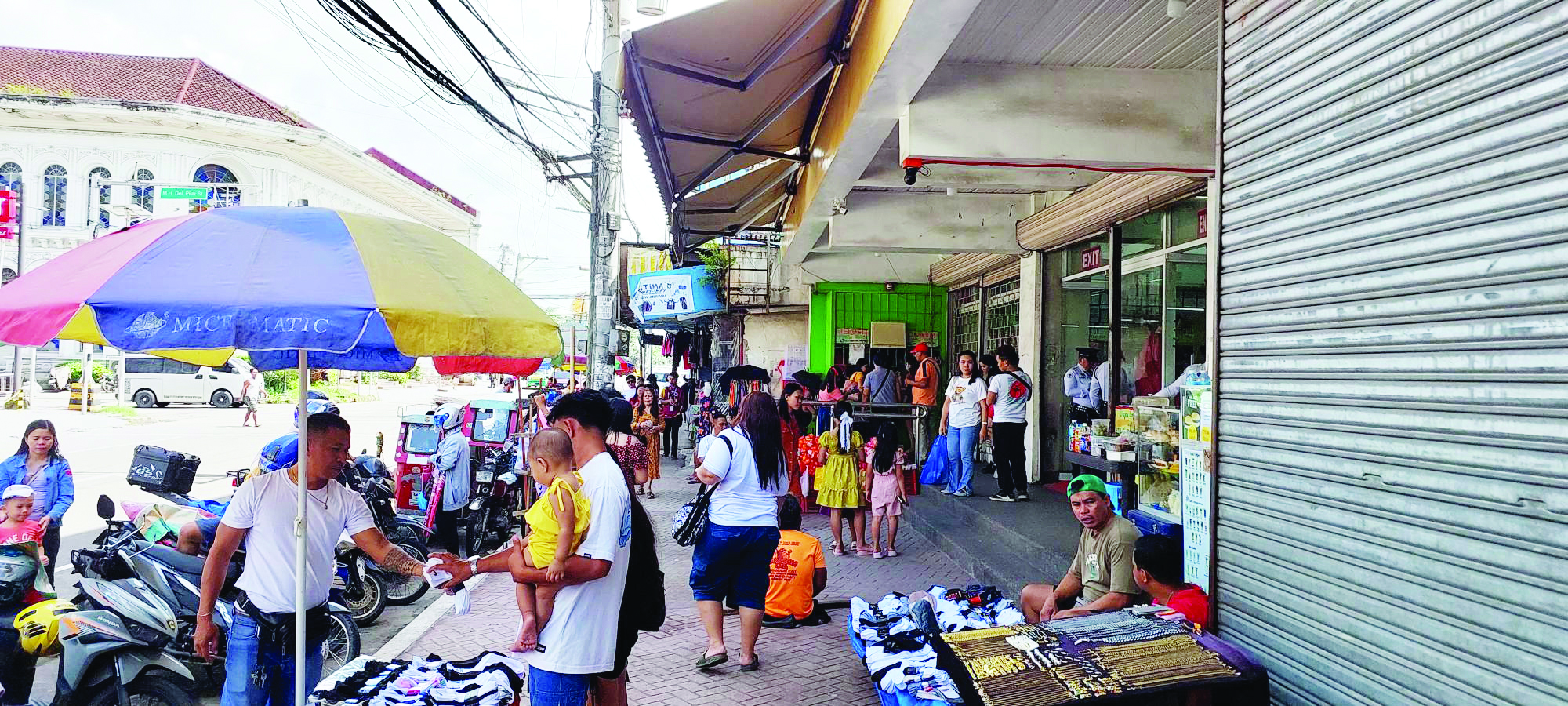
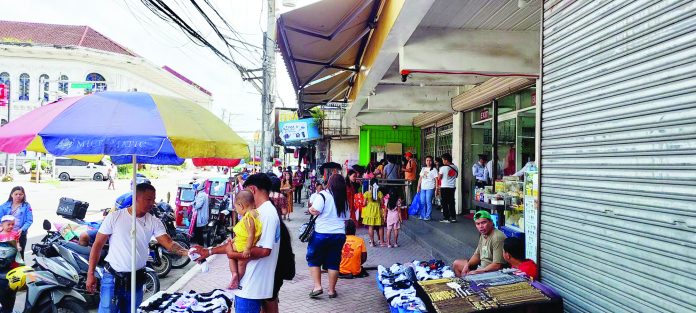
STILL STRONG. Tacloban City Mayor Alfred Romualdez dismissed reports of economic decline following the closure of some businesses in the city’s commercial area, saying Tacloban remains the region’s main economic hub and continues to attract investors. (PAPER BLOOM TACLOBAN FACEBOOK)

TACLOBAN CITY – Mayor Alfred Romualdez here has denied reports that a weakening local economy has forced several establishments in the downtown area to shut down in recent months.

In an interview with reporters on Thursday, Feb.19, Romualdez said city records show that around 900 new businesses began operations last year, while only more than 50 establishments ceased operations during the same period.

“We experience traffic congestion every day because our economy is growing. We did not have that 10 years ago or even five years ago,” the mayor said.

Snapshots of businesses that have closed since last year have circulated on social media, prompting concerns among netizens and some entrepreneurs, who attribute the closures to mounting economic and operational challenges.

Earlier, Eugene Tan, president of the Philippine Chamber of Commerce and Industry (PCCI) Tacloban-Leyte chapter, said their group has observed a steady decline in business activity across the city.

Tan cited several contributing factors, including an economic slowdown, rising real property taxes and limited parking due to railings installed along major roads.

Romualdez, however, suggested that the criticism stems from the city government’s policy of opening the local market to large-scale investors.

“They want to monopolize the business, but we allowed the entry of big businesses to create jobs. Competition has also stabilized prices of goods in the city,” he said.

Data from the Philippine Statistics Authority (PSA) appear to support the mayor’s claim of economic growth. In October 2025, the PSA reported that Tacloban’s economy expanded by 8.2 percent in 2024, surpassing the 6.8 percent recorded in 2023.

The PSA estimated the city’s Gross Domestic Product at PHP59.58 billion in 2024, up from P55.06 billion in 2023 and P51.54 billion in 2022, all measured at constant 2018 prices.

(SARWELL Q. MENIANO/PNA)

Leyte 4th DEO: donate blood, save a life

0
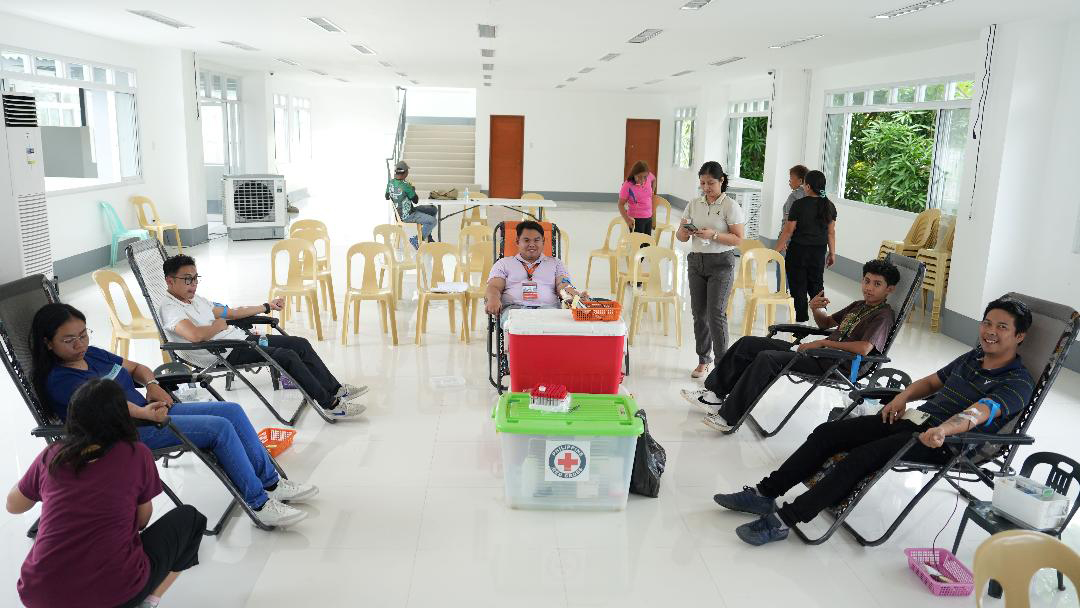
BLOODLETTING. Employees and volunteers of the Department of Public Works and Highways (DPWH) Leyte 4th District Engineering Office take part in a bloodletting activity held on March 14, 2025 at the agency’s compound under the theme “Donate Blood, Save a Life.” The activity drew 86 individuals for screening, with 20 qualified donors each giving 450 milliliters of blood to help replenish the local blood supply and assist patients in need of transfusions. (DPWH-ORMOC)
BLOODLETTING. Employees and volunteers of the Department of Public Works and Highways (DPWH) Leyte 4th District Engineering Office take part in a bloodletting activity held on March 14, 2025 at the agency’s compound under the theme “Donate Blood, Save a Life.” The activity drew 86 individuals for screening, with 20 qualified donors each giving 450 milliliters of blood to help replenish the local blood supply and assist patients in need of transfusions.
(DPWH-ORMOC)

ORMOC CITY-The Department of Public Works and Highways (DPWH) Leyte 4th District Engineering Office (DEO) held a bloodletting activity on Friday, March 14, 2025, at the DPWH compound with the theme: “Donate Blood, Save a Life”. The event was made possible through the help of the Philippine Red Cross Ormoc City Chapter.

A total of 86 individuals stepped forward to undergo screening. Ultimately, 20 donors were able to meet the health requirements and each donated a full blood bag containing 450 milliliters of blood. These donations will help replenish the local blood supply and provide much-needed assistance to those in need of transfusions.

Assistant District Engineer Peter Scheler V. Soco extended appreciation to the employees who participated, as well as the Red Cross team who played a role in the success of this event. “Every drop of blood donated can save a life. We appreciate everyone who stepped up to help,” ADE Soco said. (PR)

Provocative announcement

0

Vice President Sara Duterte’s announcement that she will run for the presidency in 2028 has significantly changed the country’s political landscape. It’s a move that will not be a mere campaign announcement but will be followed by institutional machinations, strategic alliances, and calculated reprisals. The country must be ready for the turbulence that will surely follow when ambition meets fear.

Duterte’s announcement will surely put the sponsors of the impeachment charges against her in a hurry to wrap up the case. Once a sitting or a former public official makes a move for the presidency, the impeachment court will no longer be guided by the truth but by the need to speedily dispose of the case, not to determine the truth, but to dispose of a formidable opponent before the voting public makes a decision. Such haste will surely transform what was once a noble institution into a partisan tool.

A series of realignments in Philippine politics will surely follow Duterte’s announcement. Survival will be the name of the game. Those in the legislature and the local politics will surely begin to calculate their next moves, to determine whether association with Duterte will be a blessing or a curse in the future. Parties will surely be broken, and alliances will be formed. Those who will surely be affected by the strong electoral currents that Duterte’s announcement will create will begin to quietly realign themselves to avoid being left out in the cold.

Her entrance has also unnerved her opponents, especially those on the left and those in the government who are currently embroiled in graft and corruption charges and see a Duterte presidency as a death knell. For them, it means stricter enforcement of the law, a return to the hardline stance, or renewed scrutiny of the status quo. Desperation can indeed drive people to be more aggressive. Expect more vitriolic attacks on her character, as well as more rallies and demonstrations aimed at discrediting her. The die-hard opponents will use any controversy, any technicality, to portray her candidacy as a threat to the very fabric of society.

To the ranks of Duterte’s supporters, however, the news is a sign that she is declaring her inevitability from the very start. It boosts morale and cements the support base, which will likely view any congressional or senatorial inquiry as persecution. This will not be lost on the members of the House and Senate. Those aware of the voting power of Duterte’s support base may be more circumspect in their actions, lest they be accused of harassment. The best course of action for all parties is to allow the constitutional process to take its natural course, without undue haste or fanfare, and to allow the electorate to judge in 2028.

To learn or unlearn

0

Years ago, a small video titled “Me at the zoo” slipped quietly onto the YouTube site, launching what would quickly become the world’s open classroom. Today, millions of people can learn how to fix a leaky faucet, make a loaf of sourdough bread, create a website, or fix a motorcycle by watching a stranger explain the process. I have a healthy respect for this revolution in information availability, but I am not swallowing everything that’s being fed to me.

We used to need a gatekeeper to teach us even the simplest things. We had to sign up, be apprenticed, or at least find someone willing to explain the process to us. Now, I can observe a mechanic in Manila, a baker in Paris, or a farmer in Iowa explain how to do things, all before lunch. I have watched carpenters measure twice and cut once, surgeons explain how they do their work in public lectures, and teachers explain the basics of algebra in everyday language. The democratization of information has occurred. The workshops, kitchens, studios, and classrooms of the world have opened their doors.

Search engines have greatly enhanced the democratization of information. A single Google query can pull up information, manuals, discussions, and instructions in a matter of seconds. What used to take hours in a library can be found instantly on a screen. The availability of tools from the company OpenAI means the information isn’t static; it’s interactive, dynamic, and specific to the question at hand. You can ask for clarification, ask for examples, or even challenge what’s being said.

These benefits were never available in this form or at this level before. Previous generations received information from encyclopedias that were already outdated the moment they were bound into book form. Today, we update information in real-time. In an emergency, we update guidelines in real time. We share new discoveries and experiments with new technologies almost at the speed of light. This is not a minor change; it is a fundamental transformation in how we process information and how we compete with each other.

Yet I have also seen misinformation spread at the same speed. The platforms reward “engagement,” not “truth.” The loudest voice, the most dramatic music, and the slickest production value can make lies seem more believable than the truth. Health misinformation travels alongside legitimate health advice. Financial scams masquerade as “investment tips.” Historical falsehoods disguise themselves as “patriotic correctives.” The very tools we use to help honest teachers now fuel reckless or dishonest teachers.

The problem is not only with the lies we tell each other but also with the half-truths we share with each other: advice without enough context to be useful, advice oversimplified to the point of being dangerous. The do-it-yourself repair video might not mention the risk of electrical shock. The nutrition advice might cite the studies they agree with while ignoring the consensus of the medical profession. The platforms often reward what is popular, not what is true. It is hard work to take a step back and verify what we are being told: who is speaking, what are their credentials, and do they agree with others?

I have learned to think of social media as a vast public marketplace. There are master craftsmen who demonstrate skill, and there are peddlers who sell glitter. It is on me to discern the difference. I research. I compare. I search for signs of training, experience, or attribution. If something appears too good or too outlandish to be true, I pause. Skepticism, I have found, is not the same as cynicism. It is self-preservation.

The digital era has made available to mankind an unprecedented library and an equally unprecedented rumor mill. They coexist in the same device in my hand. The appropriate approach is neither naive faith nor wholesale skepticism, but rather a discerning interest—studying assiduously, checking assiduously, and recalling that technology reflects the character of those who use it. It can hone minds and broaden minds. It can lead astray as easily. The choice, stubbornly and forever, remains ours.

Man does not live by bread alone

0

WE, of course, need to eat bread also. After all, we are also material beings that need to be fed and nourished by material food, such as bread. But since we are also spiritual and supposed to be a supernatural being—in fact, eminently so—we should not limit ourselves to natural food. We should look more for the spiritual and supernatural food that is more proper to us.

This could be the reason why from time to time the Church asks us to do some fasting. It’s meant to draw us closer to God, seeking spiritual growth and self-reflection. It is also a good way to practice self-discipline and self-control, the contrary of which we are quite notorious in. It effectively expresses repentance and humility which is the antidote for our tendency to be proud and vain. It helps us to focus on prayer and spiritual nourishment.
In short, fasting can deepen our faith. It can prod us to seek guidance and wisdom instead of just relying on our own ideas. It makes us follow clearly what Christ told us with respect to self-denial. We should do everything to make fasting a regular feature of our life.

This means that we should always be on guard against gluttony. We cannot deny that, especially in our current world culture, we tend to overeat, consume large amounts of unhealthy or luxurious food and drink.

We even give the highest priority to food and drink over other aspects of life. It is also likely that gluttony leads us to ignore health and social duties due to excessive eating and drinking.

We really have to make fasting a regular practice in our life. With fasting, we would be more aware of our real needs. It certainly would strengthen our willpower and discipline.
More importantly, it helps us to shift our focus from food to spiritual growth and the other more important aspects of life. This is not to mention that fasting somehow cultivates a stronger sense of gratitude as we would be more appreciative of the food we have. Besides, fasting can develop in us a keener sense of empathy as we join in spirit with those who also fast or who go without food.

Fasting can also make us more resistant to the temptations of the devil and to the many allurements of the world. And it would make us more attentive to what really matters in our life—listening and living out the word of God. (cfr. Mt 4,4) It certainly would make us more able to dominate our animal self to bring us to our ideal spiritual and supernatural self.

Let’s never forget that we also are an animal ruled merely by instincts, hormones and other biological elements. The animal in us should be dominated by our human rationality which also ought to be guided by the spiritual and supernatural will of God in whose image and likeness we have been created.

We therefore have to undertake a lifelong process of integrating the animal in us with the rationality of our human nature that in the end should be purified and elevated to the spiritual and supernatural life and nature of God. And fasting, together with prayer and other ascetical means, plays an important role in this.

The challenge therefore is how to carry out this very tricky and demanding task of integrating all these aspects. And for this, we should first of all rely on the grace of God, always asking for it even if it is readily given to us. That’s because we often take God’s grace for granted, and thus make ourselves the improper ground unable to take advantage of the grace that is sown on it.

Recent Posts

DALMACIO C. GRAFIL
PUBLISHER

ALMA GRAFIL
EDITOR-IN-CHIEF

ROMEO CEBREROS
OFFICE IN-CHARGE

OFFICE
BRGY. SONGCO, BORONGAN CITY

CONTACT NUMBERS
(055) 261 – 3319 | 0955 251 1533 | 0917 771 0320 | 0915 897 7439 | 0921 511 0010

DALMACIO C. GRAFIL
PUBLISHER

RICKY J. BAUTISTA
EDITOR

ALMA GRAFIL
BUS. MANAGER

OFFICE
RIZAL AVENUE, CATBALOGAN
(INFRONT OF FIRE DEPARTMENT, NEAR CITY HALL)

CONTACT NUMBERS
0917 771 0320 | 0915 897 7439 | 0921 511 0010

EMAIL
lsdaily2@yahoo.com

WEBSITE
www.issuu.com/samarweeklyexpress