25.7 C
Tacloban City
January 15, 2026 - Thursday | 12:41 PM
Home Blog Page 237

Pres. Marcos urges regular inspections of key infrastructure after San Juanico Bridge deterioration

0
RDC RESOLUTION. President Ferdinand Marcos, Jr. receives on Wednesday, June 11, a copy of a resolution approved by the members of the Regional Development Council (RDC) seeking for his approval of P1.17 billion for the full rehabilitation of the San Juanico Bridge.(LIZBETH ANN A. ABELLA)

TACLOBAN CITY — President Ferdinand “Bongbong” Marcos Jr. has stressed the importance of conducting regular inspections and maintenance of vital infrastructure, following the partial closure of the San Juanico Bridge due to structural issues.

Speaking during his recent inspection of Amandayehan Port in Basey, Samar—now serving as an alternative route for cargo vehicles—Marcos pointed out that maintenance protocols may not have been properly observed on the 2.16-kilometer bridge, the main land link between Leyte and Samar.

“We didn’t expect that this was already worse, maybe the maintenance was not properly done. It should be done every three years,” the President said, underlining the need for consistent monitoring to prevent further deterioration.

To address the ongoing transport challenges, Marcos assured that the government will take steps to reduce disruptions in the delivery of essential goods, particularly perishables.

“We will enforce a system to prioritize the perishable goods,” he said, also noting the potential increase in transportation costs during the bridge’s rehabilitation period.

To support repair efforts, the President earlier signed Proclamation No. 920, declaring a state of calamity in Eastern Visayas, enabling the release of emergency funds and resources.

Asked when the declaration might be lifted, Marcos responded, “When the traffic has returned to normal.”

Public Works Secretary Manuel Bonoan has also stated that weight limits on the San Juanico Bridge may be adjusted by the last quarter of the year, depending on the pace of structural reinforcement.

Meanwhile, the government continues to mobilize vessels and explore alternate transport routes to maintain the flow of goods and ensure the economic resilience of the region.

(LIZBETH ANN A. ABELLA)

Mayor Agda rejects proposed mining projects in Borongan City

0
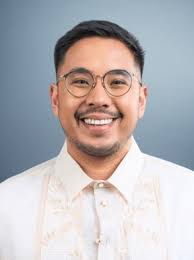
Mayor Jose Ivan Dayan Agda

TACLOBAN CITY – Borongan City Mayor Jose Ivan Dayan Agda has strongly opposed a new plan by the Department of Environment and Natural Resources’ Mines and Geosciences Bureau (DENR-MGB) to open over 2,700 hectares of land in the city to potential mining activities.

Agda warned that any mining operations—whether in Borongan’s mountains or coastal waters—could threaten the city’s natural defenses and disrupt local livelihoods.
“We have been against any mining activity from the very start,” Agda said in a phone interview on Tuesday, June 9. “We want to preserve our forests, which serve as natural barriers against typhoons.”

The mayor said the city council is considering a resolution to formally express its opposition to the plan, which was made public by MGB on June 4 through a notice inviting applications for industrial sand and gravel permits in Borongan City and the towns of Hernani and Gen. MacArthur.

According to MGB’s notice, the proposed mining areas span 3,784.98 hectares in Hernani and Gen. MacArthur, and 2,759.79 hectares in Borongan alone.

The announcement has also drawn swift backlash from the Diocese of Borongan, with Fr. James Abella, director of the diocesan Commission on Social Action, Justice, and Peace, urging residents to reject the proposed mining projects.

Agda echoed these concerns and expressed intent to meet with MGB officials to clarify the proposal’s scope—including which specific areas would be affected and what minerals would be extracted.

“We want to know exactly which areas are covered and what kind of mining is being proposed in Borongan,” he said, noting that any operations near critical water sources like the Loom River could be especially harmful.

The mayor acknowledged that limited sand and gravel extraction might be acceptable, particularly to support dredging efforts, but he drew a hard line against mining in forested or mountainous areas.

“Sand and gravel could help save resources for dredging, but I’m absolutely against any mining in our mountains,” Agda emphasized.

Borongan is known to have deposits of gold and bauxite, but Agda said preservation must come first.

Agda also warned of social consequences, saying mining-related displacement of jobs could lead to economic instability and even fuel unrest.

“This could eventually affect our economy. And what I fear is that people who lose their livelihoods may be pushed to go to the mountains,” he said, hinting at the risks of increased insurgency.

Elsewhere in Eastern Samar, large-scale mining operations are already active on Manicani and Homonhon islands, where companies continue to extract nickel and chromite. On Homonhon, four companies—Min-Met Resources, Verum Terra Geosciences Inc., TelcIron Resources Inc., and Emirs Mineral Resources—operate mining sites. Hinatuan Mining Corp. operates on Manicani Island.

Agda and local Church leaders say they hope that public pressure and community action will be enough to halt the proposed mining expansion before it begins.

(JOEY A. GABIETA)

Rank No. 9 drug target arrested in a buy-bust in Biliran

0

ORMOC CITY-A suspected drug personality listed as Rank No. 9 in the regional priority target list was arrested in a buy-bust operation conducted by law enforcement authorities in Barangay Marvel, Culaba, Biliran, on Monday afternoon, June 9.

The suspect, identified by police as alias “Japon,” 35, a married driver and resident of Brgy. Marvel, was apprehended at around 4:39 pm by operatives of the Provincial Drug Enforcement Unit, Provincial Intelligence Unit, and the Station Drug Enforcement Team of the Culaba Municipal Police Station.

An undercover operative was able to purchase one sachet containing suspected shabu for P500, leading to the suspect’s arrest. A body search conducted in the presence of barangay and Department of Justice (DOJ) witnesses yielded two additional sachets of the same white crystalline substance, a P500 court-subscribed marked bill, and one self-sealing plastic sachet.

The suspect was informed of the nature of his arrest and was advised of his constitutional rights in a language he understood.

The police are preparing charges for violations of Sections 5 and 11, Article II of Republic Act 9165 or the Comprehensive Dangerous Drugs Act of 2002. The suspect is currently detained at the Culaba Municipal Police Station.

(ROBERT DEJON)

DPWH strengthens slope protection in Curva-Domonar Road

0
default
default

ORMOC CITY– The Department of Public Works and Highways (DPWH) Leyte 4th District Engineering Office undertakes the repair and rehabilitation of slope protection structures along Curva-Domonar Road in Ormoc City, Leyte.

Backed by P94.7 million in funding from the National Disaster Risk Reduction and Management Fund (NDRRMF), the project covers the rehabilitation of 5.52 lane kilometers of Portland Cement Concrete Pavement (PCCP). Most of this—5.44 lane kilometers—are 3.05 meters wide, with the remaining 0.08 lane kilometers at 1.05 meters wide.

The project also includes the repair of 4,419.14 square meters of slope protection structures. These are especially important in an area like Curva-Domonar, where steep terrain and heavy rains can lead to erosion or landslides. By reinforcing the slopes along the road, the structures help keep the road stable, safe, and passable.

Work is ongoing and set to be completed by July 2025. Once finished, the improved road is expected to make daily travel easier, ensure more reliable access to services, and minimize the impact of natural hazards on the local community. (PR)

Returning the impeachment

0

The Senate’s decision to return the articles of impeachment against Vice President Sara Duterte to the House of Representatives is an issue of prudence. It was a reminder that even the most serious political processes must be handled with procedural integrity and constitutional clarity.

Impeachment, by its very nature, demands strict adherence to the legal framework laid out in the Constitution. The Senate, being the court in any impeachment trial, cannot proceed with a case built on vague charges or defective procedures. Accepting ill-prepared or politically motivated articles undermines not only the process but also the Senate’s institutional credibility. The return of the documents signals a refusal to be dragged into an exercise that lacks juridical rigor or substantive grounding.

What is at stake is not just the political fate of the Vice President but the integrity of the entire impeachment mechanism. A flawed complaint sets a dangerous precedent, reducing this vital constitutional safeguard into a partisan tool. The Senate’s decision reflects a sober understanding that it cannot allow itself to be used as an arena for political vendettas disguised as legal accountability. Suppose the House is serious about pursuing an impeachment trial. In that case, it must do its due diligence—investigate thoroughly, document responsibly, and charge only on grounds that are legally and morally defensible.

The wisdom behind returning the articles lies in affirming the Senate’s constitutional role as the impeachment court, not the complaint registry. By standing firm, the Senate preserves the sanctity of the process. This is not about shielding anyone from prosecution, but about upholding a standard that protects the process from abuse. The Senate’s restraint is not an evasion of responsibility—it is a demonstration of fidelity to due process, and a demand for the House to act with equal solemnity.

What is now required is for the lower chamber to go back to its duty with seriousness, precision, and responsibility. If it truly believes in its cause, then it must prove it not through headlines or emotion, but with evidence, coherence, and constitutional discipline. This is the only way the nation can move forward—guided by law, not by impulse.

Brilliance in question

0

With each bar exam, the Philippines graduates a good number of topnotchers—faces of hope, all aglow with the radiance of fresh minds. But glance around us: does this radiance find its way to our streets, our courts, our barangays, our fractured systems? It’s as if we are reaping diamonds and dumping them into the sea.

We’ve never been short of minds in this nation. From remote public schools in the mountains to UP Diliman’s echoing lecture halls, we’ve raised thinkers, inventors, writers, analysts, and dreamers—individuals whose brilliance would have bloomed anywhere else in the world. But here, their ideas too often wilt, choked by the dry air of red tape, corruption, and a maddening obsession with hierarchy over substance. The sorry irony is that all our brightest and best end up queuing up at the POEA, diploma conveniently wedged between bags, bound for a country that will happily pay them what they are worth. It’s an unspoken brain drain, a gradual draining away of the nation’s intellectual blood.

What is genius when it cannot shatter walls? What is genius and vision, bounded by a system that stifles initiative except when it promotes individual interests of the mighty? Intelligence cannot displace a culture drenched in pakikisama, utang na loob, and tokenism. Such cultural anchors are fine within close, small community settings, but as a national culture, they devour systems, promote mediocrity to the highest level, and stifle reform. Our wisest tend to be backed into a corner, their thoughts diluted to appease bosses, elders, or the establishment. Blind loyalty usually triumphs in the fight between critical thinking and blind loyalty.

And so, our technologists labor overseas creating intelligent cities for the outside world, while on our ground, traffic weaves around potholes and half-constructed bridges. Our researchers spend their days studying global climate trends for Swedish schools, while our roads flood at the prospect of a raindrop. Our economists consult for foreign banks while our nation’s inflation nibbles dinner plates off regular families’ tables. The message rings clear but soft-whispered: it’s brilliance that’s being invited here, but as ornament, not leadership.

And finally, there is the dark truth of how we choose our leaders. Ivy League degrees, global recognition, and policy expertise come in a distant second to celebrity, name recognition, and slick campaign slogans. Is it worth having a country full of intelligent people if they are led by those who do not like it, or worse, are intimidated by it? We possess technocrats. intellectuals and experts aplenty, yet they are sitting on the sidelines politely and quietly applauding second-rate leaders who can only qualify based on birth or charm. It is not just disappointing—it is a violation of the promise of education itself.

Even in day-to-day life, the Filipino genius is helpless against institutional neglect. Those with Master’s degrees barely manage to eke out their livelihood on wages that cannot even feed a family. Rural health workers understand the science of dengue and malnutrition, but have no means or budgets to implement it. We salute brains but fail to give forums and frameworks for them to be really working in the interest of the greater good. The breakdown of trust in institutions is not because people are dumb—it is because people are intelligent enough to notice the rot and the pointlessness of fighting against it.

But maybe the more profound tragedy is how such genius becomes resigned. Filipinos are not stupid; we know what is occurring. And yet, so many brilliant minds opt out to achieve personal victory rather than repair public defeat. It’s survival. And who can blame them? But when the brightest minds no longer dream for the nation, the soul of the nation loses its shine, and we are left with brilliance for itself alone. A country without a shared purpose is a lost country, no matter how many diplomas it possesses.

Yet I think there is a way out—and not in producing more brilliant minds but in creating systems where brilliance can breathe, move, and lead. We must unshackle intelligence from the ivory tower and let it flow into city halls, classrooms, rural farms, and barangay health centers. Brilliance is not quantifiable in board examination marks and Latin honors but in its ability to agitate the stagnant, deconstruct the corrupt, and elevate the masses. That, in my opinion, is the only brilliance worth celebrating.

Recent Posts

DALMACIO C. GRAFIL
PUBLISHER

ALMA GRAFIL
EDITOR-IN-CHIEF

ROMEO CEBREROS
OFFICE IN-CHARGE

OFFICE
BRGY. SONGCO, BORONGAN CITY

CONTACT NUMBERS
(055) 261 – 3319 | 0955 251 1533 | 0917 771 0320 | 0915 897 7439 | 0921 511 0010

DALMACIO C. GRAFIL
PUBLISHER

RICKY J. BAUTISTA
EDITOR

ALMA GRAFIL
BUS. MANAGER

OFFICE
RIZAL AVENUE, CATBALOGAN
(INFRONT OF FIRE DEPARTMENT, NEAR CITY HALL)

CONTACT NUMBERS
0917 771 0320 | 0915 897 7439 | 0921 511 0010

EMAIL
lsdaily2@yahoo.com

WEBSITE
www.issuu.com/samarweeklyexpress