26.1 C
Tacloban City
November 15, 2026 - Sunday | 7:25 PM
Home Blog Page 226

New two-classroom school building completed in Dagami, Leyte

0
NEW CLASSROOM. A new two-classroom school building has been completed by the Leyte II District Engineering District at Tagkip Elementary School in Dagami. The project was built at a cost of P5. 95 million.(L2DEO)

TACLOBAN CITY — A new two-classroom school building has been completed at Tagkip Elementary School in the town of Dagami, Leyte, providing improved learning facilities for pupils who previously held classes in makeshift rooms.

The project was implemented by the Department of Public Works and Highways through its DPWH Leyte 2nd District Engineering Office to help address classroom shortages and enhance the learning environment in the school.

The newly completed one-story building includes two standard classrooms, two comfort rooms, and a water tank that serves as a rainwater catchment system connected to handwashing and sanitation facilities. A PWD-accessible ramp with proper slope and handrails was also installed to comply with accessibility standards.

District Engineer Leo Edward Oppura said the new facility will benefit 49 learners, including 26 Grade 4 pupils and 23 Grade 5 pupils, who previously held their classes in temporary structures.

Before the building was completed, the students conducted their lessons in a makeshift classroom, according to school principal Merlinda Angcay, who expressed gratitude for the project.

Angcay said the new classrooms will provide a safer and more conducive environment for learning for both students and teachers.

The project, funded under the Department of Education Basic Education Facilities Fund (BEFF), had a contract cost of P5.95 million and was implemented by KM Golong Construction.

(LIZBETH ANN A. ABELLA)
BFAR to distribute 9,000 fuel cards to fisherfolk in Eastern Visayas amid rising oil prices

0

TACLOBAN CITY — The Bureau of Fisheries and Aquatic Resources(BFAR) in Eastern Visayas is set to distribute around 9,000 fuel subsidy cards to municipal fisherfolk this year to help them cope with rising petroleum prices triggered by global tensions in the Middle East.

The assistance will be provided through the government’s Fuel Discount Program for Farmers and Fisherfolk (FDPFF), a national initiative aimed at supporting small-scale producers whose livelihoods depend heavily on fuel for daily operations.

According to Dominador Maputol, BFAR officer-in-charge regional director, the subsidy seeks to cushion the impact of increasing fuel costs on fisherfolk who rely on motorized boats to reach fishing grounds.

“The fuel assistance is part of the government’s continuing effort to support our municipal fisherfolk, especially with the increasing fuel prices that directly affect their livelihood,” he said.

Maputol said the agency targets to distribute the assistance to about 9,000 fishermen across the region this year under the program.

Each beneficiary will receive a fuel card loaded with P3,000, which can be used to purchase fuel from accredited gasoline stations.

Maputol also disclosed that since the program started in 2022, more than P17.8 million worth of fuel assistance has already been distributed to 14,341 municipal fisherfolk across Eastern Visayas.

Beneficiaries are identified through their registration in the Registry System for Basic Sectors in Agriculture, the government’s official database of farmers and fisherfolk.
Priority is given to municipal fisherfolk operating motorized fishing boats below three gross tons and those practicing sustainable fishing methods.

BFAR said the program forms part of the government’s broader support for the fisheries sector, particularly as small-scale fisherfolk remain among the most vulnerable to rising production costs, including fuel, amid global market uncertainties.

(JOEY A. GABIETA)

House panel approves bill creating congressional agriculture review body

0
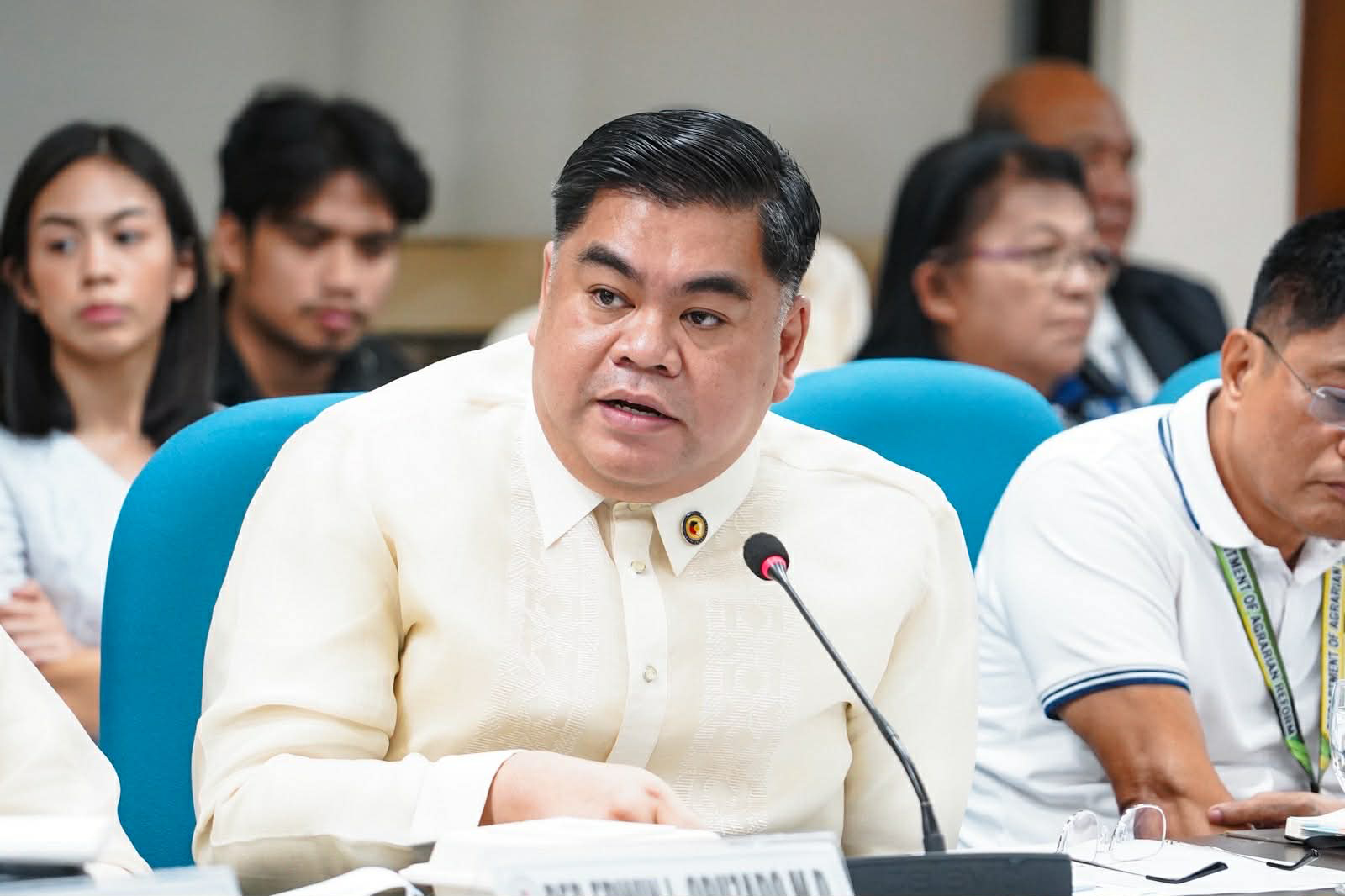
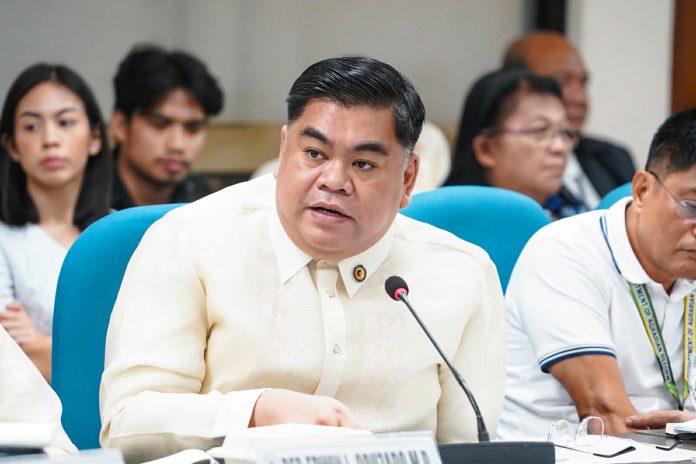
Jude Acidre of Tingog party-list

TACLOBAN CITY — A House committee has approved at the committee level a measure seeking to create a congressional body that will conduct a comprehensive review of the country’s agriculture sector and craft a long-term reform roadmap.

The House Committee on Agriculture and Food approved House Bill No. 6689, which proposes the creation of the Congressional Commission on Agriculture (AGRICOM).
The measure was authored by Ferdinand Martin Romualdez, representative of the Leyte 1st District, together with Yedda Marie Romualdez, Andrew Julian Romualdez, and Jude Acidre of Tingog party-list.

Under the proposal, AGRICOM will serve as a multisectoral body tasked with assessing the country’s agricultural production systems, value chains, institutions, and regulatory frameworks to guide evidence-based policymaking aimed at improving food security, rural livelihoods, and farm productivity.

During the deliberations, Acidre said the proposed commission is anchored on three principles — comprehensiveness, honesty in assessment, and clarity of purpose.
“What this bill seeks is a comprehensive assessment of the entire agricultural industry so we can finally see, with clarity, where we truly stand,” he said.

Lawmakers said the proposal takes inspiration from the work of the Second Congressional Commission on Education (EDCOM II), which conducted a nationwide review that helped shape long-term reforms in the Philippine education sector.

House Bill 6689 will serve as the lead reference in drafting a substitute measure consolidating other proposals seeking to establish the Congressional Commission on Agriculture.

(LIZBETH ANN A. ABELLA)

DOT Eastern Visayas adopts four-day workweek amid energy-saving measures

0
FOUR DAYS WORKWEEK. The Department of Tourism (DOT) in the region has also adopted the compressed working days among its personnel as part of the national government energy conservation campaign.

Tacloban City — The Department of Tourism (DOT) Regional Office in Eastern Visayas will implement a compressed four-day workweek starting Monday, March 9, 2026, as part of the national government’s energy-saving measures in response to rising global fuel prices and Middle East tensions.

Under Department Order No. 2026-0013, the regional office will operate from Monday to Thursday, 8:00 a.m. to 7:00 p.m., while Fridays will be observed as a non-working day. The policy aims to reduce energy consumption in government offices while maintaining uninterrupted public service.

Despite the change, clients requiring urgent assistance can contact the office via email at dotreg8@yahoo.com or through its official Facebook page, Department of Tourism – Eastern Visayas Office.

Regional Director Karina Rosa Tiopes thanked stakeholders for their understanding and support, stressing that the office remains committed to providing timely assistance and sustaining tourism services during the new schedule.

The move reflects broader government efforts to modernize work arrangements, conserve energy amid international fuel market volatility, and promote employee well-being without compromising efficiency in public service delivery.

(LIZBETH ANN A. ABELLA)

Pres. Marcos orders completion of Samar road projects to boost connectivity, peace efforts

0

TACLOBAN CITY — President Ferdinand Marcos Jr. has directed the Department of Public Works and Highways (DPWH) to fast-track the completion of long-delayed road projects in Samar Island to improve connectivity and support development and peace initiatives in Eastern Visayas.

DPWH Secretary Vince Dizon, who was in the region on March 9-10, said the directive focuses on finishing priority road networks linking the three Samar provinces—Samar, Northern Samar, and Eastern Samar—which are expected to ease travel and spur economic activity in the island.

Some of the projects, Dizon said, are also tied to security and development programs supporting the operations of the Armed Forces of the Philippines in areas previously affected by insurgency.

The push to complete the roads was discussed during a consultation with local officials from Samar and Leyte as part of the Samar Island Tri-Boundary Peace and Prosperity Road Map, an initiative aimed at improving transportation links and accelerating development across the island.

Among those present in the meeting were Leyte Governor Carlos Jericho Petilla, who is also the chair of the Regional Development Council VIII, along with Samar provincial leaders notably House Minority Leader and 4Ps party-list Rep. Marcelino Libanan, Eastern Samar Rep. Chritopher Sheen Gonzales and Samar Gov. Sharee Ann Tan, DPWH officials, and representatives from the military.

Officials said completing the priority road networks will not only improve mobility for residents but also strengthen government efforts to bring lasting peace and economic growth to Samar and the rest of Eastern Visayas.

(LIZBETH ANN A. ABELLA)

Brace for the worst

0

As of this writing, the war in the Middle East is escalating, and its effects will not remain confined to that region. The country must brace for the economic shocks that such a conflict inevitably sends across the world. Complacency now would be costly.

Armed conflict in the Middle East almost always drives up oil prices, and the Philippines is particularly vulnerable because it imports most of its petroleum. When the price of crude oil surges, transport fares climb, electricity costs increase, and the movement of goods becomes more expensive. The impact quickly spreads through the entire economy. Food producers pay more for fuel, traders pass on higher costs, and ordinary households begin to feel the pressure in even the most basic daily transactions.

The rise in fuel prices rarely stops with gasoline and diesel. It gradually pushes up the cost of rice, canned goods, cooking oil, and other kitchen staples that families rely on every day. Delivery expenses rise, refrigeration costs increase, and manufacturers adjust prices to survive the rising cost of operations. In such moments, it is the poor and the lower middle class who feel the sharpest blow, because a large portion of their income is already spent on food and daily survival.

Practical preparation, therefore, becomes necessary. Households must begin securing a reasonable supply of essential goods such as rice, basic cooking ingredients, laundry supplies, potable water, and other daily necessities. This does not mean panic buying or hoarding that deprives others, but it does require sober planning. Families that prepare modest reserves are better able to withstand sudden price increases and temporary disruptions in supply.

The country has endured similar economic tremors before, and the lesson has always been the same: readiness reduces hardship. Households, communities, and local markets must act with discipline and foresight rather than wait for shortages and higher prices to force desperate decisions. Preparing early is not alarmism; it is simple prudence in the face of a conflict whose economic consequences are already beginning to unfold.

Recent Posts

DALMACIO C. GRAFIL
PUBLISHER

ALMA GRAFIL
EDITOR-IN-CHIEF

ROMEO CEBREROS
OFFICE IN-CHARGE

OFFICE
BRGY. SONGCO, BORONGAN CITY

CONTACT NUMBERS
(055) 261 – 3319 | 0955 251 1533 | 0917 771 0320 | 0915 897 7439 | 0921 511 0010

DALMACIO C. GRAFIL
PUBLISHER

RICKY J. BAUTISTA
EDITOR

ALMA GRAFIL
BUS. MANAGER

OFFICE
RIZAL AVENUE, CATBALOGAN
(INFRONT OF FIRE DEPARTMENT, NEAR CITY HALL)

CONTACT NUMBERS
0917 771 0320 | 0915 897 7439 | 0921 511 0010

EMAIL
lsdaily2@yahoo.com

WEBSITE
www.issuu.com/samarweeklyexpress