24.9 C
Tacloban City
October 12, 2026 - Monday | 3:14 AM
Home Blog Page 219

House panel approves bill creating congressional agriculture review body

0
Jude Acidre of Tingog party-list

TACLOBAN CITY — A House committee has approved at the committee level a measure seeking to create a congressional body that will conduct a comprehensive review of the country’s agriculture sector and craft a long-term reform roadmap.

The House Committee on Agriculture and Food approved House Bill No. 6689, which proposes the creation of the Congressional Commission on Agriculture (AGRICOM).
The measure was authored by Ferdinand Martin Romualdez, representative of the Leyte 1st District, together with Yedda Marie Romualdez, Andrew Julian Romualdez, and Jude Acidre of Tingog party-list.

Under the proposal, AGRICOM will serve as a multisectoral body tasked with assessing the country’s agricultural production systems, value chains, institutions, and regulatory frameworks to guide evidence-based policymaking aimed at improving food security, rural livelihoods, and farm productivity.

During the deliberations, Acidre said the proposed commission is anchored on three principles — comprehensiveness, honesty in assessment, and clarity of purpose.
“What this bill seeks is a comprehensive assessment of the entire agricultural industry so we can finally see, with clarity, where we truly stand,” he said.

Lawmakers said the proposal takes inspiration from the work of the Second Congressional Commission on Education (EDCOM II), which conducted a nationwide review that helped shape long-term reforms in the Philippine education sector.

House Bill 6689 will serve as the lead reference in drafting a substitute measure consolidating other proposals seeking to establish the Congressional Commission on Agriculture.

(LIZBETH ANN A. ABELLA)

DOT Eastern Visayas adopts four-day workweek amid energy-saving measures

0
FOUR DAYS WORKWEEK. The Department of Tourism (DOT) in the region has also adopted the compressed working days among its personnel as part of the national government energy conservation campaign.

Tacloban City — The Department of Tourism (DOT) Regional Office in Eastern Visayas will implement a compressed four-day workweek starting Monday, March 9, 2026, as part of the national government’s energy-saving measures in response to rising global fuel prices and Middle East tensions.

Under Department Order No. 2026-0013, the regional office will operate from Monday to Thursday, 8:00 a.m. to 7:00 p.m., while Fridays will be observed as a non-working day. The policy aims to reduce energy consumption in government offices while maintaining uninterrupted public service.

Despite the change, clients requiring urgent assistance can contact the office via email at dotreg8@yahoo.com or through its official Facebook page, Department of Tourism – Eastern Visayas Office.

Regional Director Karina Rosa Tiopes thanked stakeholders for their understanding and support, stressing that the office remains committed to providing timely assistance and sustaining tourism services during the new schedule.

The move reflects broader government efforts to modernize work arrangements, conserve energy amid international fuel market volatility, and promote employee well-being without compromising efficiency in public service delivery.

(LIZBETH ANN A. ABELLA)

Pres. Marcos orders completion of Samar road projects to boost connectivity, peace efforts

0

TACLOBAN CITY — President Ferdinand Marcos Jr. has directed the Department of Public Works and Highways (DPWH) to fast-track the completion of long-delayed road projects in Samar Island to improve connectivity and support development and peace initiatives in Eastern Visayas.

DPWH Secretary Vince Dizon, who was in the region on March 9-10, said the directive focuses on finishing priority road networks linking the three Samar provinces—Samar, Northern Samar, and Eastern Samar—which are expected to ease travel and spur economic activity in the island.

Some of the projects, Dizon said, are also tied to security and development programs supporting the operations of the Armed Forces of the Philippines in areas previously affected by insurgency.

The push to complete the roads was discussed during a consultation with local officials from Samar and Leyte as part of the Samar Island Tri-Boundary Peace and Prosperity Road Map, an initiative aimed at improving transportation links and accelerating development across the island.

Among those present in the meeting were Leyte Governor Carlos Jericho Petilla, who is also the chair of the Regional Development Council VIII, along with Samar provincial leaders notably House Minority Leader and 4Ps party-list Rep. Marcelino Libanan, Eastern Samar Rep. Chritopher Sheen Gonzales and Samar Gov. Sharee Ann Tan, DPWH officials, and representatives from the military.

Officials said completing the priority road networks will not only improve mobility for residents but also strengthen government efforts to bring lasting peace and economic growth to Samar and the rest of Eastern Visayas.

(LIZBETH ANN A. ABELLA)

Brace for the worst

0

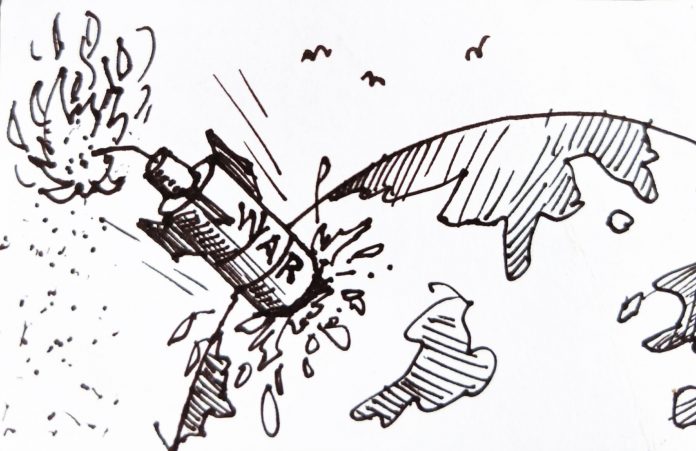
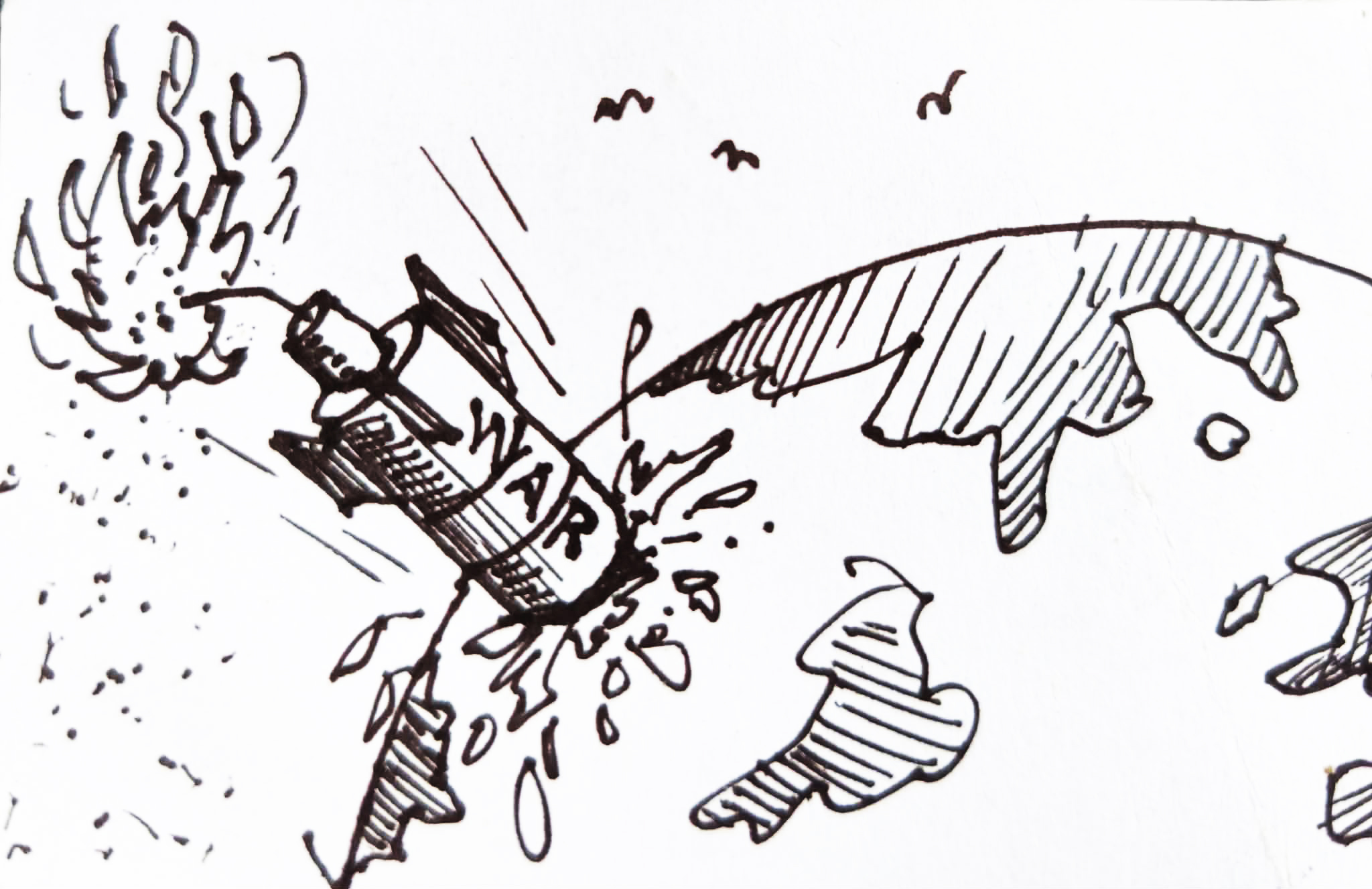
As of this writing, the war in the Middle East is escalating, and its effects will not remain confined to that region. The country must brace for the economic shocks that such a conflict inevitably sends across the world. Complacency now would be costly.

Armed conflict in the Middle East almost always drives up oil prices, and the Philippines is particularly vulnerable because it imports most of its petroleum. When the price of crude oil surges, transport fares climb, electricity costs increase, and the movement of goods becomes more expensive. The impact quickly spreads through the entire economy. Food producers pay more for fuel, traders pass on higher costs, and ordinary households begin to feel the pressure in even the most basic daily transactions.

The rise in fuel prices rarely stops with gasoline and diesel. It gradually pushes up the cost of rice, canned goods, cooking oil, and other kitchen staples that families rely on every day. Delivery expenses rise, refrigeration costs increase, and manufacturers adjust prices to survive the rising cost of operations. In such moments, it is the poor and the lower middle class who feel the sharpest blow, because a large portion of their income is already spent on food and daily survival.

Practical preparation, therefore, becomes necessary. Households must begin securing a reasonable supply of essential goods such as rice, basic cooking ingredients, laundry supplies, potable water, and other daily necessities. This does not mean panic buying or hoarding that deprives others, but it does require sober planning. Families that prepare modest reserves are better able to withstand sudden price increases and temporary disruptions in supply.

The country has endured similar economic tremors before, and the lesson has always been the same: readiness reduces hardship. Households, communities, and local markets must act with discipline and foresight rather than wait for shortages and higher prices to force desperate decisions. Preparing early is not alarmism; it is simple prudence in the face of a conflict whose economic consequences are already beginning to unfold.

The war we despise

0

News alerts keep piling up: missiles in the Middle East, drones over Eastern Europe, warships circling the waters of Asia. Each headline feels like another drumbeat in a march nobody wants to finish. I cannot help wondering—are we stumbling, step by step, toward another world war?

I ask that question not as a historian or strategist, but as an ordinary observer who reads the morning news with a cup of coffee that suddenly tastes less comforting. Turn on any broadcast, and the map of the world looks bruised. The fighting between Israel and its enemies has already shaken the Middle East, while Russia’s war in Ukraine drags on with grim stubbornness. Meanwhile, tensions simmer in places like the South China Sea and the Taiwan Strait. None of these conflicts is the same, yet they share an unsettling feature: powerful nations standing behind smaller fires, sometimes openly, sometimes from the shadows.

What troubles me most is how quickly the language of war now slips into everyday conversation. Politicians speak of “red lines,” military “deterrence,” and “strategic responses,” as if the world were a chessboard and human lives were pieces to be moved with cool fingers. But real war does not unfold like a chess match. It burns cities, empties homes, and leaves behind quiet cemeteries where young names are carved into cold stone. History has already shown us this twice in the last century.

The danger today lies not in a single war, but in the way separate conflicts can collide like storm systems. The First World War did not begin as a global war either. It began with alliances, pride, miscalculations, and leaders’ belief that the fighting would be quick. Within months, the entire planet was pulled into a catastrophe no one had truly planned. That lesson should haunt every government office and military headquarters on earth.

What makes our moment even more fragile is the frightening speed of modern weapons. Drones circle above battlefields like mechanical hawks. Missiles travel across continents in minutes. Nuclear arsenals—still sitting quietly in silos and submarines—remain capable of ending civilization many times over. The technology meant to protect nations has also given them the ability to destroy the world faster than any previous generation could imagine.
And yet, when I step outside my door, life continues in its ordinary rhythm. Jeepneys rattle down the street, vendors argue about the price of vegetables, and children laugh on their way home from school. That contrast always strikes me. While diplomats argue and armies move, most people on earth simply want to work, eat, raise families, and sleep peacefully at night. The distance between the lives of ordinary citizens and the calculations of global power can feel painfully wide.

Sometimes I suspect that history’s greatest tragedies arise from that distance. Decisions about war are often made in quiet rooms far removed from the neighborhoods that will eventually pay the price. Meanwhile, the rest of us watch from afar, hoping cooler heads will prevail. Hope, of course, is not a strategy—but it remains one of the few things ordinary people can hold onto while the great powers circle one another.

So, when I ask whether today’s conflicts could lead to another world war, the honest answer is yes. But they do not have to. The world still has diplomats, institutions, and voices of reason strong enough to slow the march toward catastrophe—if leaders choose restraint over pride and dialogue over threats. For my part, I keep hoping that somewhere behind the closed doors of power, someone remembers the simple truth that the rest of us already know: war may begin with ambition, but it always ends with grief.

Empowering women entrepreneurs: Catalyzing business and societal growth

0

Women entrepreneurs are vital contributors to the global economy, driving innovation, creating jobs, and fostering inclusive growth. Supporting and empowering women in business is not only a matter of equity but also a strategic imperative that yields significant benefits for the business world and society as a whole.

Economic Contributions

Women-owned businesses are a significant force in economic development. In the Philippines, 66% of SMEs are women-owned, according to the State of the Filipino Women report by the Philippine Commission on Women (PCW). Women own about 40% of businesses in the country, placing the Philippines among the leading nations in Asia for female entrepreneurship.

Women in the Philippines have made significant and diverse economic contributions throughout history and in the present day. Their roles have evolved from traditional activities to various sectors, significantly impacting the nation’s economy.

Historical Perspective

During the Spanish colonial era, women were primarily confined to housekeeping and childrearing, often viewed as reserved and submissive. Despite these stereotypes, they were active and enterprising, engaging in weaving and embroidery, which later became significant exports during the American colonization. By 1921, embroidery exports reached PHP 15,000,000, and hat exports amounted to PHP 1,490,020, demonstrating their vital role in economic development.

Modern Economic Activities

Today, women’s associations are actively involved in the agricultural sector, contributing to the production, value addition, and sale of agricultural products. Many are farmers’ wives, while others are heads of households, balancing family responsibilities with community and economic aspirations. These associations participate in programs like the “Kadiwa ng Pangulo,” which helps them access wider markets.

Labor Force Participation

As of 2018, less than half of Filipino women were in the labor force, with a participation rate of 46.6%. However, this represents an increase from 39.3% in 2011, indicating progress in women’s economic engagement. A significant number of women work abroad as Overseas Filipino Workers (OFWs), with 1.26 million female OFWs remitting approximately PHP 58.2 billion annually as of 2017.

Entrepreneurship

Women entrepreneurs play a crucial role in the Philippine economy, particularly through micro, small, and medium-sized enterprises (MSMEs). MSMEs contribute to 40% of the country’s gross domestic product and provide employment for 63% of the population. In 2020, over 950,000 MSMEs existed, with women leading more than half of them. Despite their prevalence, women entrepreneurs face challenges such as limited access to resources, credit, and global trade opportunities, as well as shortcomings in digitalization and competitiveness.

Empowerment Initiatives

Various initiatives aim to empower women in the Philippines. The Department of Agriculture Philippine Rural Development Project (DA-PRDP) supports women through infrastructure and enterprise subprojects. In Mindanao, a significant number of women are involved in farming, processing, enterprise management, finance, and marketing. Moreover, the International Trade Centre’s (ITC) SheTrades initiative and Visa have launched projects to strengthen women entrepreneurs in the digital economy, providing them with access to knowledge, resources, and networks.

Addressing Challenges

Despite their contributions, many Filipino women still face poverty, with 22.5% considered poor nationwide as of 2015. The poorest women are located in regions such as the Autonomous Region in Muslim Mindanao (ARMM) and Eastern Visayas. To address these disparities, policies are needed to enable women to participate in paid labor while fulfilling domestic responsibilities. This includes quantifying the value of their domestic duties in the country’s GDP estimates and implementing flexible work arrangements.

Driving Innovation and Diverse Perspectives

Women entrepreneurs bring fresh perspectives and innovative approaches to leadership, often prioritizing sustainability, equity, and social responsibility in their business models.

• Unique Perspectives: Women offer novel products and services and potential for doing things differently, fostering fresh perspectives that better understand more than half the world’s consumers.

• Innovation: Women entrepreneurs drive innovation and creativity, pioneering new business models and technologies.

• Problem-Solving: They launch ventures that reflect their passions and solve real-world problems, contributing to a more diverse and resilient economy.

Benefits of Supporting Women Entrepreneurs

Supporting women entrepreneurs yields numerous benefits for the business world and society:

• Economic Growth: Women-owned businesses drive economic growth, create jobs, and stimulate local and national economies.

• Innovation and Creativity: Women bring fresh perspectives and innovative solutions to the market, fostering competition and economic advancement.

• Social Impact: Women entrepreneurs address social challenges through their businesses, focusing on areas such as education, healthcare, and environmental sustainability.

• Inspiration and Role Models: Women entrepreneurs serve as role models, inspiring and motivating aspiring women entrepreneurs to pursue their dreams and overcome societal barriers.

Conclusion

Empowering women entrepreneurs is not just a matter of fairness; it is a strategic imperative that drives economic growth, fosters innovation, and promotes social good. By addressing the challenges women face and providing the necessary support and resources, we can unlock their full potential and create a more equitable and prosperous business world.
————–
If you have any questions or would like to share your thoughts on the column, feel free to send an email to jca.bblueprint@gmail.com. Looking forward to connecting with you!


Recent Posts

DALMACIO C. GRAFIL
PUBLISHER

ALMA GRAFIL
EDITOR-IN-CHIEF

ROMEO CEBREROS
OFFICE IN-CHARGE

OFFICE
BRGY. SONGCO, BORONGAN CITY

CONTACT NUMBERS
(055) 261 – 3319 | 0955 251 1533 | 0917 771 0320 | 0915 897 7439 | 0921 511 0010

DALMACIO C. GRAFIL
PUBLISHER

RICKY J. BAUTISTA
EDITOR

ALMA GRAFIL
BUS. MANAGER

OFFICE
RIZAL AVENUE, CATBALOGAN
(INFRONT OF FIRE DEPARTMENT, NEAR CITY HALL)

CONTACT NUMBERS
0917 771 0320 | 0915 897 7439 | 0921 511 0010

EMAIL
lsdaily2@yahoo.com

WEBSITE
www.issuu.com/samarweeklyexpress