29 C
Tacloban City
November 15, 2026 - Sunday | 1:11 PM
Home Blog Page 195

Leyte rolls out fuel price monitoring app amid volatile pump prices

0
FUEL PRICES MONITORING. Provincial Administrator Corazon Alvero, representing Leyte Governor Carlos Jericho Petilla, leads the orientation and mobile device whitelisting for municipal agriculturists and agricultural extension workers (AEWs) on Tuesday, April 14, as part of the rollout of the QGas application. The digital platform aims to provide real-time fuel price monitoring across Leyte, helping motorists access reliable information and make informed decisions amid continuing fuel price fluctuations. (OFFICE OF PROVICIAL AGRICULTURE-LEYTE)
FUEL PRICES MONITORING. Provincial Administrator Corazon Alvero, representing Leyte Governor Carlos Jericho Petilla, leads the orientation and mobile device whitelisting for municipal agriculturists and agricultural extension workers (AEWs) on Tuesday, April 14, as part of the rollout of the QGas application. The digital platform aims to provide real-time fuel price monitoring across Leyte, helping motorists access reliable information and make informed decisions amid continuing fuel price fluctuations.     (OFFICE OF PROVICIAL AGRICULTURE-LEYTE)

TACLOBAN CITY — Amid continuing fluctuations in fuel prices, the provincial government of Leyte has launched a digital platform that allows the public to easily check and compare pump prices across different areas in the province.

Dubbed the QGas application, the system is part of Governor Carlos Jericho ‘Icot’ Petilla’s initiative to improve transparency and help motorists make informed decisions as fuel costs remain unpredictable.

To support the rollout, municipal agriculturists and agricultural extension workers (AEWs) underwent orientation and mobile device whitelisting, equipping them to collect and upload fuel price data from gasoline stations in their respective localities.

Provincial Administrator Corazon Alvero underscored the importance of their role, noting that accurate and timely data collection is crucial in ensuring the platform’s effectiveness, especially as communities continue to feel the impact of rising fuel prices.

Claire Maderazo, head of the province’s special projects office, said the application directly addresses concerns over fuel price volatility by providing real-time updates per municipality. This, she added, empowers consumers with reliable information and promotes fair pricing practices.

Under the system, AEWs will regularly gather fuel price data, which will then be synchronized with a central database and published through the official website of the provincial government of Leyte, making it accessible to the public.

(ROEL T. AMAZONA)

PH, US troops boost disaster response skills ahead of Balikatan 2026

0
BALIKATAN. Troops from the 8th Infantry Division and the United States Army take part in a joint medical response training at Camp Lukban in preparation for Exercise Balikatan 2026. The three-day activity, involving Task Force AYUDA personnel, enhances disaster response capabilities and life-saving medical skills to strengthen humanitarian assistance and disaster relief operations in Eastern Visayas.(8TH ID)

TACLOBAN CITY — Filipino soldiers are stepping up their readiness for large-scale humanitarian and disaster response operations as troops from the 8th Infantry Division took part in a joint medical response training with the United States Army ahead of the upcoming Exercise Balikatan 2026.

The three-day training, conducted at Camp Lukban, involved personnel from Task Force AYUDA and focused on strengthening their capability to deliver immediate and life-saving medical interventions during emergencies.

Designed to simulate real-world scenarios, the activity emphasized rapid response in disaster-stricken and crisis-affected areas, equipping troops with critical skills needed in both humanitarian assistance and disaster relief missions—key components of the annual Balikatan exercises between the Philippines and the United States.

Military officials said the joint training reflects the continuing effort to enhance interoperability and coordination between the Armed Forces of the Philippines and their US counterparts, particularly in responding to natural disasters, which frequently affect vulnerable regions like Eastern Visayas.

The initiative also reinforces the evolving role of the military beyond combat operations, highlighting its growing involvement in community service, emergency response, and life-saving missions.

The 8th Infantry Division reiterated its commitment to building a professional and responsive force capable of addressing both security challenges and humanitarian needs, especially in times of crisis.

(ROEL T. AMAZONA)

Northern Samar group receives livelihood aid under BLES program

0

TACLOBAN CITY — A community-based association in San Jose, Northern Samar has received a boost to its livelihood operations after the provincial government extended financial and material assistance through its Barangay Livelihood Empowerment and Sustainability (BLES) Program.

The Provincial Economic Development and Investment Promotions Office (PEDIPO) facilitated the turnover of fishing tools, equipment, and machinery worth P100,000 to the Tulungan ng Iba’t-Ibang Sektor Para sa Bagong Pangarap Association, aimed at enhancing the group’s productivity and sustaining its income-generating activities.

Provincial officials said the assistance is part of continuing efforts to empower grassroots organizations by equipping them with the necessary resources to expand their operations and improve their economic standing.

The initiative underscores the local government’s push for inclusive growth, particularly in rural communities, by strengthening small-scale livelihood enterprises and creating more opportunities for income generation.

Aligned with the province’s broader development agenda, the BLES Program focuses on building the capacity of local associations, enabling them to become self-reliant and active contributors to community development.

Members of the beneficiary group expressed gratitude for the support, saying it will significantly improve their operations and help uplift the welfare of their members.
PEDIPO reiterated its commitment to sustain programs that promote livelihood development and strengthen community-based organizations across Northern Samar.

(ROEL T. AMAZONA)

Free SIM cards rolled out to 4Ps beneficiaries in Eastern Visayas

0
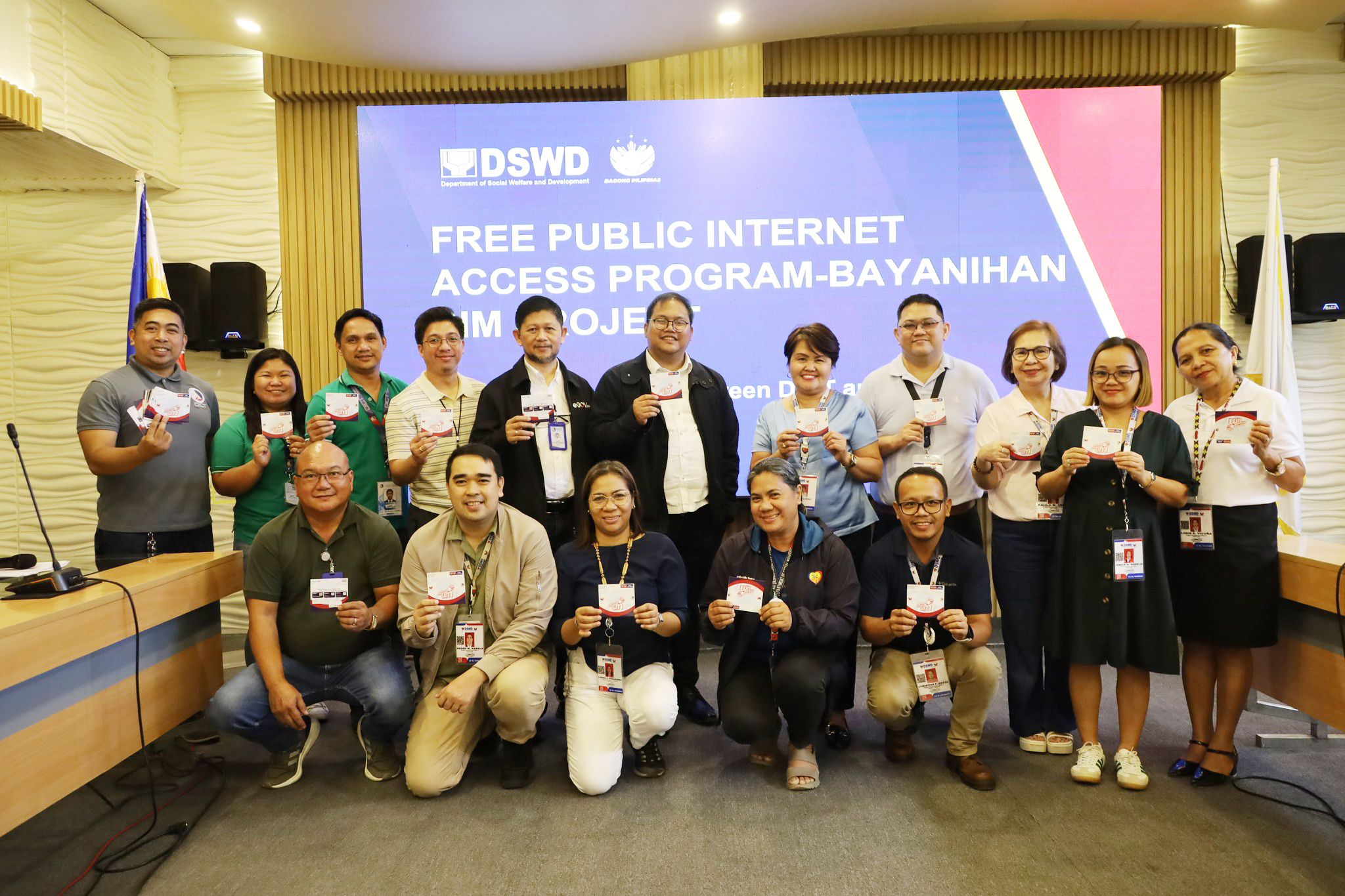
SIM PROJECT. Officials from the Department of Information and Communications Technology (DICT) and Department of Social Welfare and Development (DSWD) lead the turnover of free SIM cards under the Bayanihan SIM Project for Pantawid Pamilyang Pilipino Program (4Ps) beneficiaries in Eastern Visayas.(DSWD EASTERN VISAYAS)

TACLOBAN CITY — Thousands of low-income families in Eastern Visayas are set to gain improved internet access as the Department of Information and Communications Technology (DICT) launched on Tuesday, April 14, the distribution of free SIM cards under its Bayanihan SIM Project.

The initiative, part of the government’s Free Public Internet Access Program, targets beneficiaries of the Pantawid Pamilyang Pilipino Program (4Ps), aiming to bridge the digital divide by providing reliable connectivity to underserved households.

Beyond basic internet access, the project is also expected to support the delivery of government services, including cash assistance programs of the Department of Social Welfare and Development (DSWD), such as fuel subsidies for drivers.

Beneficiaries will be able to access these services through the eGovPH mobile application, streamlining transactions and improving efficiency.

The turnover of SIM cards was led by DICT Regional Office VIII Officer-in-Charge Regional Director Atty. Melvyn Carlo T. Barroa and OIC-Assistant Regional Director Engr. Dante P. Rosales to DSWD Field Office VIII Regional Director Grace Q. Subong and Assistant Regional Director for Administration Clarito T. Logronio, who will oversee distribution to qualified recipients.

Each SIM card comes with a monthly allocation of 25GB of data for one year, enabling beneficiaries to access essential information, avail of online government services, and explore digital opportunities such as education, communication, and livelihood platforms.
Officials said the program underscores the government’s push for inclusive digital development, ensuring that even marginalized sectors can benefit from connectivity. It also reflects strengthened inter-agency collaboration aimed at enhancing social service delivery and expanding access to digital resources across communities in the region.

(ROEL T. AMAZONA)

Actions in question

0

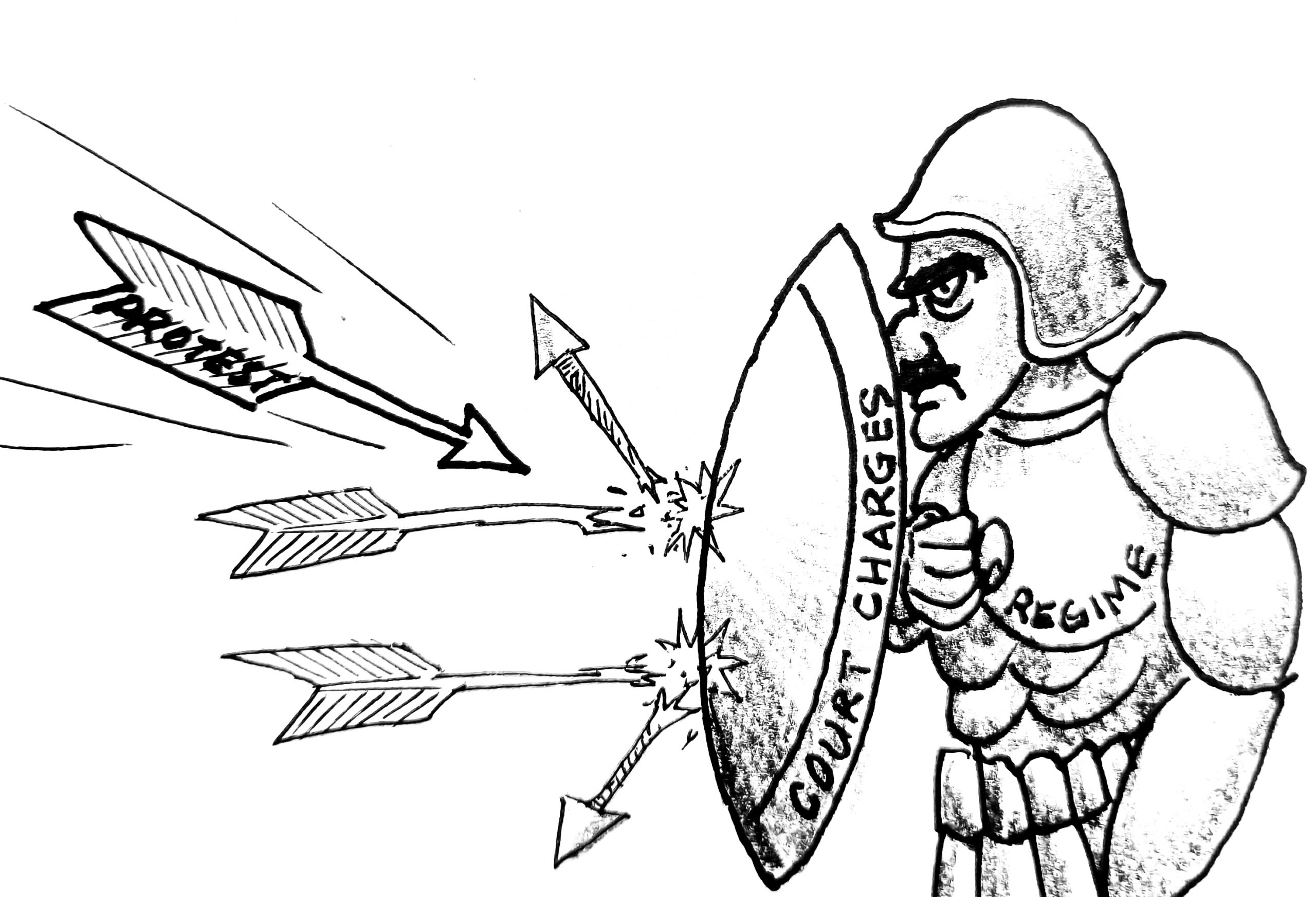
Common knowledge has it that the present administration is showing signs of becoming repressive, marked by intolerance of dissent and a troubling misuse of power. Such a direction is dangerous and unacceptable in a democratic society.

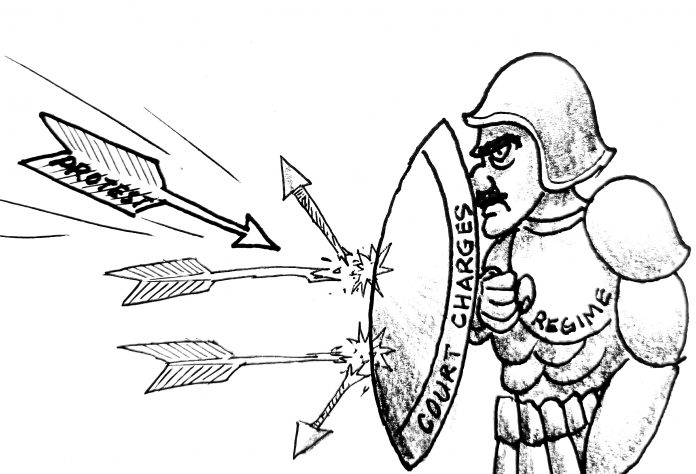
Criticism is a natural and necessary element of governance, yet the response has increasingly been to silence rather than to listen. Citizens who raise legitimate concerns, backed by evidence or driven by civic duty, are met not with transparency but with legal intimidation. Protesters are treated as threats instead of participants in democratic discourse. This pattern reveals a government more concerned with preserving its image and authority than addressing the substance of public grievances.

At the same time, allegations of massive corruption involving enormous sums of public funds remain inadequately addressed. The contrast is stark: ordinary citizens face swift consequences for dissent, while powerful figures implicated in large-scale irregularities often evade accountability. This selective enforcement of the law undermines the very foundation of justice and reinforces the perception that institutions are being used to shield the influential rather than serve the public.

Instead of focusing on urgent national concerns—rising living costs, weak public services, and economic uncertainty—the administration appears preoccupied with political maneuvering. Policies such as curfews, framed as public safety measures, raise serious questions about intent and timing. When such policies coincide with growing public dissatisfaction, they risk being seen not as protective measures but as tools to preempt and suppress collective action. This only deepens public frustration and widens the gap between the government and the governed.

The country cannot afford a leadership that responds to crises with defensiveness and control rather than competence and accountability. A decisive shift is necessary: uphold the rule of law without bias, address corruption at the highest levels, and respect citizens’ rights to speak and assemble freely. Anything less will continue to push the nation further into instability, with consequences that will be difficult to reverse.

War consequences

0

Storefronts are going dark in city after city, from small retailers to export-driven firms, as rising costs linked to the Middle East conflict squeeze them out. This is not a passing inconvenience; it is a serious economic wound that demands urgent attention.

I have been watching the trend with growing unease. Oil prices spike whenever tensions in the region escalate, and that single variable—fuel—quietly dictates the fate of thousands of businesses. Transport costs rise, electricity follows, and before long, even the most careful balance sheets begin to bleed. In a country like ours, where so many enterprises operate on thin margins, it does not take much to push them over the edge.

What’s troubling is how quickly the effects spread beyond boardrooms and into ordinary lives. A closed shop is not just a failed venture; it is a set of wages that no longer arrive on time, a family that tightens its meals, a worker who begins to count coins instead of plans. The economy does not collapse in one loud crash—it weakens in these quiet, repeated withdrawals of livelihood.

I find it difficult to ignore the pattern: when global conflict intensifies, local vulnerability is exposed. The Philippines imports most of its fuel, leaving businesses at the mercy of events unfolding thousands of kilometers away. There is a kind of helplessness in this arrangement, as if entire sectors are being made to pay for decisions and hostilities they have no hand in shaping.

Yet what unsettles me most is not the inevitability of external shocks, but the lack of sufficient cushioning from within. Businesses are left to absorb the blows largely on their own. Some try to adjust—shorter hours, fewer staff, smaller inventories—but these are stopgap measures, not solutions. Without meaningful intervention, these closures will continue, and each one will take a small but irreversible piece of the economy with it.

There is also a deeper, more unsettling shift happening beneath the surface. Confidence—quiet, invisible, but essential—is being shaken. Investors hesitate, entrepreneurs delay, and even consumers begin to hold back. The rhythm of economic life slows, not because people want it to, but because uncertainty begins to dictate behavior. That is how a distant war starts to rewrite local futures.

I cannot help but feel a mix of frustration and urgency. The situation calls for more than passive observation or routine responses. It requires decisive steps that recognize how interconnected everything has become—how a conflict in one region can empty shelves and close doors in another. Ignoring that reality only ensures that the damage will deepen.
What’s necessary now is a steady hand—policies that ease fuel costs where possible, support systems that keep small businesses afloat, and long-term plans that reduce dependence on volatile external sources. These are not quick fixes, but they are practical directions. Without them, the darkened storefronts seen today may become a familiar and lasting sight, and that is a future that should not be accepted lightly.


Recent Posts

DALMACIO C. GRAFIL
PUBLISHER

ALMA GRAFIL
EDITOR-IN-CHIEF

ROMEO CEBREROS
OFFICE IN-CHARGE

OFFICE
BRGY. SONGCO, BORONGAN CITY

CONTACT NUMBERS
(055) 261 – 3319 | 0955 251 1533 | 0917 771 0320 | 0915 897 7439 | 0921 511 0010

DALMACIO C. GRAFIL
PUBLISHER

RICKY J. BAUTISTA
EDITOR

ALMA GRAFIL
BUS. MANAGER

OFFICE
RIZAL AVENUE, CATBALOGAN
(INFRONT OF FIRE DEPARTMENT, NEAR CITY HALL)

CONTACT NUMBERS
0917 771 0320 | 0915 897 7439 | 0921 511 0010

EMAIL
lsdaily2@yahoo.com

WEBSITE
www.issuu.com/samarweeklyexpress