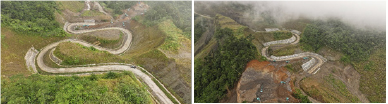
Ormoc City – The Department of Public Works and Highways (DPWH) Leyte 4th District Engineering Office (DEO) continues the development of the Albuera-Burauen Road which is a vital road network connecting communities in the tri-boundary area of Albuera, Burauen, and Ormoc City.
The road project has been implemented through various phases over the years, gradually improving accessibility across the mountainous area. Current works under the 2026 General Appropriations Act (GAA) is the Construction of Missing Links/New Roads – Albuera-Burauen Road (Albuera Section) which covers Sta. 7+584.73 – Sta. 7+733.50 in Brgy. San Pedro, Albuera, Leyte.
The ongoing project involves the construction of a 148.77-meter road section, including lined canal drainage and stone masonry works along portions of the alignment. It has a contract amount of P69,729,057.52 and commenced in June 2026, with target completion in March 2027.
The continuing improvement of the Albuera-Burauen Road forms part of efforts to establish better connectivity and provide alternate routes for residents, motorists, and communities in Leyte 4th District.
As the project remains under construction, motorists and the public are advised to exercise caution when passing through portions of the route affected by ongoing road works and to observe applicable safety measures. (PR)
University of Eastern Philippines student leaders meet with Senator Bam Aquino during a dialogue at the UEP Main Campus in Catarman, Northern Samar. The University Student Council raised concerns on campus security, student publication issues and proposed legislation affecting the university during the meeting. (Photo Courtesy)
University of Eastern Philippines student leaders meet with Senator Bam Aquino during a dialogue at the UEP Main Campus in Catarman, Northern Samar. The University Student Council raised concerns on campus security, student publication issues and proposed legislation affecting the university during the meeting. (Photo Courtesy)
CATARMAN, Northern Samar – Student leaders of the University of Eastern Philippines (UEP) brought concerns over campus security, student publication issues and proposed changes to the university’s charter to Senator Bam Aquino during a dialogue at the university’s main campus.
The University Student Council (USC) executives met with Aquino, chair of the Senate Committee on Basic Education, to discuss issues affecting students and their concerns over House Bills 9414 and 9861.
The two measures, both filed in the 20th Congress, seek to declare UEP as the National University for Sustainability Studies and revise the university’s charter. The bills were filed in 2026 and remain pending before the House Committee on Higher and Technical Education.
During the dialogue, USC representatives raised concerns over disruptions during the university’s “Balik Kampus” event, a reported campus security breach and what the student council described as alleged attempts by the university administration to censor The Pillar, UEP’s official student publication.
The USC also presented its position against House Bills 9414 and 9861, outlining concerns it said could affect students and the academic community.
The student leaders submitted to Aquino a package containing a formal letter detailing the issues discussed, copies of the two House bills, Student Council Assembly Resolution No. 001 and an executive summary of their concerns.
The dialogue comes as Aquino continues to focus on education issues in the Senate. As chair of the Senate Committee on Basic Education, he has led hearings and legislative initiatives addressing concerns such as classroom shortages, education funding and access to basic education.
Following the meeting, the USC issued a statement reaffirming its commitment to student welfare and rights and said it would continue raising the concerns of UEP students.
The council also urged students to remain engaged in discussions concerning the university and national education policies.
The student council’s engagement with Aquino provides a venue for UEP student representatives to bring campus-level concerns before a national policymaker while the proposed measures affecting the university remain under consideration in Congress.
House Bills 9414 and 9861 are proposals and have not become law. Current legislative records list both measures as pending before the House Committee on Higher and Technical Education.
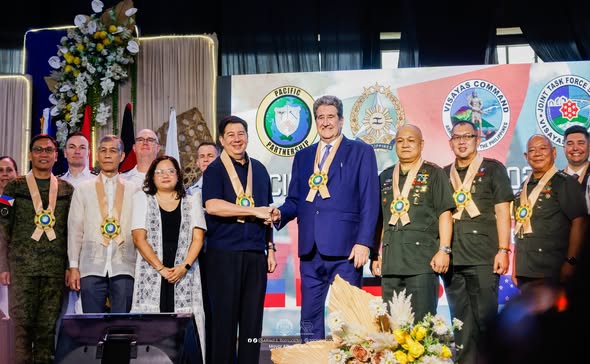
PACIFIC PARTNERSHIP 2026 OPENING CEREMONY. Tacloban City Mayor Alfred Romualdez stands alongside US Ambassador to the Philippines Lee Lipton, Major Gen. Peter Burgonio, commanding officer of the 8th ID and Joint Task Force Storm, and other key military and local officials during the formal opening ceremony of the Pacific Partnership 2026 held at the Tacloban City Convention center on Monday, Sept.21 The multinational humanitarian assistance and disaster preparedness mission marks third return to Tacloban City.
(Photo Courtesy)
PACIFIC PARTNERSHIP 2026 OPENING CEREMONY. Tacloban City Mayor Alfred Romualdez stands alongside US Ambassador to the Philippines Lee Lipton, Major Gen. Peter Burgonio, commanding officer of the 8th ID and Joint Task Force Storm, and other key military and local officials during the formal opening ceremony of the Pacific Partnership 2026 held at the Tacloban City Convention center on Monday, Sept.21 The multinational humanitarian assistance and disaster preparedness mission marks third return to Tacloban City. (Photo Courtesy)
TACLOBAN CITY – Pacific Partnership 2026 (PP26), a multinational humanitarian assistance and disaster preparedness mission, has returned to Tacloban City with disaster response training and capacity building among its key activities.
The 12-day mission, which began Sept. 18 and will run until Sept. 29, brings together military personnel and civilian experts from the United States, Canada, Germany, Japan, New Zealand and the United Kingdom to work with the Armed Forces of the Philippines (AFP), local officials and Filipino experts.
The mission is focused on strengthening the ability of participating countries and local responders to work together during disasters, including through exchanges on urban search and rescue and incident command systems.
This is the third time Pacific Partnership has held a mission in Tacloban, following its visits in 2014 and 2019. The 2014 mission came several months after Super Typhoon Yolanda devastated Tacloban and other parts of Eastern Visayas in November 2013.
The 2019 mission, held from March 11 to 22, included disaster response seminars, urban search and rescue training, engineering projects and medical activities. More than 300 participants took part in a collaborative disaster relief exercise during the mission’s final days.
For the 2026 mission, activities are grouped into four areas: disaster management, engineering, medical services and host-nation outreach.
The disaster management component will involve subject-matter expert exchanges between Pacific Partnership personnel and local counterparts on urban search and rescue, incident command systems and other disaster response capabilities.
The engineering component will involve US Navy Seabees from Naval Mobile Construction Battalion 5 and Amphibious Construction Battalion 1 working with the AFP’s 546th Engineer Construction Battalion and engineers from the Japan Maritime Self-Defense Force.
They will undertake projects at local schools, including the installation of new water hoses at Santa Elena Elementary School and repair of a roof truss at the two-room schoolhouse of Lorenzo Daa Memorial School.
Medical personnel will conduct exchanges with Filipino health professionals in optometry, dentistry and rehabilitation at Leyte Provincial Hospital. Community health engagements will also be conducted in four local government units.
The Pacific Partnership Band will hold performances at various locations, including Robinsons Mall, as part of the mission’s community outreach activities.
US Ambassador to the Philippines Lee Lipton said the mission would help strengthen disaster response capabilities while providing essential services and deepening cooperation between the Philippines and participating countries.
US Navy Capt. Robert Reyes, mission commander of PP26, said the activities would strengthen the capacity of the participating countries to respond collectively to disasters and other crises.
“Through disaster response training, engineering projects, medical exchanges, and community outreach, we strengthen our collective readiness, deepen our relationships and build the capacity to stand together, both in times of peace and when crisis strikes,” Reyes said.
An opening ceremony was held on Monday, Sept. 21, at the Tacloban City Convention Center, attended by US Ambassador Lipton, City Mayor Alfred Romualdez, Leyte Gov. Carlos Jericho “Icot” Petilla as represented by board member Raisa Villasin, and Maj. Gen. Peter Burgonio, 8th ID commander general and commander of Joint Task Force Storm
The Philippines and the United States are also marking the 80th anniversary of their diplomatic relations this year.
Pacific Partnership, now in its 22nd iteration, is an annual multinational humanitarian assistance and disaster management preparedness mission in the Indo-Pacific region. It began following the 2004 Indian Ocean tsunami and has evolved from providing direct assistance toward greater emphasis on disaster preparedness, interoperability and exchanges with host nations.
The 2026 mission is intended to strengthen the ability of participating forces and local responders to coordinate during emergencies by building preparedness during peacetime.
For Tacloban, the mission also carries particular significance given the city’s experience with major disasters, including Super Typhoon Yolanda, and its previous participation in Pacific Partnership disaster preparedness activities.
In 2019, for example, Pacific Partnership personnel worked with Philippine servicemembers, medical professionals, police, firefighters and community volunteers in a field exercise simulating an 8.5-magnitude earthquake at the Tacloban City Market.
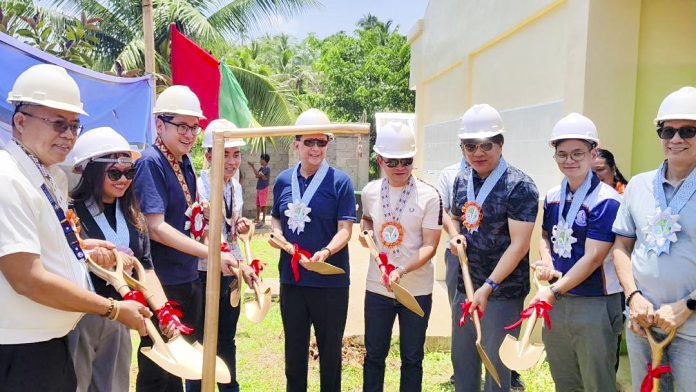
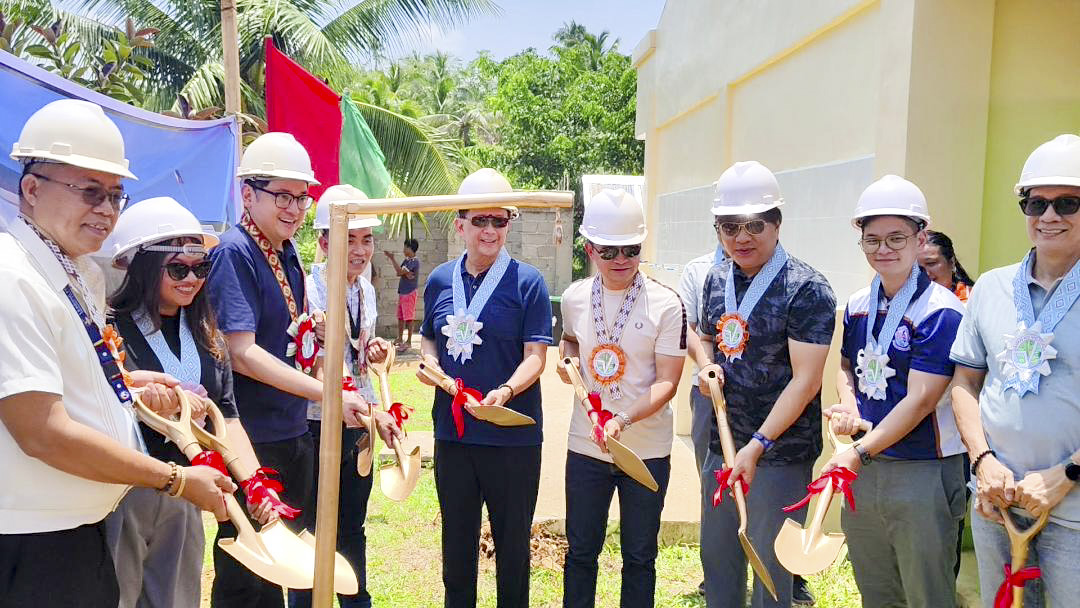
GROUNDBREAKING.Senator Bam Aquino joins local and education officials during the groundbreaking ceremonies for the Maxvilla Senior High School and Victoria National High School projects in Victoria, Northern Samar. The projects are funded by the Department of Education and the Philippine Amusement and Gaming Corp., respectively, to expand school facilities and improve access to secondary education in the municipality.
(the Provincial Government of Northern Samar)
GROUNDBREAKING.Senator Bam Aquino joins local and education officials during the groundbreaking ceremonies for the Maxvilla Senior High School and Victoria National High School projects in Victoria, Northern Samar. The projects are funded by the Department of Education and the Philippine Amusement and Gaming Corp., respectively, to expand school facilities and improve access to secondary education in the municipality. (the Provincial Government of Northern Samar)
CATARMAN, Northern Samar – Two school infrastructure projects in Victoria town are set to expand access to secondary education following groundbreaking ceremonies led by Senator Bam Aquino on Sept. 19.
The projects involve the construction of the Maxvilla Senior High School and the expansion and construction of new facilities at Victoria National High School.
The Maxvilla Senior High School project is being funded by the Department of Education (DepEd), while the improvements at Victoria National High School are being financed by the Philippine Amusement and Gaming Corp. (PAGCOR).
Aquino was invited to the ceremonies by Victoria Mayor Joey Ardales, who cited the senator’s work on education reform and support for initiatives aimed at improving learning opportunities.
In his message, Aquino emphasized the importance of investing in young people as part of efforts to strengthen communities and the country.
“A successful youth means a successful town, a successful nation, a successful race,” Aquino said.
The senator currently chairs the Senate Committee on Basic Education, which has jurisdiction over elementary and secondary education, including matters involving students and teachers.
The groundbreaking ceremonies were attended by Northern Samar Gov. Harris Christopher Ongchuan, DepEd Eastern Visayas Director Michael Oliver de Guzman, Schools Division Superintendent Gaudencio Aljibe and other provincial, municipal and education officials.
The projects are expected to provide additional facilities for students in Victoria, particularly those who currently have limited access to school infrastructure in the municipality.
Aquino has also pushed for measures addressing classroom shortages and improving funding and facilities for basic education. In February, he presided over a Senate hearing on public-private partnerships as a possible strategy for addressing classroom congestion.
TACLOBAN CITY– Access to a computer, reliable internet connection, and digital government services can make a significant difference in how quickly village residents obtain information, transact with government offices, and connect with opportunities.
Recognizing the growing importance of digital connectivity in everyday public transactions, villages in Tanauan and Carigara towns in Leyte utilized their Special Connectivity Program Fund (SCPF) to upgrade their information and communications technology (ICT) facilities and bring essential digital services closer to their communities.
The initiative forms part of President Ferdinand R. Marcos Jr.’s Bawat Barangay Makikinabang program, which seeks to ensure that government interventions and services reach communities at the grassroots level.
Through SCPF support, participating barangays are improving their ICT facilities, providing communities with better access to digital tools that can be used for government transactions, information dissemination, communication, education, and other community needs.
According to village chief Elmer Opeña, a barangay equipped with functional ICT facilities can serve as a local access point where residents can seek government information, accomplish online transactions, communicate with public offices, and access digital resources without having to travel farther from their communities.
“Damu pa gad amon unta gusto mahimo nga project, pero amo an amon gin-una para mas magin madagmit it transactions, mga dokumento, ngan damu pa dinhi ha amon barangay hall,” Opeña said.
(We have a lot of other projects that we need to implement, but for now we have prioritized ICT to provide easier transactions, processing of documents and many others inside the barangay hall.”)
He otherwise appealed for additional financial assistance from the national government to help address other pressing needs and development concerns in the barangay.
The barangay official said continued support is crucial in providing needed facilities and services and in implementing projects that will directly benefit residents.
Meanwhile in San Victor village in Tanauan town, village council member Alma Balmes said their newly-acquired upgraded ICT equipment will play a big role in securing information and accessing government programs to communicating with agencies and submitting requirements as more public services are increasingly becoming available through digital channels.
“Mas mapapadagmit gihapon an amon pakipagsumpayan ngadto ha amon mga residente,” Balmes said. (“This will make our communication with our residents much easier.”)
Barangay governments, she said, can use digital platforms to disseminate announcements, emergency information, schedules, government advisories, and other important updates more efficiently.
This becomes especially valuable during emergencies, when the timely transmission of information can help communities respond more quickly to threats and coordinate with local authorities.
Through Bawat Barangay Makikinabang program, resources are brought directly to barangays, allowing local governments to identify and address needs that affect residents in their daily lives.
The program underscores the administration’s broader push for inclusive development, one where government services, information, technology, and opportunities are made accessible not only in urban centers but also in smaller and more remote communities.
As digital technology becomes increasingly embedded in public service delivery, strengthening ICT capacity at the barangay level is becoming less of a luxury and more of a necessity.
When technology reaches the barangay, government comes closer to the people, and when people can connect, they can participate more fully in the opportunities of a digital society.
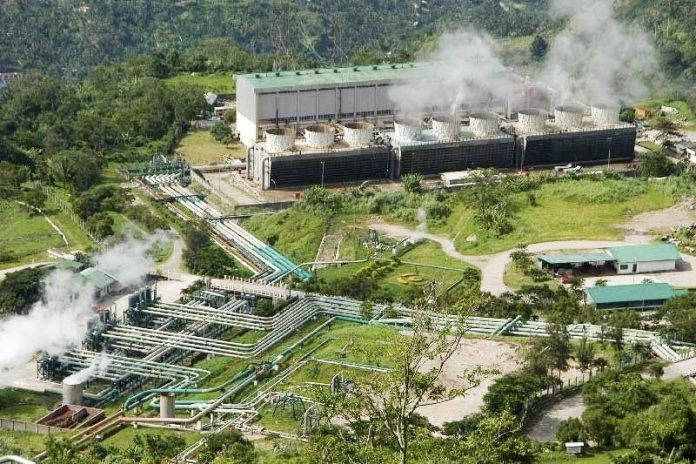
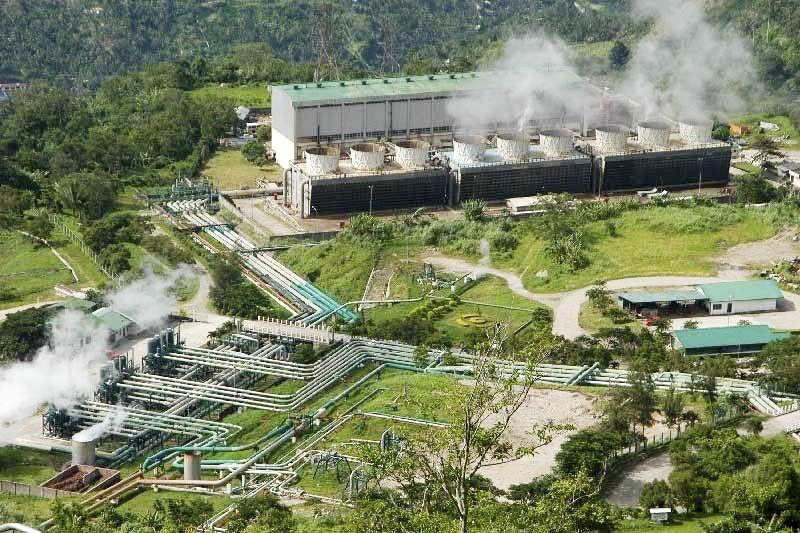
GEOTHERMAL REDEVELOPMENT. EDC is studying a P70-billion redevelopment of its aging Leyte geothermal facilities that could add 200 to 400 megawatts of capacity and extend the use of the province’s geothermal resources for another 40 to 50 years.(EDC File)
GEOTHERMAL REDEVELOPMENT. EDC is studying a P70-billion redevelopment of its aging Leyte geothermal facilities that could add 200 to 400 megawatts of capacity and extend the use of the province’s geothermal resources for another 40 to 50 years.(EDC File)
ORMOC CITY — Energy Development Corp. (EDC) is looking to modernize its geothermal operations in Leyte through a proposed P70-billion redevelopment that could increase the province’s generating capacity by as much as 400 megawatts.
EDC Vice Chairman and Chief Executive Officer Francis Giles Puno said the company is studying the construction of a new and more efficient geothermal power plant at its Upper Mahiao facility in Kananga.
The existing Upper Mahiao plant, which had a generating capacity of 125 MW, is being decommissioned due to its age and deteriorating condition.
EDC President and Chief Operating Officer Jerome H. Cainglet said the company has applied with the Department of Energy (DOE) for the decommissioning of the aging facility.
Under the proposed redevelopment, the company could build a new plant with an estimated capacity of 200 to 400 MW using the same geothermal resource.
Puno said improved technology would allow the proposed facility to generate more electricity while using less steam compared with the existing plant.
The project remains under study, with EDC coordinating with the government and the DOE. The company hopes to secure approval to proceed next year, with completion and full commercial operation targeted around 2030 to 2031.
Cainglet said EDC currently operates four geothermal facilities in Leyte — Managdong, Upper Mahiao, Malitbog and Tongonan.
The proposed redevelopment could become one of the largest geothermal redevelopment projects in the world if implemented, the company said.
Host communities, including Ormoc City and Kananga, are also expected to benefit from increased royalties should the proposed expansion result in higher electricity generation.
Host local government units receive P0.03 for every kilowatt-hour of electricity generated from geothermal resources within their areas.
EDC said its existing geothermal facilities will continue to support power generation in Leyte while the proposed redevelopment is being studied and developed.