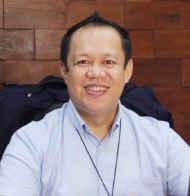
TACLOBAN CITY- The Department of Interior and Local Government (DILG) here in the region has a new director in Arnel Agabe.
Agabe, who is from Alangalang, Leyte, replaced Arnaldo Escober, Jr. He formally took the post last Monday (Sept.19)
He was once the assistant regional director for Eastern Visayas before he headed for Mindanao where he served as a DILG director for Region 10 (Northern Mindanao).
Escober spearheaded a convocation meeting held last Monday to brief his successor on the current status of the programs, projects and activities per division in the region.
The highlights of the activity included the discussion on the apprenticeship program, LGRRC implementation, and the coaching of the top notchers of the 53rd batch for the 54th batch comprehensive exam and simulation exercises.
Also included in the discussion was the crafting of the template for the assessment on the implementation of the PPAs (programs, projects and activities) of the department, as well as the issues, concerns and recommendations of the field offices. (LIZBETH ANN A. ABELLA)
During the pre-May National and Local Elections, the Vice Presidential candidate Sara Zimmerman Duterte-Carpio, boldly and repeatedly announced in her political sorties her platform about reviving the Reserve Officers Training Corps (ROTC). She wanted, with the concurrence of a large chunk of party-mates and party-supporters, ROTC introduced in the senior high school (Grades 11 and 12) in what used to be the Freshman and Sophomore tertiary education.
The present Vice President Duterte was gifted by the Filipinos by gaining the highest electoral votes of 32 million as proof of support to her platform that included the revival of the ROTC subject – gaining support from PBBM in his SONA!
Let me be blunt about it that i was product of both 2-year Basic ROTC training and 2-year Advance ROTC serving as cadet officer – a prelude to Summer Camp Training and being commissioned with the AFP Reserve Corps. Foremost, graduated from a total of 4 years ROTC training enriched in terms of discipline, courtesy, physical and mental trainings, preparedness in military action, but most specially proud to be a loving citizen oozing with nationalism infused into my veins. I have been always extra proud wearing the spic-and-span khaki and fatigue uniforms as a cadet officer and a reservist.
Unafraid of the FEU ROTC trainings (eating up my Sundays and special holidays when representing my university in parades and competitions), and never mind the night formations/lectures spent as a wannabe advance ROTC cadet officer, eating part of my time for my academic studies. Well, I got compensated when I tied for First place in the Cadet Officer Candidate Course (COCC), one of 42 who qualified to join the Summer Camp Training (SCT) In Fort Magsaysay, and gaining 6th Place among 422 advance ROTC trainees nationwide. If not for my young age, I would have been called active duty (CAD) with the other SECOND LIEUTENANTS serving my Republic!
MY COMMENTS:
I urge all young and qualified Filipinos to join the ROTC and show the nationalism running your blood, ready to rally the country’s Red, White, and Blue Flag. Let the unpatriotics have their doctrine be source of fear as unloving Filipinos?
ooo000ooo NEXT TOPIC : “Universal Connectivity Bills ramp up by DICT for F2F Teaching” SHARE S & T THOUGHTS through E-mail: drpacjr@yahoo,com
It is certain that we have seen posts in social media about the perceptible fatigue of teachers in the forefront of on-site lesson delivery. In the Basic Education and High School level we have seen and heard cases of which teachers are literally and figuratively dying and most of them are verbalizing their complaints on the readily available social media.
There are reputable and trustworthy websites who had looked into these realities and they are looking into the cases with magnifying lenses and they are not militant groups.
This link https://www.nea.org/advocating-for-change/new-from-nea/survey-alarming-number-educators-may-soon-leave-profession, is a US based website and the banner story on this website and still up today reads ; A staggering 55 percent of educators are thinking about leaving the profession earlier than they had planned, according to a National Education Association (NEA) survey of its members released on Tuesday. This represents a significant increase from 37 percent in August and is true for educators regardless of age or years teaching, driving buses, or serving meals to students. However, the poll found that a disproportionate percentage of Black (62%) and Hispanic/Latino (59%) educators, already underrepresented in the teaching profession, were looking toward the exits. (Tim Walker February 2022).
In the Philippines we have seen how teachers are saddled with Administrative Works and how these dynamics had created sad realities for the physical and mental states of the overworked teachers.
In Leyte National High School ,the biggest enrollees totaling more than ten thousand on site students, it is true. The Junior and Senior High School, teachers are subjected to the constant crowding and heat. With Class size of more than 30 students with two shifts per week, the teachers are tired and it is not an over statement. They have to simultaneously conduct these classes at two shifts per week and do the administrative tasks all at the same time. These realities need no citation nor quote to support the claim, it is a personal knowledge and this phenomenon is observable every single day.
It’s not only the teachers which are on the tight grip of these drowning learning reality, the students too. They too, are going through a very tough time emotionally. The teachers in spite of her shackles of physical and mental pressures that drains her persona, he or she has the unique position to augment and assist students at risk of mental breakdown.
Perhaps, it would not be written as a sort of statistics but the teachers have prevented suicides and that only the students can validate this. But surely, they had prevented many of those. The students can also lessen the burden of their teachers by the interactions they have with them. The inspiration and sense of fulfillment they have for the students who are doing good.
In all the school is also a real consultation room where the interaction of the teacher and the students can lighten the burdens of each other. These symbiotic interdependence is galvanized in stone. The idea that both these segments of our educational players needs help is old news. Old news or not they need institutionalized assistance, now more than ever. They need our help and understanding.
WE have to understand this point very well. We need to be truly poor so we can be truly rich in God, attaining the fullness of our dignity as God’s image and likeness, children of his, sharers of his divine life and nature. This is how we can be truly rich.
To be truly poor is to acknowledge that we depend on God for everything. To be truly poor is not about how much one has or does not have. That is a very poor description of what is to be truly poor. And that’s because one can have a lot of things and yet know that everything comes from God and is for God and for everybody else.
A truly poor person knows that he is not the absolute owner of whatever he has, even if he is entitled to the right of private ownership. He is at best only a steward tasked to make use of whatever he has to start building the kingdom of God here on earth. A truly poor person has an abiding awareness that he is only a caretaker of the goods of the earth and that he is answerable to God and to everyone for that duty.
In a certain sense, our earthly life can be described as a matter of emptying and filling. That is, emptying of our own selves, our own egos, so we can be filled with God, with love, which is what is proper to us.
In whatever we do, let’s see to it that this business of emptying and filling is the underlying law and principle that is being followed. Failing in that can only mean failing in our ultimate purpose in life, no matter how successful we may appear to be in our work or social and political life, and in the other aspects of life.
We need to adapt and develop the relevant attitude and skills so we can turn this ideal into a working lifestyle. We should not forget that Christ clearly said: ‘If anyone wishes to come after Me, he must deny himself, and take up his cross and follow Me.” (Mt 16,24) That, in a nutshell, is the biblical basis for this business of emptying and filling.
Christ himself, our way, truth and life, lived this principle perfectly by emptying himself so he can be filled with the will of his Father.
St. Paul expressed this fact in this way: “Christ who, though he was in the form of God, did not count equality with God a thing to be grasped, but emptied himself, taking the form of a servant, being born in the likeness of men. And being found in human form he humbled himself and became obedient unto death, even death on a cross.” (Phil 2,5-8)
Christ’s self-emptying cannot be overemphasized. Being the son of God with whom nothing is impossible, he chose to be born poor in a manger and led an austere life all throughout. Even in his impressive moments of preaching and making miracles, he did not want to be treated as a king or some kind of celebrity.
He preached about meekness and humility and lived what he preached. “Learn from me for I am meek and humble of heart,” he said. (Mt 11,29) In the Last Supper, he shocked his apostles when he began to wash their feet and insisted on doing so, despite the protestation of Peter, to give an example for them to follow.
Many of us have, at some point in our lives, contemplated becoming entrepreneurs. What a good inclination! But sadly, only a few of us are patient enough to sit down first and study the pros and cons of engaging in business, thus resulting in our limited grasp of entrepreneurship.
These blurry notions about business enterprise show when we get confronted with vital questions regarding entrepreneurship. We can’t even be sure of our answers. In my case, for instance, I can only express limited concepts without certainty on whether I’m giving the right answers or not.
As to the question of whether one should start from scratch for one to be called an entrepreneur, I can say on one hand that, yes, one should start his business from scratch so that he can monitor how it progresses over time. But I also don’t think so, because the best way to start a business is to have sufficient capital first since being an entrepreneur means having the capacity to start and run a business.
What if one simply buys a business venture, or inherits it from parents, can that person be considered an entrepreneur? Well, I figure that a person who merely inherits a business is not a real entrepreneur. But I also have the feeling that to be an entrepreneur means being into business, whether the latter is pioneered or simply inherited.
Should someone hire workers or employees for him to be called an entrepreneur? My layman’s grasp is that entrepreneurship is more about investing in the business, even if no workers get hired. But I’m also of the opinion that one cannot attend to his business alone; he needs workers to help him with the nitty-gritty of the business.
How about if one simply delegates the management of his business to someone else, is he an entrepreneur? My guess is that, yes, an entrepreneur or investor may not run his business himself. But it’s not ideal entrepreneurship if he simply assigns somebody to run and operate his business.
What about engaging in a franchise business, is it entrepreneurship? For me, franchising is not entrepreneurship in the real sense of the word. That’s parasitism. You just rely on a fully established business and allow yourself to be instrumental in its branching out operations. There is no originality in it, seemingly.
So, is entrepreneurship determined by what one does or think in a business company? I think entrepreneurship does not depend on what one thinks; it depends on what one does. Even if one thinks he is doing an entrepreneurial exercise, if he does not put it into action, he will not qualify as an entrepreneur.
Can someone, who owns no business enterprise, be called an entrepreneur? That’s foolishness to think of. How can one be called an entrepreneur when he owns no business at all? Well, ask no more questions about this topic. My ignorance of it is just showing further, spreading far and wide.
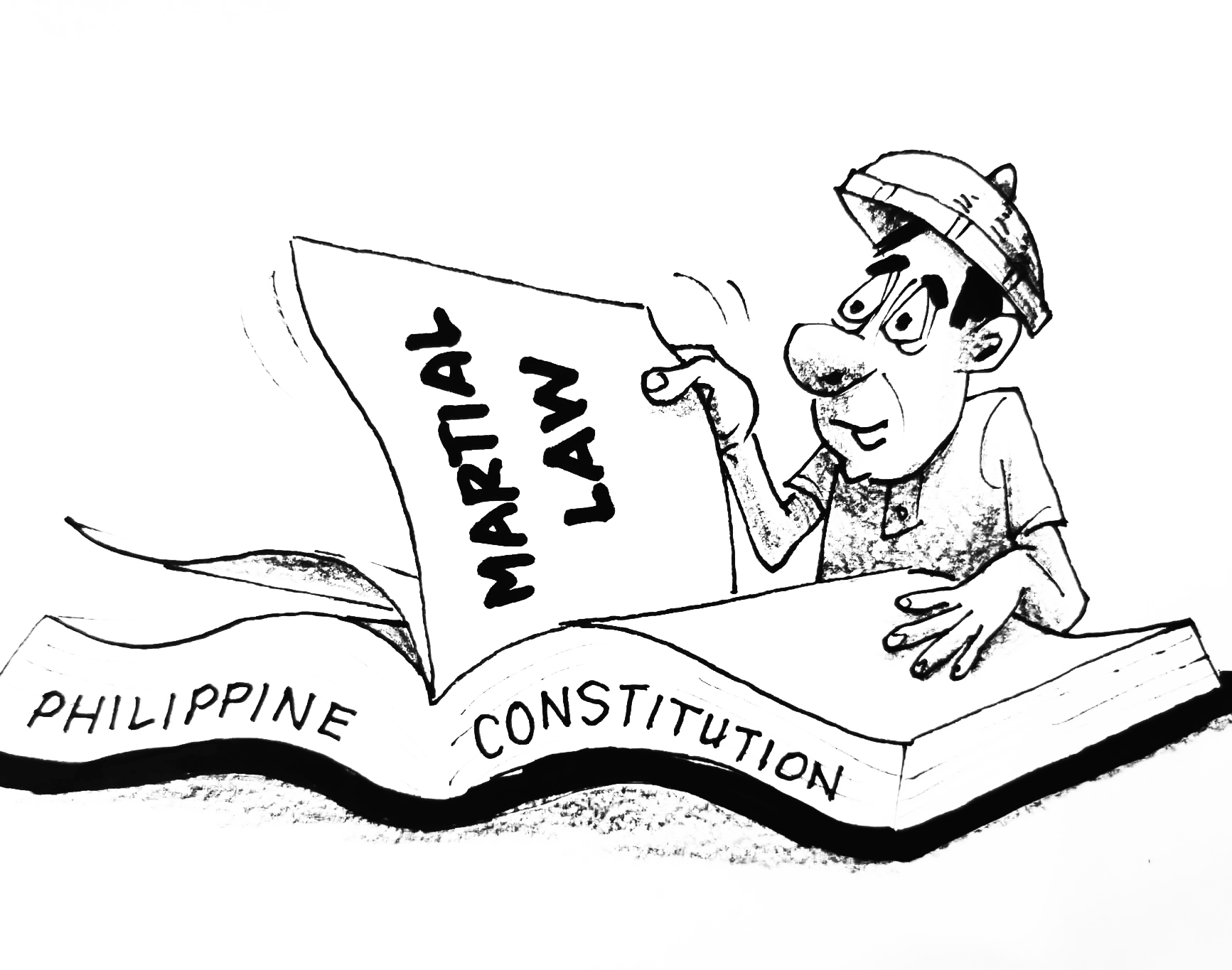
It’s quite ironic that, while some people are saying ‘never again’ to Martial Law, the same people keep on repeating the narrative when it was declared by then President Ferdinand Marcos Sr. as though they cannot move on from it.
When you say ‘never again’ to something, that means you find it despicable you can’t stand just the thought of it. If possible, you no longer want to hear anything about it as it perhaps brings to mind harrowing experiences that you never wish to think of anymore. But as it appears, this narrative seems to have been the favorite of those who claim to detest it. Do they really hate it, or are they just using it for propaganda and agitation ends?
Actually, by their unending and repetitious unearthing of this narrative and their citation of questionable figures, they are causing the people to vomit on that issue. It has snowballed into a boring history, more so that they constantly bring it up partly for political survival, so they would have something to ride on. Remembering something for a noble reason is commendable, but if it’s for the purpose of keeping the spirit of rebellion burning, then that’s even alarming.
The problem with their kind of ‘remembrance’ is the intentional omission of the event’s causes. Nothing happens without a cause, we know that. That declaration of Martial Law was just a consequence, an effect. What was its cause? This they never cite at all. They highlight the effect but cover up the cause, which explains why an effect came about. They do not cite that cause because it was obviously part of their doings, which plunged the country into chaos amid the violent protests, anarchy, and rebellion.
And how can say ‘never’ to Martial Law when it is enshrined in our Constitution? Its proclamation is lawful provided its justifying reasons exist. The head of state, whose mandate is to preserve peace and order, cannot be faulted for it. If there’s a party to blame in the event of Martial Law declaration, then it’s the people who are sowing the seeds of chaos and disorder. We say, ‘never again’ to these misdeeds.