THE Solemnity of Christ the King, which ends the current liturgical year, presents us with the gospel reading about the thief who asked Christ to remember him when Christ would enter into his kingdom. And Christ readily said: “Truly I tell you, today you will be with me in paradise.” (cfr. Lk 23,35-43).
What a heartwarming scene this is! It tells us that despite our sinfulness, we are assured always of mercy as long as we show just a bit of a sign of repentance. God is all too willing to welcome us to his kingdom.
We have to understand that God wants to establish his kingdom with us who are most of the time sinners. That is why when some Pharisees asked Christ when the Kingdom of God will come, he answered that “the Kingdom of God is within you.” (Lk 17,21) Now, it is all up to us if we want to be part of that kingdom!
We really do not have to look far to find the Kingdom of God. It is already with us as long as we repent of our sins and express our desire to be with God. It is as simple as that!
Our defects, failings, sins and all that should not be a permanent obstacle to be part of God’s kingdom. On the contrary, they should bring us closer to him, asking for forgiveness and for more grace, rather than alienate us from him. If we are humble enough to be realistic about ourselves, we can readily see the wisdom of this attitude.
We all know, as an author rightly said, that “every saint has a past, and every sinner has a future.” God will do everything to bring us back to him. He has given us all the means and an all-powerful roadmap to heaven.
We may fail God many times, but he will always be understanding to us. We should be careful not to be too overwhelmed by our weaknesses and sinfulness as to fall into despair and run away from God.
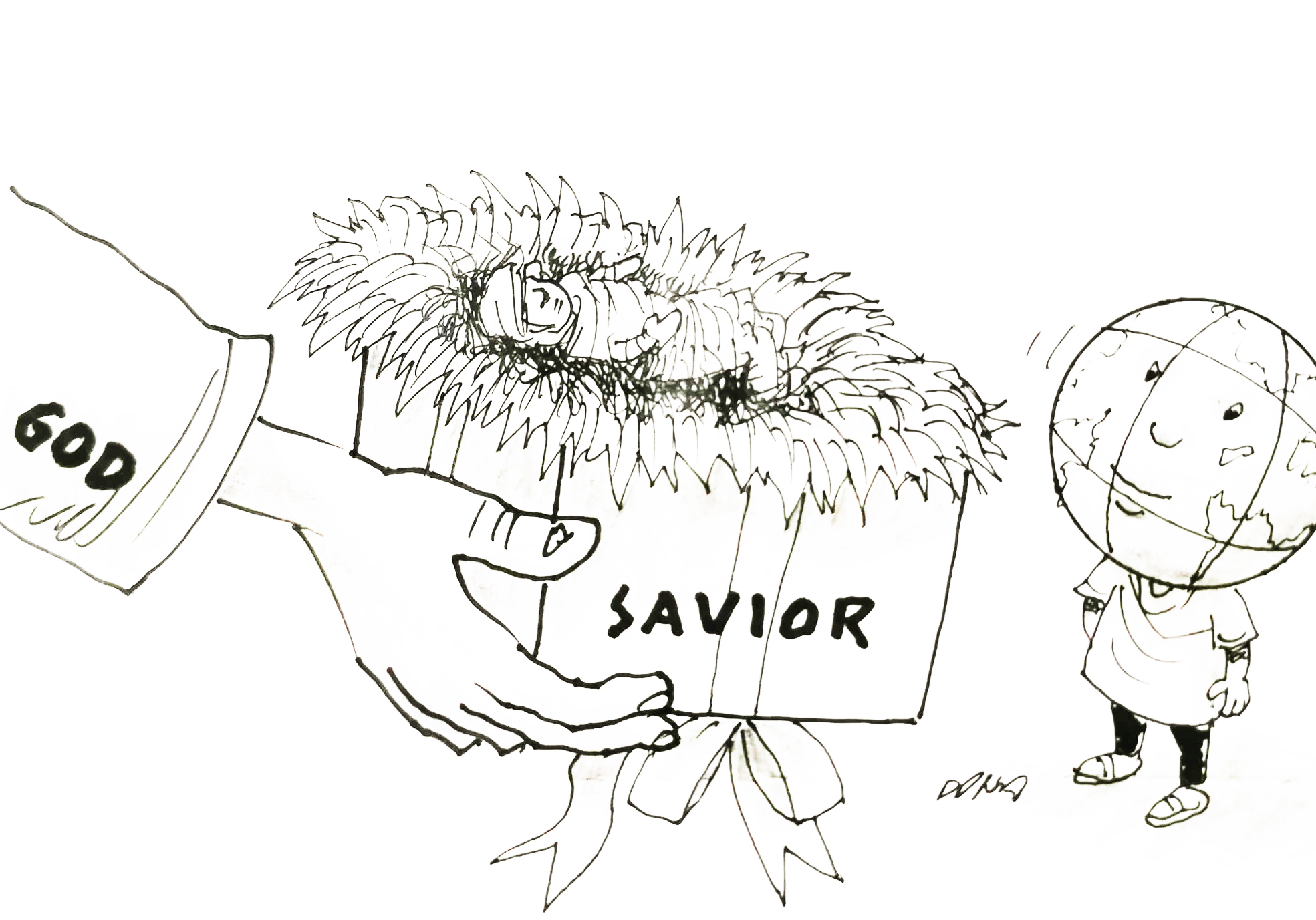
It’s precisely when we are down when God shows his greatest love for us. We should never doubt this truth which can be validated by the mere fact that God sent his Son to us, and Son became man and assumed all our sins by dying on the cross.
We obviously should not abuse the goodness and mercy of God, though we also know that somehow we cannot avoid abusing it. What we can do is to learn as quickly as possible the many precious lessons our weaknesses and sinfulness can occasion in us.
We have to remember that nothing happens in our life without the knowledge and at least the permission of God. So, if anything bad comes to us, we should always ask God: Lord, what is the purpose of all this? We know that everything happens for a reason. And the ultimate reason can only be found in God.
We have to be wary when our reaction to our errors, failures and sins would only be human, based simply on our feelings or some human consensus and other human estimation of things. These bases cannot capture the whole picture and can even distort things, aggravating things for us.
Let us make Christ, the Son of God made man, our true King. Let’s make him rule over us, in our thoughts and desires, in our words and deeds. With him, we achieve the fulness of our humanity. He does not treat us like slaves. He treats us like he treats himself.


ADB approves $3.8M to protect Phil Coral Reef
In a much welcomed move by the Asian Development Bank (ADB), specially to us Filipino marine biologists, is its recent approval of “$3.8 million worth of support for the development of insurance for the restoration, conservation and management of coral reefs in the Philippines and three other countries in ‘South-east Asia and the Pacific.”
ADB was quoted saying that “the project involves the development of cli-mate risk financing and insurance solutions to protect coral reefs in the Philip-pines, Indonesia, Fiji and Solomon Islands.”
The ADB’s initiative is likely part of the Asia Pacific Climate Finance Fund (ACLIFF), the latter is extending $2.5 million for the project, while the Global Envi-ronment Facility through the Challenge Program for the Adaptation Innovation is financing $1.3 million.
This is a boost to finance efforts to protect the coral reefs considered as first line of defense to seawater surge, tsunami and similar natural behavior instigated by climate change, too. The destructions on coral reefs are both natural- and man-made, e.g. dynamite fishing, muro ami fishing method, use of poison/toxic substances in drawing out fish from coral habitats, boat anchors dropped in dock-ing areas, etc.
Having been a frequent diver, I have witnessed how the coral populations in Boracay Island and Puerto Galera (Batangas and Manila Channels) have been broken, destroyed with steel anchors. Unreported is the status of the coral stands in Sogod Bay Southern Leyte. Hope that the Southern Leyte State University handful of marine biology researchers sustain the study of the undocumented coral population in Sogod Bay and its adjoining marine waters.
The Late and fellow marine biologist and a good friend Dr. Edgardo Gomez (a coral expert), left a legacy by “re-growing/ rehabilitating the coral population” in the Hundred Islands, Pangasinan – an area that I had done diving collection and ecological study of the marine macroalgae/ seaweeds. Hope that the younger generation of coral students maintained and sustained Dr. Ed’s noble project.
MY COMMENT:
There are only few practicing Filipino coral researchers who should be in involved in projects to preserve, conserve and maintain the country’s coral reefs. Also, as member of the Coral Reef Triangle, the Philippines need to play a bigger role in the protection of the corals in Southeast Asian waters.
ooo000ooo
NEXT TOPIC : “DA Earmarks P84 million to Increase Coffee Output”
SHARE S & T THOUGHTS through E-mail: drpacjr@yahoo.com.