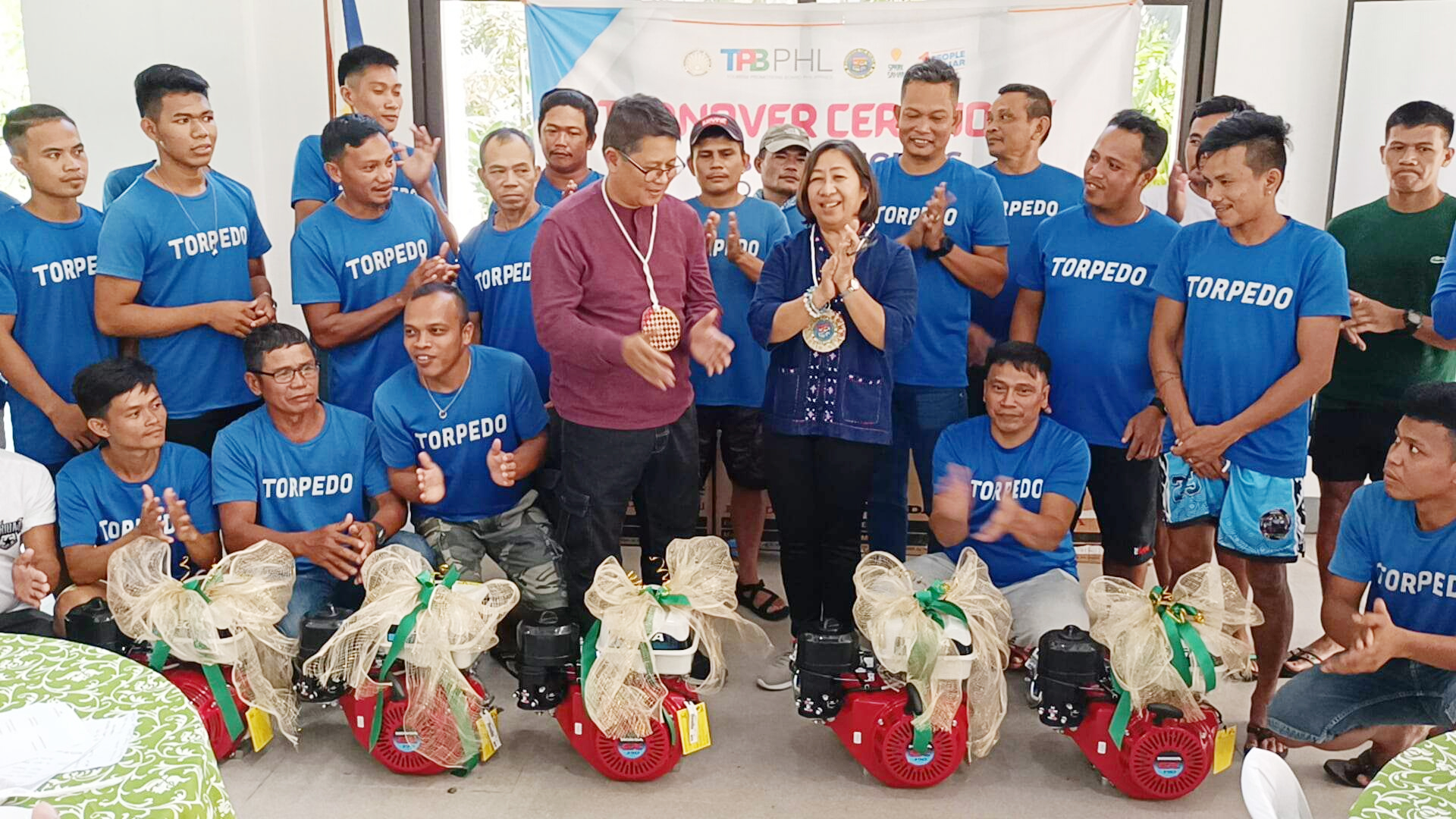
TACLOBAN CITY – At least 100 individuals from San Policarpo in Eastern Samar received livelihood assistance from the Department of Labor and Employment (DOLE).
The beneficiaries were identified for this livelihood assistance through the Public Employment Service Office (PESO) and the local government unit.
Mayor Conrado Nicart hopes that the livelihood assistance could help improve the living condition of the beneficiaries and their families.
The livelihood assistance comprises of barbeque and food vending, salon, selling dressed chicken, rice retailing, among others.
The successful beneficiaries are to receive an additional P30,000 worth of equipment after a year since they received the assistance.
Among those present during the distribution were local officials led by Vice Mayor Thelma Nicart, and representatives from the DOLE headed by provincial officer Fe Norma Valuis. (ROEL T. AMAZONA)
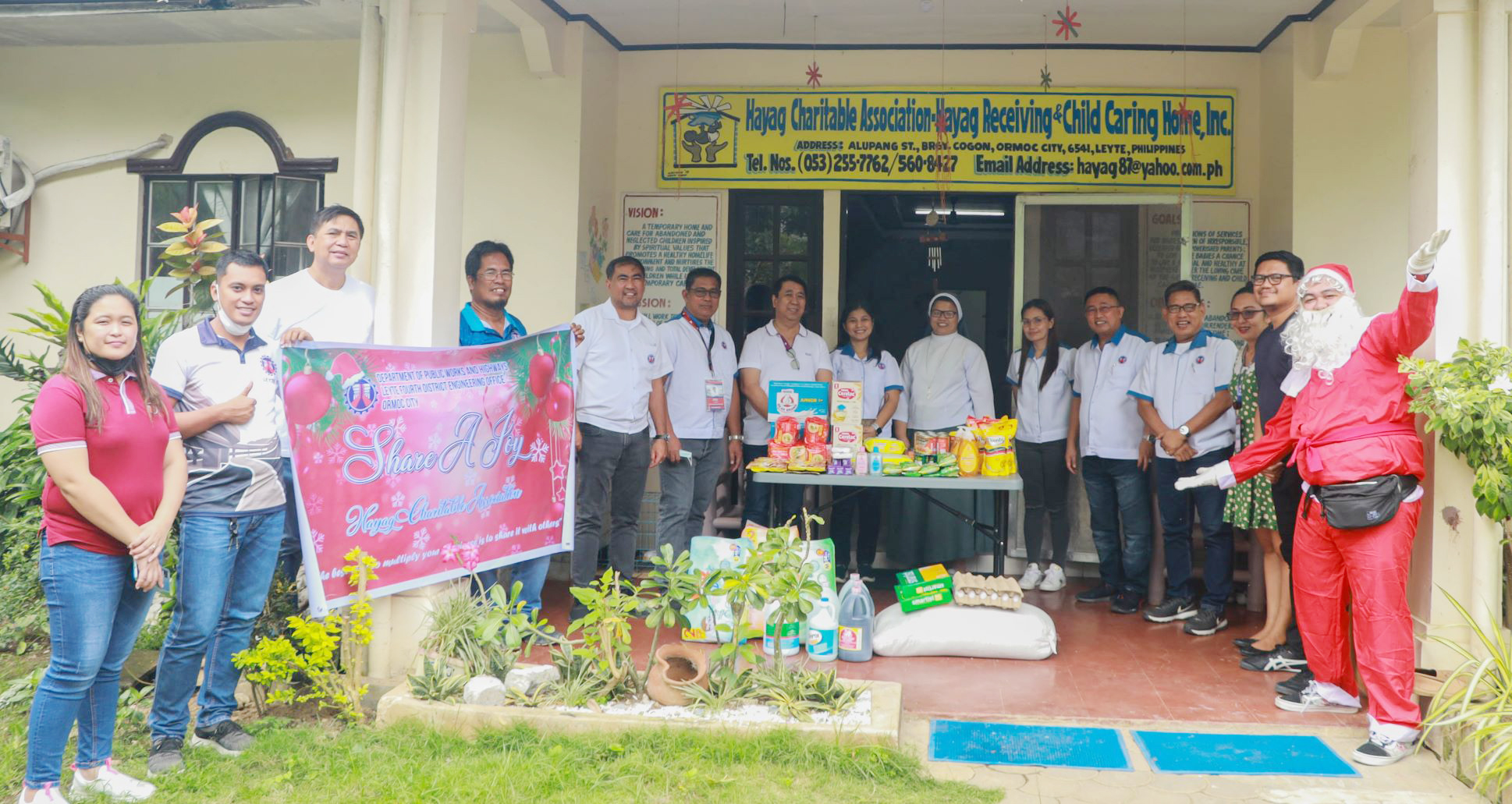
Ormoc City – Department of Public Works and Highways (DPWH) – Leyte Fourth District Engineering Office (DEO) inspectorate team inspected the on-going construction of the Philippine National Police (PNP) Building in Brgy. Linao, Ormoc City. The said inspection assures proper project implementation in the district.
The 288 square meter 2-storey building is one of the 3 police stations implemented by the DEO with a total amount of Php 29,399,993.67 funded under the General Appropriations Act CY 2022. It includes a roof deck and has provisions for telecommunications and Community Access Television (CATV) system.
“These new police buildings will provide decent and comfortable workplace for police personnel whose task primarily focuses on the safety and security of the public,” stated District Engineer Allan D. Eway. The two other police stations are strategically located in Brgy. Dolores and Brgy. Ipil in Ormoc City. (PR)
CATARMAN, Northern Samar– The Department of Public Works and Highways Northern Samar First District Engineering Office (DPWH-NSFDEO) recently inaugurated and turned over a newly completed 2-storey building to the 803rd Infantry Brigade at Camp Juan Ponce Sumoroy in Brgy. Dalakit, this town.
District Engineer Mario D. Villena of the DPWH-NSFDEO turned over the newly completed military facility to the 8th Infantry Division Acting Division Commander Brigadier-General (BGEN) Zosimo A. Oliveros, and 803rd Brigade Commander Colonel Perfecto P. Peñaredondo on October 16, 2022.
The P11.86 million project is a convergence project between DPWH and Department of National Defense (DND) under the “Tatag ng Imprastraktura para sa Kapayapaan at Seguridad” (TIKAS) program.
Works of the project involves the construction of a two (2) storey building with a total floor area of 421 sq.m. including painting and electrical works and provisions of Generator Set, Air Conditioning Units and Water Pumping System.
In an interview, Col. Peñaredondo thanked the DPWH for the implementation of the said project that greatly contribute in order for them to effectively and efficiently accomplish the organizations’ core purpose of serving the people.
BGEN Zosimo Oliveros underscored the importance of good environment in the development of personality.
“Ang TIKAS ay isa sa pinaka magandang proyekto, a convergence project between the Department of National Defense and the Department of Public Works and Highways (DPWH) under the Build Build Build Program of former President. While we are trained and operate in the jungle, we also deserve to stay in a good place after completing all operations. We need also to have better environment because for me the development of our personality, a certain or bigger percentage of that is a product of our environment. Malaking tulong na maganda yung ating facilities kasi maaliwalas yung pag-iisip natin at makapag relax tayo after sa mga trabaho natin.” BGEN. Oliveros said.
Meanwhile, District Engineer Mario D. Villena vowed that the department will continue to provide support in their future endeavors more specifically on infrastructure development of 803rd Brigade.
“We hope that this building serves as a transient quarter for our hard-working soldiers and serve a comfortable place to sleep or rest even when they are away from their homes,” DE Villena said.
He further hopes that the said project will uplift the morale of our hard-working soldiers for their selfless services to the nation especially in ensuring the security of the Filipino people.
“As defense front liners of the country, the TIKAS projects being implemented by DPWH will be a great support to our well-deserved colleagues in the Armed Forces,” he added. (ANALIZA A. PABIA, PIO ALTERNATE)
Ayala-led Globe Telecom Inc. has embarked an ambitious project to roll out the Philippines longest undersea fiber cable. Globe has sent off their state of-the-art vessel Cable Infinity to drop the undersea fiber cable that will be known as the Philippine Domestic Submarine Cable Network (PDSCN). The said vessel is operated by Kokusai Cable Ship Co. Ltd, a Japanese-owned facility.
“The PDSCN, a joint undertaking between Globe, data transmitter Eastern Communication and internet provider InfiniVAN. It seeks to improve broadband and mobile connectivity and hookup fiber to unserved areas across the country.”
The Cable infinVAN will transport the fiber cables to areas covering the 2,500 km PDSCN.
The Eastern Communications said that the “delivery of the PDSCN is expected to improve internet access in every part of the country envisioned by the partnership.”
MY COMMENTS:
The Globe project, and its 3 partners, is worth supporting by the New administration as it pushes the Philippines to an improved connectivity to hasten transactions and foster faster pace of economic recovery
ooo000ooo NEXT TOPIC : “Halal Industry have bright future for the Philippines” SHARE S & T THOUGHTS through E-mail: drpacjr@yahoo.com.
THAT’S what Christ told someone who asked him to settle the inheritance issue that person had with his brother. (cfr. Lk 12,13-21) A very common phenomenon these days, sad to say. Siblings can go into bitter quarrels and complicated litigations just because of the inheritance question.
Christ responded by saying that he was not appointed to be the judge or arbitrator of such matters. And he proceeded by giving the crowd a warning that they should be guarded against the danger of greed. “Though one may be rich, one’s life does not consist of possessions,” he said.
He then told a story that concluded with the lesson that what matters most is that we should be rich in the things of God, rather than in the things of the world that in the end will not last forever.
Since we are in the middle of the world, immersed in our temporal and earthly affairs, we should see to it that we do not lose sight of what is important and essential in our life. The things of this world are at best only means and instruments for us to grow in our love for God and for others. We should be wary of the constant danger of our heart being trapped by the things of this world, displacing God from our heart.
To be rich in what matters to God is not so much a matter of how much wealth and possessions we have as it is of how much love we have for God which is always translated in our love for the others, expressed in deeds and not just in intentions.
We may be rich or poor in our worldly standards, but what should be pursued with extreme care and seriousness is that our heart gets filled with love for God and love for the others.
Yes, one can be rich materially—he can be a millionaire or a billionaire—but he should see to it that he fits the category of what one of the beatitudes regarded as “poor in spirit” because in spite of or even because of his great wealth, his heart is fully for God and for the others.
This, of course, will require tremendous struggle and constant purification and rectification of our intentions and ways, given the fact that we are always prone to get attached to the things of this world and to the ways of greed, envy and the like.
We have to continually check ourselves especially these days when we are bombarded with many tantalizing and intoxicating things that can capture our heart and remove God from it. It always pays to lead a very simple and austere life in spite of the great wealth that we may have.
And to be clear about this also: that the more wealth we have, the greater also would be our responsibility to show our love for God and others with deeds. The scope and range of that love should grow exponentially, so to speak.
We should be wary of our tendency to get complacent in this duty of living true Christian poverty and detachment. We really have to fight tooth and nail against this tendency because the likelihood for us to fall for this sweet poison of the new things today is high.
At the end of the day, we should be able to say that with our struggles and rectitude of intention, we are truly getting rich in matters to God!
Up to now, the president has yet to choose a secretary for the Department of Agriculture that could lead the agency and help the country’s farmers in general. Indeed, our farmers need help in many aspects, and these have to be addressed by the government.
Despite the many advances modern agricultural technology has made, many of our upland farmers in remote areas are still backward with their farming methods, depriving them of good produce, and impairing the soil they till into becoming more and more unfit for planting.
The farmers behind the kaingin method are good examples of this. They would cut the weeds, including the trees standing in the area, and then burn everything to the ground later. This is a practice that remains rampant in rural areas due to the belief that the ashes contribute to the soil’s enrichment and fertility.
The clearing may prove yet fertile during the first planting season. But the soil, given this cut-and-burn procedure, becomes barren in the long run as the cut grasses and all that could have been allowed to decay to enhance soil fertility, are being burned instead, depriving the soil of natural fertilizers.
In an agricultural country like ours, such farming practices should have been corrected long ago. Agricultural experts, backed by the Department of Agriculture, should intervene through information dissemination that may be followed by constant monitoring to confirm the farmers’ implementation of what they learn.
Authorities should ensure this knowing that some unlettered farmers are so stubborn enough that they just stick to conventional farming that they have learned from their forbears. They tend to reject modern methods that prove alien to them.
To reach these farmers, local radio stations may be tapped. All sorts of gimmicks may be employed to get their attention to a radio program that could help them become effective farmers through various methods. Moreover, the particular problems encountered in their respective areas must be addressed to ensure the relevance of discussions.
Lastly, such information drive must observe consistency, if not perpetuated on air so that farmers who operate on fallacies and ancient practices would become more productive and well off. One-time airing of such educational radio programs will not suffice as the majority of farmers may not be able to hear it. A repetition of the same may prove better.
This could be the most appropriate empowerment we could give to our lowly farmers now when everything seems to have been modernized. It would be ironic for farmers to remain ancient with their farming strategies when better techniques can make them more productive, hence assets that the country can count on.