Fear gripped the entire village with everyone finally believing that Linda was a victim of unseen beings. This after every man, both married and unmarried, swore to the village chief during their one-on-one interrogation that they never touched her. The girl herself confirmed that, without a boyfriend or husband, no one had sexually touched or molested her.
At dusk, every late afternoon, all girls and ladies of the village who were capable of conceiving and bearing a child had to stay inside the house, hushed and behaving well per recommendation from the village council composed of elderly men and women. Only males could get out on errands at night for various concerns. They could not imagine the fact that a young lady in their village would get pregnant despite having no contact with a man. Only a spirit from the nearby trees and mountains could have done it.
But a man named Tomas, noted for his practical wisdom and philosophical ideas, was the only one in their village who was not convinced. He believed nothing happens without a real cause. And he could not believe it was the doings of unseen beings. So he decided to have his probe, aiming to find some reliable truths by asking specific questions.
Linda, who was luckily cooperative, was willing to answer his queries. He then learned from her that, before her pregnancy, she frequented the nearby creek to do the laundry. She pointed to him the rock on which she sits down to wash their clothes, and the little pool where she rinses out those clothes, her half, lower body submerged in it. These gave Tomas some brilliant ideas that drove him to further search for truths.
The next thing he did was to trace the creek upstream, wanting to find out more. He walked against the cascades of flowing water, sometimes forming mini-waterfalls, at times a wider pool of crystal-clear water. A few minutes later, he came across a clearing, the creek still traversing its midst. There, he saw Oscar, a young farmer who was cultivating the soil. Tomas greeted him, not divulging his real purpose in going there. He just chanced upon this farm, he claimed, which was somehow true.
But the presence of a man there made him suspect something, so he started asking questions, making sure the young man would not wonder. Tomas learned that Oscar was not only unmarried but had no girlfriend, too, oftentimes alone at work to support his family that survived his father’s death years ago. These were hints enough for Tomas to ask his final questions. “How do you manage your sexual needs?” he asked with a smile, almost jokingly.
The young man smiled and, seeing that he was talking to a man like him, he hardly hesitated to admit that he resorted to self-manipulation till he reached the peak. He revealed that he preferred to do it in the creek, under a shady tree, so he could easily clean his hands and all. Having said that, he grinned at his visitor, who smiled back with contentment.
As Tomas walked back to their village, he tried to reconcile some things. His mind was now rid of doubts, as clear as the blue sky above him. He knew he found the answer, and it was a better, more reliable answer. He sighed with relief and felt amused with his discovery. It was just a matter of explaining to the village council, and he would be able to resolve the case that had perplexed the entire village.
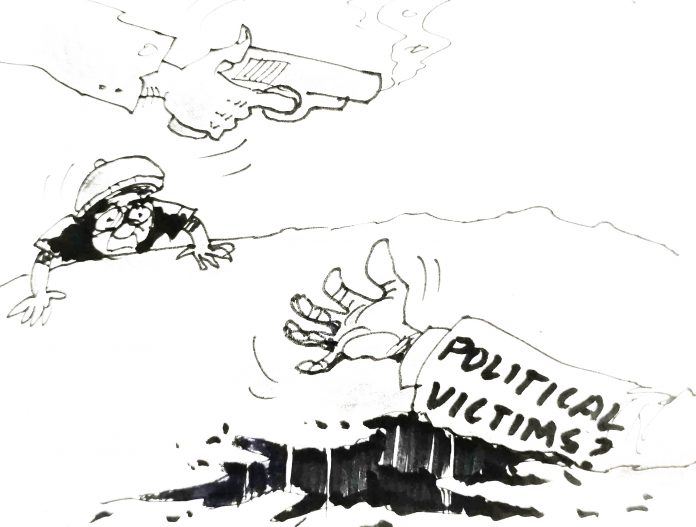
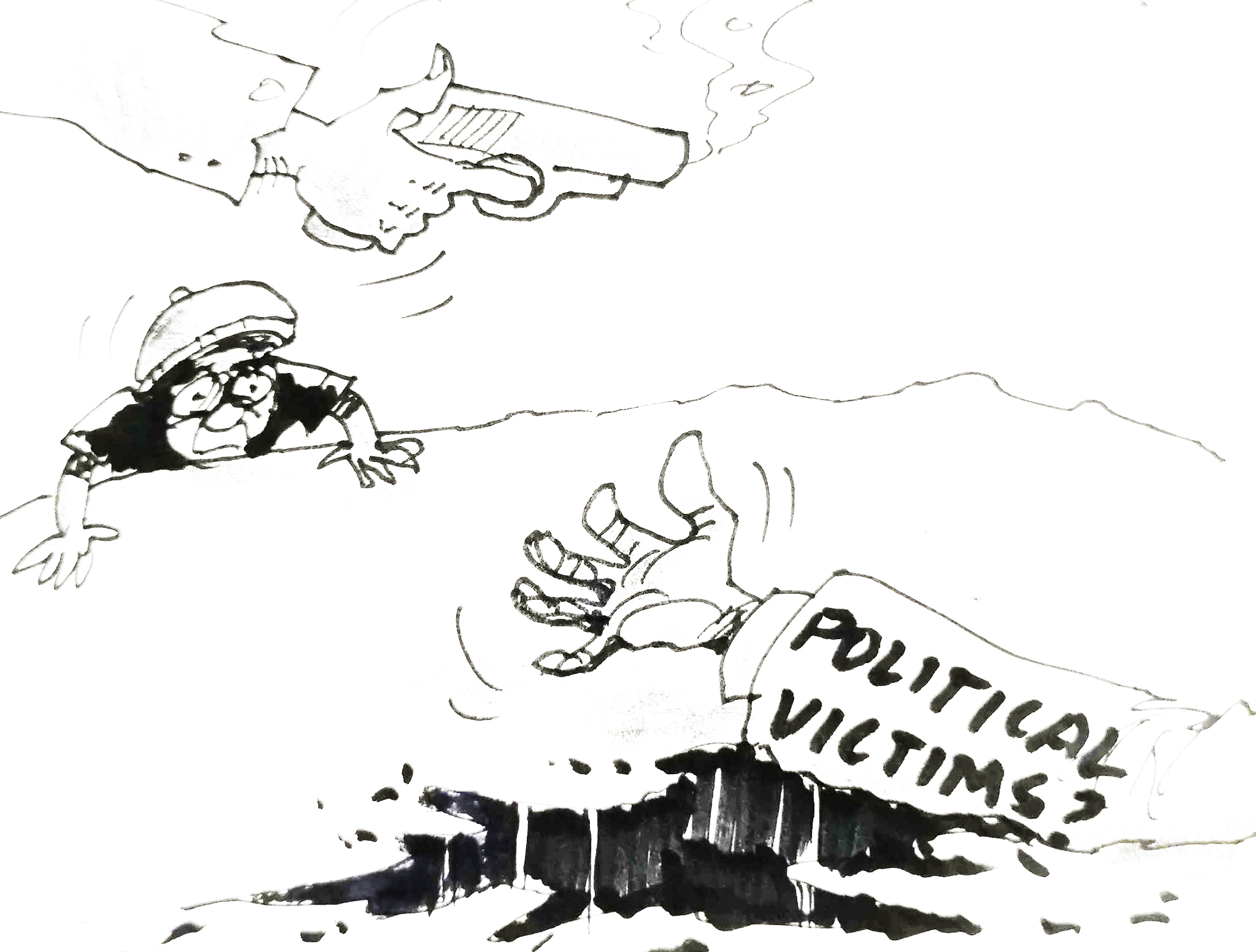
There have been killings lately and attempts to do so among elective government officials in certain parts of the country, and this is quite an alarming fact since, though the elections are over, such incidents still happen.
It is easy to cite politics as the motive behind these gruesome acts, the reason being that no other reasons are grave enough to provoke murder. Had these officials been linked to illegal drugs, we could blame the drug war for it—but this is still a policy that was espoused by the past regime, not by the present one. Business rivalry is also too shallow for a killing resort, and so is infidelity to a love partner if ever there is.
Politics, then, is the most potential reason, given the kind of political maneuverings that we have had in this country. Ours is a dirty politics, as has been proven time and again, and one attribute of which employs the filthy tactic of killing opponents. But this doesn’t mean personal encounters of political rivals drawing their pistols to shoot each other like what happens in wild West movies. They use men for hire, of course.
This brings us to the dire need to dismantle political armed groups otherwise known as private armies. Some powerful politicians who aim to perpetuate themselves in power are said to be maintaining these, not just for protection, but also to advance their ambitions and, most alarmingly, to annihilate their potential rivals. This calls for an iron fist and political will from the national government, which we don’t seem to have at the moment.
For as long as private armies, gunmen for hire, and other such elements exist, the likelihood of politically-motivated killings will prevail in this country and even turn rampant during the election seasons when politicos clash for the electorates’ support.
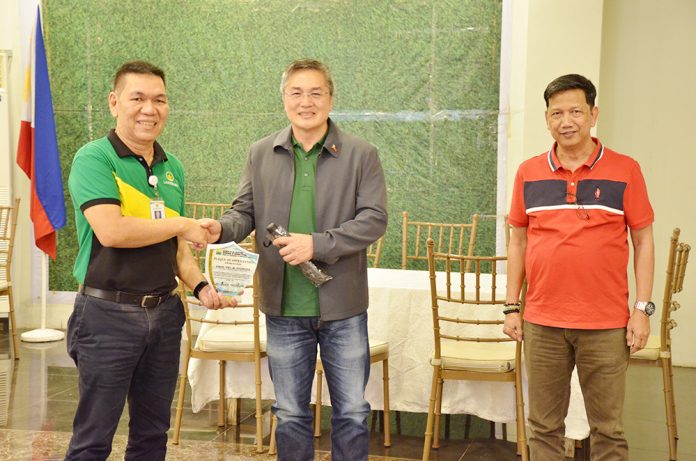
Department of Agrarian Reform (DAR) Eastern Visayas Regional Director Robert Anthony Yu presented plaques of appreciation to Comprehensive Agrarian Reform Program (CARP) implementing agencies for their continued support in fast tracking land distribution activities in the region.
(JOSE ALSMITH L. SORIA)
CATARMAN, Northern Samar – Field validation teams (FVTs) personnel from the Department of Agrarian Reform (DAR) in Northern Samar received 16 brand-new motorcycles — Honda XR150Ls – to expedite the parcelization of the collective Certificate of Land Ownership Awards (CCLOAs) in the province.
Department of Agrarian Reform (DAR) Eastern Visayas Regional Director Robert Anthony Yu presented plaques of appreciation to Comprehensive Agrarian Reform Program (CARP) implementing agencies for their continued support in fast tracking land distribution activities in the region. (JOSE ALSMITH L. SORIA)
DAR Secretary Conrado Estrella III said the motorcycles would play a crucial role in the conduct of field validation activities, especially in areas where access roads are less conducive for four-wheeled vehicles.
Comprehensive Agrarian Reform Program (CARP) implementing agencies renew their commitment of support to fast-track land distribution activities in Eastern Visayas. (JOSE ALSMITH L. SORIA)
Engr. Jose M. Balberde, Provincial Agrarian Reform Program Officer II expressed his gratitude to the department thru the DAR Secretary for his active efforts and immediate response to address the needs of the FVTs, particularly in the validation of landholdings and field investigations under Project SPLIT implementation.
“This is one of the programs of DAR thru the efforts of Secretary Estrella, as a response to President Ferdinand R. Marcos Jr.’s mandate to expedite the distribution of the individual land titles to the agrarian reform beneficiaries (ARBs) to strengthen land tenure security towards the improvement of their quality of life,” he said.
He disclosed that far-flung barangays in some municipalities are difficult to travel for four-wheeled vehicles and the appropriate mode of transportation is a motorcycle. With the provision of these motorcycles, field personnel, and FVTs can easily access these areas, especially in the conduct of field validation.
“The 16 newly delivered motorcycles are part of the 820 units that the Department had procured at an aggregate cost of P123 million,” he said.
After receiving the sixteen (16) units of motorcycles from the Regional Office, the DAR-Northern Samar conducted a blessing of these units to turn over to FVTs.
Project SPLIT is a World Bank-funded project of DAR. This project aims to improve the security of tenure and strengthen the property rights of the ARBs through the subdivision of collective Certificate of Land Ownership Awards or CCLOAs into individual titles.
The province also received a one-unit multi-function laser photocopier machine. (PR)
Canadian Ambassador David Hartmann and Elena C. Agala on a courtesy visit to the Canadian Embassy in the Philippines.
Violence become the new normal in the Philippines this late. One Senator calls our reality an ‘open season for killings’ and that is actually alarming.
Canadian Ambassador David Hartmann and Elena C. Agala on a courtesy visit to the Canadian Embassy in the Philippines.
The weekly news of ambushes and assassinations had become something of a boring topic that even with Filipinos’ penchant for controversial topics had become something that is unanimously alarming.
However, there are silver linings that even without the controversial label are worthy of a second gaze and even a closer look. And good news such as this must be given platform
The Rotary World Help may be a lesser known organization but its social impact to developing countries like the Philippines is huge.
Social Impact as described by University of Pennsylvania as : A focus first on achieving social impact – i.e., a meaningful improvement in the lives of others . The Rotary World Help is practicing Collaborative Philantrophy ;Collaborative philanthropy, also known as impact philanthropy, is defined as investors and nonprofits working together towards a social cause. Rotary World Help’s history is in a nutshell about the results it achieves Rotary started with the vision of one man — Paul Harris. The Chicago attorney formed the Rotary Club of Chicago on 23 February 1905, so professionals with diverse backgrounds could exchange ideas and form meaningful, lifelong friendships.
In Canada in 1993, the late Ted Segodnia together with fellow Vancouver club Rotarians, Bill Richwa and Ralph Towsley, organized the first shipment of medical supplies and equipment to Kiev. Bill, Ted and their wives went to Kiev to oversee the distribution of the supplies.
At the center of this effort in the Rotary World Help for the aid distribution in the Philippines is Ms. Elena Cordero Agala, a transplant to Vancouver Canada by way of Oras Eastern Samar.
With millions of dollars worth of aid to the marginalized communities in Eastern Visayas and other parts of the country to date, she agreed to have a second interview with this writer.
Rotary World Help as represented by Elena C. Agala was able to give container vans with books, medical supllies(medial beds, beddings tables,) computers, canned goods, childrens’ toys, and even a fire truck to some recipients mostly in Eastern Visayas.
Recent distribution includes the Palarao Elementary School in Leyte, Leyte;and the Bonifacio Bulante Elementary School in Tacloban City.
The Rotary World Help also organized International Dental Mission where they brought in Canadian dentists treat hundreds of Filipinos.
In all the organization was able to do this with the help of its club members in Canada and at the center of the efforts is Elena Cordero Agala , its board member and the spearhead of the efforts in the Philippines.
From 2002, the Rotary World Help was able to ship 430 container vans with an estimated USD 150 Million worth of goods to 61 countries including Ukraine and the Philippines.
Thus, in spite of the violent world and seemingly selfishness of the many, they, the Rotary World Help, had shown a whole new approach of giving. That of pooling their own resources, raising funds on their own and spending them to purchase goods to be given to people they don’t know and obviously incapable of repaying that kindness.
Elena Agala’s recent visit was in August 2022 and doing the giving for a month, using her own funds and bringing in the Rotary World Help Container Vans, she came back again this February with more goods to give, more time to spend and more smiles to get.
“We should never get tired of sharing whatever we can so people would also be motivated to do the same,” she said.
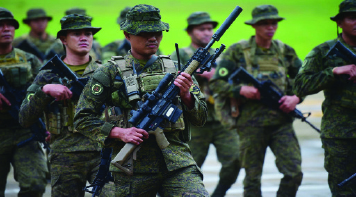
More than 560 newly-graduate soldiers were deployed to different Army units in the region in another effort to finally quell Eastern Visayas long-running insurgency problem.
TACLOBAN CITY — Over 560 new soldiers were deployed to different Army units across the region on Wednesday (March 8) in another move to help end Eastern Visayas’ problem on insurgency.
More than 560 newly-graduate soldiers were deployed to different Army units in the region in another effort to finally quell Eastern Visayas long-running insurgency problem.
The 564 soldiers, 27 of who were women, had just completed their basic military training last February 20 and were immediately deployed to the various units of the 8th Infantry Division.
Major General Camilo Ligayo, the 8th ID commanding general, led the send-off ceremony as he expressed confidence in the new privates’ ability to succeed in fighting the New People’s Army, the armed wing of the Communist Party of the Philippines.
“After hurdling the rigorous training, it is with great expectations that you are physically, emotionally, and psychologically prepared to face the multifarious challenges ahead,” Ligayo told the newly-minted soldiers.
Aside from addressing the insurgency problem, the new soldiers will also be ready to conduct any humanitarian efforts, especially during a disaster situation, Ligayo added.
The 8th ID is targeting to end the insurgency problem of the region within three to six months of this year.
Earlier, elite members of the Scout Rangers and soldiers from the 42nd Infantry Brigade and 74th IB were also deployed particularly to Northern Samar where four of the five remaining guerilla fronts are operating. (ROEL T. AMAZONA)
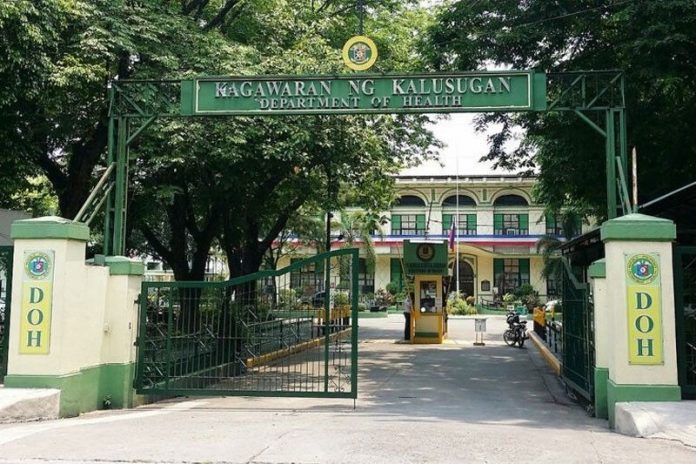
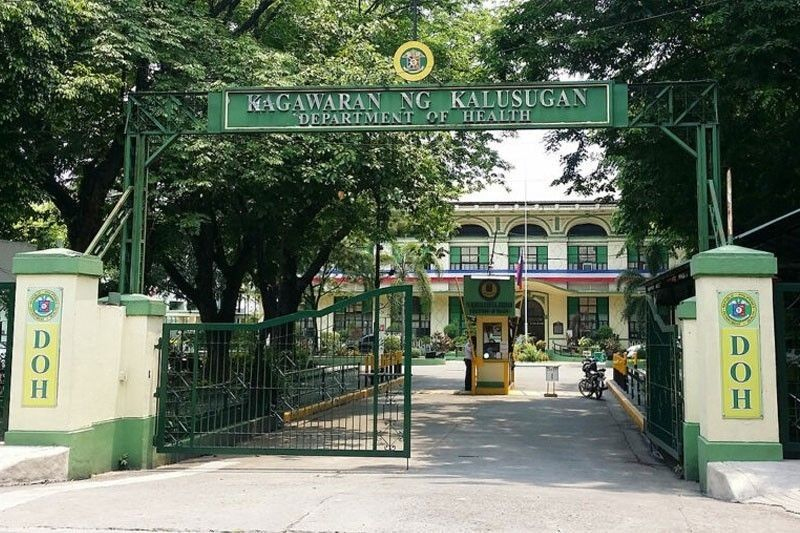
GOVERNMENT CENTER, PALO, Leyte– The Department of Health reported that there region has 331 cases of hand, foot, and mouth (HFM) cases since the start of the year.
This was disclosed by the health agency’s regional information officer, Jelyn Malibago, adding that most of the affected had ages ranging from zero to 17 years old.
Malibago clarified that HFMD is a virus and is not deadly but is highly contagious.
“It can be cured with or without treatment. However, it depends on the variant of the virus if the affected person will not manage, it will result in polio, paralysis, meningitis, and other possible complications,” she said.
Malibago said that 50 percent of the cases originated from the community while other sources were from homes and daycares.
Among the symptoms of HFM include fever, sore throat, and rashes.
DOH also provides public advisory to always practice preventive measures like proper hygiene, wearing facemasks, and washing of hands with soap. Isolation is advised to the infected people.
Wearing personal protective equipment is advised for every healthcare worker. Parents and guardians are advised not to take their children off to school when they have symptoms. (ELLA MAE M. RITA, LNU Student Intern)




The researcher
Fear gripped the entire village with everyone finally believing that Linda was a victim of unseen beings. This after every man, both married and unmarried, swore to the village chief during their one-on-one interrogation that they never touched her. The girl herself confirmed that, without a boyfriend or husband, no one had sexually touched or molested her.
At dusk, every late afternoon, all girls and ladies of the village who were capable of conceiving and bearing a child had to stay inside the house, hushed and behaving well per recommendation from the village council composed of elderly men and women. Only males could get out on errands at night for various concerns. They could not imagine the fact that a young lady in their village would get pregnant despite having no contact with a man. Only a spirit from the nearby trees and mountains could have done it.
But a man named Tomas, noted for his practical wisdom and philosophical ideas, was the only one in their village who was not convinced. He believed nothing happens without a real cause. And he could not believe it was the doings of unseen beings. So he decided to have his probe, aiming to find some reliable truths by asking specific questions.
Linda, who was luckily cooperative, was willing to answer his queries. He then learned from her that, before her pregnancy, she frequented the nearby creek to do the laundry. She pointed to him the rock on which she sits down to wash their clothes, and the little pool where she rinses out those clothes, her half, lower body submerged in it. These gave Tomas some brilliant ideas that drove him to further search for truths.
The next thing he did was to trace the creek upstream, wanting to find out more. He walked against the cascades of flowing water, sometimes forming mini-waterfalls, at times a wider pool of crystal-clear water. A few minutes later, he came across a clearing, the creek still traversing its midst. There, he saw Oscar, a young farmer who was cultivating the soil. Tomas greeted him, not divulging his real purpose in going there. He just chanced upon this farm, he claimed, which was somehow true.
But the presence of a man there made him suspect something, so he started asking questions, making sure the young man would not wonder. Tomas learned that Oscar was not only unmarried but had no girlfriend, too, oftentimes alone at work to support his family that survived his father’s death years ago. These were hints enough for Tomas to ask his final questions. “How do you manage your sexual needs?” he asked with a smile, almost jokingly.
The young man smiled and, seeing that he was talking to a man like him, he hardly hesitated to admit that he resorted to self-manipulation till he reached the peak. He revealed that he preferred to do it in the creek, under a shady tree, so he could easily clean his hands and all. Having said that, he grinned at his visitor, who smiled back with contentment.
As Tomas walked back to their village, he tried to reconcile some things. His mind was now rid of doubts, as clear as the blue sky above him. He knew he found the answer, and it was a better, more reliable answer. He sighed with relief and felt amused with his discovery. It was just a matter of explaining to the village council, and he would be able to resolve the case that had perplexed the entire village.