
27.2 C
Tacloban City
October 04, 2026 - Sunday | 6:04 PM
Home Blog Page 128

11 Leyte towns achieve peace milestone, eye increased investments and development

0
Commitment to Peace and Development: Mayors from 11 municipalities in Leyte’s second district sign a memorandum of understanding (MOU) during the declaration of Stable Internal Peace and Security Condition (SIPSC) on May 29, 2026. The declaration recognizes the municipalities’ sustained peace and security efforts and reinforces their commitment to fostering development, attracting investments, and improving the welfare of their communities.(8th ID)

TABONTABON, Leyte— Eleven municipalities in Leyte’s second district have been formally declared as having attained a Stable Internal Peace and Security Condition (SIPSC), a milestone that local officials believe will strengthen investor confidence, spur economic activity, and accelerate development across their communities.

The May 29 declaration, led by Maj. Gen. Peter Burgonio, commander of the 8th Infantry Division, marks the culmination of years of peace and security efforts by local government units, security forces, and community stakeholders aimed at eliminating insurgency-related threats and maintaining public safety.

Among the municipalities granted SIPSC status were Tabon-Tabon, Dulag, Capoocan, Tunga, Mayorga, Pastrana, La Paz, Dagami, Julita, MacArthur, and Barugo.

Tabon-Tabon Mayor Efren Redoña said the declaration sends a strong signal to potential investors that the municipalities are safe and ready for business expansion and economic growth.

“Peace and order are essential for development. Investors are more likely to establish businesses in municipalities where security and stability are assured,” he said.

Although Tabon-Tabon was not considered a major insurgency hotspot, Redoña noted that its location previously made it a transit area for members of the New People’s Army (NPA) moving between neighboring municipalities.

The SIPSC declaration is part of the government’s broader campaign to address insurgency through a whole-of-nation approach that combines security operations, governance reforms, infrastructure development, and the delivery of basic services to conflict-affected communities.

Military officials said the recognition signifies that local governments and communities have demonstrated their capability to sustain peace, prevent the resurgence of insurgent influence, and maintain a secure environment conducive to development.

Of the 14 municipalities comprising Leyte’s Second District, only Carigara and Jaro have yet to receive SIPSC status.

Burauen became the district’s first municipality to earn the declaration in September 2024.
Local officials expressed optimism that the peace milestone will encourage more investments in agriculture, tourism, commerce, and small-scale industries, creating employment opportunities and improving the quality of life for residents.

For the military and local government leaders, the declaration is not merely a recognition of improved security conditions but also a foundation for long-term economic progress and sustainable development throughout Leyte’s Second District.

(LIZBETH ANN A. ABELLA)
14,000 Eastern Samar farmers, fisherfolk receive aid to boost farm and fishery production

0
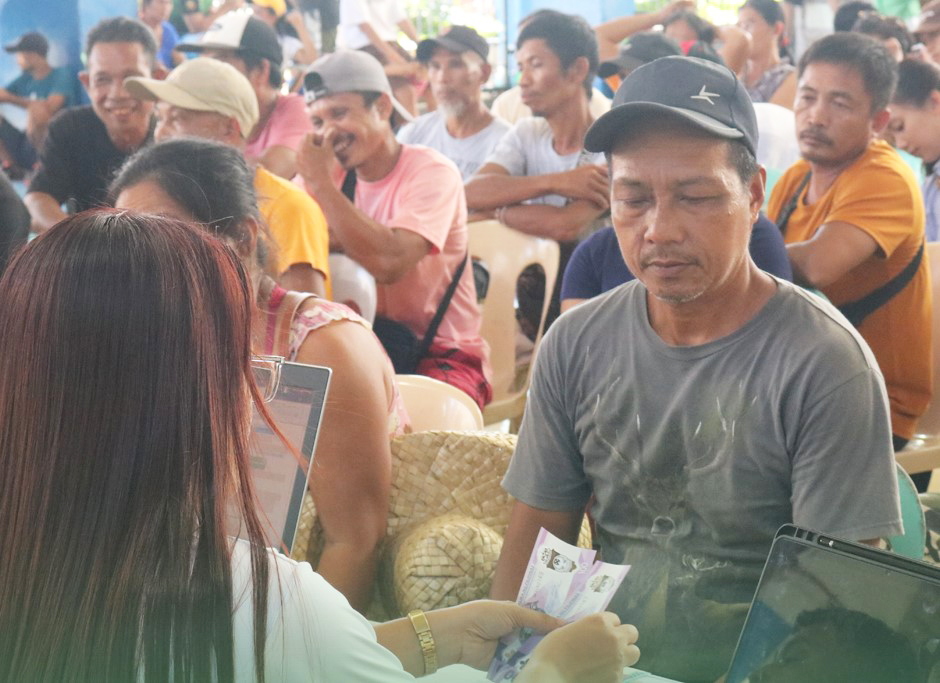
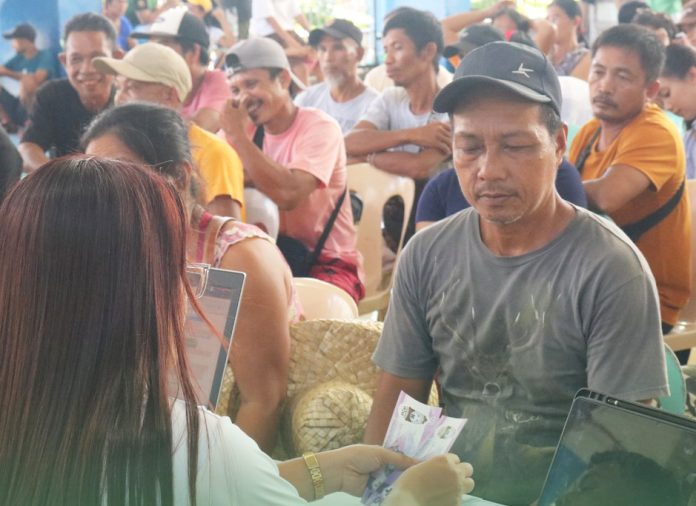
SUPPORT FOR FOOD PRODUCERS.Farmers and fisherfolk from Eastern Samar receive financial assistance under the Presidential Assistance for Farmers and Fisherfolk Program (PAFFP) during a payout caravan conducted by the Department of Agriculture Regional Field Office 8. The program aims to help beneficiaries cope with rising production costs and sustain agricultural and fishery activities in their communities. (DA Regional Field Office 8).

TACLOBAN CITY — More than 14,000 farmers and fisherfolk in Eastern Samar have received government financial assistance aimed at strengthening agricultural and fishery production, easing the burden of rising input costs, and helping rural communities prepare for the next planting and fishing seasons.

The assistance was distributed through a three-day payout caravan under the Presidential Assistance for Farmers and Fisherfolk Program (PAFFP), implemented by the Department of Agriculture Regional Field Office 8 (DA RFO 8) across 10 municipalities in northern Eastern Samar.

The program forms part of the national government’s efforts to support food producers facing increasing production expenses, including fuel, fertilizers, seeds, farm labor, and other operational costs that have affected the agriculture and fisheries sectors in recent years.

Under the initiative, beneficiaries received direct cash assistance that they can use for farm and fishing-related expenses, helping ensure the continuity of their livelihood activities and maintain productivity.

For rice farmer Aldrin Nofies of Oras, the assistance will help cover fuel expenses for his farm machinery, a critical component of his farming operations.

“The assistance we received is a big help. I can use it to buy diesel for the tractor I use in farming. With the high cost of diesel and labor, this aid can help cover some of our farming expenses,” Nofies said.

Pablo Mengullo, a rice farmer from San Policarpo, said the financial support comes at a crucial time as farmers continue to face increasing costs of agricultural inputs and household necessities.

“It is a big help because we no longer have to worry about where to get funds for some of our farming expenses. Prices of the things we buy are already high, and money is spent quickly. What we received can help sustain our farming operations,” Mengullo said.

For farming couple Lheona and her husband from Dolores, the assistance will help pay for farm workers and support their small rice farming operation.

“Even if the assistance is small, it is already a big help because we can use it to pay workers who help us in the field,” Para said.

To supplement the family’s income while waiting for the next harvest, she has also ventured into backyard vegetable production.

“I do not rely only on rice farming. I also plant vegetables so that we have something to cook and additional food for the family,” she added.

According to DA guidelines, beneficiaries must be registered under the Registry System for Basic Sectors in Agriculture (RSBSA), while fisherfolk recipients must be enrolled under the Boat Registration (BoatR) system.

Eligible rice farmers must cultivate no more than two hectares of land and must have been actively engaged in rice production during periods of market disruption and economic challenges.

The Department of Agriculture said the PAFFP was designed to provide immediate financial relief while helping farmers and fisherfolk remain productive despite rising costs of fuel, fertilizers, feeds, labor, and other essential inputs.

Beyond providing short-term assistance, the program is expected to contribute to food security efforts by helping ensure that farmers and fisherfolk can continue producing food and sustaining their livelihoods amid economic pressures.

DA RFO 8 said the continued implementation of the program reflects the government’s commitment to supporting the agriculture and fisheries sectors, which remain vital to the region’s economy and food supply.

(ROEL T. AMAZONA)

Corrupting the youth

0

The younger generation is growing up in a time when many public leaders show a troubling example of what power can become without integrity. Citizens see officials accused of corruption, misuse of authority, dishonesty, and self-interest. This is not only disappointing; it teaches a dangerous lesson to the nation’s future.

Leadership carries a responsibility beyond governance. Leaders are visible role models, especially in societies where public figures frequently appear in the news. When those in public office engage in political grudges, manipulate institutions for personal gain, or treat public funds as their own, they send a message that success is based not on skill, character, and service but on influence, deceit, and greed. Young people watch these behaviors closely. Whether they realize it or not, they absorb the standards set by those in power.

The damage goes beyond politics. Corrupt leadership changes public values over time. Students may begin to doubt the value of honesty when dishonesty seems to be rewarded. Workers may lose trust in merit when connections seem more important than qualifications. Entrepreneurs may feel disheartened when corruption skews fair competition. A nation cannot expect its youth to uphold principles that many leaders openly ignore. The character of future generations is shaped not only by what schools teach and parents preach but also by what society celebrates and tolerates.

Equally concerning is the cycle of poverty that often follows corrupt governance. Resources meant for education, healthcare, infrastructure, agriculture, and social services dwindle when public funds are wasted, mismanaged, or stolen. Citizens end up with poor services, limited opportunities, and ongoing economic struggles. Meanwhile, some politicians focus on maintaining power, building political dynasties, and attacking rivals instead of addressing the issues that affect everyday families. Young people raised in such an environment may become cynical, seeing public service as just another path for personal gain rather than a noble pursuit. This mindset undermines the foundation of democratic government.

This trend cannot be accepted as normal. Citizens must demand better standards from those seeking public office and hold accountable those who betray the public trust. Schools, families, religious institutions, civil society organizations, and responsible media should continue to teach integrity, responsibility, and respect for the law. The nation’s future relies not only on the leaders it elects today but also on the values it instills in the next generation. If the country wants honest and capable leaders in the future, it must reject corruption and the abuse of power today

Timing and priority

0

The Senate session hall has once again become a stage for a familiar national argument. This time, key figures are questioning the timing of the planned restart of the Senate Blue Ribbon Committee’s investigation into alleged corruption in flood-control projects. They insist that the impeachment trial of Vice President Sara Duterte should come first. This framing misses the larger point. The issue is not that one matter is being pursued; it is that both matters involve accountability, and accountability should not be treated as a queue where one concern waits for another to take the spotlight.

I understand why many Filipinos want the impeachment process to proceed. Serious accusations deserve thorough examination. Public officials, no matter their rank, should answer legitimate questions raised against them. That is how democratic institutions should work. Still, when I listen to conversations in markets, public vehicles, offices, schools, and online forums, I hear a different concern from ordinary citizens. Many seem far more worried about reports of massive losses tied to flood control projects because these involve public funds, allegedly amounting to billions of pesos. For people facing rising prices, inadequate services, and recurring floods, the question of where the money went feels urgent.

What strikes me most is how the debate has shifted toward timing instead of substance. Timing is easier to discuss because it avoids harder questions. It is like arguing about the schedule of a fire investigation while the smoke is still in the air. Whether the inquiry starts today, tomorrow, or next month does not change the need to determine whether public funds were spent correctly. If there are allegations of large-scale irregularities, those claims deserve scrutiny on their own merits, not by comparison to another political issue.

I also find it hard to accept the idea that one investigation must weaken the other. Government institutions are not set up to handle only one function at a time. Courts hear multiple cases. Congress studies several bills. Committees conduct various inquiries. The public’s ability to care about more than one issue at a time should not be underestimated. Filipinos can demand answers about impeachment claims while also asking where billions of pesos meant for flood prevention have gone. In fact, a mature democracy expects that.

There is another aspect that concerns me. Long before the current debate began, many citizens were asking why investigations into suspicious flood-control projects seemed slow and inconsistent. The country has faced devastating floods year after year. Communities have seen rivers overflow, roads vanish under muddy water, and families evacuate their homes. When huge amounts are allocated for flood prevention, yet flooding remains a common tragedy, people naturally begin to ask tough questions. Those questions did not suddenly arise because of political timing; they have been around for years.

Some observers have also criticized past hearings for focusing more on challenging witnesses than on thoroughly examining the actions of officials linked to the projects in question. Whether that criticism is entirely fair is up to public judgment, but the perception itself matters. Investigations should uncover facts, not hide them. When proceedings create the impression that the focus is more on the messengers than the message, public trust suffers. Citizens expect investigators to follow evidence wherever it leads, regardless of political ties, popularity, or influence.

One thing I dislike about many political debates in the Philippines is the tendency to push people into opposing camps. One side is expected to defend a certain figure, while the other must attack. Lost in the noise is the taxpayer—the ordinary citizen who has no convoy, no security detail, no television network, and no army of online defenders. That taxpayer simply wants answers. If public funds were spent correctly, then let the evidence show it. If they were misused, then let accountability follow. To me, this is a far more important goal than deciding which political storyline dominates the headlines each week.

The nation gains nothing from treating accountability as a competition. The impeachment process should proceed in accordance with constitutional requirements, and investigations into alleged corruption should continue wherever credible evidence exists. Neither should be sacrificed for the other. The public deserves a government that can handle multiple issues at once. More importantly, it deserves institutions that pursue the truth with the same energy, whether the subject is a vice president, a senator, a cabinet official, a contractor, or anyone else entrusted with public funds.

Indifferent, self-indulgent, self-absorbed

0

THIS is the worst condition that we can find ourselves in, the very opposite of what is truly ideal for us. Instead of being connected and engaged to others, especially to God first, we choose to be on our own. Instead of reaching out to others, we prefer to pursue our own interests only. Instead of being empathetic and compassionate, we just focus on our own selves. We are supposed to be men and women for others.

We have to be wary and guarded against this possible scenario that unfortunately can be seen as getting common these days. Many people are trapped in their own world. If ever they go out of their own world, it’s because they are forced to do so or because doing so would actually serve their own self-interest.

These days, there are many people whom I consider trapped in the world of the senses, ruled mainly by their instincts and emotions, and easily vulnerable to mere impulses of the flesh and the usually improperly grounded worldly values and ways. Yes, many have fallen into all sorts of addiction and mental illnesses.

This is not what to be truly human is. A human being is a person, endowed with intelligence and will among many other faculties, and as such he is meant to be related to others.

In short, we are not only rational, but also relational. We actually cannot avoid it. This is where we have to consider more deeply certain duties that we have. We cannot be passive and indifferent to our relationships. Our growth, our maturity and perfection depend on how well we take care of this essential aspect.

We have to actively purify and strengthen them, enhance and defend them. We just cannot allow them to drift in any direction, blindly obeying the forces and impulses of the flesh and the world. They have to be directed.

We have to understand that we are made to enter into relations with others. Having relations is not a marginal or optional aspect of our life. It is essential to us. Even in our conception and birth, we need parents, we need a family, then a community, and all sorts of persons, both individually or collectively considered.

It is said that during the creation of man, God first made Adam. And though he already had relation with everything else in Paradise, God later thought Adam needed someone else “like him.” And so, Eve came along.

The story tells us of the kind of relationships we have. We have relations not only with objects, plant and animals, but also with other people, and ultimately, as well as primarily and constantly, with God.

In fact, the very basis of this relational character of our life is God himself. Though one, he is three persons. That’s because as God, he is never alone, nor idle and cold. Within himself and with the rest of creation, his eternal being and activity produce the three subsistent persons who are in perpetual relation with one another, precisely because of the eternal activity of knowing and loving within him and with the world.

This Trinitarian nature and life of God is the ultimate basis, pattern and goal of the relational character of our life. Thus, in the Catechism we are told: “The communion of the Holy Trinity is the source and criterion of truth in every relationship.” (2845).

And it adds something worth noting. “It (our every relationship) is lived out in prayer, above all in the Eucharist.” We need to understand then that our relational character is developed and lived first of all in prayer and in the Eucharist. Without prayer and the Eucharist, that relational character of our life is negated.

How user-generated content transforms brand perception and boosts yrust

0

Discover how user-generated content (UGC) impacts brand perception, builds trust, and drives customer loyalty. Learn proven strategies to harness UGC effectively.

In a world saturated with polished ads and influencer promotions, authenticity wins. Consumers today don’t just want to be sold to—they want to hear from people like them. That’s why User-Generated Content (UGC) has become a key driver in shaping brand perception, building trust, and boosting engagement.

From Instagram posts and YouTube reviews to TikTok challenges and customer testimonials, UGC creates credibility no marketing budget can buy. Here’s how UGC is reshaping branding—and how your business can take full advantage.

1. UGC Builds Authenticity and Trust

One of the biggest advantages of user-generated content is its authentic nature. Unlike traditional advertising, UGC feels real, relatable, and unscripted. Consumers trust the voices of fellow customers more than the brand itself.

• Stat to Know:

According to Nielsen, 92% of consumers trust UGC more than branded content.
This authenticity is what makes UGC so powerful in shaping positive brand perception. Whether it’s a customer sharing a glowing review or posting a photo using your product, it creates a sense of trust that polished ads often fail to achieve.

2. Social Proof That Influences Buying Decisions

UGC acts as social proof, reinforcing the idea that your brand is popular, reliable, and loved by real people. When potential buyers see others using and enjoying your product or service, they’re far more likely to follow suit.

This is especially impactful in industries like:
• Fashion & apparel
• Beauty & skincare
• Technology & gadgets
• Travel & hospitality

Reviews, testimonials, and customer stories help remove doubt from the buying process, making it easier for new customers to say “yes.”

3. Humanizing Your Brand

Brands often struggle to appear relatable. UGC solves this by showing real people interacting with your product in real-life situations.

When customers post about your brand:

• It adds personality and diversity to your image.
• It fosters emotional connections with your audience.
• It makes your brand feel less like a business and more like a community.

Reposting or engaging with UGC also shows your audience that you value and listen to them—a key factor in driving long-term loyalty.

4. Cost-Effective, High-Impact Marketing

User-generated content is free marketing—often with better results than paid ads. Instead of creating every piece of content yourself, your customers do it for you.

Brands can:

• Run hashtag campaigns or contests to encourage UGC
• Repost quality content on their own channels
• Highlight reviews and testimonials in marketing materials
This not only saves time and budget, but also generates high-performing content that resonates with other consumers.

5. Boosting Engagement and Building Community

When brands highlight user content, they create a two-way relationship. Customers feel recognized and appreciated, which increases engagement.

Building a community around your brand has powerful effects:
• More shares and mentions
• Increased brand visibility
• Stronger emotional loyalty

Some brands even develop brand ambassador programs or UGC spotlights to celebrate top contributors and maintain an active, engaged audience.

6. Handling the Risks: UGC Done Right

While the benefits of UGC are significant, it’s important to manage potential downsides:
• Negative reviews or posts can hurt perception if ignored.
• Inappropriate or off-brand content can confuse your messaging.
• Legal issues can arise from using content without permission.
• Tips for managing UGC effectively:
• Always ask for permission before reposting.
• Set clear guidelines for hashtag campaigns.
• Monitor and moderate content regularly.
• Respond to both praise and criticism professionally.

Conclusion: User-Generated Content Is Your Brand’s Secret Weapon

In today’s trust-driven marketplace, user-generated content is more than a trend—it’s a strategic advantage. It gives your brand a credible, authentic voice that resonates with real customers and helps build powerful emotional connections.

By encouraging, showcasing, and managing UGC wisely, you not only improve how people perceive your brand—you create a community that lives it.

• Key Takeaways:

UGC builds trust through authenticity.
It acts as social proof and influences purchasing.
It humanizes your brand and drives community engagement.
It’s cost-effective and scalable.
Managed correctly, it strengthens your reputation long-term.
Want to harness the power of UGC for your brand?
Start by encouraging your customers to share their experiences—then amplify their voices. Because in the end, your best marketers are already your biggest fans.
————–
If you have any questions or would like to share your thoughts on the column, feel free to send an email to jca.bblueprint@gmail.com. Looking forward to connecting with you!

Recent Posts

DALMACIO C. GRAFIL
PUBLISHER

ALMA GRAFIL
EDITOR-IN-CHIEF

ROMEO CEBREROS
OFFICE IN-CHARGE

OFFICE
BRGY. SONGCO, BORONGAN CITY

CONTACT NUMBERS
(055) 261 – 3319 | 0955 251 1533 | 0917 771 0320 | 0915 897 7439 | 0921 511 0010

DALMACIO C. GRAFIL
PUBLISHER

RICKY J. BAUTISTA
EDITOR

ALMA GRAFIL
BUS. MANAGER

OFFICE
RIZAL AVENUE, CATBALOGAN
(INFRONT OF FIRE DEPARTMENT, NEAR CITY HALL)

CONTACT NUMBERS
0917 771 0320 | 0915 897 7439 | 0921 511 0010

EMAIL
lsdaily2@yahoo.com

WEBSITE
www.issuu.com/samarweeklyexpress