CARIGARA, Leyte– The mayor of this town delivered his first State of the Municipality Address (Soma) on July 1, reporting the accomplishments of his administration last year.
Mayor Eduardo Ong, Jr. said that under his leadership, several infrastructure projects were made, benefiting his constituents in the process.
Mayor Eduardo Ong, Jr.
He said that these projects include those funded by the municipal government and the national government.
These projects include farm-to-market roads, health centers, a potable water system, a public comfort room, a covered court, drainage canal, daycare center, road widening, and a multi-purpose building, among others.
Ong also said that all of the 49 barangays of the town were given cash assistance of P200,000 to help them fund their chosen projects.
During his term, Carigara received the 2022 DILG Seal of Good Financial Housekeeping from the Department of Interior and Local Government; for disaster risk reduction in health systems from the Department of Health, and increasing their annual revenue from P13 million last year to P25 million for this year. (ROEL T. AMAZONA)
MANILA– Marine Aviation Support Activity (MASA) 23, a semiannual Philippine-U.S. military exercise focused on mutual defense, strengthening relationships, and rehearsing emerging aviation concepts, is scheduled to take place in the Philippines from July 6-21.
Philippine and U.S. service members will conduct a range of interoperability training events consistent with the Mutual Defense Treaty and Visiting Forces Agreement. Scheduled training includes live fire events, bilateral air assaults, and airfield seizures, joint forward arming and refueling, and other aviation support operations. This training will enhance cooperation and interoperability between Philippine and U.S. forces, as the countries continue to reinforce their commitment to each other as friends, partners, and Allies.
“MASA 23 facilitates the collaborative development of aviation, ground, and logistics related capabilities. This exercise serves as a testament to the enduring partnership between the Philippines and the U.S., strengthening our ties and enhancing capabilities between our nations,” said Brig. Gen. Robert Brodie, Commander of I Marine Expeditionary Force (Forward).
Philippine and U.S. forces will also partner for a variety of subject matter expertise exchanges across a variety of military activities, including expeditionary refueling, aerial casualty evacuation, water purification, health services, close air support, aviation safety, and more. Bringing Philippine and U.S. service members together for exercises like MASA develops lifelong friendships and connections that strengthen the partnership between both countries and increases regional peace and stability.
“By sharing knowledge and skills in air operations, live-fire events, and dozens of other training evolutions, we deepen our partnership and contribute to regional peace and stability, promoting a free, open and prosperous Indo-Pacific region,” Brodie said. (PR)
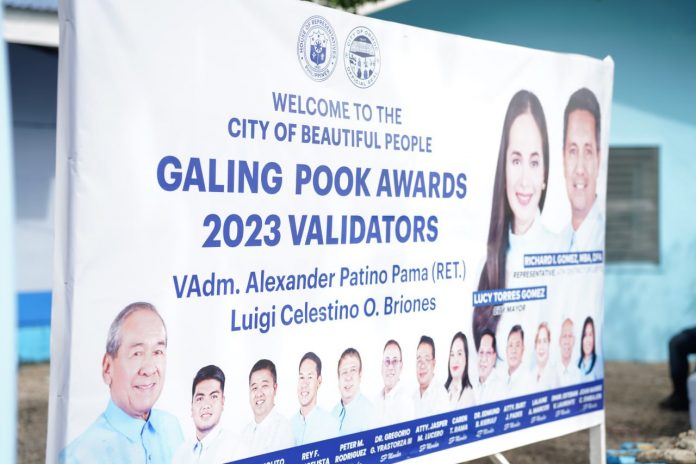
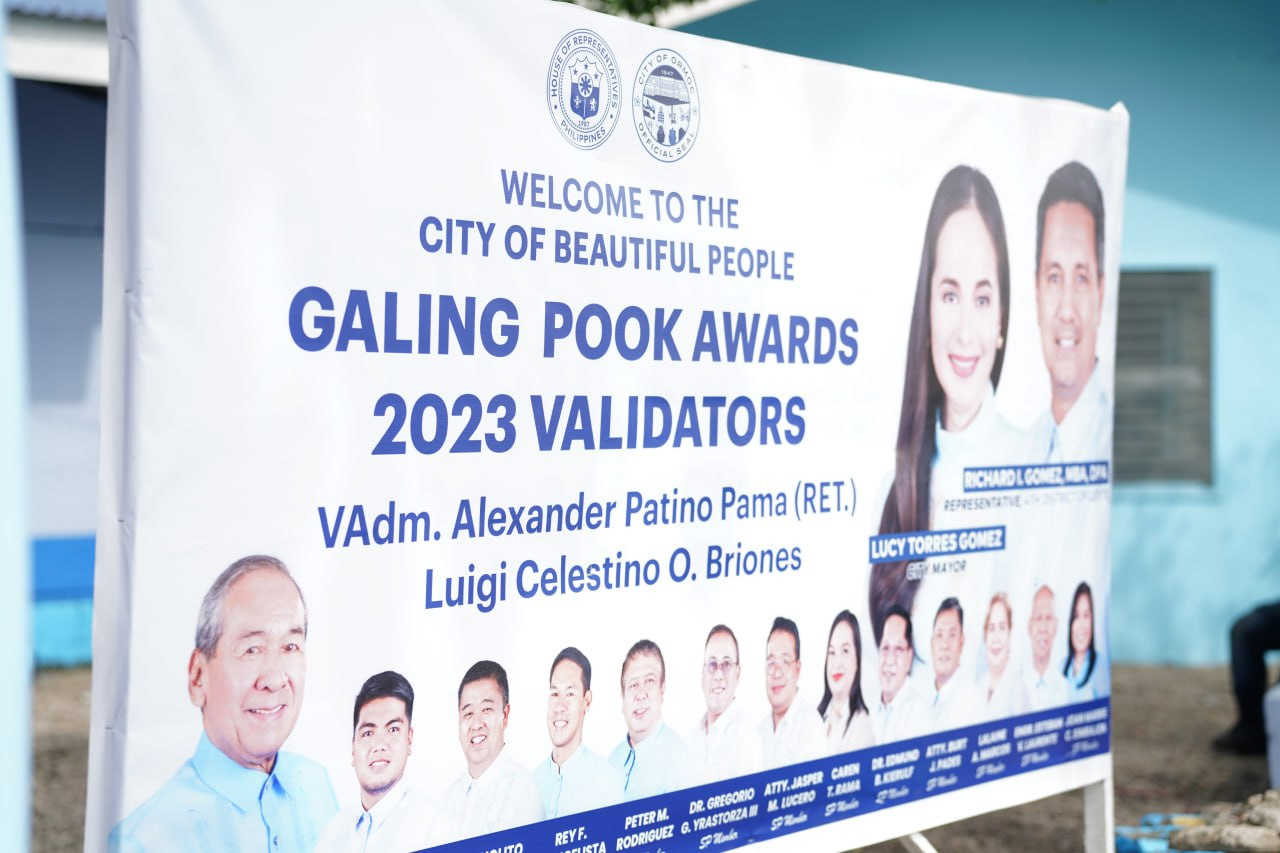
Leyte Rep. Richard Gomez said that contrary to the claims of some mayors, he has allotted funds to various programs and projects in the third district, amounting to over P5.2 billion in all for this year alone.
TACLOBAN CITY– Leyte Rep. Richard Gomez strongly denied allegations that he has not implemented projects in some municipalities under his congressional district.
According to Gomez, who represents Leyte’s fourth district, he finds the allegation not only without basis but unfair considering that this comes from some mayors of the district.
“When you are a public official, you have to be very careful with your statements. You just can’t lie in front of the people just to get the attention. You can be held accountable,” the solon said in a press conference here on Wednesday (July 5).
The fourth congressional district of Leyte covers the city of Ormoc and the municipalities of Albuera, Matag-ob, Kananga, Palompon, Merida, and Isabel.
Rep. Gomez particularly mentioned Mayor Ramon Onate of Palompon who alleged to have said that no projects were implemented by his office.
He said that projects worth over P550 million have been implemented or ongoing projects that will directly benefit the people of Palompon.
The amount of these projects, Gomez, is almost 10 times higher than the development fund of the local government.
The town, it was learned, has only a P45 million development fund allocation for this year.
“Even with a P5 million project for a small municipality like Palompon it can be felt already, what more if it is more than half a billion pesos,” Gomez said.
Gomez said that there are five ongoing projects, one project completed in Palompon funded by his office with three remaining projects funded by regional projects.
For the municipality of Albuera, there are 4 completed projects, 12 ongoing projects, one ongoing project from the regional office, one not yet started, and one suspended project.
For Matag-ob, one project was completed, two are ongoing projects and one has not yet started.
For Kananga, there are two completed projects, six are on-going and two have not yet started.
For Isabel, four projects are ongoing, and one was completed.
For Merida, six projects were already completed, five are ongoing and two projects have not yet started
As of July 3,2023, an overall total of P5.77 billion was released for 106 various projects in the district.
And out of the overall total, 5 of which amounting to P517 million are regional projects while the 101 amounting to P5.25 billion are funded under Leyte’s 4th district.
To date, 10 projects are completed, 72 are ongoing, 12 are suspended and 12 have not yet started.
Gomez said that the huge amount he is pouring to the fourth district is a result of his hard work, his constant communication with leaders of the different agencies, and even from senators. (LIZBETH ANN A. ABELLA)
Chinese battleships have been a frequent presence in the disputed waters of the West Philippine Sea (WPS), refusing to leave despite increasing tensions with neighboring countries. This is a testament to China’s determination to assert its territorial claims and establish its dominance in the region, even if it means claiming other countries’ territories.
It is important to comprehend China’s long-standing historical and cultural ties to the South China Sea, including the West Philippine Sea. From ancient times, China has viewed this area as an integral part of its territory, based on historical claims and geopolitical interests. China’s deep-rooted sense of nationalism and historical perception supposedly guide its actions in maintaining a strong naval presence in the disputed waters.
China’s intelligence and comprehension of international politics play a crucial role in its decision to keep its battle ships in the WPS. China is aware of the potential strategic advantages that arise from controlling this region, as it encompasses lucrative maritime resources and vital sea lanes. By maintaining a constant military presence, China seeks to secure its economic and energy interests, as well as project its power and influence over neighboring countries involved in the dispute.
Moreover, China’s regard of the power dynamics at play is significant in understanding its refusal to leave the disputed waters. China’s rise as a global superpower has empowered it to challenge the dominance of other countries, particularly the United States. By showcasing its military might in the WPS, China aims to demonstrate its autonomy and ability to protect its interests regardless of international pressure. This behavior underscores China’s strategic thinking and its awareness of its role in shaping the balance of power in the region.
The continued presence of Chinese battleships in the disputed waters demonstrates their historical and cultural claims to the region, their understanding of international politics, and their comprehension of the power dynamics at play. As tensions in the area persist, a nuanced understanding of China’s motivations and objectives is crucial. The problem is, China for its part doesn’t take other claimants’ sentiments into consideration.
Environmental pollution poses a significant threat to the delicate balance of ecosystems worldwide. To mitigate this challenge, it is essential to explore innovative strategies that not only reduce pollution but also foster sustainable resource management. Recycling represents a promising avenue to address these concerns.
Various materials, such as plastic, paper, glass, and metals, can be recycled, substantially reducing the pressure on natural resources. Adopting recycling practices reduces the need for raw material extraction, which often leads to habitat destruction, deforestation, and excessive energy consumption. By diverting waste from landfills and incinerators, recycling enables resource conservation and plays a vital role in curbing the pollution associated with their disposal.
Recycling contributes to mitigating air pollution. The incineration of waste releases harmful toxins and greenhouse gases that exacerbate climate change. Recycling, on the other hand, allows for the repurposing of waste into new products, leading to a reduction in greenhouse gas emissions and atmospheric pollution. Through the conversion of waste materials into usable resources, recycling offers a sustainable and circular approach to waste management that minimizes environmental harm.
One notable application of recycling in alleviating environmental pollution is the reduction of plastic waste. Plastics have become ubiquitous in our society, but their improper disposal results in catastrophic pollution of oceans, soil, and wildlife habitats. Recycling plastics not only lessens their environmental footprint but also mitigates the adverse effects of plastic production. By recycling plastic, fewer resources are required for manufacturing, resulting in reduced greenhouse gas emissions and pollution associated with petroleum extraction.
Recycling also plays a crucial role in combating water pollution—a pressing issue affecting aquatic ecosystems worldwide. By repurposing materials like paper and cardboard, recycling saves vast amounts of water that would otherwise be consumed during the production of virgin paper products. Moreover, reusing metals through recycling reduces the need for resource-intensive mining operations, which often lead to water contamination due to the dispersion of heavy metals and toxic chemicals.
In addition to its direct environmental benefits, recycling also promotes a shift towards a more sustainable and conscious society. Embracing recycling initiatives fosters a sense of environmental responsibility and raises awareness about the detrimental effects of unchecked consumption. By actively participating in recycling processes, individuals become aware of their role as stewards of the environment, actively contributing to the preservation of natural resources for future generations.
But recycling alone cannot solve all environmental challenges. It should be complemented with efforts to reduce consumption, promote sustainable production, and educate individuals about the importance of environmental stewardship. Through these collective efforts, we can transition towards a greener and more sustainable future.
“I BLESS you, Father, Lord of heaven and of earth, for hiding these things from the learned and the clever and revealing them to little children. Yes, Father, for that is what it pleased you to do.” (Mt 11,25-26)
If we believe in these words of Christ, it should dawn in our mind that we should try our best to be always child-like, even as we age and get exposed to so many things in this world. Imagine! It is to little and simple children that God reveals himself. He hides from those who think they are learned and clever.
Christ repeated this idea a number of times. “Unless you change and become like little children, you will never enter the kingdom of heaven,” he also said. (Mt 18,3) “Let the children come to me. Do not prevent them, for the Kingdom of God belongs to such as these.” (Mk 10,15)
Yes, children and heaven are almost synonymous to each other. No wonder we feel like we are in heaven every time we see children around. Every time a baby is born, we are very happy because we somehow know that he just did not come out of his mother’s womb, but rather from the very hands of God who created him before the parents procreated him.
In spite of the many limitations of children, what makes them always desirable is their pure, innocent heart, incapable of malice, ambition, pride and haughtiness. They are a source of many other good things.
Their heart is always trusting in the Lord always, just like a little kid is always confident with his father. Faith and hope easily grow and acquire strength when nurtured in a child’s heart. It’s this attitude that leads them to go on and move on no matter what, for life to them could only be an adventure of discoveries.
It’s this kind of heart that makes them transparent, sincere and simple, not afraid to be known as they truly are. They may still lack the subtlety of prudence and discretion, and be prone to spontaneity, but they hardly mind these deficiencies.
They are only interested in doing what they think is good and enjoyable. Suggestions and corrections do not humiliate them. Rather, they welcome these suggestions and corrections.
Children are humble, teachable, flexible and docile. You can tell them anything, and they always tend to believe and obey. Attainments, achievements and successes do not spoil them. Neither do difficulties, temptations and failures crush them and plunge them to sadness or bitterness.
We just have to make sure that to be childlike does not become being childish. A passage from the first letter of St. Paul to the Corinthians can serve as a very relevant reminder to all of us: “Do not become children in sense. But in malice be children, and in sense be perfect.” (14,20)
And more directly, St. Paul said: “When I was a child, I spoke as a child, I understood as a child, I thought as a child. But when I became a man, I put away childish things.” (1 Cor 13,11)
Yes, indeed! We have to be childlike in spirit, but not childish in our human ways. As Christ himself said, we have to be innocent like doves, but clever as serpents. With God’s grace, we have to learn to put these seemingly contrasting qualities together.