26.6 C
Tacloban City
August 04, 2026 - Tuesday | 9:19 PM
Home Blog Page 1124

City gov’t continues free livelihood skills training in brgys

0
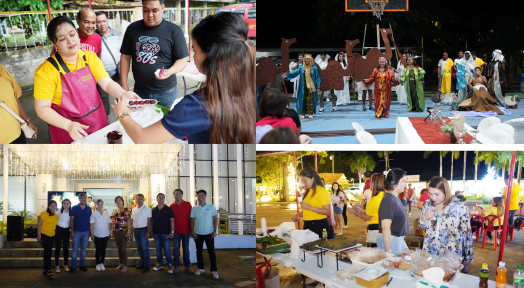
The city government of Tacloban under Mayor Alfred Romualdez continues to provide free skills training to villagers.Among these skills training being conducted include dressmaking, cosmetology, and reflexcology.(CIO)

TACLOBAN CITY– The Community Livelihood and Extension Program (CLEP) has made available the schedule for its six skills training sessions that will take place in city barangays this September, such as food processing, cosmetology, reflexology, haircutting, bartending, and dressmaking.

The city government of Tacloban under Mayor Alfred Romualdez continues to provide free skills training to villagers.Among these skills training being conducted include dressmaking, cosmetology, and reflexcology.(CIO)

Food processing and baking classes started on September 5 and will go on until the 28th of the month in the following northern barangays: 106 North Hill, 100 San Roque, 106 Aeroville, and 97 Cabalawan.

Cosmetology classes are ongoing in Barangays 97, 23 Salazar, 104 Salvacion, and 103 Palanog.

On the other hand, the scheduled training on reflexology, haircutting, and bartending will be held for most of the month in four barangays, namely, 97 Cabalawan, 18, and 105 Guadalupe.

Meanwhile, dress-making classes will be held at the CLEP Building from September 1 to 29, every Monday and Friday.

For those interested in availing of the free training, CLEP encourages that they coordinate with their respective barangay or walk-in at their office along Paterno Street Extension.

Residents of barangays and employees of the city government are also given free haircuts as part of CLEP’s community extension activities.

The Livelihood training office’s tasks this month also include continuing to monitor program completers and coordinating operations with city barangays.
(H.J.ROCA/E.LAGAHIT/CIO)

Borongan introduces kayak race; aims to boost its sports tourism

0

TACLOBAN CITY– The city government of Borongan in Eastern Samar is boosting its tourism industry through water sports tourism.

Last Sunday (Sept.3), the city government through its tourism office launched the first ever kayak race, a water sports event, participated by 10 teams.

The holding of the kayak race, dubbed as ‘Padul-ong Fun Borongan Kayak Race,’ was incorporated as part of the events of the city’s annual fiesta celebration which is observed every Sept.8 in honor of its patron, Our Lady of Nativity.

Rupert Ambil, city information officer and who is also in charge of sports activities, said that considering that Borongan City, the provincial capital of Eastern Samar province, is ‘blessed with the natural playgrounds of the sea,’ makes it an ideal place for kayak event.
“We are clustering the riverside and coastal barangays in the north, south, and the city center to create a series of kayak races that will compete for the main event,” he said in a statement.

The kayak race had two routes: starting from Baybay to Ando Island to Divinubo Island and from Barangay Bugas to Brgy. Camada.

Ambil also said that Borongan City could host a national kayak race event and not just confine it as a local sporting competition.

“Almost all local government units and resorts in the country have kayaks. This can evolve into a national open competition, fostering inter-town rivalries while also promoting Eastern Samar as a nature and adventure destination,” he said.

Kayaking is a water sports event that involves the use of a small sea craft, kayak, which has double- a bladed paddle.

The city government under Mayor Jose Ivan Dayan Agda, has been pushing to transform Borongan as a tourist destination by coming up with various events, aside from its natural attractions like its white beaches and waterfalls.

The city, for one, has been holding for years now a national surfing competition, attracting some of the country’s known and best surfers.
(JOEY A. GABIETA)

Army official: NPA rebels tagged as ‘roving bandits’

0

TACLOBAN CITY – The remnants of the New People’s Army (NPA) in Samar Island now are classified as roving bandits with no single village official supporting their ideology, an Army official said Wednesday.

Maj. Gen. Camilo Ligayo, commander of the Philippine Army’s 8th Infantry Division told reporters that the remaining NPA rebels are jittery with the continued deaths, capture, and surrender of their leaders.

“The remaining 180 active regular NPA members are now roving bandits with the dismantling of two guerilla fronts and weakening of two others. They refuse to surrender since they are facing criminal charges,” Ligayo said in an interview Wednesday.
The official is confident in eradicating insurgents in three Samar provinces before the end of the year.

There are about 10 army battalions assigned in Samar province as the government heightened its fight against communist insurgents.

Only two NPA guerilla fronts in Samar Island remain in existence after the dismantling of one front and the weakening of another early this year.

But these fronts are already weakened with the surrender of mass supporters in communities.
Ligayo said the rebel’s Front Committee 2 that operated at the border of Samar and Northern Samar has been demolished after the capture and surrender of some of their combatants and recovery of firearms.
He said the NPA Front Committee 3, which operated near the borders of Northern and Eastern Samar, has been dismantled after a series of operations by government forces. (PNA)

Coming soon

0

As the barangay election in the country approaches, we can all the more see how significant it is to local governance, and how it impacts local communities. It is because it serves as the foundation of the country’s political system, allowing citizens to elect officials who could lead and represent their respective communities.

It can be recalled that the Commission on Elections (COMELEC) has previously postponed the barangay election due to concerns over the COVID-19 pandemic. This decision emphasizes the government’s commitment to ensuring public safety and minimizing the risk of infections through mass gatherings. But that decision was politically criticized, and politicians feared the spread of the virus during campaign rallies and voting activities could potentially cause reputational damage for their candidacy.

That postponement of the barangay election has generated mixed reactions among constituents. Supporters argued that rescheduling the election would provide ample time to intensify efforts in voter education and ensure a more informed electorate. Critics, however, asserted that this decision further delayed the local governance process and deprived communities of the chance to choose leaders who can address immediate concerns and advocate for their respective barangays’ needs.

Somehow, the COMELEC has introduced reforms aimed at promoting fairer electoral processes, such as the implementation of voter registration through biometrics, stricter campaign finance regulations, and the utilization of automated voting systems. These initiatives ensure a more streamlined experience for voters while deterring fraudulent activities and reducing corruption risks.

Keeping up with the updates on the Philippine barangay election is essential as it allows for a deeper understanding of the country’s political landscape and the potential implications for local development. By critically examining these updates, we can contribute to informed discussions and analysis of the continually evolving Filipino political context at the barangay level.

The big difference

0
DOMS PAGLIAWAN

Nowadays, dishonesty has unfortunately become synonymous with politics, with some asserting that it is the most effective strategy in this arena. But the idea that dishonesty is the best policy in politics is fundamentally flawed. True leadership should be based on integrity and transparency, as honesty fosters trust, promotes accountability, and enhances democracy.

Dishonesty in politics contributes to the gradual erosion of public trust. When leaders prioritize their personal agendas over the welfare of their constituents, public trust diminishes, leading to disillusionment and apathy among citizens. Political careers built on deceit are likely to face the consequences of distrust, hindering meaningful dialogue and progress. In contrast, honest politicians connect with the electorate on a deeper level, fostering trust, and inspiring civic engagement.

When politicians engage in dishonest practices, they undermine their responsibility to those they represent. Without accountability, transparency becomes elusive, and the interests of the public are overshadowed by personal gain. Conversely, honest politicians embrace transparency, willingly accept responsibility for their actions, and strive to be held accountable by their constituents.

Dishonesty distorts the decision-making processes in politics, as it is built on a foundation of misinformation and manipulation. When leaders consistently resort to dishonesty, they undermine the quality and efficacy of decision-making, as decisions are based on false or incomplete data. In contrast, honest politicians provide accurate information and engage in fair and open debates, resulting in better-informed decisions that address the needs and aspirations of society.

The acceptance of dishonesty in politics poses a significant threat to democratic institutions. Democracy is rooted in active citizen participation and a system of checks and balances. When dishonesty prevails, these principles crumble, enabling corruption and authoritarianism to take hold. In contrast, honest politicians serve as the guardians of democracy, preserving the integrity of institutions and safeguarding the rights and freedoms of citizens.

Dishonesty in politics exacerbates social divisions and deepens societal distrust. Manipulative tactics and false narratives employed by dishonest politicians exploit pre-existing divisions and foster animosity between different demographic groups. Conversely, honest politicians prioritize unity, inclusivity, and understanding, aiming to bridge gaps and create a cohesive society.

As a political strategy, dishonesty hampers long-term national development. By prioritizing short-term gains and personal interests, dishonest politicians neglect the implementation of sustainable policies that have the potential to improve the lives of citizens. Conversely, honest politicians are driven by a genuine commitment to societal progress, pursuing policies that foster sustainable development and long-term prosperity.

While some argue that dishonesty is the best policy in politics, it is crucial to recognize its detrimental impact on trust, accountability, decision-making, democracy, social cohesion, and national development. True leadership requires honesty as an unwavering guiding principle, as it cultivates trust, strengthens democratic institutions, and fosters progress. By embracing honesty, politicians can restore public confidence, deepen civic engagement, and contribute to the betterment of society as a whole.

Phils pursues P1.2-B climate adaptation project

0
Dr. Paciente Cordero

The Philippine government, through Land Bank of the Philippines (LBP) and the Philippine Atmospheric Geological and Seismological Administration (PAGASA), will implement a P1.2 billion ($22 million) climate adaptation project, purposely to prepare disaster-prone communities from the adverse impacts of man- and nature caused calamities. More specifically, the twin government agencies plan is to establish an impact-based forecasting (IBF) and an early facility warning system for the calamity prone country (IBF-PH project).

Accordingly, the project is aimed “to enable communities, especially those frequently hit by disasters, to take better pre-emptive measures against natural and other forms of calamities. The same project has received P552.2 million funding grant from the Green Climate Fund (GCF) and another co-financing fund of P662.7 million from PAGASA through the DThe GCF, a creation of the United Nations Framework Convention on Climate Change (UNFCCC) and Paris Agreement of 2015, is an operating agency of the financial mechanism portfolio. Considered the world’s largest multilateral climate funding source, has nearly $11 billion approved fund and a total portfolio of over $40 billion. The Philippines, as signatory to the Paris Agreement, is qualified to avail of the fund for its climate adaptation initiatives.

MY COMMENT:
I am personally happy that the Philippines, a natural calamity-prone country, has vied for the GCF assistance for its climate change-oriented projects. It’s about time that the PBBM administration tap resources for its climate adaptation projects – to paraphrase his recent statement, thus “… either we adapt or we perish…” referring to natural calamities happening in the country.
ooo000ooo
NEXT TOPIC : “DBM has P21.5-Billion calamity fund”
SHARE S & T THOUGHTS through E-mail: drpacjr@yahoo.com

Recent Posts

DALMACIO C. GRAFIL
PUBLISHER

ALMA GRAFIL
EDITOR-IN-CHIEF

ROMEO CEBREROS
OFFICE IN-CHARGE

OFFICE
BRGY. SONGCO, BORONGAN CITY

CONTACT NUMBERS
(055) 261 – 3319 | 0955 251 1533 | 0917 771 0320 | 0915 897 7439 | 0921 511 0010

DALMACIO C. GRAFIL
PUBLISHER

RICKY J. BAUTISTA
EDITOR

ALMA GRAFIL
BUS. MANAGER

OFFICE
RIZAL AVENUE, CATBALOGAN
(INFRONT OF FIRE DEPARTMENT, NEAR CITY HALL)

CONTACT NUMBERS
0917 771 0320 | 0915 897 7439 | 0921 511 0010

EMAIL
lsdaily2@yahoo.com

WEBSITE
www.issuu.com/samarweeklyexpress