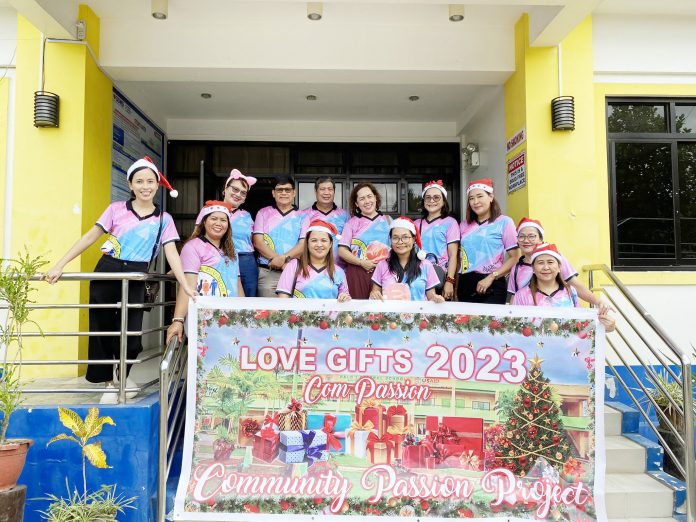
Members of the Special Education Advocates League of Leyte made the residents of the Home for Girls/Reception and Student Center for Center had a Merry Christmas as they gave them some presents.(SEAL LEYTE)
Members of the Special Education Advocates League of Leyte made the residents of the Home for Girls/Reception and Student Center for Center had a Merry Christmas as they gave them some presents.(SEAL LEYTE)
PALO, Leyte–The Special Education Advocates League of Leyte (SEAL) has conducted a gift-giving activity at the Home for Girls/Reception and Student Center for Children of the Department of Social Welfare and Development (DSWD),this town, to coincide with the Christmas season.
Henrietta Managbanag, the assistant superintendent of the Department of Education (DepEd)-Leyte Division, commended the center’s personnel and participants for the “heartwarming and fulfilling” community outreach project on December 23, 2023.
“Nakapagpasaya tayo ng mga munting anghel. Thank you very much, SEAL warriors,” said Managbanag.
“Your unrelenting spirit and selflessness, once again, have radiated luminous hope, kindness, love, and compassion to many of our less fortunate, ignored, neglected, and abandoned children,” she added.
The beneficiaries received gift items and free food.
SEAL officers and members, including district supervisors and school heads of Leyte, also entertained the children during the program.
Meanwhile, Managbanag urged the SPED advocates to “transcend such magnanimous love and care to everyone and beyond.”
SEAL, through the support of Leyte Division Superintendent Mariza Magan and Assistant Superintendent Roberto Mangaliman, has been at the forefront of an “inclusive and compassionate community” for Learners with Special Educational Needs (LSENs) in Leyte province. (RONALD O. REYES)
MAASIN CITY– Some 1,361 rice farmers in this city who are enrolled with the Department of Agriculture (DA) registry system received certified seeds in two tranches for the semester-cycled planting sessions.
The city’s Office of Agricultural Services got 600 bags of certified rice seeds from the DA regional office this year, at 300 bags per release, as well as the appropriate fertilizers, through the Rice Competency Enhancement Fund (RCEF).
According to City Agriculturist Virgilia Barrientos during a recent ‘Kapihan sa PIA’ interview, each bag contained 20 kilos at one hectare every two bags, and these were given in pro-rated shares because the farmlands most of the farmers tilled did not surpass a hectare.
Barrientos also reported having received 72 packs of hybrid rice seeds at 3 kilos per pack from the provincial government, with matching fertilizers, which were distributed to rice farmers with irrigated rice lands.
It can be recalled that Governor Damian Mercado, in his State of the Province Address (SOPA) last December 4, reported the distribution of quality rice seeds to farmers in all the 19 local government units of the province through the city/municipal agricultural offices as a food security strategy.
Barrientos explained that both certified and hybrid seed varieties have high-yielding properties, but the certified seeds can fit in rain-fed areas and can be set aside for new crops in the next cropping, while hybrid seeds require irrigated rice fields and another set of planting materials.
During this year’s mid-year harvest, some farmers in barangays Libhu and Bactul had excess supplies that were sold in the DA’s Bagsakan Center for a reduced price than the prevailing market selling price, Barrientos reported. (LDL/MMP/PIA Southern Leyte)
TACLOBAN CITY – The provincial government of Northern Samar released the year-end benefits of the employees before Christmas Day, giving them a reason to have a joyful occasion with their families.
The year-end benefits included the Service Recognition Incentive (SRI) amounting to P20,000 per employee which was released on December 22, 2023, along with the Productivity Enhancement Incentive (PEI) amounting to P5,000, granted to regular provincial employees, who included casual employees with at least four months of service as of November 30, 2023.
As for job order workers and contractual employees who have rendered at least four months of service, they received a gratuity pay of P5,000.
Aside from the SRI, PEI, and gratuity pay, the employees also received their 14th-month pay or Christmas bonus, released to regular employees last month.
The year-end bonus came with a cash gift of P5,000 per employee, based on the guidelines set by the national government.
The provincial government has 1,265 permanent and casual employees and 2, 540 job order workers.
“It is because of your unwavering commitment that the provincial government of Northern Samar continues to achieve great things for our province. I express my heartfelt thanks and appreciation for your hard work and dedication throughout the year,” Governor Edwin Ongchuan said in his message to the employees.
“It is because of your unwavering commitment that the provincial government of Northern Samar continues to achieve great things for our province. Thank you for your efforts in making Northern Samar a better place for everyone,” the governor added.
Ongchuan reiterated that he gave premium on the welfare of the employees because they believe that the provincial government’s human resources are as vital as its fiscal resources and an essential component to sound public administration.
The governor also expressed his appreciation for the support of the legislative body headed by Vice Governor Clarence Dato for approving the budget that provides benefits to the employees.
The provincial board authorized the allocation of P38 million from the province savings of which P25.3 million was approved for the payment of SRI while P12.7 million was for gratuity pay. (ROEL T. AMAZONA)
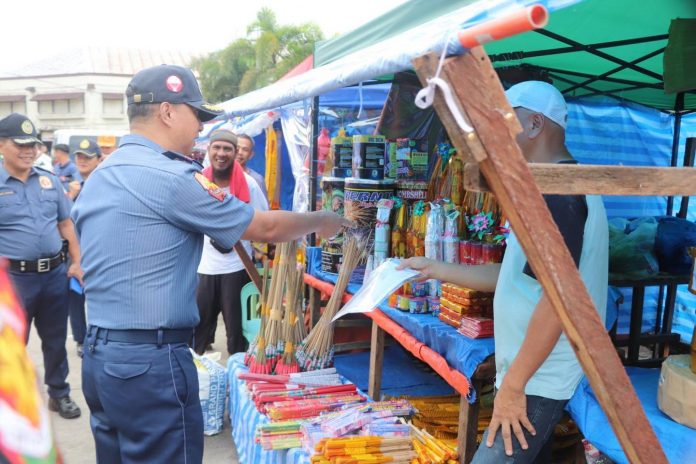
As the New Years’ Eve draws nearer, police regional director B/Gen. Reynaldo Pawid ,led inspection of stalls selling firecracker at downtown area in Tacloban City on December 26, 2023. The inspection is a part of the security measures aimed to ensure that dealers and retailers of these firecrackers and pyrotechnic devices wont’ sell any prohibited and illegal items and complies with fire safety rules.(PRO-8)
As the New Years’ Eve draws nearer, police regional director B/Gen. Reynaldo Pawid ,led inspection of stalls selling firecracker at downtown area in Tacloban City on December 26, 2023. The inspection is a part of the security measures aimed to ensure that dealers and retailers of these firecrackers and pyrotechnic devices wont’ sell any prohibited and illegal items and complies with fire safety rules.(PRO-8)
TACLOBAN CITY- As the government aims to make the New Year celebration peaceful and no untoward incident, police authorities led by Regional Director B/Gen. Reynaldo Pawid, inspected stalls in this city selling firecrackers and pyrotechnics.
The inspection is a part of the security measures aimed to ensure that dealers and retailers of these firecrackers and pyrotechnic devices don’t sell any prohibited and illegal items and comply with fire safety rules.
Pawid was joined by Col. Salvador Alacyang, deputy regional director for operations; Col. Michael Palermo, Tacloban city police director, and Col. Romeo Desiderio, chief of the regional operations division.
Pawid emphasized that the regional office of the Philippine National Police (PNP) is more than prepared for the New Year’s celebration when it comes to peace and security preparations.
In Tacloban alone, there are eight retailers and three retailers that are legitimate to sell firecrackers.
Confiscated unsafe and not a holder of a permit to sell firecrackers will be destroyed in a safe place, said Pawid. (LIZBETH ANN A ABELLA)
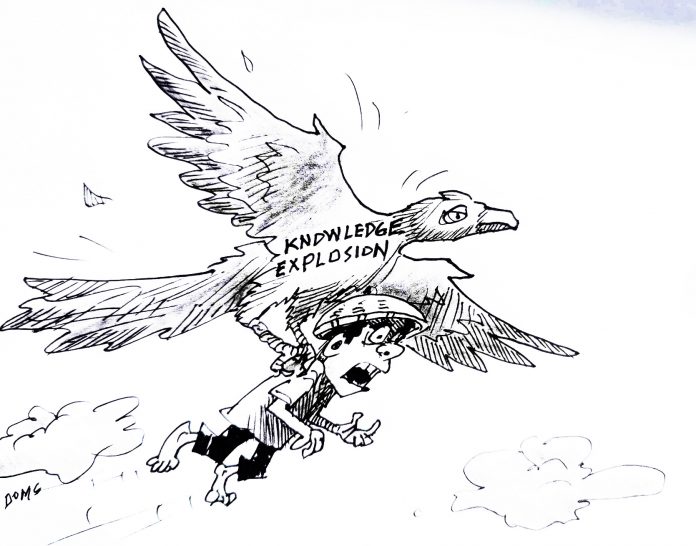
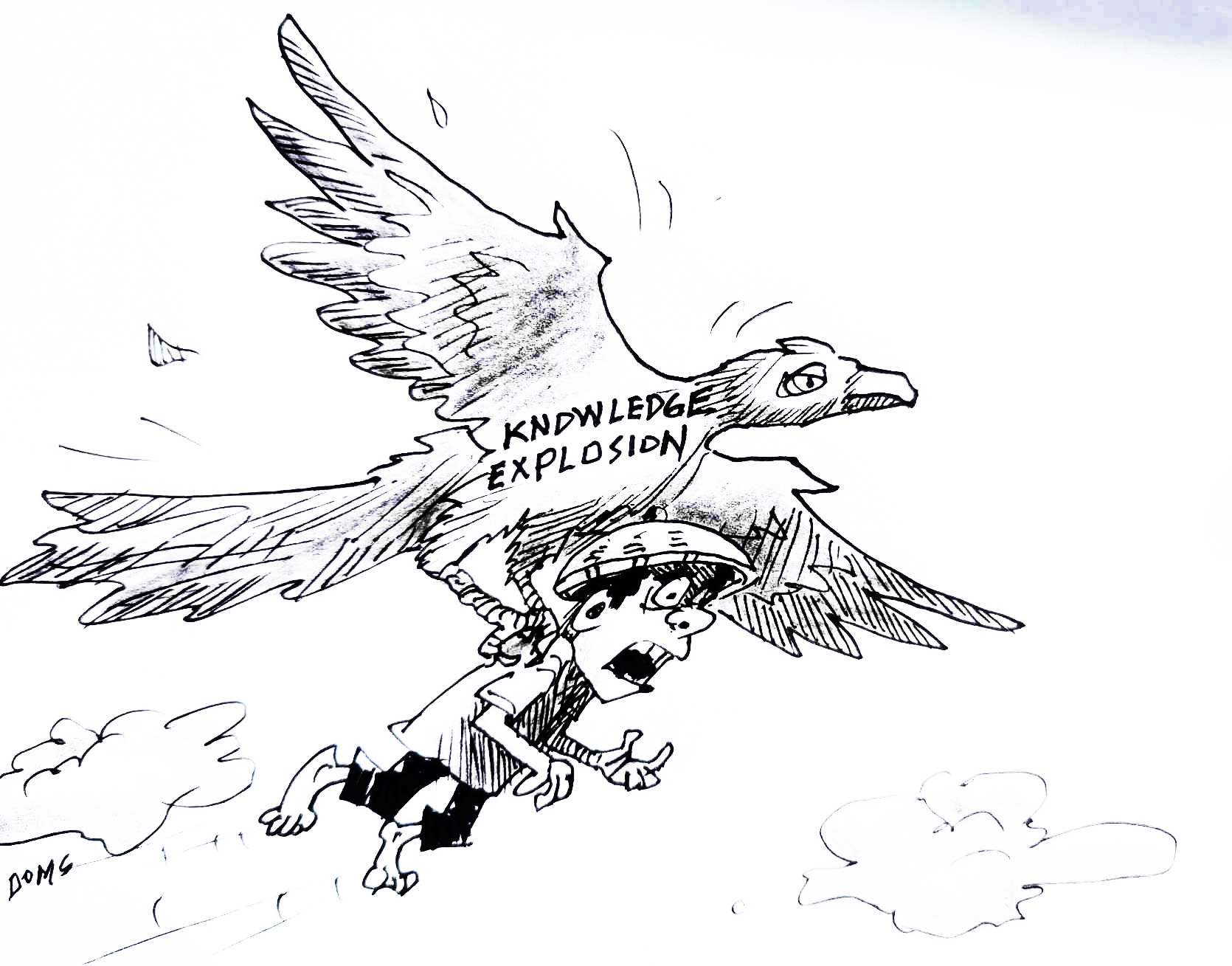
Today, we live in an era of unparalleled knowledge revolution, explosion, and rapid increase. The advancement of technology and the accessibility of information have revolutionized the way we acquire and process knowledge. The expansion of digital platforms and the widespread availability of the internet have fueled this explosion of knowledge. We find ourselves at the forefront of this revolution, constantly exposed to a diverse range of ideas and perspectives that challenge and enrich our understanding of the world.
One key aspect of this knowledge revolution is the sheer volume of information now available at our fingertips. With a simple search query, we can access an abundant array of sources, ranging from academic papers and scholarly journals to blog posts and online forums. This easy access to information empowers us to delve deeply into our areas of study, enabling us to expand our understanding beyond the boundaries of traditional classroom learning.
Moreover, the development of sophisticated technologies, such as machine learning and data analytics, has brought about a new level of comprehension. These tools enable us to process massive amounts of data, identify patterns, and gain valuable insights. As netizens, we can harness these technologies to analyze complex problems, conduct advanced research, and make significant contributions to academia and society.
With this vast amount of information comes the necessity for critical thinking and discernment. We must develop strong analytical skills to navigate through the abundance of knowledge available. We must learn to evaluate sources for credibility and reliability, synthesize multiple perspectives, and form well-reasoned arguments. While the knowledge revolution has undoubtedly expanded our intellectual horizons, it also demands that we approach information with caution and cultivate a discerning mindset.
Somehow, the knowledge explosion and rapid increase of today’s society have transformed the way we gather, process, and apply knowledge. We are fortunate to witness and be a part of this extraordinary period of human history. But then again, while the volume of available information is astounding, we must develop critical thinking skills and approach information with discernment to maximize the benefits of this knowledge revolution, otherwise we could go astray.
In today’s complex world, the ability to shift our perspective and comprehend the intricate links between different elements is a skill that is highly valued and often sought after. It involves the art of making major things minor and vice versa, which enables us to grasp the underlying connections, especially if we examine the concept at an intellectual level.
Shifting our attention from what seems significant to the less conspicuous elements can unveil hidden intricacies. Understanding complex systems often relies on pinpointing minor components that play vital roles in shaping the whole. For instance, in ecosystems, focusing on the roles of seemingly insignificant organisms can give us a deeper understanding of the overall dynamics, emphasizing the interconnectedness of life itself.
Exploring the minute aspects of a specific phenomenon can offer insights that apply to broader contexts. By observing details and patterns, we can identify commonalities that exist across different levels. In technological developments, for example, understanding the intricacies of nanoscale structures has paved the way for significant advancements, enabling us to manipulate materials and create groundbreaking innovations.
Conversely, giving prominence to minor elements can open up new dimensions in our understanding of complex situations. Recognizing the significance of seemingly trivial details can uncover hidden meanings and bring about paradigm shifts in various fields. For instance, exploring marginalized voices and overlooked events in historical research allows us to challenge dominant narratives and gain a more comprehensive understanding of past events.
By shifting our focus from the expected to the unexpected, we challenge our preconceived notions and deepen our intellectual growth. Perceiving what is typically minor enables us to question and reevaluate societal norms, biases, and long-held assumptions. This approach plays a crucial role in fields such as sociology, gender studies, and philosophy, where it is essential to critically examine deeply ingrained beliefs that may hinder progress and social transformation.
Adopting the approach of making major things minor and vice versa facilitates interdisciplinary collaboration and holistic problem-solving. By looking beyond the confines of individual disciplines and integrating diverse perspectives, we can explore complex issues from multiple angles. This integration of knowledge enhances our ability to tackle multidimensional challenges and arrive at innovative and comprehensive solutions.
The ability to shift priorities and focus our attention on overlooked aspects fosters creativity and new ways of thinking. By challenging the conventional hierarchy of importance, we break free from conventional wisdom and explore uncharted territories. This mindset shift assists artists, writers, and innovators to produce unique creations that offer fresh perspectives and reshape existing narratives.
Embracing the art of making major things minor and vice versa enriches our intellectual capacity by encouraging us to perceive the world from different angles. In doing so, we unlock hidden connections, challenge assumptions, and expand our problem-solving abilities. This approach fosters creativity, enables interdisciplinary collaboration, and contributes to our understanding of complex phenomena. Say, can we apply this to the deeply-rooted culture of corruption in our country? Yes, for sure. Come on and let’s do it.