TACLOBAN CITY– The Land Transportation Franchising and Regulatory Board (LTFRB) office here in the region is urging operators of public utility vehicles to form cooperatives as it pushes the public utility vehicle modernization program (PUVMP).
The deadline for consolidation was set to April 30 of this year, extending the original deadline of December 31, 2023.
LTFRB Regional Director Gualberto Gualberto said that failure to comply may result in enforcement actions, including halting the operation of these utility vehicles.
Gualberto encourages individual operators to visit the LTFRB office to initiate the inclusion process in the modernization program for transport cooperatives and corporations.
The PUVMP, initiated by the Department of Transportation (DOTr), aims to address transportation issues and future demands in the Philippines.
Department Order No. 2017-011, as issued by DOTr, the program seeks to upgrade public transport to global standards, providing a more dignified and efficient commuting experience while promoting environmental sustainability.
In a press conference held Wednesday (Frb.7), various transport service entities in the region highlighted the program’s benefits for both passengers and drivers.
Mervin Llego of the Central Tacloban Transport Cooperative praised the program’s six-month payment moratorium, which allowed the cooperative to save funds for vehicle maintenance and driver compensation. (LIZBETH ANN A.ABELLA)
A fisherman carries a tuna catch in Guiuan, Eastern Samar in this Nov. 7, 2023 photo. Amid rising fuel prices, the Bureau of Fisheries and Aquatic Resources (BFAR) is eyeing to extend a P42.48 million fuel subsidy to at least 14,162 fishermen in Eastern Visayas this year. (Photo courtesy of BFAR)
A fisherman carries a tuna catch in Guiuan, Eastern Samar in this Nov. 7, 2023 photo. Amid rising fuel prices, the Bureau of Fisheries and Aquatic Resources (BFAR) is eyeing to extend a P42.48 million fuel subsidy to at least 14,162 fishermen in Eastern Visayas this year. (Photo courtesy of BFAR)
TACLOBAN CITY – Amid rising fuel prices, the Bureau of Fisheries and Aquatic Resources (BFAR) will extend PHP42.48 million fuel subsidy to at least 14,162 fisherfolk in the Eastern Visayas region this year.
Christine Gresola, information officer of the BFAR regional office here, said on Monday the number of recipients under the second tranche of the fuel subsidy program is higher than the 5,729 fishers who received the cash aid last year.
Each beneficiary gets a fuel subsidy card worth P3,000. It is available for use at partner and accredited gasoline stations within the region.
“This is to cushion the impact of the ongoing economic challenge causing continuous spike on fuel price, affecting the fishing routine of our fisherfolk and disturbing the price trend of selected fishery commodities,” Gresola said.
The fisheries bureau urged fishermen who did not receive the subsidy last year to visit their respective municipal agriculture office to check if they are registered with the agency’s boat registry system and the Registry System for the Basic Sectors in Agriculture.
Since last year, BFAR has been handing out cards to prepare for the distribution of the second round of fuel subsidies this year.
The fuel subsidy program in Eastern Visayas seeks to maximize the utilization of agri-fishery machinery and facilities and enhance the resiliency of fisherfolk beneficiaries. (SARWELL Q. MENIANO/PNA)
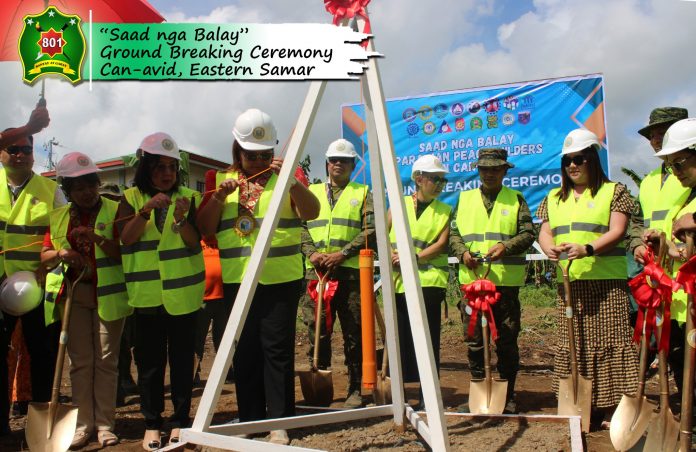
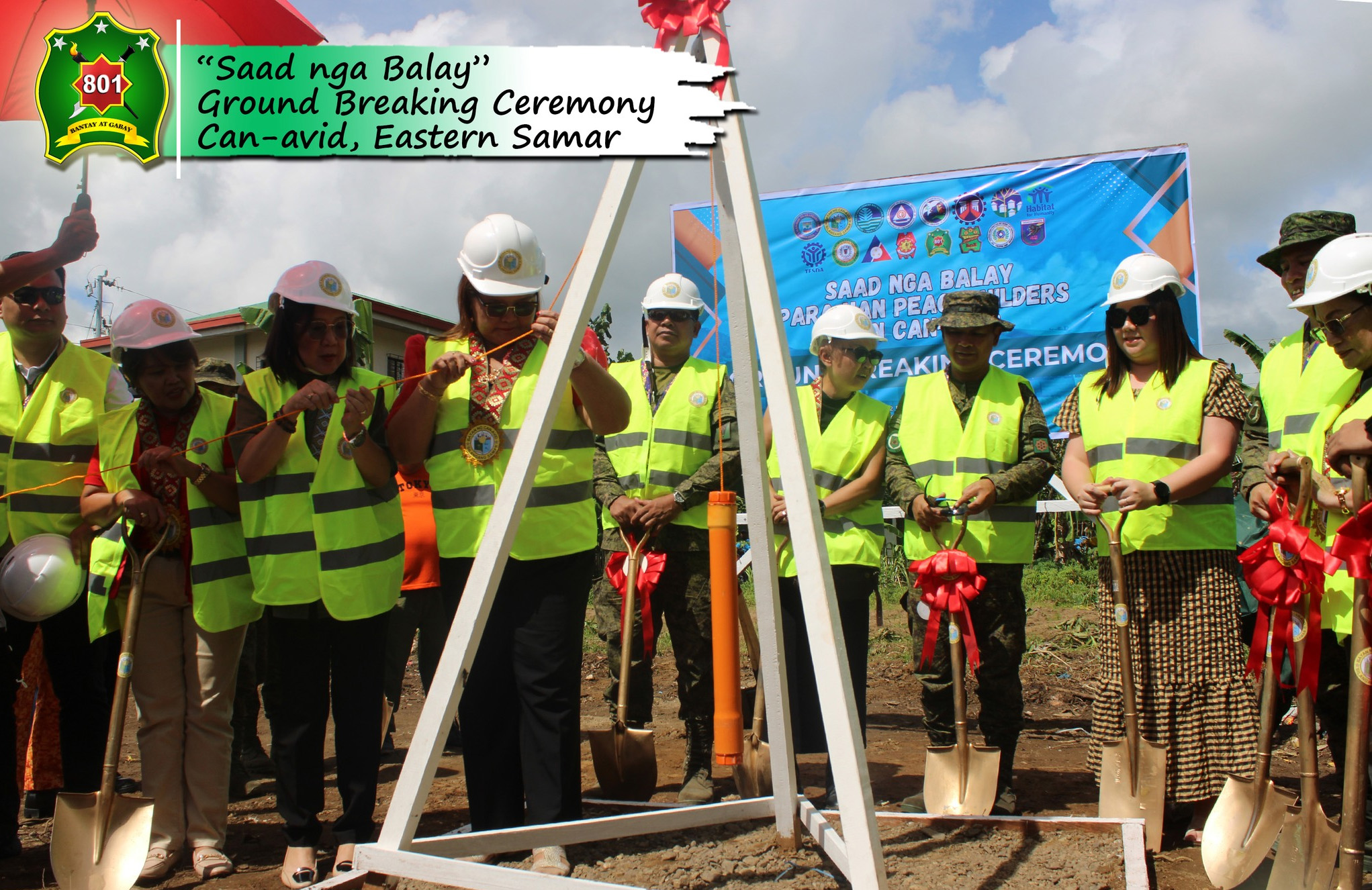
SAAD NGA BALAY. Former members of the New People’s Army who have returned to the fold of the law are to own their own houses in Can-avid, Eastern Samar which had a groundbreaking on Feb.2 led by Mayor Vilma Germino. The housing project is seen to be completed by June with 10 former rebels occupying them. (PHOTO COURTESY)
SAAD NGA BALAY. Former members of the New People’s Army who have returned to the fold of the law are to own their own houses in Can-avid, Eastern Samar which had a groundbreaking on Feb.2 led by Mayor Vilma Germino. The housing project is seen to be completed by June with 10 former rebels occupying them. (PHOTO COURTESY)
TACLOBAN CITY – Construction of a housing project that will benefit former members of the New People’s Army (NPA) from the town of Can-avid in Eastern Samar province broke ground on Friday (Feb.2) with at least 10 rehabilitated rebels initially identified as the beneficiaries.
The project, constructed at a lot owned by the local government in Barangay 4, is a collaborative effort between the provincial and municipal governments, the Philippine Army, and various national government agencies.
The housing project aims to provide a decent home to 10 former rebels who are from the town and who surrendered earlier.
Each unit is worth P278,642 with a design of half-concrete and half-hardiflex.
As part of the project, beneficiaries will receive training from the Technical, Education, Skills and Development Authority (TESDA) for carpentry and masonry skills, making them the primary workforce for the construction of their homes.
They will also be enrolled in the Tulong Panghanapbuhay sa Ating Disadvantage/Displaced Workers (TUPAD) program of the Department of Labor and Development (DOLE) to provide them with income during the construction phase.
The beneficiaries will also receive livelihood assistance and other capacity building interventions.
Mayor Vilma Germino said that the project will not only benefit former rebels but also their families.
The local chief executive also expressed her appreciation for the support provided by their partners in making the project a reality.
Prior to the groundbreaking, the Office of the Presidential Adviser on Peace, Reconciliation and Unity (OPAPRU) headed by area management unit- Eastern Visayas chief Imelda Bonifacio conducted consultations with stakeholders and beneficiaries as part of the social preparation for the implementation of the project.
“The focus of the “Saad Na Balay” project goes beyond the physical structures. It aims to promote peace and resiliency within the community. By engaging in dialogue and consultations with project beneficiaries, OPAPRU ensures a conflict-sensitive approach that aligns with its mission,” Bonifacio said.
Meanwhile, 801st Brigade Commander Brigadier General Lelina reiterated the government’s call for the remaining NPA members to return to the fold of the law and take advantage of the reintegration program offered by the government.
Lelina assured them of the government’s commitment to achieving peace and resilience through dialogue and support.
After the groundbreaking of the housing units for former rebels in Can-avid town, the same project is also set to be implemented in its neighboring municipality of Dolores. Ten beneficiaries are also targeted to benefit the shelter project.
The Saad nga Balay project was first implemented in San Jose de Buan town in Samar province through the funding of both the provincial and municipal governments.
Construction of the 17 housing units for former rebels in the municipality is now ongoing and being undertaken by the personnel from the 546th Battalion, personnel from the 87th Infantry Battalion, and partner government agencies. (ROEL T. AMAZONA)
TACLOBAN CITY– The U.S. Agency for International Development (USAID) recently handed over two high-specification Geographic Information System (GIS) workstations to the city government of Borongan, aimed at bolstering disaster preparedness and facilitating efficient environmental planning.
GIS is a computer-based tool utilized for capturing, storing, checking, visualizing, analyzing, and interpreting geographic data, enabling individuals to easily discern patterns and relationships within spatial information.
A ceremonial turnover and signing of the deed of donation took place on January 30 with Mayor Jose Ivan Dayan Agda, representing the city government, and Eduardo Bornilla Jr., the program manager of USAID’s Climate Resilient Cities (CRC) initiative.
Bornilla, in his remarks, emphasized that the GIS workstations will play a crucial role in processing and integrating climate data into local plans and programs, aiding in the understanding of disaster impacts on communities, and facilitating resource prioritization for adaptation efforts.
Mayor Agda, for his part, highlighted the significance of these GIS workstations in enhancing operational efficiency, promoting transparency, and facilitating decision-making processes within the city government.
The mayor further said the importance of the GIS workstations to the City Agriculture Office (CAO) and City Planning and Development Coordinator’s Office (CPDO) as they provide hardware support for mapping activities under the CRC Project.
These offices can utilize the equipment for crafting development plans, recording agricultural data – particularly for programs like Dukwag Agrikultura, maintaining databases for local farmers’ profiles, and implementing nature-based solutions to climate adaptation challenges, the city mayor said.
Mayor Agda underscored the importance of such technological advancements, emphasizing their role in streamlining structural development and planning processes, which are crucial for Borongan’s preparedness.
He recognized the potential of this infrastructure in attracting business investments to the city as this could help boost the local economic activity. (ROEL T. AMAZONA)
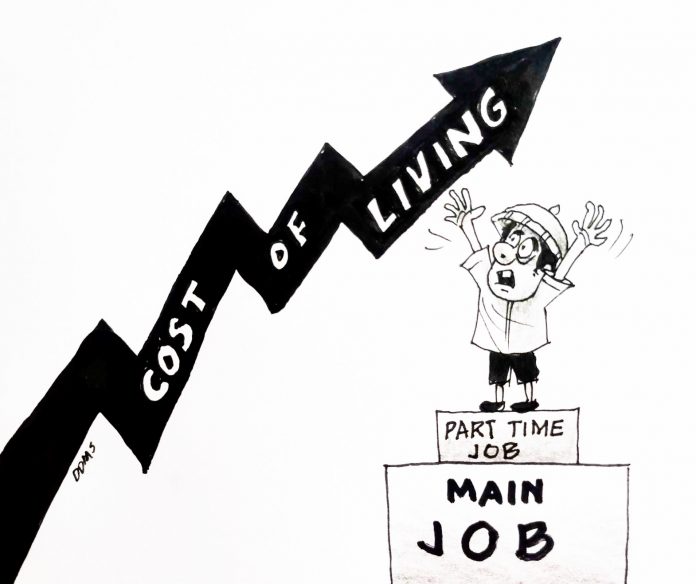
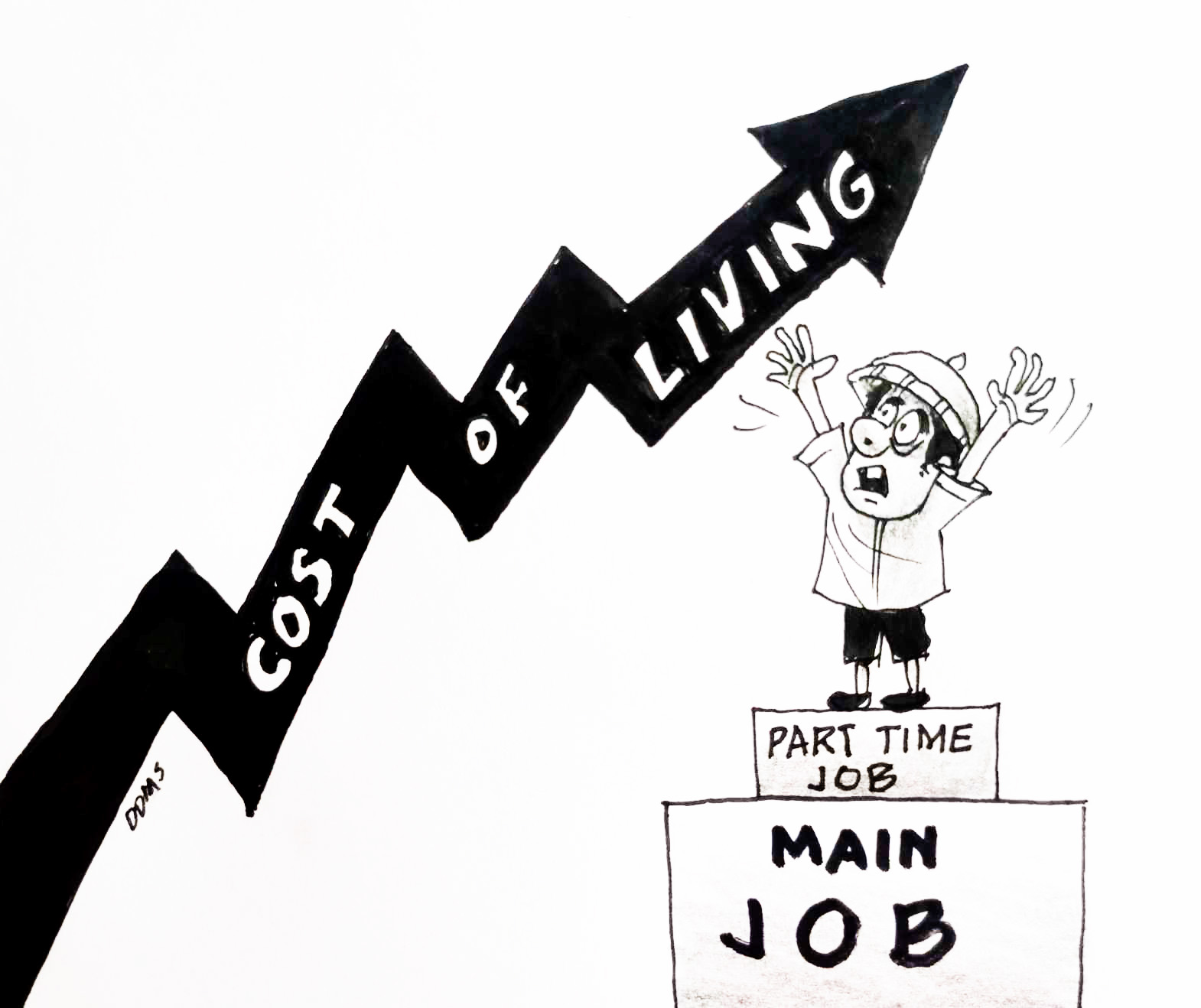
The relentless rise in consumer prices has compelled many working individuals nowadays to explore part-time job opportunities to supplement their income. They are forced to do so due to the effects of inflation and the resulting burden on them and their families.
One of the primary causes behind this resort lies in the diminishing purchasing power of their wages. As inflation erodes the real value of money, individuals find themselves struggling to maintain their previous standard of living with a fixed income. Consequently, many are compelled to take up part-time positions to bridge the financial gap created by rising prices. Inflation can also lead to job losses in certain sectors, resulting in individuals transitioning to part-time employment as a means of immediate income generation.
This inflation-driven part-time employment can severely impact the overall well-being of working individuals. Balancing multiple jobs can pose immense physical and mental strain, adversely affecting work-life balance, personal relationships, and overall job satisfaction. Moreover, the constant search for additional employment can divert attention and effort away from professional growth and development, a scenario that hampers the long-term financial prospects and career advancement of those affected. Ultimately, the burden of part-time work due to inflation acts as a hindrance to economic mobility and prosperity for the working population.
Policymakers should prioritize sustainable economic measures aimed at curbing inflationary pressure. This could involve implementing policies such as price control mechanisms, targeted subsidies, and wage adjustments that outpace inflation rates. Additionally, investing in education and professional development programs can improve workers’ skill sets, enabling them to secure better-paying jobs and withstand the impacts of inflation. Moreover, creating a more affordable and accessible social safety net can provide a safeguard against financial instability caused by rising prices, thus reducing the need for part-time employment.
This is a concerning consequence of economic instability. Inflation erodes purchasing power, diminishes job security, and disrupts the livelihoods of the working population. We must work towards implementing comprehensive strategies aimed at blunting the impact of rising prices. A stable economic environment must be fostered by investing in the well-being and professional growth of the workforce.
When a service car like mine begins to age, its owner should assess the implications it may have on its performance, reliability, and overall efficiency. It is imperative to analyze this phenomenon from a holistic perspective, taking into account various factors such as mechanical wear, technological advancements, and financial considerations.
The first aspect to consider when a service car starts to age is mechanical wear. Over time, the car’s engine, transmission, and suspension components may experience degradation, leading to diminished performance and increased maintenance costs. Gradual wear and tear on the engine can result in decreased power output and fuel efficiency. Similarly, the transmission system may start showing signs of strain, leading to transmission slippage and rough gear shifting. Proper maintenance and timely repair services can mitigate these issues, but as the vehicle ages, the frequency and cost of repairs tend to increase, affecting its overall functionality.
Technological advancements must also be taken into account when assessing an aging service car. As time progresses, new technologies are introduced into the automotive industry, ranging from enhanced safety features to improved fuel efficiency systems. An outdated technology may limit a service car’s ability to keep pace with modern standards. Older models may not possess advanced safety features such as lane departure warning or adaptive cruise control. Furthermore, newer vehicles often offer superior fuel efficiency figures due to advancements in engine design and hybrid technology, rendering an aging car less economical and environmentally friendly.
Financial considerations also play a significant role in evaluating an aging service car. Higher maintenance and repair costs, as previously mentioned, can significantly impact the owner’s wallet. Oh boy, take it from me. You must assess whether the expenditure required to maintain an aging vehicle outweighs the cost of purchasing a new or slightly used model. Furthermore, considerations such as depreciation, insurance costs, and potential resale value should be examined to determine the financial viability of retaining an aging service car in the long run.
Safety is another aspect that should not be overlooked when discussing an aging service car. It is crucial to prioritize the well-being of both the driver and passengers. Older models may lack essential safety features, such as airbags, stability control, or antilock braking systems. These technologies have become standard in modern vehicles, making older cars less capable of ensuring the occupants’ safety in the event of an accident. Therefore, if personal safety is a priority, it may be advisable to consider upgrading to a newer model.
Environmental impact is an area of growing concern in today’s society, and it should be addressed in the context of an aging service car. One should acknowledge that older vehicles tend to emit higher levels of pollutants and have higher carbon footprints compared to newer, more eco-friendly models. As governments worldwide implement stricter emissions regulations, owners of aging cars may face limitations or increased costs in certain areas, such as city centers. To align with environmental goals, it might be necessary to transition to more sustainable transportation options.
So, when a service car begins to age, a comprehensive analysis is essential to understand the implications on its performance, reliability, and overall efficiency. One should consider mechanical wear, technological advancements, financial considerations, safety, and environmental impact when making decisions about retaining or replacing an aging vehicle. Taking into account these factors will ensure a well-informed approach to managing an aging service car.