ORMOC CITY – The Ormoc City government will establish a five-hectare demonstration farm for ube (purple yam) in partnership with the Philippine Root Crop Research and Training Center (PhilRootcrops) as part of efforts to expand production of the high-value crop and support a proposed law declaring ube a national agricultural priority.
The pilot farm, to be developed with PhilRootcrops of the Visayas State University (VSU) in Baybay City will showcase modern ube production technologies and encourage more farmers to cultivate the crop.
Leyte Fourth District Rep. Richard Gomez said preparations for the project are already underway, with land being ready for planting and tissue-cultured planting materials to be supplied by PhilRootcrops.
“Currently, we are preparing our land for ube production. We are fortunate that VSU has available tissue-cultured planting materials,” Gomez told reporters on Tuesday, Aug. 4.
PhilRootcrops produces tissue-cultured planting materials of the VU-2 ube variety, a cultivar recommended by the National Seed Industry Council for commercial production.
Gomez said the demonstration forms part of a broader effort to unlock the economic potential of ube, which he described as an underutilized but highly promising crop.
“For a long time, ube was not given priority. We only realized recently that this is a golden crop,” he said.
The local initiative complements House Bill No. 10225, or the proposed Philippine Ube Industry Development Act, which Gomez recently filed in the House of Representatives.
The measure seeks to declare ube a national priority crop and establish a comprehensive framework for the development, promotion, and protection of the country’s ube industry.
Among its key provisions are the creation of a Philippine Ube Industry Council and expanded government support for research, production of quality planting materials, processing, marketing, branding, and export promotion.
According to Gomez, the Philippines has favorable conditions for expanding ube production, particularly in Leyte, where idle agricultural lands could be utilized for the crop.
“Ube thrives in our soil, and we have many vacant areas that can be used for its production. This can be achieved with government support,” he said.
He noted that ube is relatively easy to cultivate, matures within several months, and can withstand varying weather conditions, making it a viable alternative source of income for farmers.
“It can be planted regardless of weather conditions and even in idle areas. It just needs a push,” Gomez added.
He emphasized that the Department of Agriculture would play a crucial role in expanding the industry by ensuring the availability of quality tissue-cultured planting materials and supporting large-scale propagation.
According to data from the Philippine Statistics Authority, Eastern Visayas produced about 2,800 metric tons of ube in 2025, with Leyte contributing around 1,900 metric tons, making it the region’s top producer.
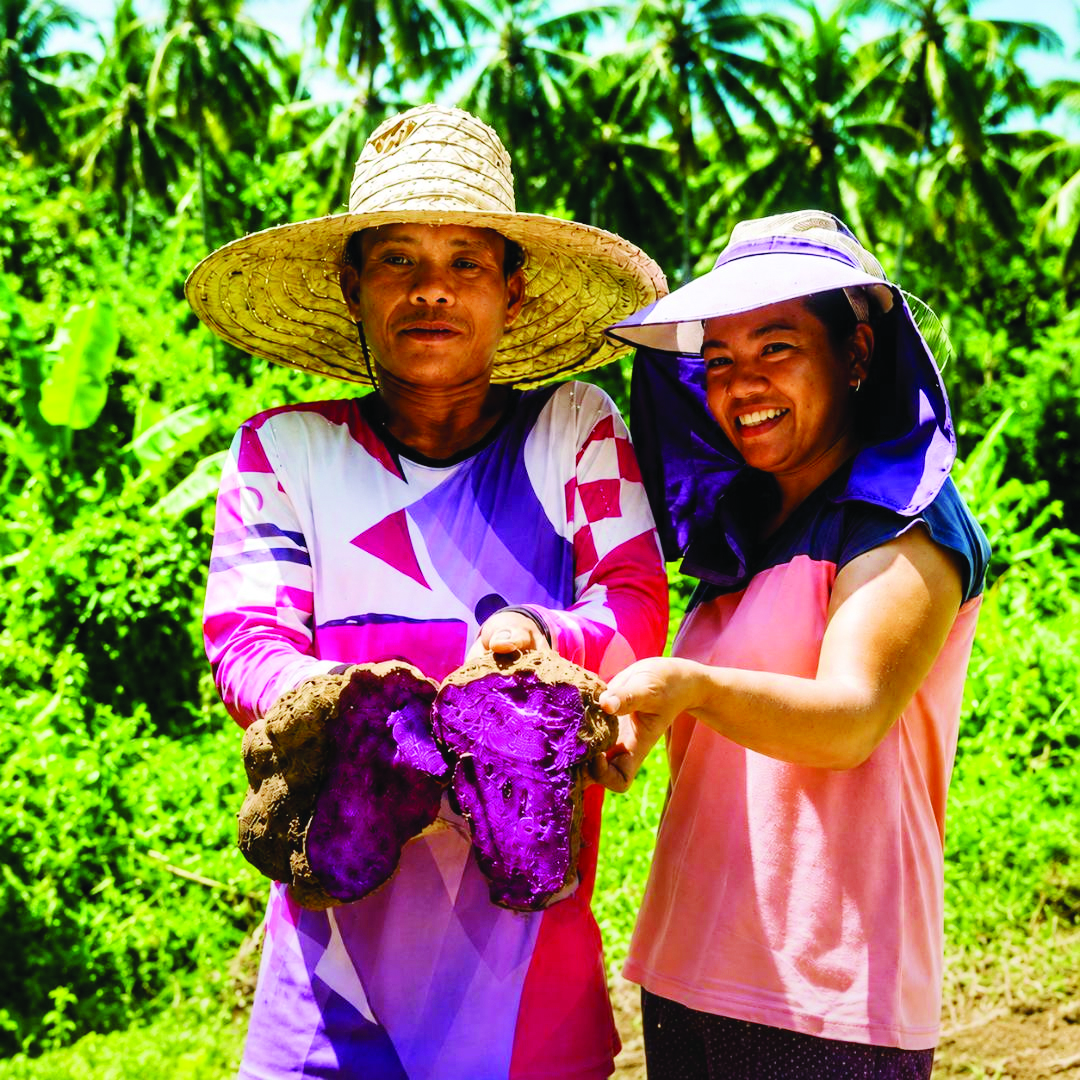
Known for its vibrant violet flesh, ube is widely used in traditional and modern Filipino delicacies, including ube halaya, halo-halo, cakes, pastries, bread, and ice cream.
With demand for ube-based products increasing in both domestic and international markets, advocates believe the crop has strong potential to become a major agricultural export while providing higher incomes for Filipino farmers.
(JOEY A. GABIETA)