(Photo courtesy of the Provincial Government of Northern Samar)
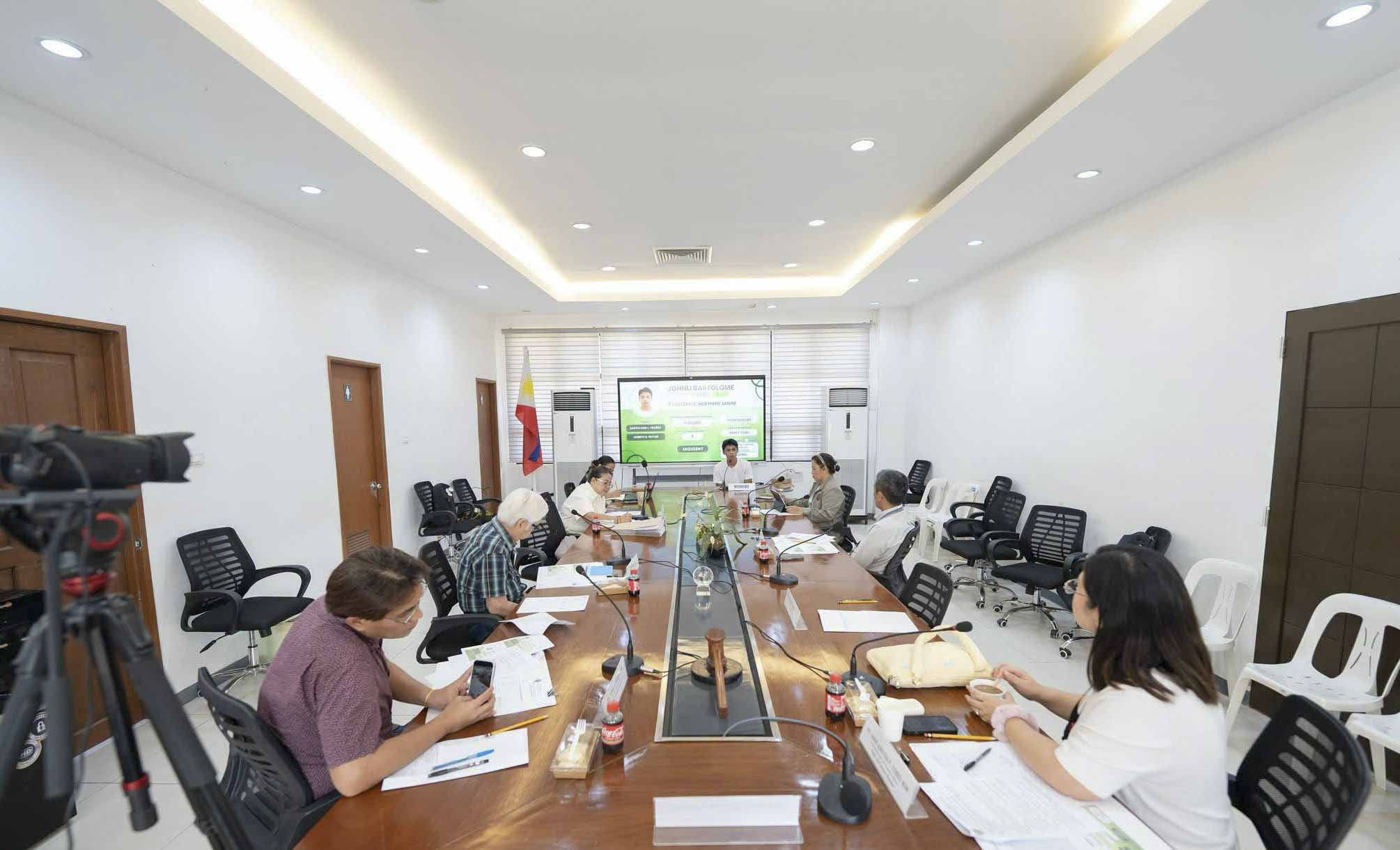
CATARMAN, Northern Samar — Thirty-one students from farming families have undergone panel interviews for the first batch of the provincial government’s agriculture scholarship program, an initiative aimed at encouraging more young people to pursue careers in farming and address the aging agricultural workforce.
The applicants, who are taking up Bachelor of Science in Agriculture from first to fourth year, underwent face-to-face interviews as part of the selection process for the Provincial Government of Northern Samar Agriculture Scholarship Program (PGNS ASP).
The assessment, conducted by the scholarship program board, evaluated the applicants’ academic qualifications, financial circumstances, behavioral competencies, and commitment to helping improve the province’s agricultural sector.
To qualify, applicants must come from farming families listed in the Department of Agriculture’s Registry System for Basic Sectors in Agriculture (RSBSA), demonstrate good academic performance, and meet the program’s indigency requirements.
Under Provincial Ordinance No. 8, scholarship recipients are required to engage in agri-preneurial activities after graduation, with the aim of developing young agricultural entrepreneurs who can contribute to local food production and the province’s farming industry.
The scholarship program was approved in 2025 during the administration of then-Governor Edwin Ongchuan and is now being implemented under the leadership of Governor Harris Ongchuan.
It was established in response to concerns over the declining number of young people entering agriculture and the increasing age of the farming population.
The ordinance was sponsored by Board Member Leonida Laodenio, chair of the Sangguniang Panlalawigan Committee on Agriculture and Food Security, and co-sponsored by Board Member Don Abalon, following a proposal from Provincial Agriculturist Jose Luis Acompaniado.
The scholarship board is expected to deliberate on the results of the interviews and submit its recommendations to Governor Ongchuan, who will make the final decision on the selection of scholars.
(EUGENE M. ENANO)