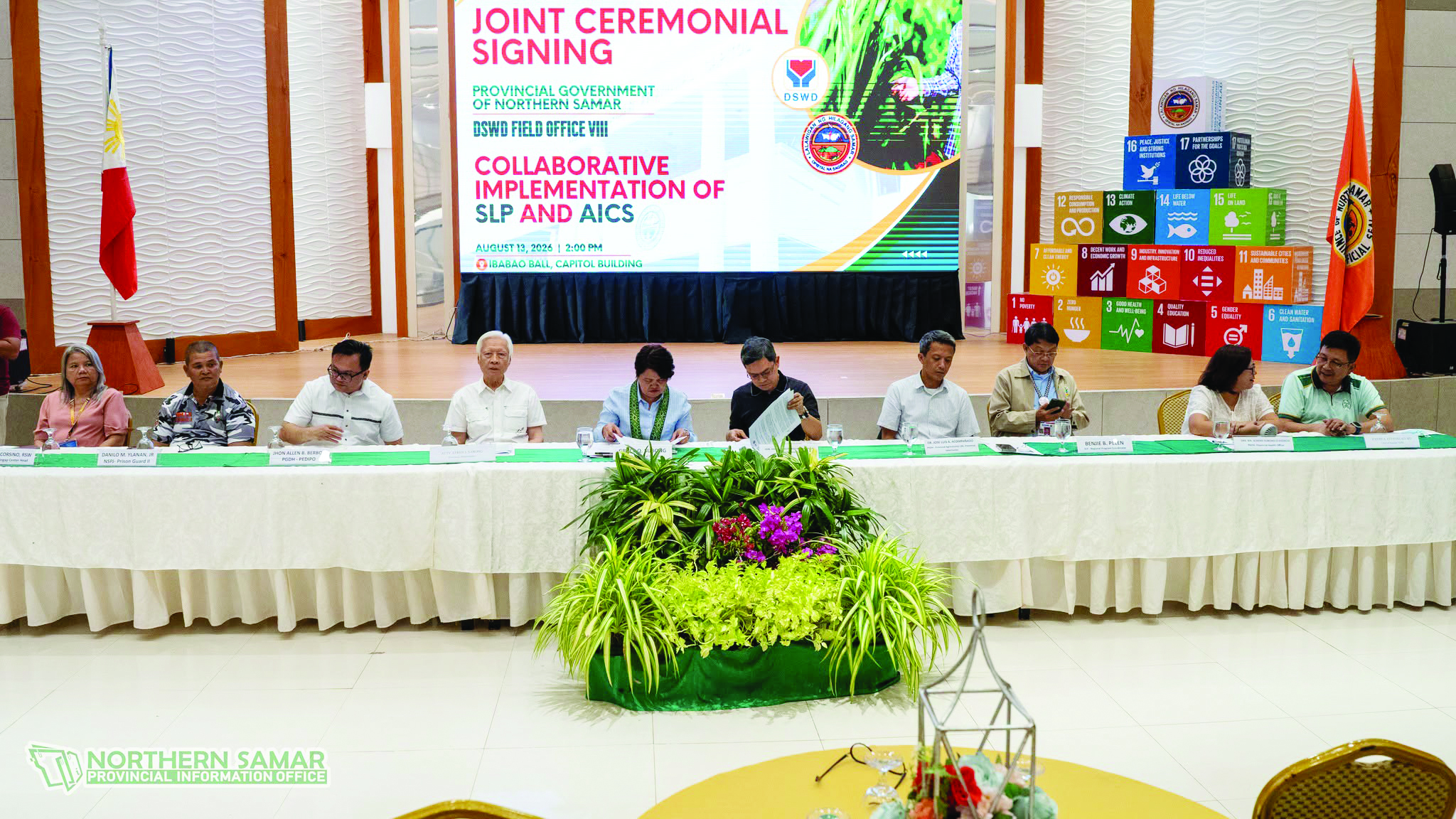
TACLOBAN CITY — Persons deprived of liberty (PDLs) at the Northern Samar Provincial Jail will gain access to livelihood opportunities and crisis assistance under a new partnership between the provincial government and the Department of Social Welfare and Development (DSWD) regional office.
The partnership was formalized on Aug. 13 through the signing of separate agreements for the joint implementation of the Sustainable Livelihood Program (SLP) and Assistance to Individuals in Crisis Situations (AICS).
The programs are intended to help PDLs develop skills and livelihood opportunities while in detention and prepare for their eventual return to their families and communities.
AICS provides immediate assistance to individuals and families facing crisis situations, while SLP offers longer-term livelihood support aimed at helping beneficiaries become more economically self-sufficient.
DSWD Regional Director Grace Subong described the agreement as a milestone in the agency’s more than three decades of partnership with Northern Samar, particularly with the inclusion of the provincial jail as a new avenue for livelihood intervention.
The provincial government has already been providing PDLs with opportunities to acquire skills and engage in productive activities through the Provincial Economic Development and Investment Promotions Office (PEDIPO). These have included bread and pastry making, egg production and vegetable farming.
The partnership also involves the Provincial Agriculture Office, Provincial Veterinary Office, Provincial Health Office, Northern Samar Provincial Hospital and the provincial jail, bringing together government agencies involved in social protection, livelihood, health and crisis assistance.
Governor Harris Ongchuan said government assistance should not simply provide temporary relief but should help people develop the capacity to build more secure futures.
“We do not want our fellow citizens to remain dependent on government assistance. What we want is to give them the skills and opportunities to overcome poverty through their own efforts, with the support of the government,” he said.
PEDIPO head John Allen Berbon said the agreements formalize and strengthen a partnership between the provincial government and DSWD that has developed over nearly three decades.
PEDIPO traces its roots to the Technology and Livelihood Development Center established in 1998 and later became the Provincial Livelihood and Development Office in the early 2000s. It has provided skills training and livelihood assistance to organizations and micro, small and medium enterprises through partnerships with national government agencies and private-sector groups.
The new agreements expand the partnership to PDLs, with livelihood interventions intended to support their rehabilitation, reintegration and transition to more sustainable lives after confinement.
(ROEL T. AMAZONA)