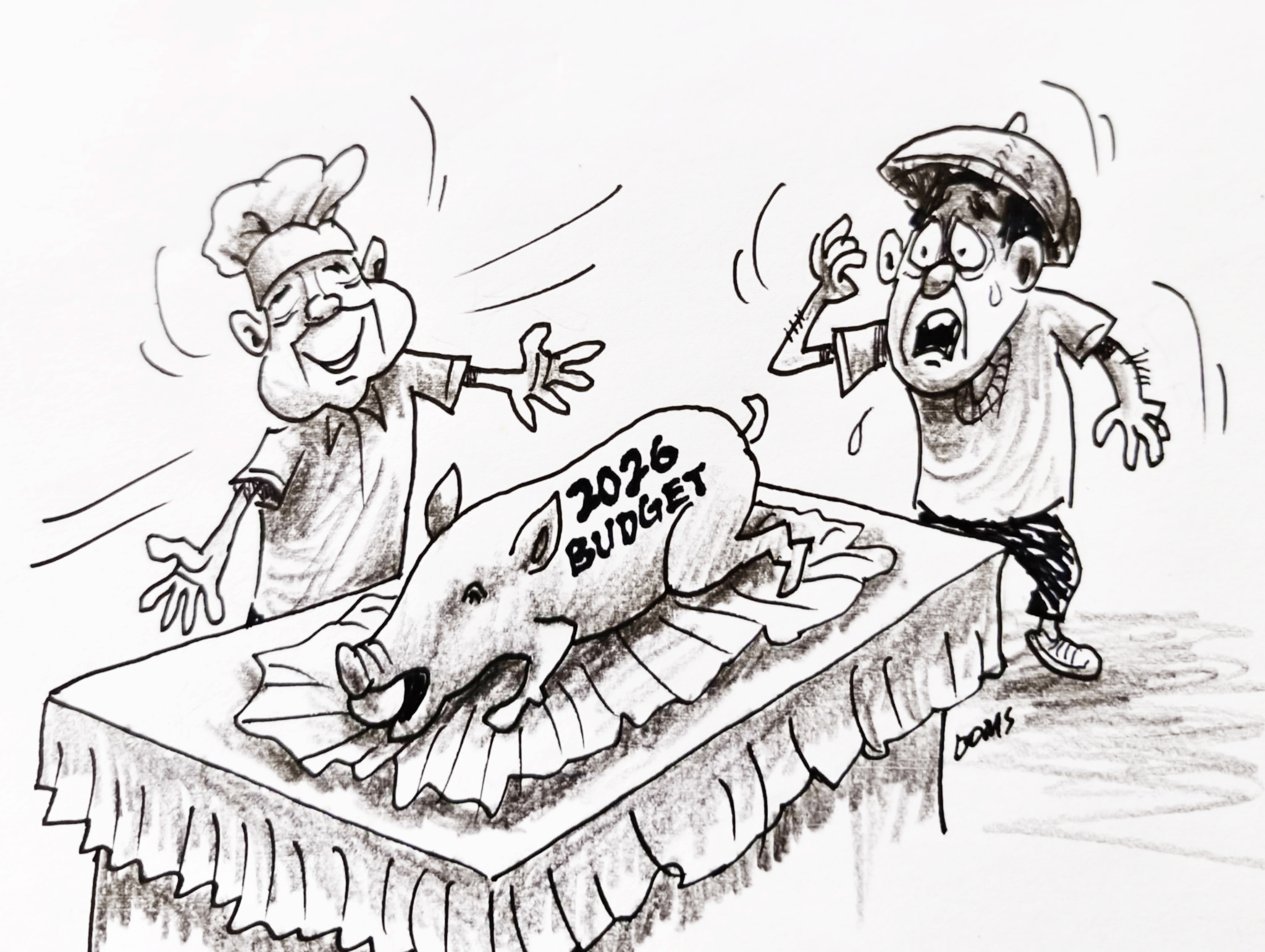
The approval and signing of the 2026 budget by President Ferdinand Marcos Jr. has reopened a long-standing issue in fiscal administration that has yet to yield a conclusive solution. It is a case where, although the budget is declared clean by the Senate, evidence that pervades this budget with “pork barrel funds” undermines this observation.
History explains the justification of skepticism. Pork-barrel expenditures have long masked vague appropriation items, lump-sum appropriations, and discretionary spending. These are sometimes cited for their adaptive role in development, but are often used for political survival instead. When legislators get their hands on spending funds meant for other offices, the budget itself is no longer an instrument of development but an instrument of politics.
The call for a “clean” budget is primarily grounded on procedural ratification rather than transparency. Procedural ratification is not necessarily a fulcrum for public accountability, particularly in a budget process so complicated that it cannot be easily accessed by regular citizens or defined by auditors. Anti-graft advocates underline that pork barrel funding rarely uses the same nomenclature it previously did; instead, it is buried under funds for infrastructure development, social welfare, or so-called “special projects” whose primary intention is to benefit chosen areas and allies. Nomenclature is not necessarily a reflection of intention.
But the cost of such behaviors goes beyond the loss of funds. It also degrades the nation’s planning capacity by diverting funds from long-term priorities, such as quality education, improved healthcare, preparedness and response to natural disasters, and national food security. This is also an institution where the values of competence and loyalty are not applied as much as the value of public office as an investment opportunity that demands dividends.
The best solution is to wrest the exercise of discretion from the darkness. Each item in the budget must be linked to a public intent, a public agency, measurable results, real-time public access to the data, and severe punishment for failure to comply. The national budget must cease to serve profit, and instead serve the public interest.