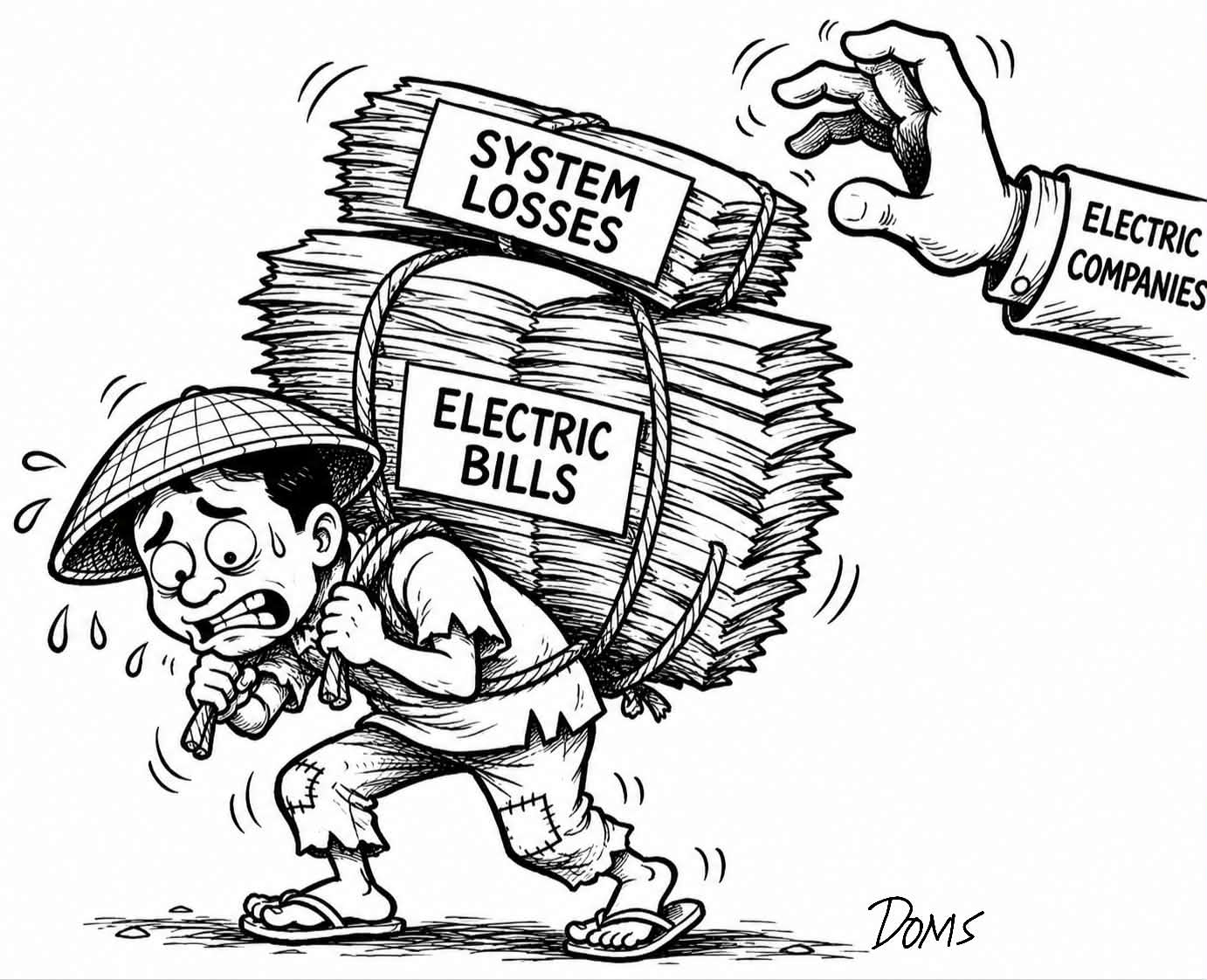
President Ferdinand Marcos Jr.’s announcement that system losses would be removed from consumers’ electricity bills immediately caught public attention. But that proposal deserves careful scrutiny rather than automatic applause. Without a clear implementation plan, such a promise remains difficult to measure and evaluate.
System loss charges have long been one of the most criticized items in electricity bills because consumers often feel they are paying for losses that are beyond their control. Any commitment to remove this burden would naturally be welcomed by households and businesses struggling with rising living costs. Yet a major policy declaration should be accompanied by a detailed explanation of how it will be carried out, what legal changes are required, and when consumers can expect to see the promised relief. Public confidence is built not by applause during a speech but by specific measures that can be examined and verified.
Another question concerns the financial consequences of eliminating the charge. If electric distribution utilities are no longer allowed to recover system loss costs from consumers, someone else will ultimately bear that expense. Unless the companies themselves absorb the losses, the government may need to provide subsidies or establish another funding mechanism. That raises an obvious concern: where will the money come from? Without identifying a sustainable source of funding, the proposal risks becoming a promise that proves difficult to fulfill in practice.
Supporters of the administration may argue that the government can negotiate with the power sector and introduce reforms that reduce consumer costs. Critics, however, question whether the administration is willing or able to confront large and influential business interests if such reforms significantly affect their revenues. Those concerns reflect a broader debate over the political resolve required to implement policies that impose costs on powerful stakeholders. Whether that skepticism is justified will ultimately be judged by concrete government action rather than by speeches or public approval.
The public deserves more than encouraging announcements. It deserves a complete policy, a realistic timetable, transparent financing, and measurable results that can be independently verified. If the administration intends to remove system loss charges from electricity bills, it should immediately present the legislative, regulatory, and fiscal roadmap needed to make that commitment a reality. Until then, cautious scrutiny remains the most responsible response to a promise that carries significant consequences for consumers, the power industry, and the national budget.