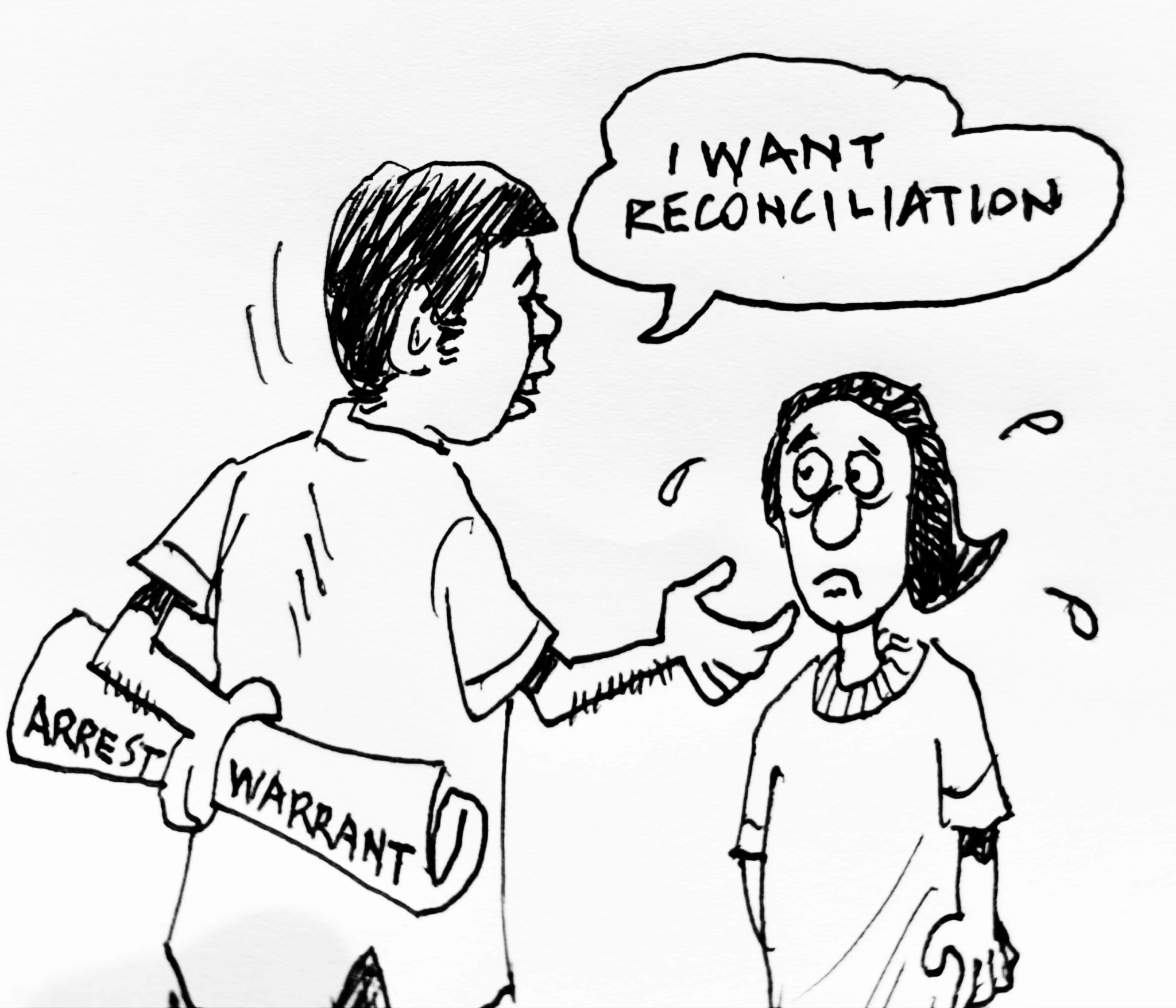
President Ferdinand “Bongbong” Marcos Jr.’s recent pronouncements calling for political reconciliation with the Duterte camp were delivered with the calm, measured tone of a statesman. But tone is not substance, and gestures are not policy. For many Filipinos, the words rang hollow, not because reconciliation is undesirable, but because the administration’s current actions appear fundamentally incompatible with the spirit of unity it claims to seek. Reconciliation, after all, cannot be proclaimed into existence; it must be demonstrated through consistent conduct.
Observers point out that while the President speaks of mending political rifts, the government’s machinery continues to pursue investigations and legal actions that overwhelmingly affect individuals associated with his critics—including allies of the former administration. These investigations may well have legal basis, but the selectivity with which they unfold raises inevitable questions. If only the President’s detractors find themselves under intense scrutiny, while other figures facing similarly serious allegations remain untouched, how can this be read as anything other than political convenience dressed as law enforcement?
The arrests and detentions of opposition personalities—and the broader pattern of intimidating dissent—further expose the contradictions in the administration’s rhetoric. A government sincerely seeking reconciliation does not silence voices that challenge it; it listens to them. It does not conflate criticism with destabilization; it recognizes criticism as an essential part of a functioning democracy. Yet activists, journalists, and political figures continue to report pressure, surveillance, and threats. This reality casts a long shadow over any speech promising unity.
True reconciliation demands trust, and trust is built on transparency, fairness, and restraint. It requires the most powerful—those who command the institutions capable of coercion—to exercise power judiciously, not selectively. If the administration genuinely desires to bridge political divides, it must show a willingness to temper its impulse to punish opponents and instead foster an environment where disagreement is safe and participation is encouraged. Words alone cannot achieve anything, they must be coupled with consistent actions.
Where is reconciliation in the continued pursuit of political rivals? Where is the sincerity in calling for unity while tightening the screws on dissent? The administration still has the opportunity to align its actions with its rhetoric. But until it does, calls for reconciliation will remain just that—calls, echoing in a political climate defined less by unity than by the persistent, unmistakable whir of the machinery of power.