Among the classes that completed SALDiWA, including our very own SALDiWA 59, tales of struggle and hardship are all too common.
Career officers often recount the absence of food, the toll of sleepless nights, the indignities of inadequate facilities, and the myriad challenges of poverty—all underscoring the humbling experiences and profound realizations they encountered along the way.
Yet, my SALDiWA story unfolds differently. It is not one of immense wealth or abject scarcity, but rather a narrative of “sakto lang, at may konting sobra”—a life that is just enough, with a little to spare.
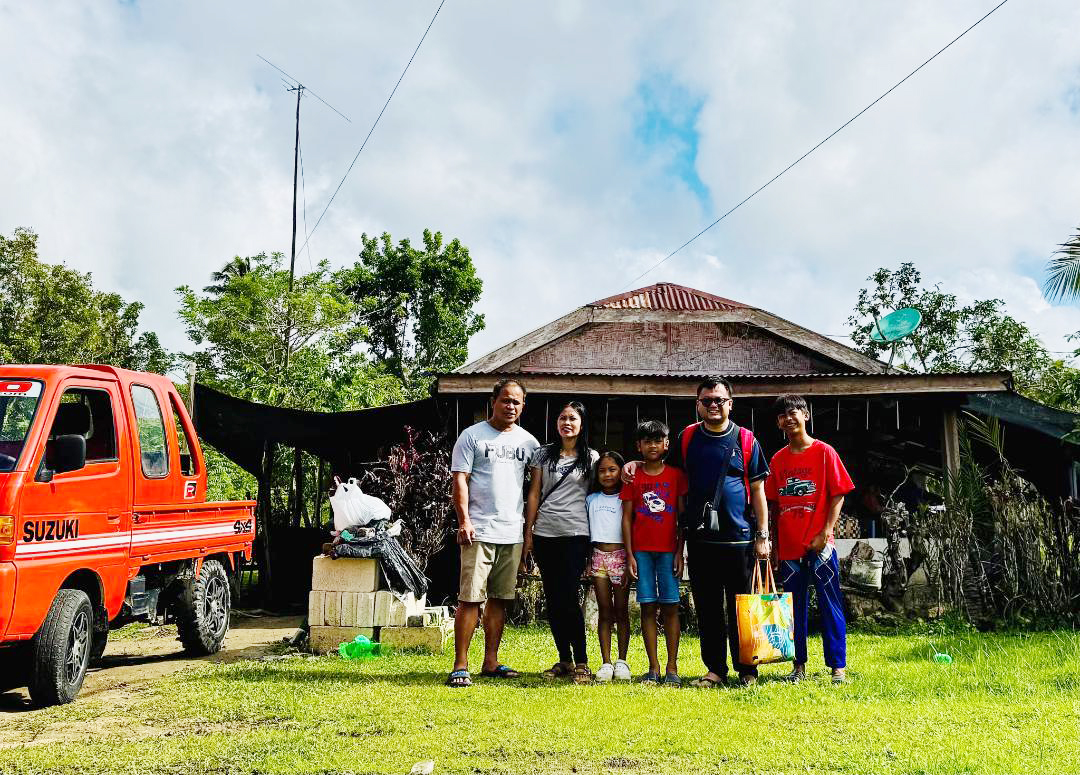
I found myself embraced by a household of five. Giovanni, a 40-year-old entrepreneur, and his 36-year-old wife, Aisa, are the proud parents of three children: EJ, a 16-year-old in Senior High School; Ivan, a 14-year-old in Grade 8; and Vanessa, a bright 9-year-old in Grade 3. The couple runs a small event styling business, securing contracts almost daily across various municipalities in Bohol.
For the past five years, they have transformed ordinary venues into enchanting, themed environments through their artistry—using creative décor, captivating lighting, stylish furniture, and exquisite floral designs to craft immersive, Instagram-worthy experiences. In my eyes, they are no longer merely poor; rather, they hover at the threshold of the “near-poor,” precariously balanced with little to no safety net against economic shocks. For now, they live sufficiently, but when calamity strikes or economic downturns loom, their stability falters.
When I inquired Aisa about their earnings amounted to, she smiled and replied, “Kuya, sakto lang po, at may konting sobra.”
SAKTO LANG: Enough to Maintain a Family
Aisa, the driving force and creative soul behind their business, confided that they both hail from deeply impoverished backgrounds. She completed high school, while Giovanni did not finish elementary education. Their family circumstances denied them the opportunity for a tertiary education.
Their entrepreneurial journey began in Manila, where they toiled tirelessly. Giovanni labored in a glass supply chain while Aisa worked in the textile industry. For more than five years, they saved diligently and when the COVID-19 pandemic struck, they returned home to Bohol.
It was their innate talent that propelled them to their current standing.Aisa began with simple balloon arrangements, progressed to floral design, and eventually mastered full-scale event styling.
In this household, modesty reigns. While 48% of households in Brgy. Poblacion Weste live below the poverty line, according to PSA data, my foster family stands as a hopeful exception. They have WiFi, a smart TV, a refrigerator, and a gas stove. They enjoy running water and, most importantly, they send their children to school without the kids needing to worry about daily meals and essential needs.
In my few days with them, I observed the children diligently completing their assignments, researching through their parents’ smartphone, and watching educational YouTube videos about chemistry experiments.
Thus, they embody a life that is enough for a contemporary family.
MERONG KONTING SOBRA: Enough to Share with Others
One incident that deeply moved me occurred when a neighbor approached Aisa asking if her daughter could print a two-page paper for an assignment. Without hesitation, Aisa gladly obliged.
I also learned that their vehicle—a Rusco Pick Multicab—serves the community by transporting harvested rice and root crops. They never charge for this service; instead, neighbors often repay them in kind—with a cavan of rice, or a bunch of bananas or sweet potatoes.
Moreover, I learned also that during village gatherings and inter-barangay competitions, Aisa generously lends out equipment and materials from their styling business to support community activities.
When I teased her about their apparent prosperity, playfully suggesting that their income allowed them to share with others, she simply replied, “Hindi naman, kuya. Sakto lang po talaga. May konti lang talagang sobra.”
KAILANGAN SOBRA PARA MERONG PARA SA IBA: From akin to atin
The story of Giovanni and Aisa is ultimately one of “Kailangan Sobra para Merong para sa Iba.”
During my stay, our family interactions were limited to dinner table. One evening, I playfully urged them to take a day off so I could spend more time with them, as their schedules were overwhelmingly busy. I joked, “Huwag naman kayo maghangad ng sobra-sobrang pera kasi importante din ang pahinga.”
Much to my surprise, Giovanni responded with a heartfelt smile: “Kailangan sobra para merong para sa iba.”
At that moment, a profound realization washed over me—they were undeniably correct. As the saying goes, “Nemo dat quod non habet.” We cannot give what we do not have.
Some people do not seek greater wealth or achievements for themselves but instead for the benefit of others.
I see the goodness in Giovanni and Aisa, the authenticity of their compassion, their understanding of what it means to possess little. Although they may not yet be categorized as non-poor or wealthy, they extend a helping hand, for they know the depths of struggle.
As a leader-manager tasked with promoting local economic development in my province, I now recognize the invaluable impact of our work within the community.
Our office is dedicated to nurturing livelihood training and skills development, and through this encounter, I have come to understand that from a single success story, a powerful domino effect can unfold.
What Aisa calls “sakto lang” should never be the ceiling of our aspirations; instead, it should be a stepping stone toward a more profound goal- “may konting sobra.” This surplus transforms homes into veritable channels of blessings for others.
While its true that not everyone will ascend to the heights of success- such is life’s reality- we, as stewards of governance, must uphold sacred the concept Kapwa. This foundational tenet of Filipino psychology is rooted in empathy, dignity, and respect that nurture our personal relationships and bolster our community ties. Ultimately, when families possess not only enough for themselves but also that ‘konting sobra,’ they can extend their blessings, enriching the Kapwa.
When families achieve “sakto lang na may konting sobra,” they embody Pakikiramdam—that shared inner sensitivity allowing us to understand others without words.
In this state of abundance, the value of Kaganda ang-loob shines bright. Humanity and kindness flow naturally, a testament to our shared existence and the wealth of love we can offer one another.
And in such homes, Pakikiramdam thrives—a willingness to sacrifice personal comfort for communal harmony.
My own time with my foster family in Poblacion Weste was a poignant reminder: in a world where we share our “konting sobra,” the spirit of community thrives. As I learned there, kung merong konting sobra, ang para lang sana sa akin ay magiging para sa atin!
As duty-bearers, let us not settle for “sakto lang.” Let us strive for that glorious surplus—“konting sobra”—igniting a chain reaction of generosity. After all, a society that thrives shares its bounty- not just for survival, but for the beautiful tapestry of life!
BY: JHON ALLEN B. BERBON