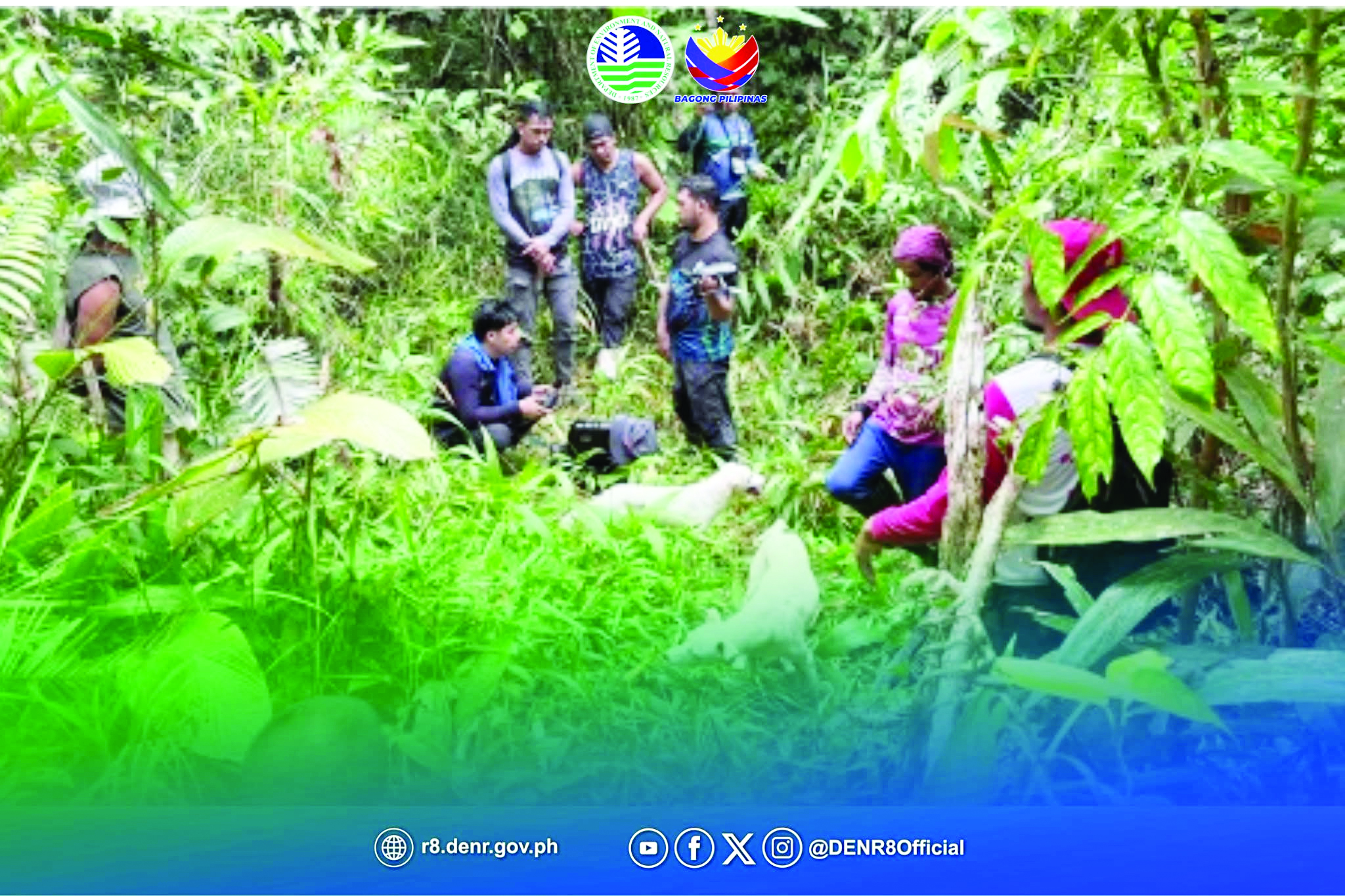
TACLOBAN CITY — Sixty hectares of land in Capoocan, Leyte will be restored as forest beginning December as farmers, government environmental officials and a renewable-energy company join forces to revive a watershed and strengthen protection of the area’s biodiversity.
The three-year reforestation project in Barangay Visares will involve the planting of 37,500 indigenous tree seedlings, turning an area within the Palaypay watershed and Kahamtikan river system into a developing forest under the “Forest for Life: 5 Million Trees by 2028” program.
The Department of Environment and Natural Resources (DENR), Energy Development Corporation (EDC) and the Visares and Sto. Niño Farmers Association (VisFA) are partnering in the project, which also aims to provide livelihood opportunities to members of the local community.
Tree planting is scheduled to begin in December during the rainy season, when soil moisture and rainfall are expected to improve seedling survival and establishment.
Among the species to be planted are yakal, nato, manaybanay and hindang, all indigenous trees suited to the area. The partners are targeting at least an 85 percent seedling survival rate throughout the project.
Unlike a one-time tree-planting activity, the initiative will include three years of maintenance, protection and monitoring to ensure that the seedlings develop into a viable forest.
VisFA members will serve as the primary community partners, providing labor for planting and maintenance while conducting regular patrols and monitoring the reforested areas. The project is expected to provide employment and income opportunities to about 45 farmers.
The DENR will provide technical and regulatory assistance, including site assessment and delineation, as well as monitoring of the project’s progress and environmental impact.
EDC, which operates geothermal facilities in the area, will provide financial and logistical support for seedling production, planting, maintenance, protection and environmental information activities.
The location of the project gives the reforestation effort importance beyond increasing tree cover. The Palaypay watershed and Kahamtikan river system help support the ecological health of surrounding communities, while a healthier forest can improve the landscape’s ability to retain water, reduce soil erosion and runoff, and limit sedimentation in waterways.
Restored forest areas can also provide habitats for wildlife and other native species while absorbing carbon from the atmosphere, contributing to broader efforts to address climate change.
“This partnership demonstrates how renewable-energy development and environmental conservation can work together,” DENR 8 Assistant Regional Director Dario Suarez said in a statement. “By restoring these 60 hectares, we are protecting biodiversity and watersheds while supporting communities and the sustainability of clean-energy operations.”
A technical working group composed of representatives from DENR, EDC, VisFA and the local government of Capoocan will oversee the project to coordinate its implementation and ensure its long-term sustainability.
Suarez said the involvement of VisFA is crucial because the farmers will be responsible not only for planting the trees but also for helping protect and maintain them after the initial planting.
The project reflects a broader shift toward community-based forest restoration, where local residents become active partners in protecting restored areas. Such approaches can help address one of the biggest challenges in reforestation—ensuring that newly planted trees survive and are maintained long enough to become established forests.
(JOEY A. GABIETA)