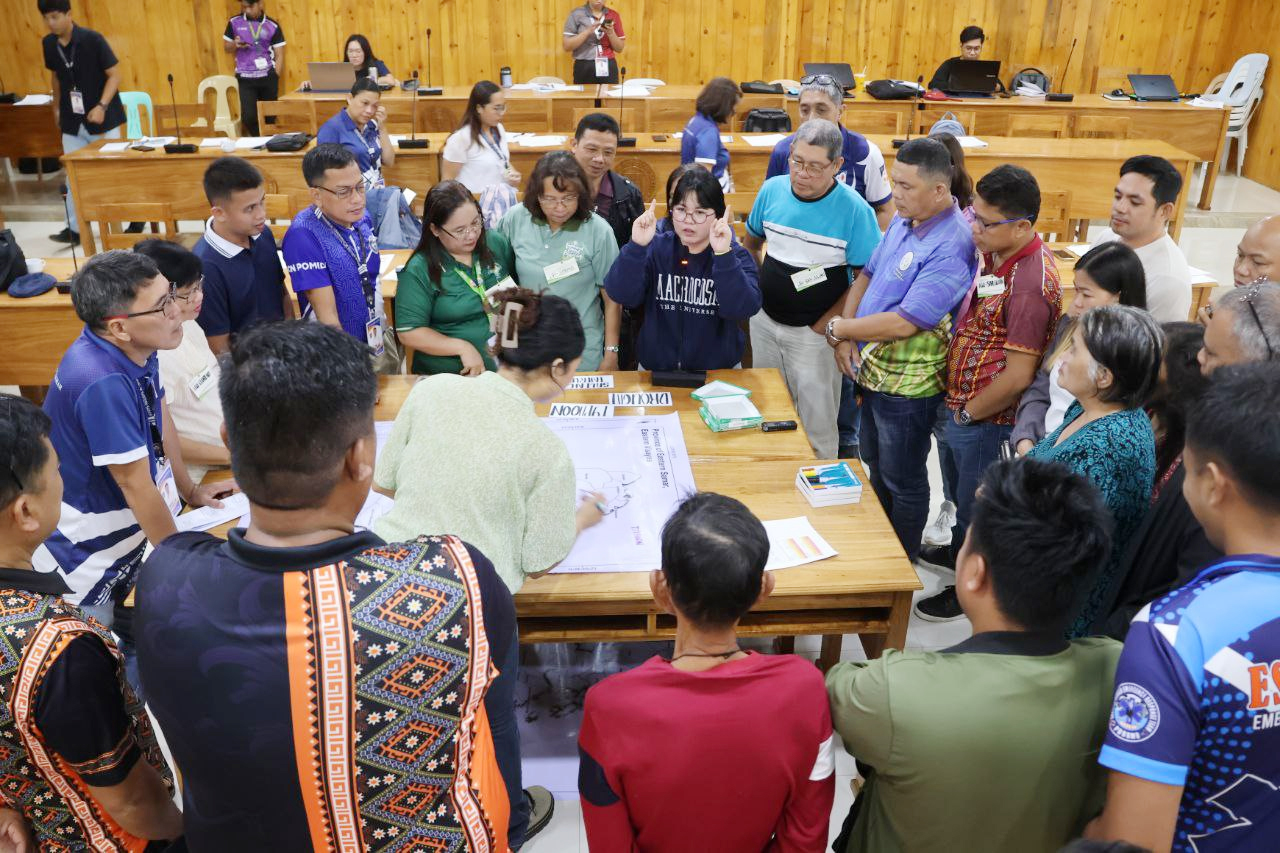
TACLOBAN CITY — Efforts to help rice farmers cope with the impacts of climate change are underway in Eastern Samar following a climate risk mapping workshop aimed at improving agricultural planning and protecting rice production in the province.
The participatory workshop was held last month at the provincial government conference hall in Borongan City and was spearheaded by the Philippine Rice Research Institute (PhilRice) in partnership with the Office of the Provincial Agricultural Services (OPAS).
The activity forms part of the Climate-Smart Maps for Strengthening the Adoption Plans of Farming Communities Project, which seeks to boost rice productivity by using science-based mapping tools to guide farming decisions.
Through the project, climate-smart maps will be developed to help farmers and local government units plan for the effects of changing weather patterns, including heavy rains, flooding, and drought that frequently affect rice-growing areas.
Experts from PhilRice, including specialists from its Bicol and Central Experiment Stations, shared technical insights and best practices on climate-resilient rice farming during the workshop.
Participants also discussed how scientific data and climate information can help farmers select the most suitable rice varieties, cropping schedules, and farming technologies based on local climate conditions.
Rice farmers and other stakeholders were given the opportunity to share their experiences and concerns regarding climate-related challenges affecting their harvests.
Organizers said the workshop will help generate recommendations and site-specific farming strategies for municipalities across Eastern Samar, taking into account climate patterns, soil characteristics, and appropriate rice varieties.
Among those who attended were municipal rice program coordinators, personnel from OPAS, representatives from the Provincial Disaster Risk Reduction and Management Office, project management staff, and farmers from different parts of the province.
Officials said the initiative is part of broader efforts to build a more climate-resilient and sustainable agriculture sector in Eastern Samar while safeguarding food production in the face of increasing climate risks.
(ROEL T. AMAZONA)