Impact of El Niño
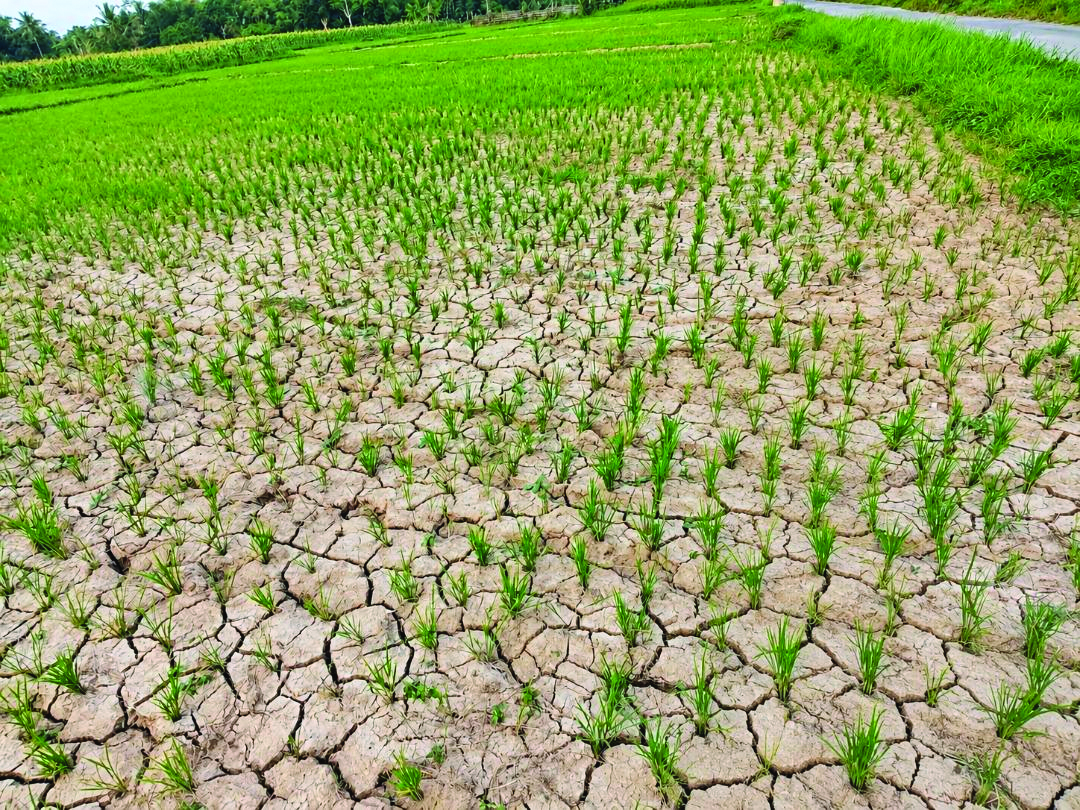
TACLOBAN CITY — Prolonged dry conditions have damaged at least 350 hectares of rice fields in parts of Eastern Visayas, with farmers facing an estimated P10 million in losses in Calbiga, Samar, and the prospect of sharply lower harvests in Alangalang, Leyte.
In Calbiga, the dry spell has affected at least 150 hectares of mostly rice fields involving 215 farmers in 38 of the town’s 41 barangays, according to the Municipal Agriculture Office.
Municipal Agriculture Officer Paolo Cabueñas said the affected fields are mostly rain-fed and have become vulnerable to the lack of rainfall that has persisted in the town for months.
“As of this time, this dry spell has affected 38 of our barangays involving 215 farmers covering 150 hectares with estimated losses of about P10 million,” Cabueñas said in a phone interview Tuesday, Sept. 8.
Calbiga has more than 3,000 hectares devoted to rice production, but only about 780 hectares are covered by irrigation systems, benefiting more than 490 farmers.
To help farmers cope, the municipal government has asked barangay officials to consider using their calamity funds to purchase water pumps that could draw water from nearby rivers.
However, Cabueñas said the local government is also promoting vegetable and high-value crop production by distributing seedlings to farmers as an alternative source of food and income.
In Alangalang, Leyte, the prolonged dry spell has also raised concerns over the town’s rice harvest.
Municipal Agriculture Officer Cesar Anade said the monitoring and validation of affected farmers is still ongoing, but initial estimates show that about 5% of the town’s 4,569 registered farmers may have been affected.
This translates to roughly 100 farmers cultivating at least 200 hectares of rice fields.
Anade said the dry spell has affected Alangalang since June and is expected to significantly reduce rice production this year.
“We can say that this dry spell will really result in the drop of our rice production for this year,” he said.
He estimated that the town could produce only about 20,000 metric tons of palay this year, half of its usual output of around 40,000 metric tons.
Alangalang has more than 6,000 hectares of agricultural land devoted to rice, making it one of Leyte’s major rice-producing areas.
Anade encouraged affected farmers to temporarily shift to vegetables and other heat-tolerant crops to supplement their income.
But providing water pumps to all affected farmers may not be feasible because water levels in rivers have also declined, he said.
The dry spell has also increased production costs for farmers who have access to water pumps.
A farmer in Alangalang, who requested anonymity, said she has been using an impounding well to irrigate her three-hectare non-irrigated rice farm.
“This was supposed to be supplemental because there was usually rain. But now that there is no rain, we have to operate the pump every day to irrigate the fields,” she said in Waray.
She said the prolonged dry spell has added more than P7,000 to their production expenses.
Under normal conditions, she said, one hectare could produce more than 100 cavans of palay. This year, however, she is uncertain how much she will harvest.
The situation underscores the vulnerability of rain-fed rice farms to prolonged dry conditions, as declining water supplies threaten yields while farmers with access to pumps face higher irrigation and fuel costs.
JOEY A. GABIETA