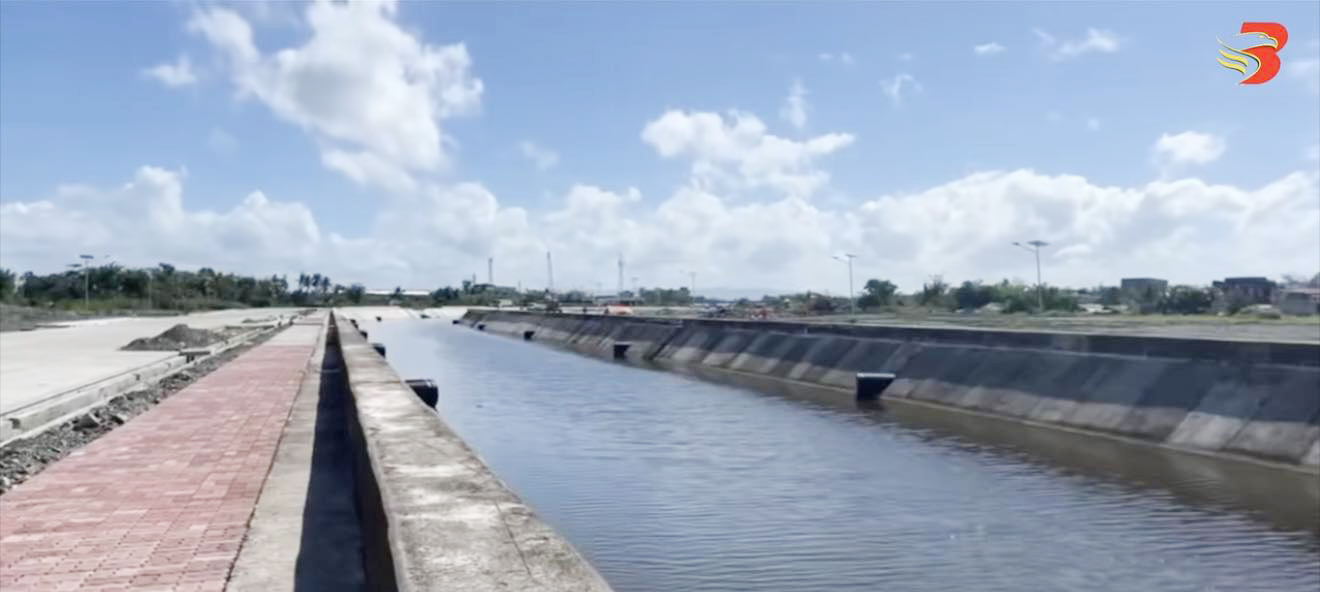
TACLOBAN CITY — The Department of Public Works and Highways (DPWH) has assured funding of the P3.26-billion Tacloban–Palo Diversion Road project, also known as the “Grand Canal,” after it was left without an allocation in the agency’s 2026 budget.
This was assured by DPWH Secretary Vince Dizon during his visit here on Tuesday, March 10, as he noted that the ambitious project will be provided project next year with its completion eyed on 2028.
“The project is assured of funding in 2027 and 2028, so this will be completed before the end of the President’s term. Even if there’s no allocation this year, there are still ongoing activities under the 2025 allocation,” Dizon said.
The project earlier had a proposed P600-million allocation for 2026, but it was not included in the final budget.
Despite the funding gap, the project has already received about P2.33 billion from the 2019 and 2023 to 2025 national budgets. As of January 2026, construction progress has reached 49.38 percent.
Once completed, the Tacloban–Palo Diversion Road will be a four-lane, 3.2-kilometer highway connecting the San Jose District in Tacloban City to Barangay Campetic in Palo, Leyte.
The road will feature a 16- to 22-meter-wide flood control and drainage system along its center, designed to improve water flow, prevent clogged waterways, and reduce flooding in several communities in Tacloban and Palo that are prone to inundation during heavy rains and typhoons.
DPWH Regional Director Edgar Tabacon said the agency is optimistic the project will secure funding next year given its importance in easing traffic congestion and addressing flooding in the area.
(HALLEBERT FRANCIS S.HIPE, LNU STUDENT INTERN)