TACLOBAN CITY — The Department of Science and Technology (DOST)in Eastern Visayas has rolled out a series of science, technology, and innovation (STI) projects in Southern Leyte aimed at improving local governance, strengthening livelihoods, and enhancing disaster preparedness.
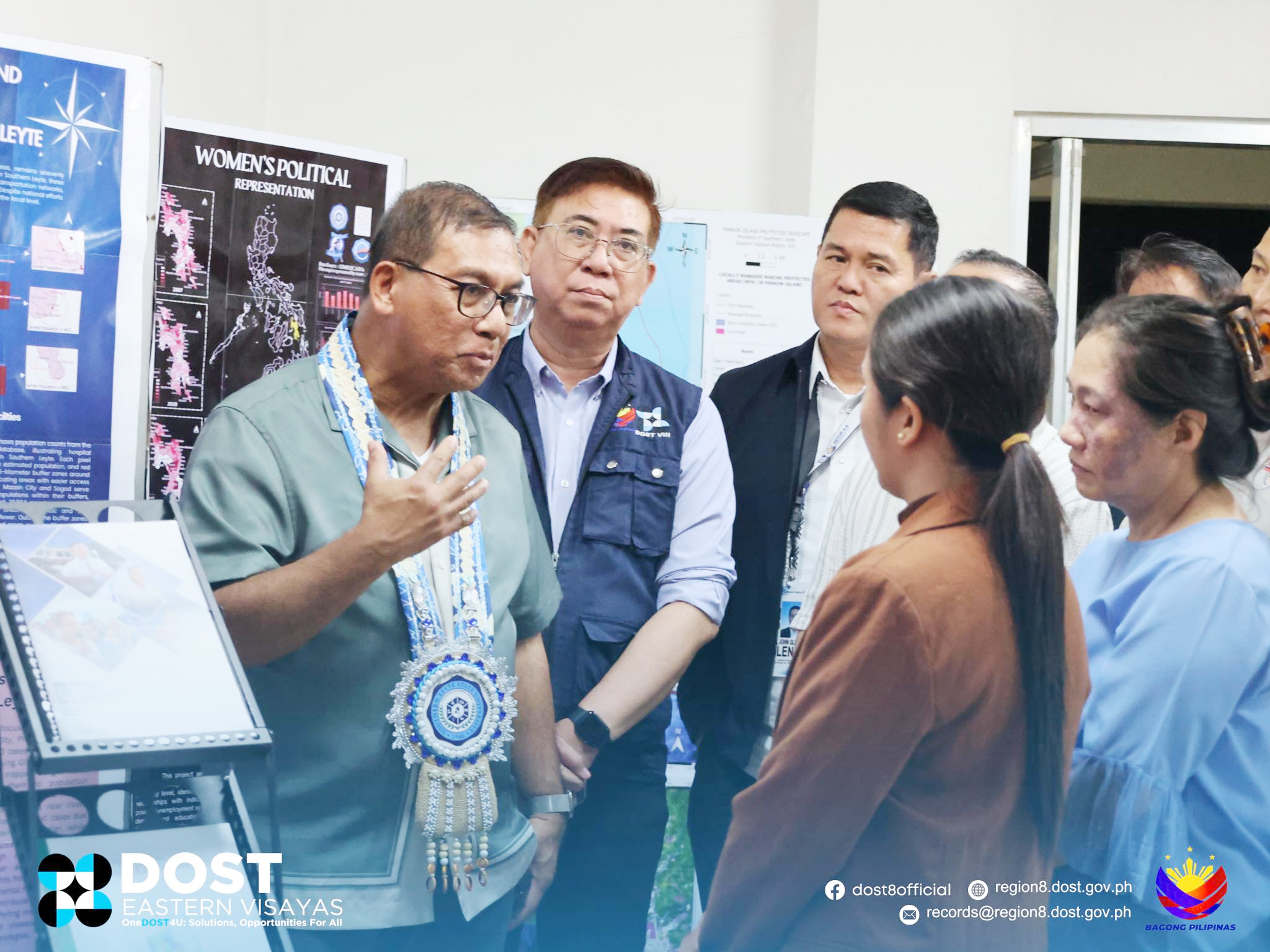
The projects were formally turned over and launched during the Jan.22 ceremony at the Southern Leyte State University (SLSU) Main Campus, led by DOST VIII through the Provincial Science and Technology Office–Southern Leyte, and attended by DOST Secretary Renato Solidum Jr., senior agency officials, 2nd District Representative Christopherson Yap, and local government and university leaders.
Among the beneficiaries was the local government unit of Pintuyan, which received a mobile command and control vehicle (MoCCoV) and a squid drying facility. The MoCCoV is designed to improve emergency response and disaster coordination through real-time communication and monitoring, while the squid drying facility is expected to enhance post-harvest processing, reduce spoilage, and increase income opportunities for local fisherfolk.
SLS also received several technology-based initiatives aimed at strengthening institutional development and innovation. These include the BrIGHT Project (Bringing IT to Governance for Holistic Transformation), which promotes the use of information technology to improve efficiency, transparency, and public service delivery.
Also launched were the Technology Business Incubation (TBI) Lig-on, which will provide mentorship, shared facilities, and technical assistance to startups and innovators, and the Geographic Information System (GIS) Laboratory, intended to support development planning, disaster risk reduction, and environmental management through spatial analysis and data visualization.
Secretary Solidum said the initiatives reflect DOST’s four strategic pillars: promoting human well-being, fostering wealth creation, reinforcing wealth protection, and institutionalizing sustainability.
He added that the projects demonstrate how science and technology can be applied directly to community needs while supporting long-term development goals.
SLSU president Jude Duarte said the university remains committed to serving as a development partner by ensuring that research and innovation translate into practical solutions that address local challenges.
Representative Yap, meanwhile, expressed support for advancing STI initiatives in Southern Leyte, stressing the importance of disaster mitigation, livelihood development, and environmental protection in one of the country’s most disaster-prone provinces.
(ROEL T. AMAZONA)