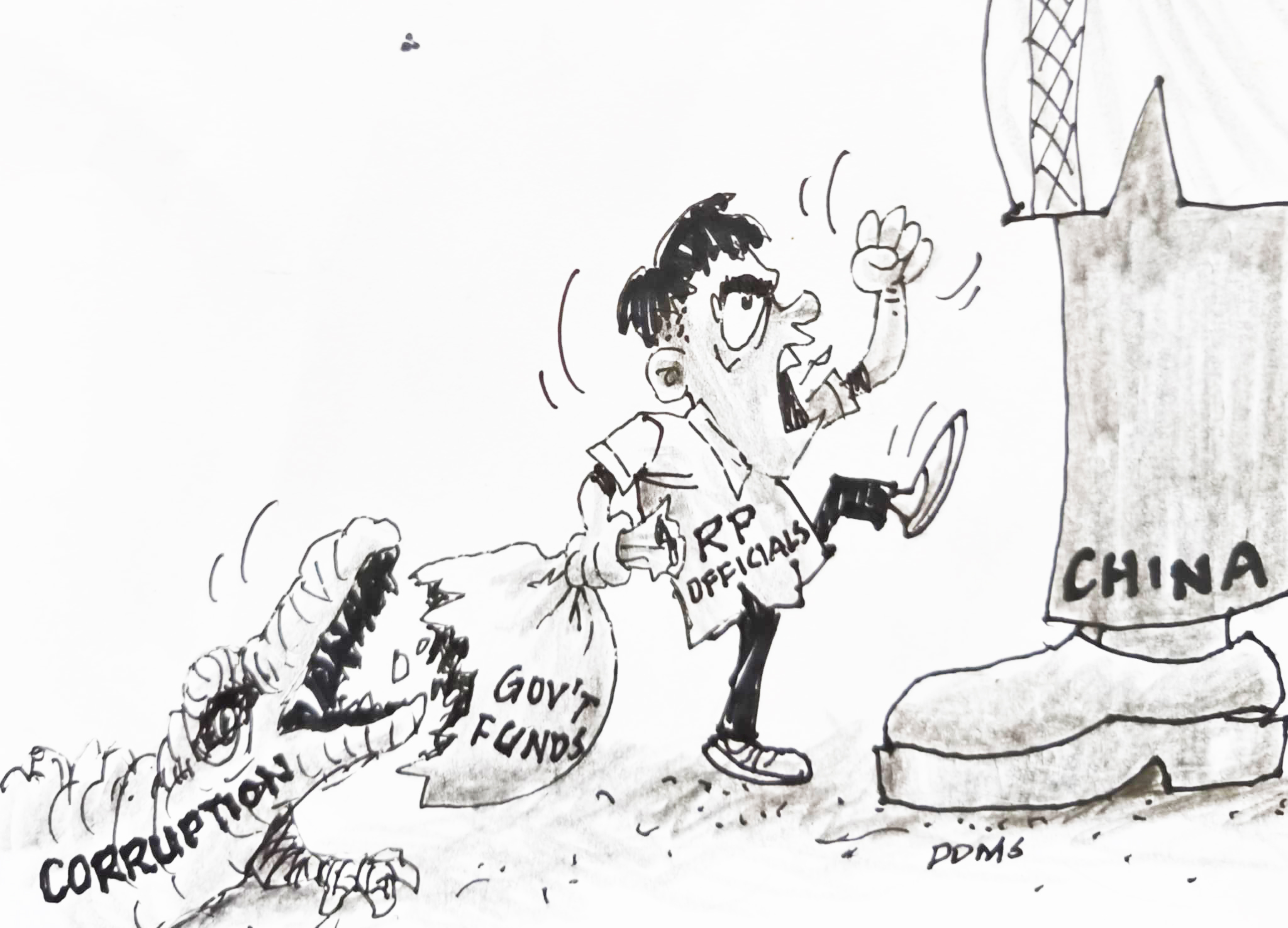
The rhetoric of top Philippine officials is quite bold in denouncing China on the West Philippine Sea issue. However, this bravery is nowhere to be found in dealing with the multi-billion-peso corruption issues in the Philippine government. This warrants further analysis.
There is no argument against the fact that the protection of Philippine sovereignty is the responsibility of every Philippine official. Eloquent denunciations against China on the West Philippine Sea issue may be appreciated by the public. However, making such denunciations requires much more courage than taking decisive action against allies, benefactors, and even political sponsors who may be involved in corrupt activities. While the Philippine government is quick to express its outrage against China on the West Philippine Sea issue, investigations into corruption activities within the Philippine government are going at a snail’s pace or, even worse, not conducted at all.
The Philippines has experienced several corruption scandals in recent years, involving billions of Philippine pesos in health, infrastructure, agriculture, and social protection funds. These funds are intended to build schools and hospitals and to provide for people in dire need of government assistance. These funds are being wasted in corruption activities much more directly and immediately than any vessel in the West Philippine Sea.
This phenomenon also raises an uncomfortable question about what is considered a priority. There is much to gain by confronting China. In fact, it can rally nationalist sentiment and bring together factions united by a common concern. On the other hand, confronting entrenched corruption networks means confronting politicians, donors, and power brokers. There is also the risk of uncovering complicity and undermining alliances. The easy way out is to continue to magnify the threat from without and to see the threat from within as secondary. Corruption is not secondary. Corruption is the daily drain from the public till, the betrayal of trust that distorts policy, drives up costs, and denies citizens basic services.
If true leadership is to mean anything, it must start with cleaning one’s own house. This means strengthening independent auditing bodies, protecting whistleblowers, enforcing strict transparency in procurement, and ensuring that no individual, regardless of position or connection, is exempt from investigation or prosecution. It also means regularly reporting to the public the status of major corruption cases. A nation cannot claim strength from without while it succumbs to decay from within. This requires discipline, courage, and integrity to first be applied to where it is most urgently needed – inside the halls of power.