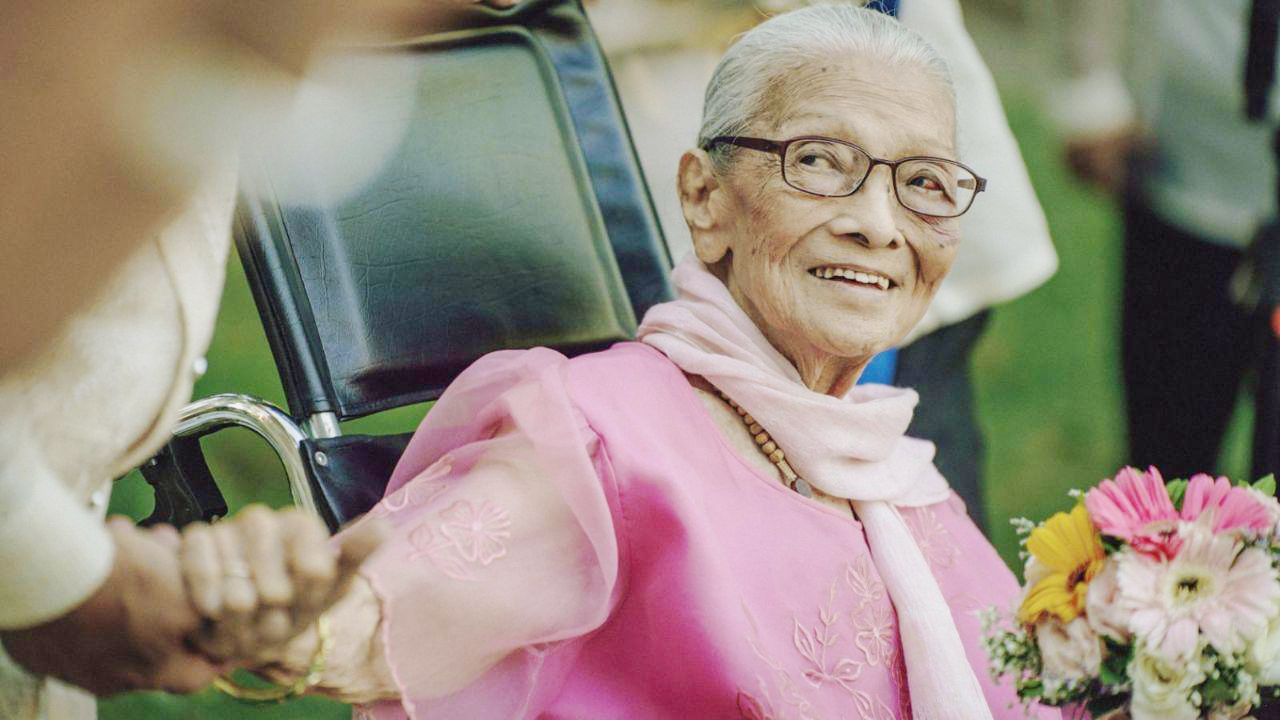
Grief is a sneaky thing.
When we went home to Tacloban on January 22, you were still full of wit and life. You bantered with us, asked for chicharon, and slipped easily into our Sagkahan home. You didn’t question why we weren’t staying at your house in El Reposo. Those days felt ordinary in the best way. We didn’t know we were already counting down.
Unexpectedly, we spent the rest of January and most of February in the hospital. By the time you were discharged, I had to leave town. The afternoon I returned to Tacloban was the afternoon you passed, just eleven minutes after I arrived at the hospital. I made it in time to hold your hand and say goodbye. In the days when you could no longer speak, holding your hand had become how your children and grandchildren said everything.
I grieved all that I could the night you left—in the way I clung to your hand as they pronounced you gone, in the slow walk beside your body to the morgue, in the long hours waiting for the funeral home to arrive. I put my favorite daytime lipstick on you, what felt like my last act of love for you—and an enduring one for Papa and Tita Beh.
In the days that followed, as we signed papers and arranged your funeral and cremation, I carried my grief as lightly as I could. I needed to function—to be logical, pragmatic, attentive to detail. But grief slips out in quiet moments. It surfaced in the stillness of early mornings beside your casket. It lingered as I wiped water stains from the glass so guests could see you clearly.
When we received your urn, I expected my grief to fall heavy and final. But grief is not a boulder; it seeps in like water through hairline cracks. It lives in what you left behind, in the way your urn stayed for a few days at the altar in El Reposo and now at our altar in Sagkahan, in the slow goodbyes as family members return, one by one, to lives they knew before you passed.
I still cannot fully comprehend that the same person who came home with us in January now rests in an urn outside my room. Out of habit, I say good morning and good night. I tell you, I won’t be long when I leave the house. Love does not know, after all, how to stop speaking.
It was heavy to witness what you endured in that last month, to watch your body decide it had done all it could. Yet alongside that heaviness is gratitude. For years, we came home to you in Manila. In the final season of your life, you came home to us.
In losing you, there is grief, but also relief that you are no longer lonely or in pain. Grief, I am learning, is the trouble of the living. People say it is love with nowhere to land. Perhaps that is why it settles into memory and ritual, into the quiet corners of our homes that still hold you. Loving someone who lived until 95 means grief searches longer before learning where to land.
Grief may be sneaky, but so is love. It endures. It reshapes itself. And in learning how to carry my grief, I am also learning how to carry you—with tenderness, with gratitude, and with a love that does not end. (Note: The author is the granddaughter of Estrella Añover Montilla who passed on February 19, 2026 at age 95)
BY: ESTRELLE MONTILLA