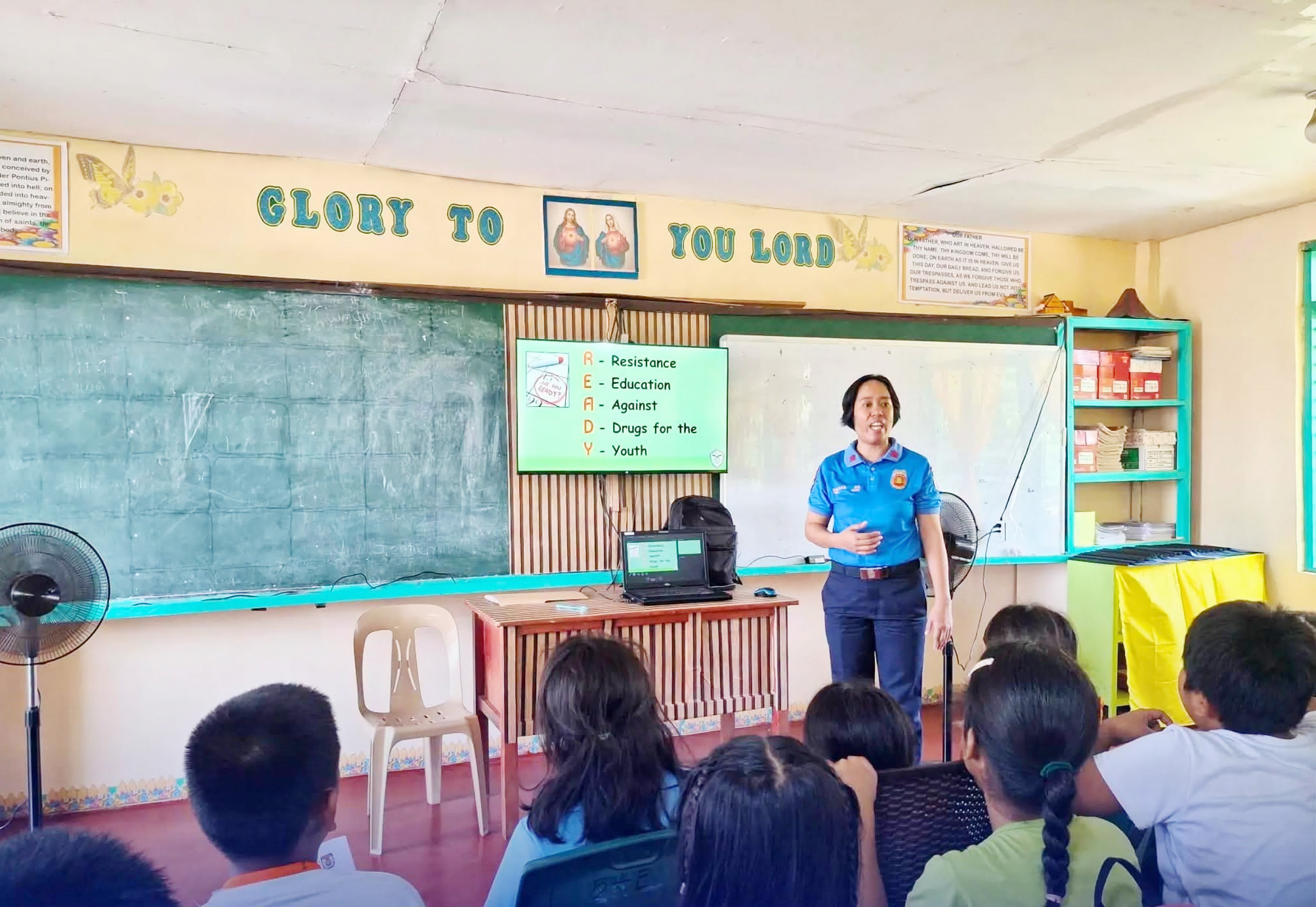
TACLOBAN CITY — Sixty-nine Grade 6 pupils in Bobon, Northern Samar have completed a four-session drug prevention program led by the Northern Samar Police Provincial Office (NSPPO), aimed at helping young learners resist peer pressure and make responsible decisions when confronted with illegal drugs and other harmful substances.
The program, known as Project R.E.A.D.Y. (Resistance Education Against Drugs for the Youth), was conducted at Salvacion Elementary School from August 13 to September 3, marking its initial implementation in the municipality.
The sessions were held every Thursday and covered topics designed to strengthen the pupils’ awareness, values and decision-making skills as part of the police’s preventive approach to drug abuse.
During the first session, police introduced Project R.E.A.D.Y. and discussed the effects and consequences of gateway drugs and other harmful substances.
The second session focused on peer pressure and other influences that could lead young people to experiment with drugs. Pupils were taught ways to recognize and resist negative influences.
The third session centered on moral values and self-esteem, emphasizing self-confidence and a strong sense of self-worth as important factors in making healthy and responsible choices.
The final session, titled “Decision-Making in a Risky Situation,” taught the pupils how to assess potentially dangerous situations, weigh possible consequences and make sound decisions when faced with risks or negative influences.
All 69 Grade 6 pupils completed the four-session module.
The NSPPO said Project R.E.A.D.Y. forms part of its continuing preventive drug education efforts, bringing drug abuse prevention closer to young people through sustained engagement with schools, families and communities.
The program is being implemented under the leadership of NSPPO Provincial Director PCOL George B. Buyacao Jr., who has emphasized the importance of cooperation among law enforcement agencies, schools, parents and other stakeholders in promoting safer, healthier and drug-free communities.
Salvacion Elementary School head Leah T. Nogales expressed support for the initiative, saying stronger cooperation between the police and education sector is important in protecting children from the dangers of illegal drugs and other harmful substances.
The NSPPO said early drug prevention education can help equip children with knowledge and practical skills that they can use in dealing with peer pressure and other challenges as they grow older.
Through programs such as Project R.E.A.D.Y., the police aim to strengthen preventive measures against drug abuse while encouraging young people to develop positive values and make informed decisions.
(ROEL T. AMAZONA)