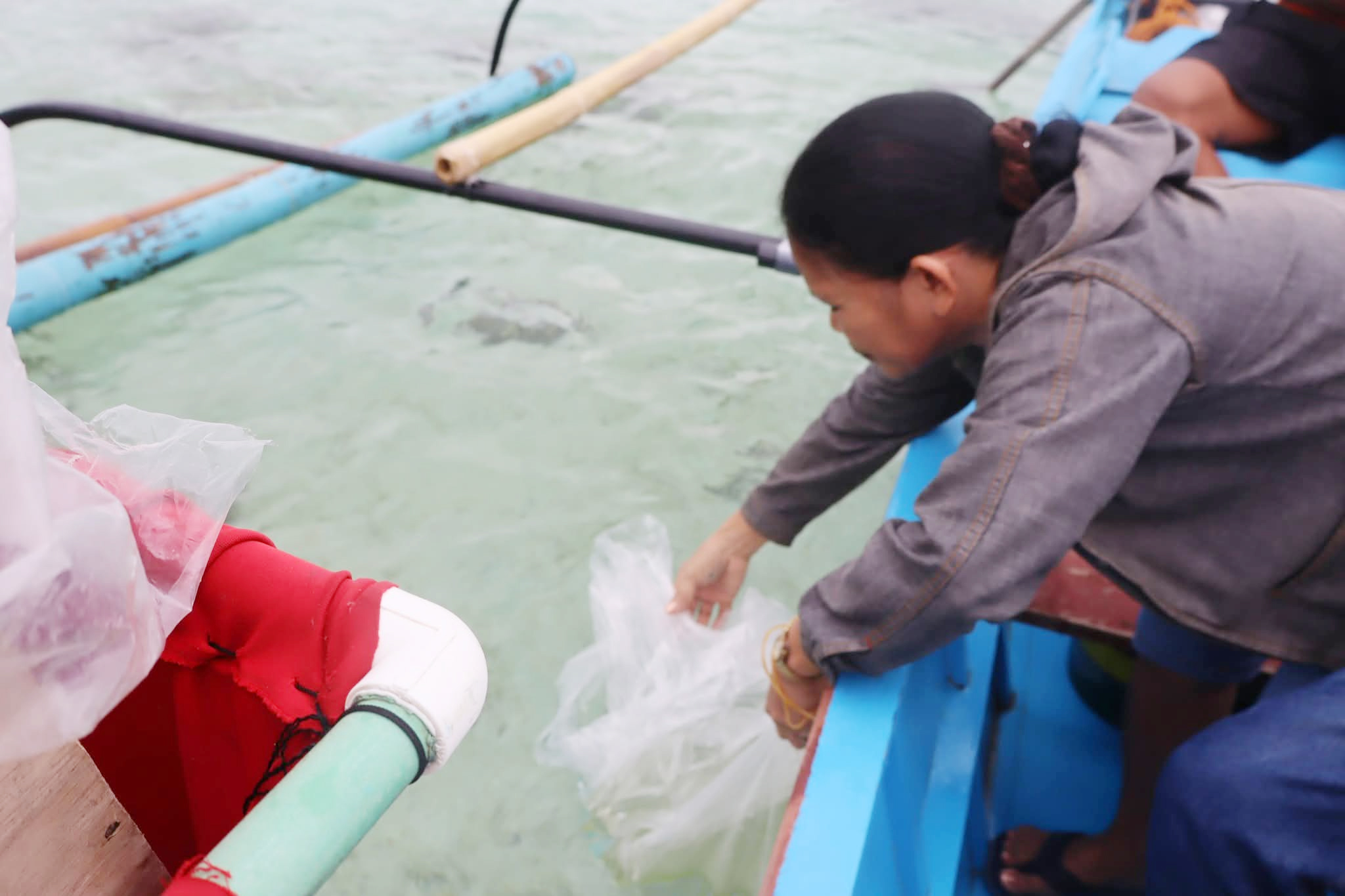
TACLOBAN CITY– The provincial government of Southern Leyte has released one million blue swimming crab larvae into the waters of two coastal towns as part of an intensified effort to restore declining crab stocks and secure the livelihood of thousands of fisherfolk.
Under the “Rehabilitation of Southern Leyte Blue Swimming Crab Industry through Stock Enhancement” program, the province dispersed around 600,000 blue swimming crab (BSC) larvae in the zoea stage in Barangay Sabang, Hinundayan, on February 19, followed by another 400,000 larvae in Barangay Tabugon, Liloan, on February 20.
The initiative is being led by the Fisheries Section of the Provincial Agriculture Office and forms part of a broader marine restoration strategy of the provincial overnment of Southern Leyte.
The latest dispersal builds on earlier releases of about 5.4 million larvae in the towns of San Juan, Saint Bernard, Silago, and Hinunangan, expanding the program’s coverage across key fishing grounds in the province.
The blue swimming crab, locally known as “lambay” and scientifically identified as Portunus pelagicus, is among the most commercially valuable marine species in Southern Leyte.
It supports small-scale fishers and supplies both local markets and seafood processors. However, overfishing, habitat degradation, and environmental pressures have contributed to fluctuating and, in some areas, declining catches in recent years.
Through stock enhancement — a process of breeding and releasing larvae into natural waters — the provincial government aims to replenish crab populations, stabilize harvests, and ensure long-term sustainability of the industry.
Officials described the program as both an environmental intervention and an economic investment, emphasizing that rebuilding crab stocks directly translates to improved income opportunities for coastal communities.
Provincial authorities said monitoring activities will continue to assess survival rates and long-term impact, as the local government strengthens partnerships with fisherfolk and coastal barangays to protect and manage marine resources.
(JOEY A. GABIETA)