25.3 C
Tacloban City
October 02, 2026 - Friday | 11:57 PM
Home Blog Page 98

Tricycle driver arrested in buy-bust operation

0

ORMOC CITY — A 45-year-old tricycle driver listed as a street-level drug personality was arrested during a buy-bust operation conducted by the Station Drug Enforcement Team (SDET) of the Balangiga Municipal Police Station on Friday night, June 26, in Barangay Bacjao, Balangiga, Eastern Samar.

The suspect, identified only by the alias “Rene,” is a resident of Balangiga and is included in the local police’s drug watchlist.

Police said the suspect sold a sachet containing a white crystalline substance believed to be shabu to an undercover operative for P500 during the anti-drug operation.

A body search conducted in the presence of the required witnesses led to the recovery of two additional sachets of suspected shabu concealed inside the suspect’s belt bag.

Authorities also recovered P700 in cash, including the marked P500 buy-bust money, a lighter, and a red Honda TMX Supremo motorcycle with a sidecar believed to have been used by the suspect.

The suspect was informed of the reason for his arrest and apprised of his constitutional rights in a language he understood.

Police are preparing charges for violations of Republic Act No. 9165, or the Comprehensive Dangerous Drugs Act of 2002, against the suspect, who is currently detained at the Balangiga Municipal Police Station pending the filing of appropriate charges.

(ROBERT DEJON)

PRO-8 conducts specialized training to enhance police response to active shooter incidents

0
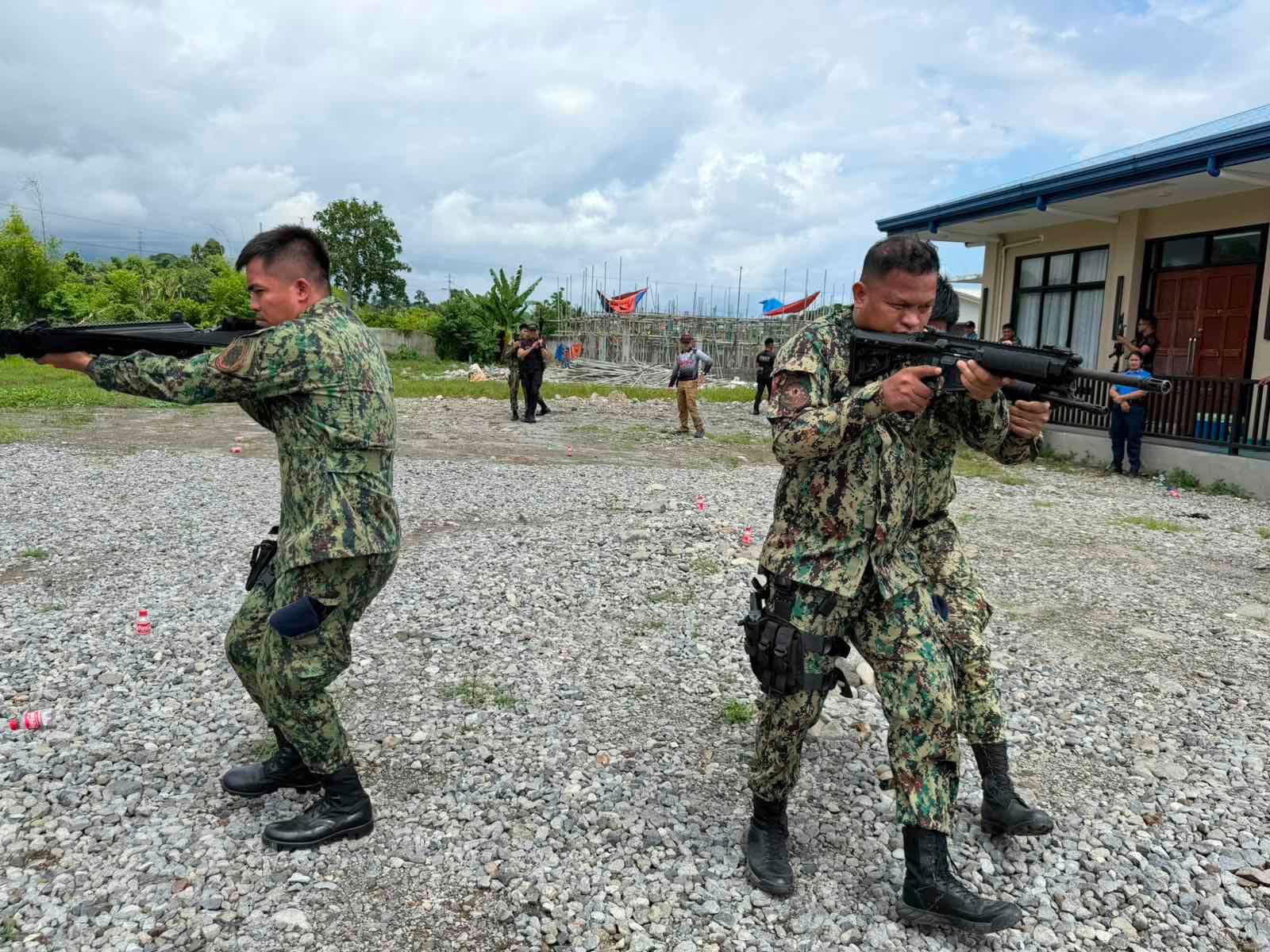
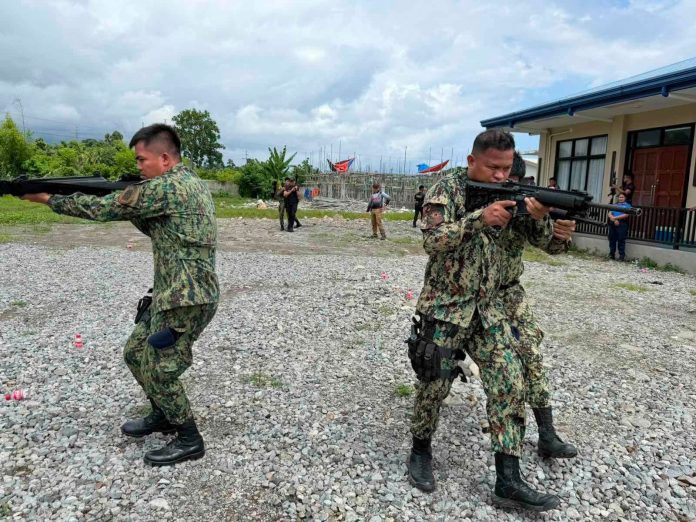
Enhancing Tactical Readiness. Police personnel from the Police Regional Office 8 participate in practical exercises during the launch of the Tactical Response on Active Shooting Incident program at the Convention Center in Barangay Tabgas, Albuera, Leyte. The specialized training aims to strengthen law enforcement’s capability to respond effectively to active shooter incidents and other high-risk emergencies through coordinated tactical operations and simulation drills. (ROEL T.AMAZONA)
Enhancing Tactical Readiness. Police personnel from the Police Regional Office 8 participate in practical exercises during the launch of the Tactical Response on Active Shooting Incident program at the Convention Center in Barangay Tabgas, Albuera, Leyte. The specialized training aims to strengthen law enforcement’s capability to respond effectively to active shooter incidents and other high-risk emergencies through coordinated tactical operations and simulation drills.
(ROEL T.AMAZONA)

ALBUERA, Leyte – Police personnel in Eastern Visayas underwent specialized tactical training on Sunday, June 28, as the Police Regional Office 8 (PRO-8) launched its Tactical Response on Active Shooting Incident program aimed at improving law enforcement’s capability to respond swiftly and effectively to active shooter situations and other high-risk emergencies.

The training, held at the Convention Center in Barangay Tabgas, this town, was organized by the 1st Leyte Provincial Mobile Force Company in coordination with the Albuera Municipal Police Station.

The activity was attended by police personnel under the leadership of PRO-8 Regional Director B/Gen. Jason Capoy, represented by Leyte Police Provincial Office Officer-in-Charge Police Colonel Celerino Sacro Jr.

Participants included personnel from the 1st and 2nd Leyte Provincial Mobile Force Companies, the Albuera Municipal Police Station, and Task Force Kamurayaw who took part in a series of lectures and practical exercises designed to strengthen tactical skills and operational coordination during critical incidents.

The training covered tactical response procedures, threat assessment, coordinated operations, rapid decision-making, and adherence to established operational protocols. Simulation exercises also focused on improving teamwork, communication, and the ability of first responders to make timely and effective decisions during emergencies.

According to PRO-8, the program forms part of its continuing efforts to enhance the operational readiness, tactical proficiency, and professional competence of police personnel in addressing evolving security threats across Eastern Visayas.

The regional police office emphasized that regular capability-building activities ensure officers remain prepared to protect lives, preserve public order, and respond effectively to crisis situations.

The initiative likewise reinforces the Philippine National Police’s commitment to delivering responsive, professional, and reliable public safety services under its mandate to serve and protect the Filipino people.

(LIZBETH ANN A. ABELLA)

Amend that law

0

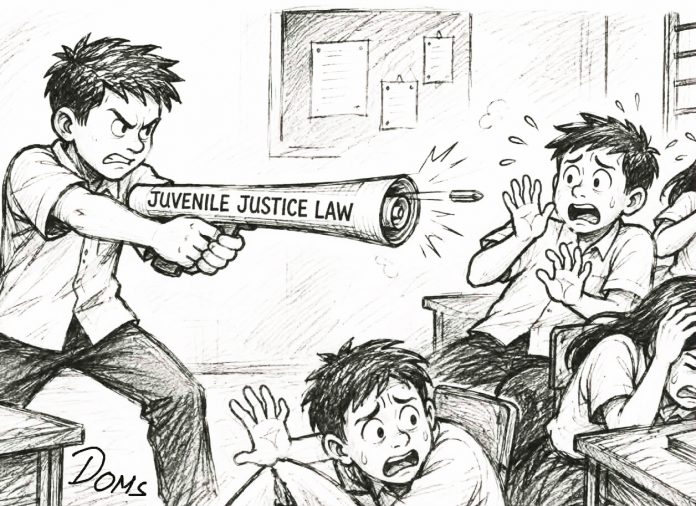
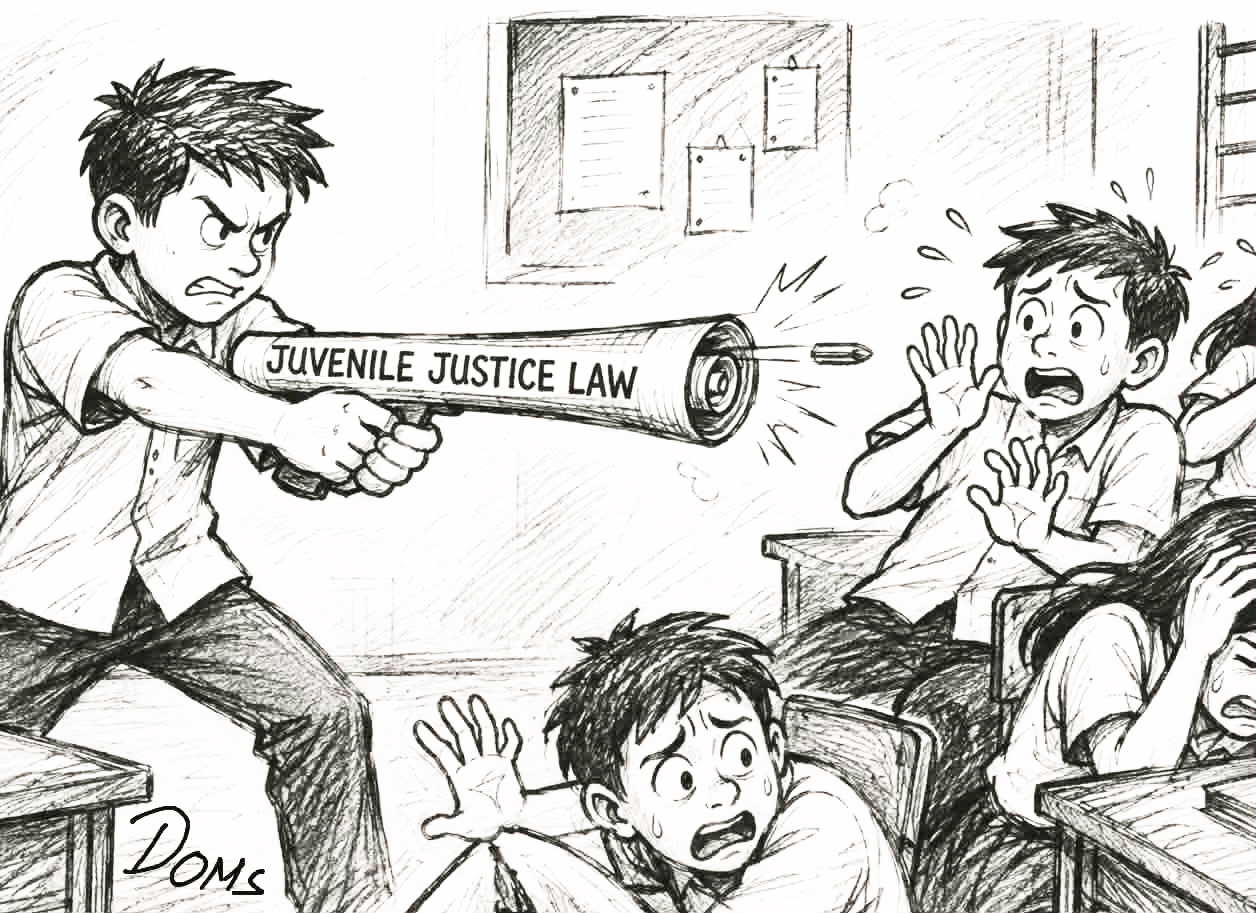
Senator Robin Padilla is right to call for a special Senate session to amend the Juvenile Justice and Welfare Act of 2006. The law, in its current form, has become dangerously outdated against the harsh realities of present-day violence involving minors. When a law begins to protect deliberate killers instead of innocent lives, it has failed its purpose.

The recent school shooting involving a 14-year-old student should shake lawmakers into action. A teenager entered school grounds armed, fired thirty-eight rounds, killed three fellow students, and wounded several others. This was not childish mischief or a moment of confusion; it was a deliberate act of violence. Yet under the current law, the shield of minority stands so wide that even such grave acts are met with legal softness. That sends a deadly message: age can be used as a shield for murder.

Laws are meant to guide society toward justice, not create loopholes for evil. The original purpose of the Juvenile Justice Law was understandable—to protect young offenders from harsh systems when their actions were born of immaturity, neglect, or poverty. But that protection was never meant to excuse calculated brutality. There is a wide difference between a child who steals food out of hunger and a child who plans a massacre, understands its consequences, and carries it out anyway. The law’s failure lies in treating both under the same broad mercy.

What makes the issue worse is the growing awareness among minors themselves. Reports and conversations now show that some young offenders know the law better than many adults do. They know they cannot easily be jailed, and that knowledge changes behavior. It removes fear. It encourages recklessness. When the law becomes part of the planning of a crime, that law has become an accomplice. No nation can afford a justice system that unintentionally trains young minds to exploit it.

Amending the law does not mean abandoning compassion for the youth. It means drawing a hard line between mistake and malice, between accident and intent. A minor who causes death by accident, or acts in genuine self-defense, deserves protection and rehabilitation. But a minor who knowingly commits murder, armed with full awareness of what he is doing, must face serious and proportionate punishment. Congress must act with urgency. Justice for the dead, safety for the living, and accountability for the guilty demand nothing less.

Monstrous tandem

0

On August 5, 1972, the world watched as burglars tied to political power brought down a presidency in the United States through the Watergate scandal. It was politics and corruption dancing in the same room, and the building nearly burned. That unholy marriage remains one of the ugliest forces any nation can endure, and I have always believed it is among the fastest ways to rot a country from the inside.

I can tolerate politics in the way one tolerates rain on laundry day—annoying, inconvenient, often messy, but part of life. Politics, after all, is unavoidable; it is the machinery of power, the marketplace of ideas, the endless wrestling match of human ambition. But corruption is a different beast. Corruption is not noise; it is poison. And when politics begins feeding that poison instead of fighting it, what emerges is not government but a feeding frenzy, like vultures fighting over a carcass they themselves killed.

What’s sickening is how politics becomes the perfect shield for thieves. A plunderer in office no longer needs innocence; he only needs allies. The moment accusations rise, the script is always the same: “This is political persecution.” It is a cheap umbrella in a storm of evidence. Facts get buried beneath party colors, and stolen money vanishes behind speeches, press conferences, and finger-pointing. The public ends up staring at smoke while the fire quietly eats the house.

And that house, of course, is the nation itself. A government obsessed with political survival spends less time fixing roads, feeding children, or building hospitals and more time buying loyalty. Public funds become poker chips. Cabinet seats become rewards. Investigations become theater. Laws become elastic, stretched until they fit whoever is in power. I have always found that part almost comical—if it were not so tragic. It is like watching termites hold elections over who gets to chew the pillars first.

History is cruelly honest about this. Dictatorship showed how political machinery can protect massive theft for years while critics were silenced and institutions bent to serve one family’s appetite. Across the seas, Operation Car Wash in Brazil exposed how politicians and business giants built an empire of bribery so large it shook the entire government.

These are not fairy tales. They are receipts. Nations bleed not only from war but from men in barongs, suits, and neckties who know exactly how to smile while robbing the treasury.
And what chance does an ordinary citizen have when every gate is guarded? That is the cruelest joke. Protest if you must, but permits can be denied. Speak if you dare, but lawsuits can rain down. File complaints, but the offices meant to hear them may already be occupied by friends of the accused. I often think corruption with political backing behaves like an octopus—its head hidden, but its arms wrapped around courts, police, media, and budgets. Cut one arm, and another tightens elsewhere.

What makes this evil monstrous is not only the money stolen but the culture it breeds. Young people watch and learn. They begin to think honesty is for fools and power is the only real law. A child who sees thieves celebrated grows up measuring success not by character but by cunning. That, to me, is the deepest wound. Roads can be rebuilt. Economies can recover. But a generation taught to admire wolves instead of shepherds is harder to save.

That is why I cannot shrug this off as “just politics.” Politics is rough, yes, but it need not be rotten. The cure, as I see it, is stubborn transparency, strong institutions, and citizens who refuse to be hypnotized by slogans or bribed by crumbs. The broom must keep sweeping, even when the dust fights back. Because if corruption and politics continue to sleep in the same bed, the nation will keep waking up poorer and weaker, wondering who stole the morning.

Staying calm amid life’s storms

0

THAT’S what we can learn from that gospel episode about Christ’s disciples caught in a storm while in the middle of the sea. (cfr. Mt 8,23-27) They, at first, were gripped with fear, a very understandable reaction.

And when they noticed Christ simply sleeping in the boat, they woke him up, expressing their fear. That’s when Christ simply stood up and calmed the turbulent sea, leaving them greatly astonished. But Christ faulted them for their lack of faith.

Yes, we too can easily be frozen in fear when we encounter the different forms of life’s storms. But like Our Lord’s disciples, we should just go immediately to him and ask for his help. And to be sure, he will always be there to help, but maybe in ways that may escape our understanding. In this, we should not be surprised and start to loosen our faith in God’s powerful and wise ways.

There’s really no reason to be too worried and anxious when we encounter some difficulty in our life. In fact, we have every reason to be confident and at peace, focused on what we are supposed to do. And that’s because we are always in God’s hands.

Whatever situation we may be in, we can be sure that God will always provide for what is truly needed by us, and it may not be what we want. We just have to trust him completely for he knows better than we do, and what we want may not be what we need. It may not even be what is good for us.

God always knows what to do in any situation we may find ourselves in. He may allow some evil to come to us, an evil that can do us no harm unless we let it, but God knows how to draw good from evil.

Ours is simply to trust God completely, and out of that trust, we should always feel confident and courageous to do what we are supposed to do. We should not waste our time lamenting and feeling like a victim, or wallowing in doubts, passivity and self-pity.

We have to remove ourselves from that state mentioned by St. Paul in his Letter to the Ephesians: “children tossed to and fro and carried about with every wind of doctrine, by the cunning of men, by their craftiness in deceitful wiles.” (4,14) We have to keep going. There are a lot of things to do.

Yes, there will always be challenges, problems, difficulties that humanly speaking may be impossible for us to tackle. But as long as we have trust in God, we can sincerely echo St. Paul’s words: “I can do all things in him who strengthens me.” (Phil 4,13) These words have been verified to be true in the lives of all the saints, especially the martyrs.

It’s important that we be confident and at peace always, because that would put us in the proper condition to do the things we are supposed to do. It will make us bold and courageous, fruitful and productive.

It is a confidence that is not presumptuous. It goes together with prudence, discretion and tact. It is meek and humble, not pompous, arrogant and vain. It reassures and inspires people. It would make us credible in our witnessing to Christ’s saving message.

It is a confidence that is both in heaven and on earth. It happily blends eternity and time. It is not simply theoretical. It is also realistic and practical.

To make our schools truly safe, they must be given greater financial support

0

Kinahanglan hin support, kinahanglan hin sakto nga budget!

For our schools to be safer, they need more than promises — they need greater financial support, transparent governance, and genuine autonomy. The tragedies linked to unsafe, overcrowded classrooms are not isolated accidents but systemic failures rooted in corruption, weak procurement, and symbolic reforms. If education is the backbone of our nation, then reforming how we fund and manage schools is a matter of survival.

The Philippine Constitution (Article XIV, Section 5) mandates the State to “assign the highest budgetary priority to education.” Yet in practice, allocations fail to meet the urgent need for safe learning environments.

The Government Procurement Reform Act (RA 9184may have been changed to a better law perhaps but still the law is implemented by men. And it is was designed to ensure transparency and competition in public spending. However, corruption persists:

• Overpriced contracts and substandard construction plague classroom projects.
• Patronage politics dictates project allocation.
• False reporting of completed classrooms masks inefficiencies.

These failures explain why thousands of children study in unsafe, makeshift spaces. Corruption transforms budget allocations into hollow promises, undermining both safety and learning.

School-Based Management (SBM), institutionalized through DepEd Order No. 44 (2016), was meant to empower schools to manage resources locally. In reality, SBM is often symbolic: schools lack fiscal autonomy and remain dependent on centralized, bureaucratic processes. Without genuine control, principals and communities cannot address urgent needs like classroom repairs or security upgrades.

If we are to protect our children, we must treat education reform as a national emergency. Procurement must be transparent, SBM must be real, and budgets must prioritize both classrooms and security. Only then can we ensure that schools are sanctuaries of learning, not sites of tragedy.

Recent Posts

DALMACIO C. GRAFIL
PUBLISHER

ALMA GRAFIL
EDITOR-IN-CHIEF

ROMEO CEBREROS
OFFICE IN-CHARGE

OFFICE
BRGY. SONGCO, BORONGAN CITY

CONTACT NUMBERS
(055) 261 – 3319 | 0955 251 1533 | 0917 771 0320 | 0915 897 7439 | 0921 511 0010

DALMACIO C. GRAFIL
PUBLISHER

RICKY J. BAUTISTA
EDITOR

ALMA GRAFIL
BUS. MANAGER

OFFICE
RIZAL AVENUE, CATBALOGAN
(INFRONT OF FIRE DEPARTMENT, NEAR CITY HALL)

CONTACT NUMBERS
0917 771 0320 | 0915 897 7439 | 0921 511 0010

EMAIL
lsdaily2@yahoo.com

WEBSITE
www.issuu.com/samarweeklyexpress