24.5 C
Tacloban City
October 03, 2026 - Saturday | 3:57 AM
Home Blog Page 94

DepEd calls for long-term mental health support after fatal San Jose NHS shooting

0
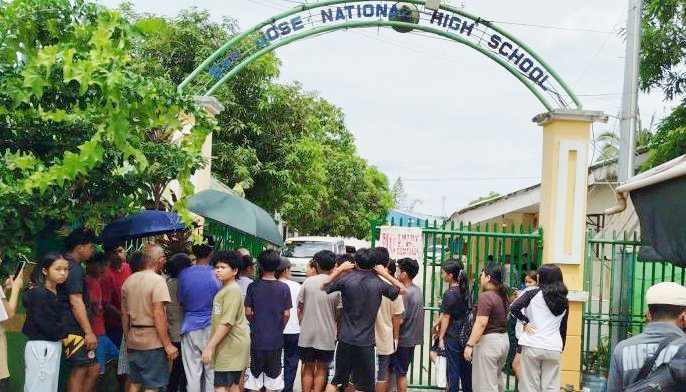
MENTAL HEALTH SUPPORT. DepEd Tacloban Schools Division Senior Guidance Coordinator Julienne Rosa Saballa underscores the importance of sustained psychological support and follow-up interventions for students affected by the June 22 shooting at San Jose National High School, stressing that long-term mental health care is essential as learners prepare to return to classes.(Photo Courtesy)

TACLOBAN CITY – As students prepare to return to classes following the deadly shooting at San Jose National High School (SJNHS), the City Schools Division here is calling for sustained mental health interventions, warning that the psychological effects of the tragedy could persist long after the incident if left unaddressed.

The Department of Education (DepEd) Tacloban Schools Division has underscored the need for continuous psychological support for students affected by the June 22 shooting at San Jose National High School (SJNHS), saying recovery from trauma extends far beyond the immediate aftermath of the tragedy.

DepEd Tacloban Schools Division Senior Guidance Coordinator Julienne Rosa Saballa said students who underwent Psychological First Aid (PFA) immediately after the shooting should continue receiving follow-up interventions to help them recover emotionally and prevent long-term mental health problems.

She explained that while PFA is designed to stabilize the emotional responses of individuals following a traumatic event, healing is a gradual process that requires continuous monitoring and professional support.

“If these emotional responses are not addressed early, they may manifest later in adulthood as mental health conditions such as anxiety, depression, and post-traumatic stress disorder,” Saballa said.

She noted that guidance personnel have already provided Psychological First Aid to affected students and school personnel, but emphasized that regular follow-up assessments remain necessary as learners gradually return to the classroom.

“Healing does not happen in one or two days. It is a process, which is why follow-up is necessary,” she said.

Saballa also urged parents to closely observe changes in their children’s behavior and seek assistance from the City Health Office or qualified mental health professionals if they notice signs of emotional distress or trauma.

The June 22 shooting at San Jose National High School left three students dead and injured 20 others, sending shockwaves through the school community and raising concerns over the long-term psychological impact on survivors, classmates, teachers, and families.

The tragedy has also highlighted the shortage of licensed guidance counselors in public schools, prompting DepEd to push for the full implementation of Republic Act No. 12080, or the Basic Education Mental Health and Well-Being Promotion Act.

Saballa said only two of Tacloban City’s four public high schools have registered guidance counselors, while the remaining secondary schools and dozens of elementary schools rely on teachers assigned to perform guidance-related duties.

“The ideal ratio is one registered guidance counselor for every 500 students. At Leyte National High School, we are only two guidance counselors serving more than 8,000 students,” she said.

She explained that registered guidance counselors are licensed professionals who provide counseling, career guidance, crisis intervention, and mental health services that are vital to students’ overall well-being and the prevention of behavioral problems and school violence.
According to Saballa, the full implementation of Republic Act No. 12080 would create additional plantilla positions for school counselors, school counselor associates, and school division counselors. The law also mandates the establishment of care centers in every public basic education school to provide counseling services, mental health first aid, and preventive psychosocial programs.

As schools prepare for the resumption of classes, DepEd guidance counselors are also conducting orientation sessions for teachers to help them recognize and appropriately respond to students who may continue to experience trauma, anxiety, or emotional distress following the shooting.

Saballa said the combined support of schools, families, and mental health professionals will be crucial in helping affected learners safely transition back to the classroom while rebuilding their sense of security and well-being.

(ROEL T. AMAZONA)

Three charged with kidnapping, double murder in slay of former Abuyog vice mayor, son

0
KIDNAPPING WITH DOUBLE HOMICIDE.This undated photo shows former Abuyog, Leyte Vice Mayor James Bohol (left) and his son, Carlo. Authorities have filed kidnapping with double homicide charges against three suspects in connection with their deaths following an intensive police investigation.(File Photos)

TACLOBAN CITY — Police have filed two counts of kidnapping with double homicide against three men in connection with the abduction and killing of former Abuyog, Leyte Vice Mayor James Bohol and his son, Carlo, saying the evidence gathered is sufficient to support prosecution.

The charges were filed on Thursday, July 2, before the Office of the Provincial Prosecutor in Abuyog against Mark James Taboy, 30; Kim Solayao, 27; and Reniel Galza, 24, all residents of Basey, Samar.

The three suspects are currently under police custody at the Mayorga Municipal Police Station after surrendering to authorities in Pasay City late Monday night, June 30.
Police said the filing of charges came less than a week after the crime, citing forensic evidence, witness testimonies, and the suspects’ movements before and after the incident as key pieces of evidence supporting the case.

Former vice mayor James Bohol, 60, and his 30-year-old son, Carlo, were reported missing after they were allegedly abducted from their warehouse in Mayorga, Leyte, on June 27.
Their bodies were found three days later in a ravine in Barangay Imelda, Silago, Southern Leyte, following an extensive search operation. Authorities later confirmed through forensic and medico-legal examinations that the recovered bodies were those of the missing father and son.

Leyte Police Provincial Director Col. Celerino Sacro said investigators believe the suspects were attempting to evade arrest after the killings.

“Based on the timeline, they were really planning to escape,” Sacro said during a media briefing on Thursday.

According to investigators, the victims were allegedly abducted in Mayorga, transported through Abuyog, and their bodies were later dumped in the mountainous area of Silago. Police tracked the suspects to Pasay City, where they eventually surrendered to local authorities.

Investigators have yet to determine why the suspects traveled to Pasay or whether they intended to leave Metro Manila.

The charges were filed despite claims made by Taboy in a circulating video that the deaths resulted from an act of self-defense and that there was no intention to kill the victims.
Leyte Police Provincial Office legal officer Lt. Col. Annaliza Centeno said the claim would ultimately be evaluated by the court.

“That is his defense, but it will be the court that will determine whether it was indeed an act of self-defense,” Centeno said.

Taboy alleged that Carlo Bohol had threatened to kill their families.

However, medico-legal findings showed that former vice mayor Bohol sustained three stab wounds to the neck, while his son suffered six stab wounds in the same area, underscoring the brutality of the attack.

Investigators declined to identify which of the three suspects allegedly inflicted the fatal wounds, saying the matter would be presented as part of the prosecution’s evidence during trial.

Police are continuing to investigate the motive behind the killings.

Centeno said one of the primary angles being pursued is an alleged unpaid loan that Taboy had obtained from the former vice mayor.

“That is one of the motives that we are considering,” she said, adding that investigators are also looking into other possible motives but declined to elaborate to avoid jeopardizing the ongoing investigation.

(LIZBETH ANN A. ABELLA, ROEL T. AMAZONA)

Implement shooting drills

0

For a long time, the Philippines has viewed school shootings as a unique problem that only occurs in other countries. The safety plans for its domestic schools were only developed to prepare for natural disasters such as typhoons, earthquakes, and fires, and regular earthquake and fire drills are held every year.

However, the string of gun-related violent incidents that recently occurred on a local campus has fully exposed a serious gap in schools’ capacity to respond to armed attacks. The lethality of this gap cannot be underestimated: in school shooting cases, chaos is the core driver that pushes up casualties. Teachers and students without pre-established response plans are highly likely to take incorrect escape routes and waste the precious window of time to seek safety.

Casualties caused by panic are no less severe than those inflicted by bullets themselves, and unplanned instinctive reactions will greatly expand the scale of the tragedy. In response to concerns that introducing active shooter drills would spread fear among children, we must clarify that the fire and earthquake drills long accepted by the public have never triggered the corresponding disasters. The logic that “preparing for a disaster equals inviting it” is completely untenable.

The core purpose of drills is to train students’ survival literacy; unplanned, sudden fear is the real harm. We call on the Philippines’ school governing authorities, the Department of Education, and local governments to take immediate action while the warning effect of these incidents remains salient, to complete three tasks: formulating clear response procedures, training teachers, and teaching age-appropriate response plans for armed threats.

Integrating school shooting response into the campus safety system is a responsibility that must be fulfilled, not an optional choice. Campus safety must address both natural-disaster risks and man-made violent risks simultaneously to protect students and the entire school community.

Nuclear expansion

0

Upon learning about the news that North Korea’s top leader, Kim Jong-Un, had ordered the expansion of the country’s nuclear arsenal, I could not hide my dismay. It was not an unprovoked hatred toward an individual, but a rational criticism of the absurd decision to expand nuclear arms itself.

This decision fundamentally misjudges the purpose of nuclear weapons, and it has pushed the security of the entire Northeast Asia region and even the whole world into a more dangerous state. Over the years, North Korea has conducted multiple nuclear tests and ballistic missile launches, which have already stretched tensions on the Korean Peninsula to a breaking point.

Ordinary people in South Korea, Japan, and the United States have long been on edge from repeated missile alerts. Even citizens of North Korea itself have to bear the heavy weight of international sanctions brought by the country’s nuclear policies year after year, with resources that could have been used to improve people’s livelihoods all drained into endless military expansion.

Those who promote nuclear deterrence always describe nuclear weapons as a shield to protect their homeland, but this is no shield at all. It is tantamount to sharpening a sword inside a room stacked full of gasoline, or setting one’s own house on fire just to ward off a thief.

What is worse, some people treat the whole world as a chessboard they can manipulate at will, and the lives of millions of ordinary people as pawns in their power games. They completely forget that nuclear war is a boomerang that always returns to hit its thrower; no country can stay unscathed in a global nuclear conflict.

Even the power that first acquired nuclear weapons cannot escape the spread of nuclear radiation and the collapse of the global order. The so-called logic that “the more nuclear weapons you have, the safer you are” was untenable from the very start. The larger the stockpile of nuclear warheads, the greater the risk of dragging all of humanity into destruction.

I have no personal hatred of Kim Jong-un, but I cannot accept that he has staked the fates of hundreds of millions of people as a gamble. People of any country should never have to pay the price for a small group of people’s nuclear ambitions. True security never comes from owning more nuclear warheads capable of destroying the world. True strength lies in the restraint to refuse to deploy nuclear weapons, and the courage to sit down for peaceful dialogue with neighboring countries.

Only by letting go of the obsession with expanding nuclear arsenals, replacing deterrence with dialogue and expansion with restraint, can we win real, long-lasting peace for ordinary people, instead of waiting for doomsday to arrive under the shadow of nuclear war.

Bridging worlds: Navigating cross-Cultural management in the global enterprise

0

Multinational companies (MNCs) operate across diverse cultural landscapes, bringing together individuals from various backgrounds, values, and communication styles. Effective cross-cultural management is no longer a mere HR function but a strategic imperative for MNCs seeking to foster collaboration, innovation, and global success. This article explores the challenges and opportunities of cross-cultural management in MNCs, examining key strategies for building culturally intelligent teams and navigating the complexities of a global workforce.

The Global Tapestry: Why Cross-Cultural Management Matters

The globalization of business has created a complex tapestry of cultures within MNCs. This diversity, while a potential source of strength, can also lead to misunderstandings, conflicts, and inefficiencies if not managed effectively. Cross-cultural management aims to bridge these cultural divides, fostering a work environment where individuals from different backgrounds can collaborate effectively, communicate openly, and contribute their unique talents to achieve common goals.

The benefits of effective cross-cultural management are numerous:

Improved Communication: Understanding cultural differences in communication styles can prevent misunderstandings and promote clearer, more effective communication.

Enhanced Collaboration: Creating a culturally inclusive environment fosters collaboration and teamwork among individuals from diverse backgrounds.

Increased Innovation: Diverse teams are more likely to generate innovative ideas and solutions, leveraging the unique perspectives and experiences of their members.

Greater Employee Engagement: Employees who feel valued and respected for their cultural background are more likely to be engaged and committed to the organization.

Improved Global Performance: Effective cross-cultural management can enhance an MNC’s ability to operate successfully in diverse markets, adapt to local customs, and build strong relationships with stakeholders.

Building Bridges: Strategies for Effective Cross-Cultural Management

Effective cross-cultural management requires a multifaceted approach that addresses both individual and organizational levels. Key strategies include:

1. Cross-Cultural Training:

Description: Providing employees with training on cultural awareness, communication skills, and strategies for working effectively with individuals from diverse backgrounds.
Implementation: Offer workshops, online courses, and simulations to help employees develop cross-cultural competence.

2. Diversity and Inclusion Programs:

Description: Implementing programs to promote diversity and inclusion throughout the organization.
Implementation: Establish employee resource groups, conduct diversity audits, and implement inclusive hiring practices.

3. Global Mobility Programs:

Description: Providing employees with opportunities to work in different countries and cultures.

Implementation: Offer international assignments, short-term projects, and virtual exchange programs.

4. Mentoring and Coaching:

Description: Pairing employees from different cultural backgrounds to provide mentoring and coaching.

Implementation: Establish mentoring programs that pair senior employees with junior employees from diverse backgrounds.

5. Communication Strategies:

Description: Developing communication strategies that are sensitive to cultural differences.
Implementation: Use clear and concise language, avoid jargon and slang, and be mindful of nonverbal cues.

6. Leadership Development:

Description: Developing leaders who are culturally intelligent and able to lead diverse teams effectively.

Implementation: Offer leadership development programs that focus on cross-cultural competence and inclusive leadership.

7. Organizational Culture:

Description: Creating an organizational culture that values diversity and promotes inclusion.

Implementation: Communicate the importance of diversity and inclusion, recognize and reward employees who promote these values, and create a safe and respectful work environment.

Case Studies: Success Through Cultural Intelligence

Several MNCs have demonstrated the power of effective cross-cultural management:
IBM: IBM has a long history of promoting diversity and inclusion, recognizing that a diverse workforce is essential for innovation and global success. The company has implemented numerous programs to support employees from diverse backgrounds and promote cross-cultural understanding.

Procter & Gamble: P&G operates in diverse markets around the world and has developed a strong capability in cross-cultural management. The company emphasizes cultural sensitivity, local market knowledge, and building strong relationships with local partners.
Accenture: Accenture has a global workforce and a strong commitment to diversity and inclusion. The company has implemented numerous programs to promote cross-cultural collaboration and develop culturally intelligent leaders.

Conclusion
In today’s globalized world, cross-cultural management is no longer a “nice-to-have” but a “must-have” for MNCs seeking to thrive. By understanding the dimensions of cultural difference, implementing effective strategies for building culturally intelligent teams, and fostering an organizational culture that values diversity and inclusion, MNCs can unlock the full potential of their global workforce and achieve sustainable success. The ability to bridge worlds, to navigate cultural complexities with sensitivity and skill, is the hallmark of a truly global enterprise.
————–
If you have any questions or would like to share your thoughts on the column, feel free to send an email to jca.bblueprint@gmail.com. Looking forward to connecting with you!


The war we must win

0

An gyera aadi ha aton dughan, aadi han pag buhi han diri maupay nga mga butang ngan panhitabo nga naglabay!

The Philippines has never lacked talent, resilience, or opportunity. What it has lacked, too often, is the courage to confront its old self — the habits, compromises, and complacencies that have quietly eroded our governance and weakened our nation. If we truly desire a better country, then Filipinos must declare war against this old self.

The old self is corruption disguised as convenience. It is the shrug of indifference when dishonesty is committed, the “ok na ini ” mentality that accepts mediocrity, and the silence that allows accountability to fade. This old self is not confined to politicians; it lives in us; in the everyday choices we make. Each time we excuse wrongdoing or disengage from civic duty, we strengthen the very system we claim to despise.

The realization we must embrace is that governance is not the sole burden of leaders. It is a shared responsibility. A nation cannot rise if its people remain passive. Every act of integrity, every refusal to participate in corruption, every insistence on excellence is a step toward renewal.

This war is not fought with weapons but with conscience. It is fought in the marketplace, in the classroom, in the barangay hall, and in the voting booth. It requires:

• Integrity in daily life — honesty even when no one is watching.

• Active citizenship — engagement in community and governance, not just criticism from the sidelines.

• Rejecting complacency — refusing to settle for “good enough” when excellence is possible.

• Discipline and accountability — living by the rules we demand of others.

• Unity of purpose — rising above divisions to pursue the common good

If Filipinos collectively embrace this war against the old self, governance will transform. Transparency will become the norm, leaders will be compelled to serve with accountability, and citizens will no longer tolerate mediocrity.

We can be transformed, ngan mag uupay kita!

Recent Posts

DALMACIO C. GRAFIL
PUBLISHER

ALMA GRAFIL
EDITOR-IN-CHIEF

ROMEO CEBREROS
OFFICE IN-CHARGE

OFFICE
BRGY. SONGCO, BORONGAN CITY

CONTACT NUMBERS
(055) 261 – 3319 | 0955 251 1533 | 0917 771 0320 | 0915 897 7439 | 0921 511 0010

DALMACIO C. GRAFIL
PUBLISHER

RICKY J. BAUTISTA
EDITOR

ALMA GRAFIL
BUS. MANAGER

OFFICE
RIZAL AVENUE, CATBALOGAN
(INFRONT OF FIRE DEPARTMENT, NEAR CITY HALL)

CONTACT NUMBERS
0917 771 0320 | 0915 897 7439 | 0921 511 0010

EMAIL
lsdaily2@yahoo.com

WEBSITE
www.issuu.com/samarweeklyexpress