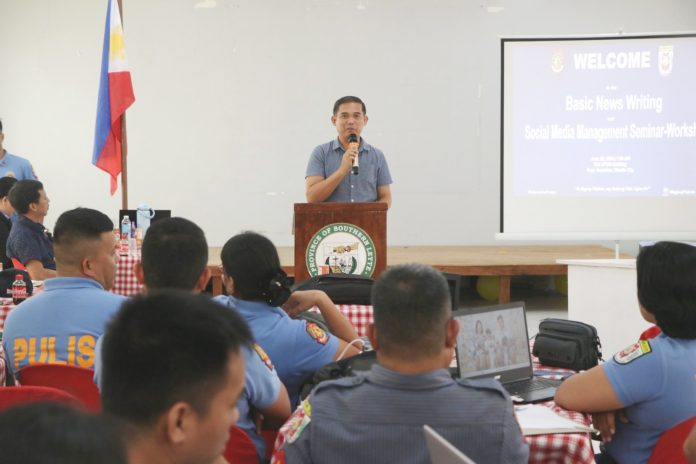
MEDIA RELATIONS. Police from Southern Leyte were told by PIA Regional Manager Reyan Arinto to deal with the members of the media by providing accurate and fair information. Arinto was among the guests during a lecture sponsored by the Southern Leyte police office. (PIA-Maasin)
MEDIA RELATIONS. Police from Southern Leyte were told by PIA Regional Manager Reyan Arinto to deal with the members of the media by providing accurate and fair information. Arinto was among the guests during a lecture sponsored by the Southern Leyte police office. (PIA-Maasin)
MAASIN CITY– A top official of the Philippine Information Agency (PIA) in Eastern Visayas urged police officers to exercise caution in sharing information during crises to prevent the escalation of secondary crises.
“In crises, we have to deal with the media; we have to handle and manage them properly in divulging information,” said Reyan L. Arinto, PIA-8 regional head, during a lecture on Crisis Communication for law enforcers on June 20 at the old DPWH Function Hall.
The provincial Philippine National Police leadership invited Arinto to be one of the speakers for a seminar on basic news writing and social media management.
In his hour-long talk, Arinto encouraged the police officers to maintain positive working relationships with the local media and be readily available for interviews on radio stations or in print publications.
In addition, humanitarian outreach programs could support the police in educating people at the community level and helping them better understand law enforcement perspectives.
Arinto said it’s important to provide updates without revealing sensitive information that could compromise peace, order, and security.
During a simulated press conference about a bomb explosion, the police chief calmly gave limited but accurate information to facilitate immediate reporting.
Police officers from different field stations listen attentively as PIA Regional Head Reyan Arinto provides training on handling inquisitive or adversarial media during crises. (Photo: PIA-8)
Lyna Gayas, administrative and information officer of the Department of Education – Southern Leyte Division, and Ronald O. Reyes, Manila Standard and Sun Star Philippines correspondent, also shared their expertise.
Police chiefs and social media handlers from PNP field units across the province attended the event. (AAC/MMP, PIA Southern Leyte)
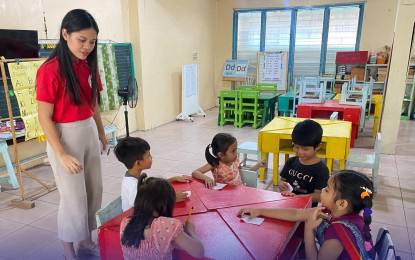
HELPING READERS. A college student teaching children to read in Samar province in this July 1, 2024 photo. The Department of Social Welfare and Development (DSWD) regional office here has kicked off the 20-day tutorial to enhance the reading capabilities of elementary students in Samar province.
(Photo courtesy of DSWD Region 8)
HELPING READERS. A college student teaching children to read in Samar province in this July 1, 2024 photo. The Department of Social Welfare and Development (DSWD) regional office here has kicked off the 20-day tutorial to enhance the reading capabilities of elementary students in Samar province. (Photo courtesy of DSWD Region 8)
TACLOBAN CITY – The Department of Social Welfare and Development (DSWD) regional office here has kicked off its 20-day tutorial program to enhance the reading capabilities of elementary students in Samar province.
Dubbed “Tara, Basa! Tutoring Program” (TBTP), it will deploy 375 tutors and youth development workers (YDWs) to help improve the reading capabilities of 2,000 struggling elementary pupils and carry out family development sessions for parents or guardians.
“As per TBTP guidelines, each tutor will handle a maximum of 10 learners and one YDW for a maximum of 50 parents or guardians,” the DSWD regional office here said in a statement Tuesday.
In return for their service, tutors and YDWs will receive a PHP405 daily pay, equivalent to the prevailing daily minimum wage in the region, for their 20-day work.
This is on top of the capacity development and service credits they will earn after the program.
Last week, each of the identified tutors and YDWs from Samar State University in Catbalogan City and Northwest Samar State University in Calbayog City received PHP2,000 to support their needs during their deployment to their assigned schools.
Tutors and YDWs are college students from poor families. Tutors will focus on teaching children to read, while YDWs are tasked with empowering parents as their first teachers at home.
Parents and guardians of child beneficiaries are also provided with PHP235 daily under the cash-for-work scheme by the DSWD. The cash rewards parents and guardians for attending these sessions and for assisting their children in preparing their needs for learning and reading and in their after-reading assignments. (SARWELL Q. MENIANO/PNA)
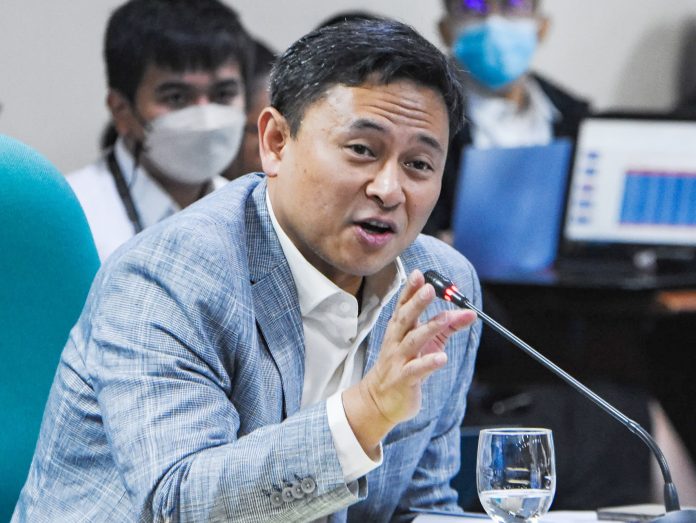
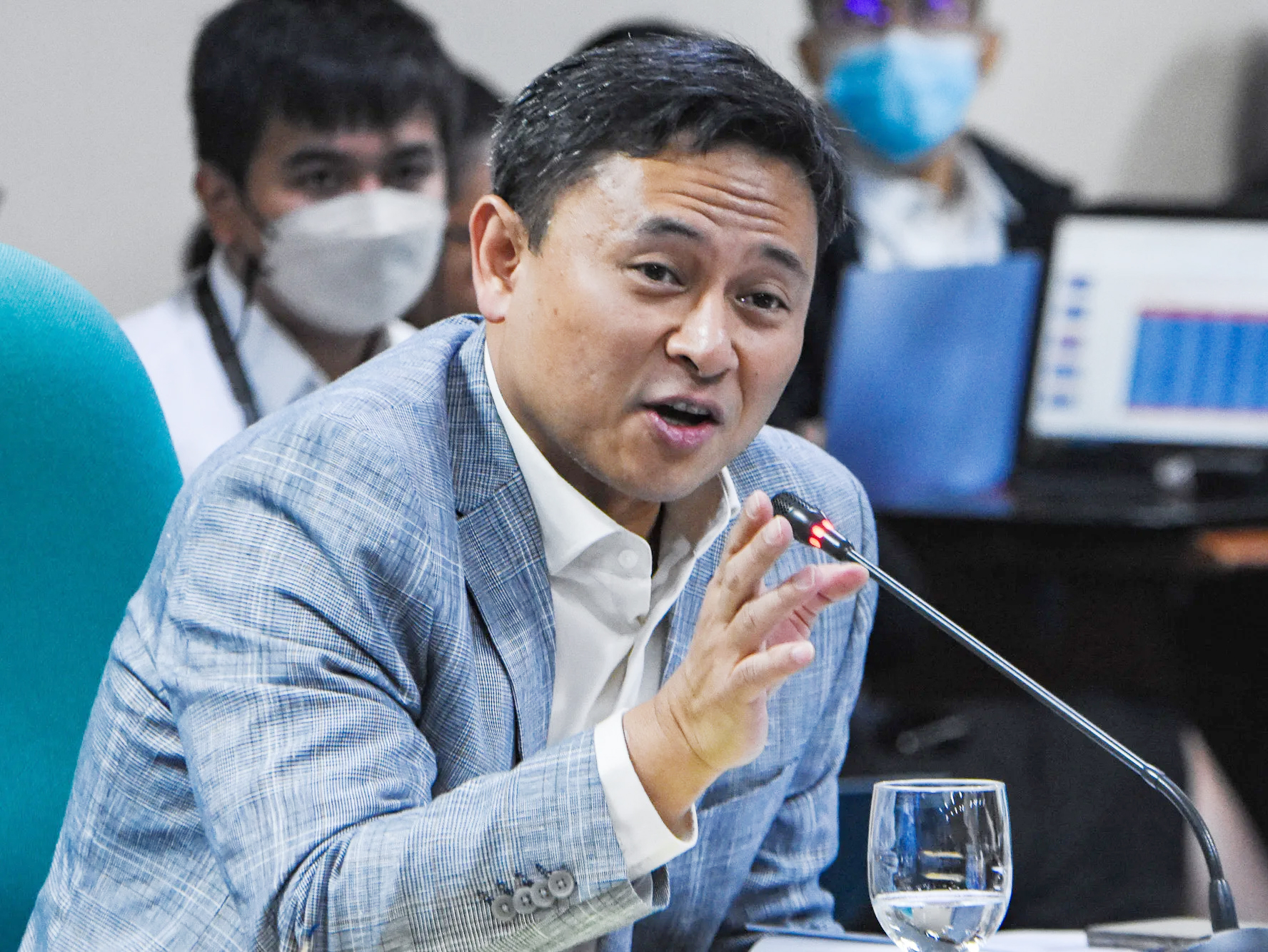
EDUCATION SECRETARY. Officials from the region commended on the appointment of Senator Sonny Angara as the new Education Secretary. Angara is to take the post on July 19, replacing Vice Pres. Sara Duterte. (Photo Courtesy)
The senator replaces VP Sara
EDUCATION SECRETARY. Officials from the region commended on the appointment of Senator Sonny Angara as the new Education Secretary. Angara is to take the post on July 19, replacing Vice Pres. Sara Duterte. (Photo Courtesy)
TACLOBAN CITY – The appointment of Senator Juan Edgardo ‘Sonny’ Angara as Secretary of the Department of Education (DepEd) has been warmly welcomed by officials in Eastern Visayas.
Eastern Samar Governor Ben Evardone highlighted Angara’s extensive knowledge of education, which makes him a fitting choice for the education portfolio.
“I welcome and fully support the appointment of Sen. Sonny Angara as the new DepEd Secretary. Sec. Angara has extensive knowledge about education. In fact, education has been his priority sector in terms of budgetary support, advocacies, and initiatives,” Evardone said in a statement sent to the Inquirer.
“I am sure that he will bring to DepEd his wealth of expertise, experience, and knowledge. I hope that all stakeholders in the education sector should rally and support Sec. Angara,” he added.
Leyte board member Carlo Loreto also expressed support for Angara’s appointment, calling it a wise decision.
“(Sen.) Sonny Angara’s appointment as Education Secretary is a decision that resonates with wisdom and foresight. His track record as a dedicated public servant, coupled with his extensive efforts in improving educational infrastructure and responding effectively to crises, make him an ideal candidate for this significant position,” Loreto said.
Loreto, a former vice governor of Leyte, said that Angara has funded the construction of several school buildings and gymnasiums across the province during his tenure as a senator.
“With his new role as Education Secretary, Sen. Angara is poised to revitalize the Department of Education (DepEd) and propel the educational system towards greater heights,” he added.
Rep. Marcelino Libanan of the 4Ps party-list group shared his personal connection with Angara, recalling their time together in the 11th Congress.
“I know him. He is brilliant as we worked together during the 11th Congress,” Libanan said.
He acknowledged that Angara’s background as a politician might be seen as a setback, but emphasized Angara’s dedication to service.
“That is okay. What is important is that he has the heart and mind to serve. At any rate, the DepEd secretary is an alter ego of the President who is a politician,” Libanan said.
The regional office of the DepEd expressed their enthusiasm for Angara’s appointment following the sudden resignation of Vice President Sara Duterte.
“The DepEd community looks forward to working with the new leadership as we continue our relentless pursuit towards improving the quality of Basic Education in the country,” Jazmin Calzita, the regional information officer, said in a statement.(JOEY A. GABIETA)
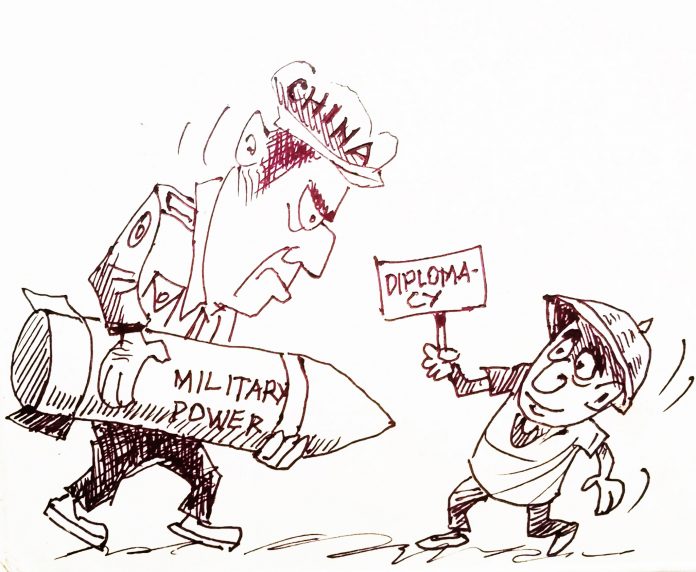
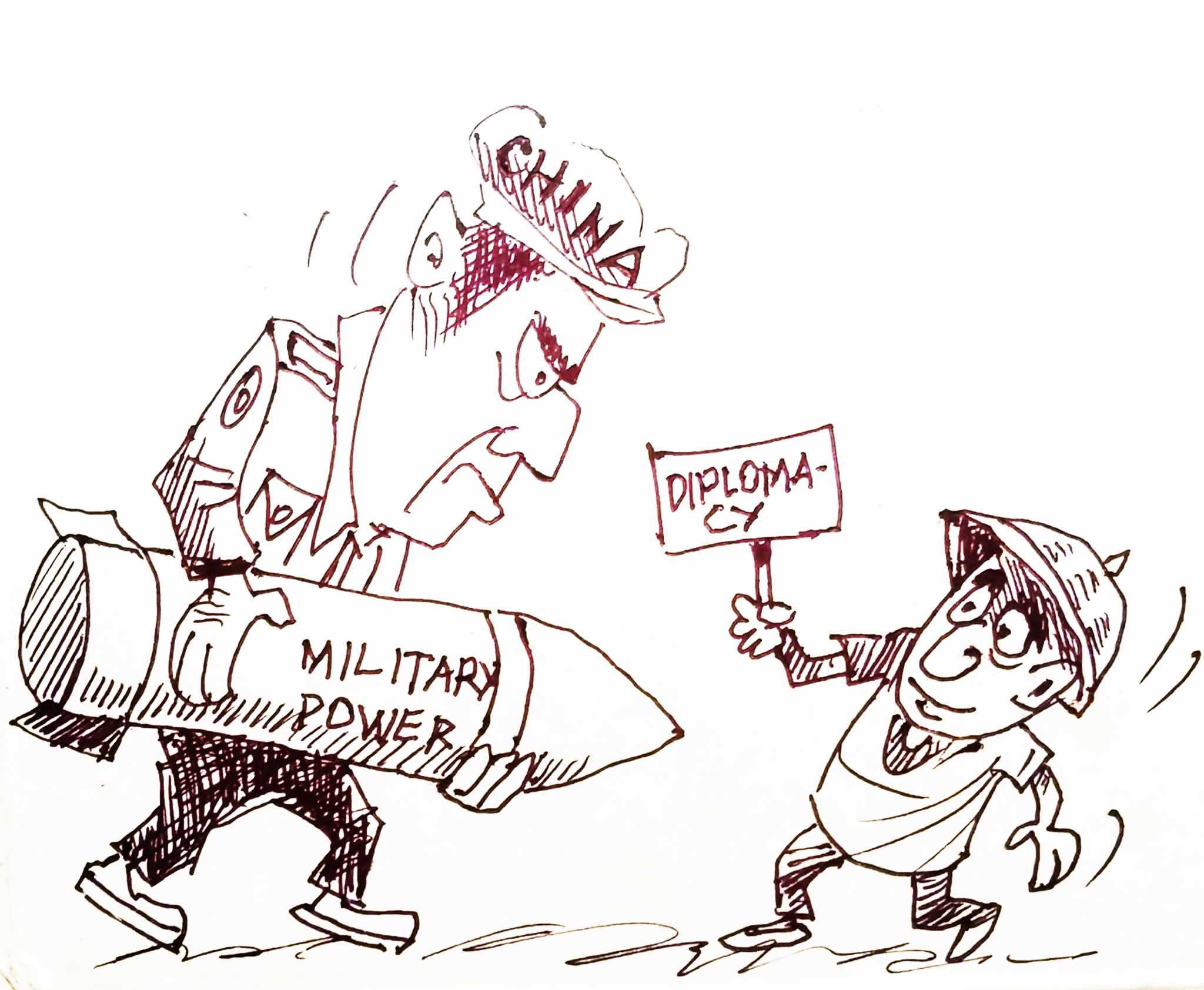
It cannot be denied that tensions in the West Philippine Sea have escalated primarily due to China’s increasingly assertive actions in the West Philippine Sea. The Philippines, a key player in this geopolitical hotspot, has faced numerous provocations from its powerful neighbor. Despite these challenges, the Philippine government has steadfastly pursued a path of diplomacy and peaceful resolution, underscoring the nation’s commitment to international law and highlighting the importance of maintaining regional stability.
The West Philippine Sea is a vital maritime area rich in resources and strategic importance. China’s expansive territorial claims, encapsulated in the so-called “nine-dash line,” have been a source of contention with some Southeast Asian nations, including the Philippines. In 2016, the Permanent Court of Arbitration in The Hague ruled in favor of the Philippines, invalidating China’s claims. However, China has largely ignored this ruling, continuing its militarization and construction of artificial islands in the region.
Amid these provocations, the Philippines has chosen to adhere to diplomatic channels and international legal frameworks. President Ferdinand Marcos Jr., following the stance of his predecessors, has emphasized the need for a rules-based order in the South China Sea. By engaging in dialogue with China and other ASEAN countries, the Philippines aims to foster mutual understanding and cooperation. This diplomatic approach is crucial in preventing the escalation of conflicts that could destabilize the entire region.
Furthermore, its strategic alliances with other nations complement the Philippines’ diplomatic efforts. The United States, a long-time ally, has provided substantial support through military cooperation and joint exercises. These alliances deter further aggression, signaling that the Philippines is not alone in its pursuit of peace and stability. Additionally, the country’s engagement with international organizations, such as the United Nations, underscores its commitment to a multilateral approach to resolving disputes.
This firm stance on diplomacy amid China’s provocations in the West Philippine Sea is a testament to our dedication to peace and international law. The Philippines not only upholds its sovereignty but also contributes to regional stability. This approach, supported by strategic alliances and a commitment to a rules-based order, exemplifies a responsible and pragmatic response to a complex geopolitical challenge. This approach prevails.
Story Writing techniques have indeed evolved significantly over the years, reflecting changes in reader preferences, societal norms, and the broader cultural context. Early narratives often began with detailed descriptions of settings and characters, aiming to immerse the reader slowly into the world of the story. This method, while thorough, can sometimes feel sluggish to contemporary readers who prefer to be thrown into the action right from the start. Today, many writers opt to begin their tales in medias res, or “in the midst of things,” capturing attention with dynamic scenes and immediate conflicts.
This change in technique doesn’t merely cater to shorter attention spans but also mirrors the fast-paced nature of modern life. Today’s readers, accustomed to the immediacy of information and entertainment, often seek stories that provide instant gratification. Writers have adapted by crafting openings that grab attention quickly, often sacrificing lengthy exposition for punchier, more compelling beginnings. This approach can create a sense of urgency and excitement, drawing readers into the narrative swiftly and effectively.
Despite these evolutions in storytelling, the core elements of good writing—character development, plot structure, and thematic depth—remain constant. What changes are the methods and techniques used to deliver these elements. For example, the use of unreliable narrators or nonlinear timelines has become more prevalent, allowing writers to play with readers’ perceptions and expectations. Such techniques can add layers of complexity and intrigue to a story, challenging readers to piece together the narrative themselves and engage more deeply with the text.
However, no matter how advanced or innovative these storytelling techniques become, they are ultimately constrained by the bounds of reality. While fiction allows for the bending of truth and the creation of entirely new worlds, it cannot alter actual events or facts. Writers can manipulate the narrative to present events in a certain light or evoke specific emotions, but they cannot change the underlying truth of what has happened. Fiction, by its nature, is a form of artifice—a crafted representation of reality rather than reality itself.
The distinction between fiction and reality is crucial, particularly in an era where the lines between truth and falsehood can sometimes blur. In fiction, writers have the creative freedom to explore hypothetical scenarios, alternate histories, and fantastical worlds. This freedom allows for the exploration of “what if” questions and the expression of ideas and emotions in ways that might not be possible in real life. However, this creative liberty also comes with a responsibility to the reader, who must navigate the boundaries between the fictional world and the real one.
Real-life events, in contrast, are immutable. They occur within the rigid framework of time and space, governed by the laws of physics and the constraints of human experience. While our understanding and interpretation of these events can change—sometimes dramatically—through storytelling, journalism, and history, the events themselves remain fixed. This immutability highlights a fundamental difference between fiction and reality: while the former can be molded and reshaped by the imagination, the latter stands as an unalterable record of what has been.
The desire to transform harsh realities into something more palatable is a common human impulse, reflected in the way stories are told and retold. Fiction provides an escape, a way to reimagine the world and explore different possibilities. Yet, it is also a reminder of the limits of our control over reality. No matter how skilled a writer may be, they cannot rewrite the past or change the facts of the present. This recognition of the unchangeable nature of reality serves as a grounding force, reminding us of the distinction between the worlds we create in our minds and the world we inhabit.
While story writing techniques continue to evolve and adapt, reflecting changes in culture and technology, the fundamental difference between fiction and reality remains. Writers can manipulate narratives to engage, entertain, and provoke thought, but they cannot alter the truths of real events. This reminds us of the power and limitations of storytelling. As much as we might wish to reshape reality into a more favorable form, we must ultimately confront and accept the world as it is, even as we continue to dream of what it could be.
Going back to school is always an exciting experience for students. It is another opportunity to rise in the ladder of education and become what one dreams to be someday. For most students, schooling is a good riddance from the household chores that they had been engrossed with during the summer break. Others who had to spend the vacation on enterprising gimmicks may have run short of days to earn enough for the school days. But those who went on happy trips and peer gimmicks, the school days may just be a killjoy of their fun adventures. There are varied reasons for every student depending on his socio-economic condition and personal ambition to attain his goals.
But supporters of these students are faced with a different reality that has to do with economics. Education had always been expensive in every way. With rising school fees as against stagnated wages and salaries, supporting students is certainly not easy. More than the school fees are the high cost of daily expenses that students incur in the course of their studies. It is where the undetermined amount is needed for those providing support to students. It is therefore not a joking matter for students to waste the great investment that their parents put for their education. The sacrifices that parents do to meet the demands of their students is enough reason for the student to strive hard in their studies.
It is unfortunately appalling to see students leisurely squandering their precious time and money hardly earned by their parents. Such undesirable situation is so frustrating for parents who are striving hard to provide the necessary support for the education of their children. Students may not realize the value of their time as well as the support they get from their parents for their education. It may take sometime for students to absorb in their system the precious gift of having parents whose unfailing support for their education is readily at hand. Many unfortunate children whose parents cannot afford the cost of education are striving hard with awe as they see those who can afford just waste their time, resources and parental support.
Determination to succeed had always been a better driving force than any other. While parental support is a major factor, success is still for those who strive in their studies. Many times it had been shown that socio-economic status is, although a factor, not a hindrance to success. Poverty therefore is not much an obstacle for one who works hard to attain the goal of earning education. We have seen many poor students overcome the hardships of life and finish schooling despite the odds. Likewise we see many students who have enough financial support from their parents become failures out of their own making.
As students return to another school year of struggles and challenges, it would be apt and timely for them to realize the value of their education. Only when one fully understands how valuable and costly education is will one strive to study hard in order to succeed. Time is so precious and fleeting and parents always will want their children to spend wisely in education. It is for this reason that students must study well as their way of reciprocating the goodness and support of their parents. Wasting time and money on leisure with peers is one sure way to a bleak future that students must be wary of. If one thinks education is a hard struggle and expensive, try ignorance and soon realize the value of education. Comments to alellema@hotmail.com