ORMOC CITY-Five individuals were apprehended by local police and personnel from the Municipal Agriculture Office (MAO) of Culaba, Biliran for illegal fishing at around 6 am on Friday, August 16, in the waters off Barangay San Roque of said town.
The arrested individuals were identified as alias “Wil,” 5; alias “Mak,” 34; alias “Liki,” 25; alias “Jon,” 23; and alias “Jo,” 23.
All are fishermen and residents of Brgy. Looc.
According to the Culaba police, they were conducting a seaborne patrol alongside MAO personnel when they caught the five individuals in the act of illegal fishing.
The violators were using a fishing method locally known as “paburo” without any legal documents or permits, which is a violation of the municipal fishing license and permits.
The authorities confiscated a fishing boat valued at approximately P160,000, a motor engine worth P60,000, a fishing net valued at P230,000, and 90 kilos of caught fish with an estimated value of P3,500.
The violators, along with the confiscated items, were brought to Culaba municipal police station for documentation and were subsequently turned over to MAO Culaba for proper disposition.
The fishing boat was brought to the shoreline of Brgy. San Roque. (ROBERT DEJON)
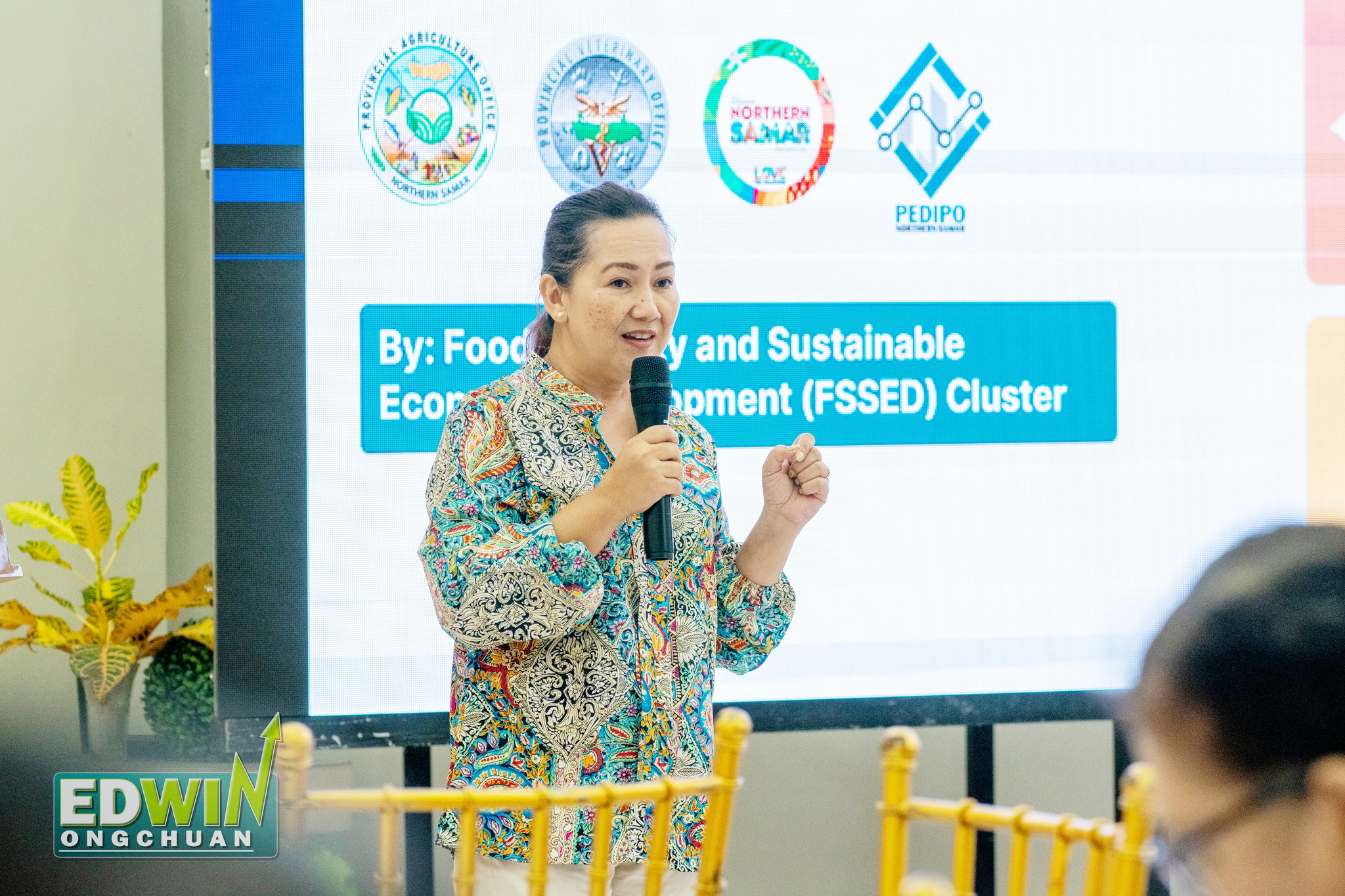
TOURISM COMEONS. Northern Samar is adding tourism activities as its way to lure in more tourists to the province. The Provincial Tourism Office, headed by Maria Josette Doctor, added the fun farm tour and seafood tour, under its tourism circuits. (THE NORTHERN SAMAR PROVINCIAL INFORMATION OFFICE)
In Northern Samar
TOURISM COMEONS. Northern Samar is adding tourism activities as its way to lure in more tourists to the province. The Provincial Tourism Office, headed by Maria Josette Doctor, added the fun farm tour and seafood tour, under its tourism circuits. (THE NORTHERN SAMAR PROVINCIAL INFORMATION OFFICE)
TACLOBAN CITY – The provincial government of Northern Samar, through its Provincial Tourism Office (PTO), has introduced two new tourism circuits aimed at attracting more visitors to experience the province’s unique offerings.
These additions, the ‘Fun Farm Tour’ and the ‘Seafood Tour’, complement the four existing tourism circuits already available in the region.
The Fun Farm Tour and Seafood Tour are designed to showcase the rich agricultural landscape and innovative farming practices of Northern Samar, offering immersive experiences for both domestic and foreign tourists.
The Fun Farm Tour highlights the municipalities of Mondragon, Silvino Lubos, and San Roque, and Pambujan, areas known for their agricultural abundance and provide visitors with opportunities for garden-to-table food tasting, farming and food processing tours, and homestay experiences, which have become increasingly popular across the country.
Meanwhile, the Seafood Tour focuses on the towns of San Jose and Rosario, renowned for their delicious mud crabs, fresh fish, spider shells (sahang), squid, shrimp, and other exquisite seafood.
This tour also includes activities such as diving, fishing, food processing, and ocean-to-table dining experiences.
Maria Josette Doctor, the provincial tourism officer, presented these new tourism concepts to the provincial government department heads during the 3rd Quarter Development Cluster Meeting held last week.
The PTO collaborated with the Provincial Agriculture Office (PAO), the Provincial Economic Development and Investment Promotions Office (PEDIPO), and the Provincial Government’s Food Security and Sustainable Economic Development Cluster to conceptualize and promote these new tourism circuits.
Before the introduction of these new tours, the province already offered several tourism circuits: the Balicuatro Island Hopping Tour, which includes the towns of San Antonio, Capul, San Vicente, and Allen; the Eco-Tour featuring the Lalaguna Mangrove Eco-Park in Lavezares and the Biri Rock Formations on Biri Island; the River Cruise in the towns of Catubig, Las Navas, and Laoang; and the Pacific Tour, which covers the Pacific towns of Palapag, Mapanas, Gamay, and Lapinig.
The development and promotion of these tourism circuits are part of Governor Edwin Ongchuan’s broader initiative under the Food Security and Sustainable Economic Development program.
This initiative aims to boost tourism, livelihood, and economic development throughout the province.
We have been told, time and again, about the benefits of growing fruits, vegetables, cereals, and other eatables for personal sustenance, economic growth, and food security. Despite these well-meaning efforts, many people remain reluctant to engage in agricultural activities due, partly, to the rampant problem of theft, which has turned what should be a rewarding endeavor into a source of frustration and disillusionment.
Theft in agricultural communities is more than just an inconvenience; it directly attacks the livelihoods of those who labor to cultivate the land. Farmers invest money, time, and physical effort in planting and nurturing their crops. Yet, when harvest season arrives, many find that the fruits of their labor have been stolen by individuals who contributed nothing to the process. This injustice discourages people from planting in the first place, as the risk of losing everything to thieves is too great. Why should anyone continue to toil under the sun when others are just waiting in the shadows to reap the rewards?
This problem is particularly acute in areas where law enforcement is either ineffective or indifferent. When people feel that their hard work is not protected and that there are no consequences for those who steal, the entire incentive structure for agricultural productivity collapses. This creates a vicious cycle: fewer people plant, leading to less local food production, which in turn makes communities more reliant on external food sources, driving up costs and increasing food insecurity.
Moreover, the social implications of this theft are tremendous. Trust within communities erodes as people become suspicious of their neighbors, wondering who among them might be responsible for the thefts. This breakdown in social cohesion further discourages collaborative efforts that could otherwise strengthen agricultural output, such as community farming initiatives or cooperative storage facilities. The fear of theft not only undermines individual efforts, it also weakens the potential for collective action.
Strengthening law enforcement and ensuring that agricultural theft is treated with the seriousness it deserves is crucial. Communities should establish local watch groups or other forms of collective security. There must be renewed efforts to educate people on the long-term benefits of agricultural productivity, coupled with assurances that their investments will be protected. This would encourage people to contribute to the food security and economic stability of their communities.
The speed at which the world is changing never ceases to amaze me. When I reflect on the past few decades, it feels like we’ve gone through more transformations in communication, transportation, and technology than any previous generation could have imagined. Growing up, I remember a time when writing letters, making phone calls on landlines, and getting lost in a new city without GPS were all part of daily life. But now, those days seem like distant memories. Everything has become faster and more interconnected, making the world feel smaller and more accessible than ever before.
I think the real acceleration began with the rise of the internet in the late 20th century. The moment we gained the ability to share information instantly across the globe, the floodgates opened. Suddenly, it wasn’t just about communicating faster; it was about transforming every aspect of our lives. The way we travel, work, learn, and even think has been fundamentally altered. In communication, we moved from letters to emails to instant messaging and social media, each step making it easier to stay connected with anyone, anywhere. In transportation, we’ve seen the advent of high-speed trains, electric cars, and the possibility of commercial space travel on the horizon.
Technology, of course, has been the biggest game-changer. The development of smartphones puts the power of the internet in our pockets, giving us access to a world of information at our fingertips. Artificial intelligence (AI) has taken things even further, making it possible for machines to learn, adapt, and even make decisions in ways that were once the exclusive domain of humans. These changes have happened so quickly that sometimes I struggle to keep up. It feels like the moment I get used to one new technology, another one comes along to replace it.
Looking ahead, I often wonder where this rapid pace of change will take us. What will our world look like in another ten or twenty years? The possibilities are both thrilling and a bit daunting. On one hand, I’m excited by the potential for advancements in medicine, environmental sustainability, and global communication. AI could help us solve some of the world’s most pressing problems, from climate change to disease eradication. But on the other hand, I worry about the impact on jobs, privacy, and the human experience itself. Will we become so reliant on technology that we lose touch with the things that make us human?
The question of whether AI will replace us in all aspects of life weighs heavily on my mind. There’s no doubt that AI will continue to take over tasks that are repetitive, dangerous, or require complex data analysis. We’ve already seen this in industries like manufacturing, logistics, and even customer service. But the idea that AI could replace humans entirely is unsettling. What would it mean for our sense of purpose if machines could do everything we can, and perhaps do it better? It’s a future that’s hard to imagine, yet one that seems increasingly possible.
However, I do believe there are areas where AI will struggle to fully invade. Creativity is one of them. While AI can generate art, music, and even write stories, it does so by mimicking patterns it has learned from human creations. It cannot truly innovate or draw inspiration from personal experiences, emotions, and the complexities of the human condition. Similarly, jobs that require deep empathy and understanding, like those in healthcare, education, and counseling, are areas where I believe humans will always have the upper hand. AI can assist, but it can’t replace the human touch that comes from genuine care and connection.
In this rapidly changing world, I think we must focus on these uniquely human qualities. By nurturing our creativity, empathy, and capacity for deep relationships, we can carve out spaces that AI cannot invade. These are the areas where we can continue to find meaning and purpose, even as technology reshapes the world around us. It’s not about resisting change but about finding our place within it, ensuring that we don’t lose sight of what makes us truly human.
So, as I navigate this fast-paced, ever-evolving landscape, I try to remind myself that while technology can enhance our lives in countless ways, it’s our humanity that will ultimately prevail and guide us. We embrace the changes that come our way, but we also hold onto the things that AI can never replicate; we can create a future that is not just technologically advanced but also deeply fulfilling and authentically human.
Applause erupted from Filipinos in all nooks of the globe at every turn on the floor and on the air as Carlos Edriel Poquiz Yulo performed in the final competition in the gymnastics of the 2024 Olympics. People were caught in awe as the young Filipino made perfect landings after making difficult artistic twists and turns. The tumbling appeared too easy for the Filipino Olympian who trained so hard to achieve his childhood dream of winning an Olympic gold. Unknown to all of us, he had to sacrifice in daily training and correct practice to attain perfect form since when he was a kid. His life story only came to public knowledge when he bagged the first gold in the artistic floor exercises, besting seven others in the field.
The tale of his difficult life drew public attention as he shared his humble beginnings in the gym near his house. He was only seven years young when his grandfather brought noticed his superb tumbling skills on their neighborhood. It was reportedly his grandfather who brought him to the Rizal Memorial Coliseum for his to watch young gymnasts in practice. Thereafter, he was introduced to the officials of the Gymnastics Association of the Philippines where he was admitted for training after undergoing a tryout. His grandfather is still living in their family abode but had no knowledge of his feats, chiefly his winning two Olympic golds in the 2024 Paris Olympics.
In a twist of fate, he was given the opportunity to train in Japan under the tutelage of a Japanese coach who imposed a regimen too hard to do but he took without any complaint as he was focused on his Olympic dream. His stint in Japan had the support of the Gymnastics Association of the Philippines and his father who backed him in the sport of his passion. He participated in world and international tournaments for him to hone his skills and win prizes as well. His winnings reportedly went directly to his mother Angelica Poquiz Yulo.
As he hugged the limelight in the 2024 Paris Olympics, a silent bomb was ticking behind the scenes. It exploded to distract the attention of people hooked to social media platforms. The issue has to do with posts by the mother who openly disowned her son for reasons only she could explain. There too were messages against the girlfriend of her son, who she did not like as unworthy of her son. She was protective of her son who she sees as being controlled by his girlfriend. The rift spread like wildfire on social media as people feasted on the tales that remained one sided considering that the Olympian was focused on winning the gold in the 2024 Parish Olympics.
In his bid to muster all the strength he needs in the tough competitions, Carlos Edriel Poquiz Yulo decided to drop his Japanese coach Munehiro Kugimiya and tapped his Filipino coach Aldrin Castaneda to handle him in the 2024 Paris Olympics. It was revealed later that one of the reasons he dropped his Japanese coach was his intervention in his personal relations with Chloe Anjeleigh San Jose who he revealed is his source of strength. Part of his struggle is his having no support while in Japan where he was struck with depression as he encountered language barrier with his fellow Japanese gymnasts. comments to alellema@yahoo.com
In the dynamic landscape of the 21st-century business world, one phrase has increasingly found its way into our lexicon: disruptive innovation. The term refers to a process whereby a smaller company with fewer resources successfully challenges established industry businesses. This was coined by Harvard Business School professor Clayton M. Christensen in the mid-1990s. This article explores into the ways disruptive innovation, driven by startups, is revolutionizing traditional industries.
The Phenomenon of Disruptive Innovation
Disruptive innovation is not merely about the introduction of new technology. At its heart, it is a strategy, a different approach to the market that challenges the status quo. Startups, with their agility and risk-taking attitude, are often the forerunners of such innovation. They develop products or services that, while initially gaining traction in a niche market, eventually disrupt the entire industry, displacing established market-leading firms.
Startups have introduced innovative technologies and business models that have transformed traditional sectors, offering convenience, accessibility, and new experiences to consumers. They have challenged established players, redefined market dynamics, and reshaped the way people commute, travel, shop, manage finances, order food, and access healthcare. Through their disruptive innovations, startups continue to drive change and shape the future of industries worldwide.
Impact on Traditional Industries
Startups are transforming various traditional industries through disruptive innovation. For instance, in the transportation industry, companies like Grab and Angkas, in the Philippines, and Uber and Lyft, overseas, have drastically altered how consumers view personal transportation. By leveraging digital technology and a unique business model, they have challenged traditional taxi services and have reshaped urban transportation.
Similarly, the hospitality industry has seen an upheaval with the advent of platforms like Airbnb. By turning homeowners into hoteliers, Airbnb has utilized a peer-to-peer business model to disrupt traditional hotel chains. Additionally, this has become an inspiration for Overseas Filipino Workers to invest on real properties as they have realized that this is a good source of income which can benefit their families.
The finance industry has also not been immune to this wave of disruption. Fintech startups are offering a range of services, from mobile payments to crowdfunding, that are challenging traditional banks and financial institutions. We have been used to using credit card payments online. But for the past years, various payment channels have emerged such as GCash, Maya, GrabPay, etc. All of these have truly made life easier with regards to having a range of payment options.
Implications of Disruptive Innovations
While disruptive innovations bring about industry transformations, they also come with their own set of implications. Traditional businesses must adapt to these changes or risk being left behind by these emerging businesses. This requires a shift in mindset, from protecting existing markets to embracing new innovations and incorporating them into their business models.
Furthermore, as industries evolve, regulatory bodies must also keep up. While these changes are intended to help businesses. It should also be understood that they need to create a balance between protecting consumers and fostering innovation. This can often be a complex task, given the pace of innovation and the time it takes to understand and regulate new technologies.
Disruptive innovation, primarily driven by startups, has become a transformative force in traditional industries. It is reshaping markets, changing the rules of competition, and constantly redefining consumer expectations. For established businesses, the choice is clear: adapt and innovate or risk obsolescence. As for startups, the sky is the limit. Their potential for growth and disruption continues to be a defining characteristic of the modern business landscape. The age of disruptive innovation is not just upon us; it is transforming the world as we know it.
Should we fear these evolving changes? I guess not. We just need to cope up with these changes as these are significantly important in allowing us to do more with just a few clicks.
————–
If you have any questions or would like to share your thoughts on the column, feel free to send an email to jca.bblueprint@gmail.com. Looking forward to connecting with you!