Amid the political noise in our country today, it’s easy to feel discouraged.
I have no intention of painting a grim scenario in this column. But an open discussion on what we are experiencing may help us better understand the real challenges we collectively face.
This seemingly endless mudslinging and squabbling among our political leaders is doing our country more harm than good.
Constant bickering and the exchange of derogatory words are nothing but black propaganda, resulting in character assassination in the hope of gaining people’s sympathy and blind loyalty. This is creating animosity and slowly eroding our essence as one nation.
Where has our reputation gone as the most dominant Christian country in Asia? Along with East Timor, the Philippines is one of two predominantly Catholic nations in East Asia, with approximately 88.66% of the population belonging to the Christian faith.
The outdated term “third world” no longer accurately reflects the modern-day realities of the Philippines. With solid economic growth, a skilled workforce, expanding infrastructure, and a business-friendly environment, the country is undeniably an emerging market with vast opportunities.
Recent reports from the Department of Economy, Planning and Development (DepDev) as well as the Department of Finance (DOF) revealed that the Philippine economy maintained a steady gross domestic product (GDP) growth of 5.6% in 2024 — the second-fastest in ASEAN — despite multiple challenges.
Moreover, the outlook for 2025 remains positive, fueled by lower inflation and higher consumption and investments. Numbers don’t lie; that’s why many detractors of the current administration are throwing all sorts of accusations — trivial or otherwise — to discredit President Ferdinand “Bongbong” Marcos Jr.’s governance and leadership style.
His former political allies, the Dutertes of Davao, for reasons they alone know, have demonized him since Day One by persistently calling him irreverent names such as “bangag” or “adik,” a weak leader, and, worse, accusing him — along with Speaker Martin Romualdez — of masterminding alleged widespread corruption in cahoots with favored legislators, private contractors, and other government officials.
Critics are demanding accountability, citing pending petitions involving the 2025 General Appropriations Act (GAA) and Philippine Health Insurance Corporation (PhilHealth) fund transfers that have yet to be addressed.
As of this writing, PBBM’s economic advisers say the Philippines currently ranks as the 8th fastest-growing economy last year compared to 46 countries that have released their fourth-quarter GDP data.
The continuous destabilization efforts of the opposition and dissatisfied minority are creating a negative impression of our country abroad. Yet deep inside, we know there is no perfect government. Regardless of who is in power, there will always be opposing forces attempting to pull down the government’s image — whoever is the President of the Republic.
This adversarial stance can be likened to an incurable social illness hurting our country’s soul.
Purposely or not, this uncalled-for behavior triggers hopelessness in the Filipino psyche. The good news is, you (my dear readers) are not the only ones feeling that way.
Looking at our country today, I can surmise some common root causes of discouragement:
Perceived failure or setbacks in achieving goals
Lack of progress or improvement despite efforts
Feeling overwhelmed or stuck in a difficult situation
As an ordinary government worker preoccupied with multifarious tasks, I always try my best to be busy. I work day in and day out to accomplish the agency’s projects and activities assigned to me. Yet, I often end up feeling unappreciated by top management and discouraged.
Honestly, I dread the day when my enthusiasm and optimism will be replaced by doubt and negativity. If ever that happens, remember: the French origins of the word “discouraged” refer to “courage taken away.”
But even though I sometimes feel this way, I have to remind myself that our collective efforts, passion, and resilience can drive positive change. We should never give up because:
1.Our voices matter: Every individual has a unique perspective and contribution to make.
2. Change is possible: History shows that collective action can lead to significant progress.
3.We are stronger together: Unity and solidarity can help us overcome challenges.
4. Our future is worth fighting for: We owe it to ourselves, our children, and future generations to strive for a better tomorrow.
Let’s channel our energy into constructive dialogue, advocacy, and community-building. Together, we can create a brighter future for our country. Uswag Otso, Padayon! Mabuhay ang Pilipinas!


Not that exempted
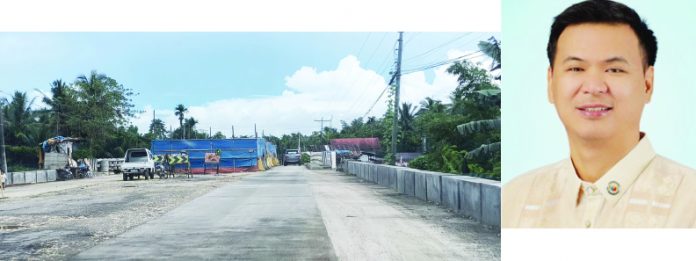
In Eastern Visayas, ghost projects are far from being rumors—they are for real. From provincial highways to barangay-level footpaths, paper roads and phantom buildings have bled public funds dry while communities remain stuck in poverty. This is corruption in its ugliest form, and it must no longer be tolerated.
Anyone who has lived long enough in the region knows how ghost projects operate. They begin with project proposals that sound noble and necessary—farm-to-market roads, multipurpose halls, school buildings, water systems. The budget is approved, the funds are released, but the project either never materializes or exists only in a token form: a half-poured foundation, a rusting post, or a short gravel strip that leads nowhere. On paper, it is complete. In reality, it is a monument to theft.
Barangays, the smallest units of government closest to the people, have not been spared. There are cases where barangay funds have been appropriated for projects that villagers never even saw. Sometimes the name of a barangay is used in liquidations and reports, yet when residents are asked, they shake their heads in disbelief—no such project was ever done. This is not just stealing; it is mockery. It insults both the people and the very concept of governance.
The culprits are not ghosts but flesh-and-blood politicians and contractors who have mastered the art of vanishing money. They thrive on a system where signatures matter more than substance, where inspection reports are signed without inspection, and where collusion between officials and contractors is treated as normal. These are not mere lapses; they are carefully orchestrated crimes that strip resources from the poor while fattening the pockets of the already powerful.
The irony is stark: Eastern Visayas, a region that has endured calamities and is in dire need of infrastructure and services, suffers from deliberate sabotage by those entrusted to rebuild it. The typhoons tear down homes, but it is corruption that ensures they are never rebuilt properly. Ghost projects do not simply steal money—they steal opportunities, delay progress, and deepen the misery of the people who deserve better.
Accountability must be the weapon against this plague. Those involved should be dragged into the courts, not coddled in political alliances. Dismissal from service is the least punishment for officials who betray their mandate. Private contractors who conspire in this racket should be blacklisted permanently, stripped of the privilege of ever handling public funds again. Anything less is complicity, a wink at corruption disguised as governance.
One wonders how many school children could have studied in safe classrooms, how many farmers could have reached markets faster, how many communities could have had clean water, if not for these shameless ghost projects. This is why tolerance of such thievery is not just negligence—it is cruelty. It tells the poor they are meant to remain poor, while their supposed leaders live off stolen riches.
The fight against ghost projects in Eastern Visayas must not stop at exposure. It must be pursued with the ferocity of people tired of being fooled, demanding proof of real work before the release of funds, and insisting on citizen oversight in every barangay. Ghost projects must be exorcised, and public service returned to the living, breathing people who own it.