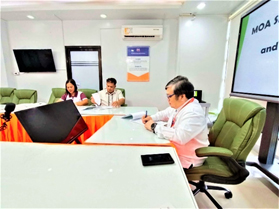
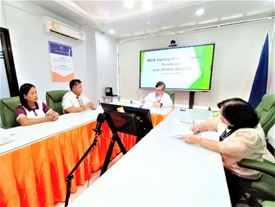
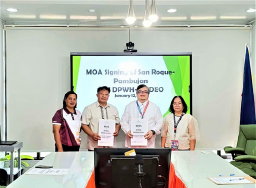
The DPWH-NSSDEO formalized a Work Immersion Memorandum of Agreement (MOA) with San Roque-Pambujan Vocational High School (SPRVS) on January 13, 2026, aimed at bridging the gap between classroom learning and real-world work application for Senior High School (SHS) students.
The MOA was signed by the NSSDEO District Engineer, Atty. Arthur Eric L. Sabong, with witnesses from both institutions: Ms. Ma. Amparo Mariam T. Dapug, Chief, Administrative Section (DPWH NSSDEO) and Mr. Nestor S. Cubay, SHS Coordinator.
Under the partnership, DPWH-NSSDEO will accommodate 15 students from SPRVHS for school year 2025-2026, assigning them to various sections and units in the district office.
This program aligns with the Senior High School curriculum under Republic Act 10533 (Enhanced Basic Education Act of 2013) of DepEd. The agreement is effective for the 2025-2026 academic year and is renewable annually, with both parties committed to reviewing and strengthening the partnership to better serve the work immersion students.
This partnership underscores the DPWH NSSDEO’s aim of nurturing a skilled, industry-ready workforce that intends to contribute to the Philippines’ infrastructure development agenda. Additionally, this collaboration reflects the Department’s commitment to supporting national education priorities, fostering innovation through fresh perspectives, and building a sustainable pipeline of talent to drive the country’s long term infrastructure growth.
ORMOC CITY– A call center agent was arrested during a buy-bust operation in Brgy. Bagong Buhay, this city after authorities recovered several sachets of suspected illegal drugs on the evening of Wednesday, January 21.
The suspect, identified as alias “Rod”, 30, with a live-in partner and resident of Purok 4, Brgy. Bagong Buhay, was caught in possession of one sachet of a white crystalline substance suspected to be shabu, purchased by an undercover operative for P500.
During a body search conducted in the presence of law-mandated witnesses, police recovered an olive-green coin purse containing three additional sachets of the suspected shabu and the P500 buy-bust money. Authorities also confiscated a yellow improvised lighter and a white repacking straw.
PS4 Chief of Police, Captain Rodolfo Mercolita, said the suspect was informed of the nature of his arrest and read his constitutional rights in a language he understood.
Charges for violation of RA 9165, the Comprehensive Dangerous Drugs Act of 2002, have been filed at the City Prosecutor’s Office. The suspect is now detained at the PS4 locked-up cell in Brgy. Linao, Ormoc City.
TACLOBAN CITY — Leyte police swiftly apprehended a suspect in a fatal shooting in Kananga town following a hot pursuit operation early morning on January 25, authorities reported.
The victim, only identified as alias Jojo, 33, a farmer and resident of Sitio Laray, Brgy. Libertad, Kananga, was shot multiple times inside a residence, resulting in his instantaneous death. The suspect, alias Jun-jun, 35, a married habal-habal driver from the same barangay, was arrested shortly after the incident and is now in custody of the Kananga Municipal Police Station for documentation and proper disposition.
Initial investigation indicates the shooting stemmed from a personal grudge linked to a dispute between the victim and suspect during a disco party in Brgy. Tapol the previous night. The firearm used was of an undetermined caliber.
Kananga MPS, led by Major Darwin Dalde, immediately secured the crime scene, coordinated medical assistance, and conducted a hot pursuit operation that led to the suspect’s prompt arrest.
“The immediate arrest of the suspect reflects our personnel’s readiness and strong commitment to uphold the rule of law and protect the community,” said Provincial Director Col. Dionisio D.C. Apas Jr., commending the swift action of the Kananga police.
Authorities said the operation underscores ongoing efforts to strengthen peace and security under the Bagong Pilipinas agenda, emphasizing decisive law enforcement and accountability.
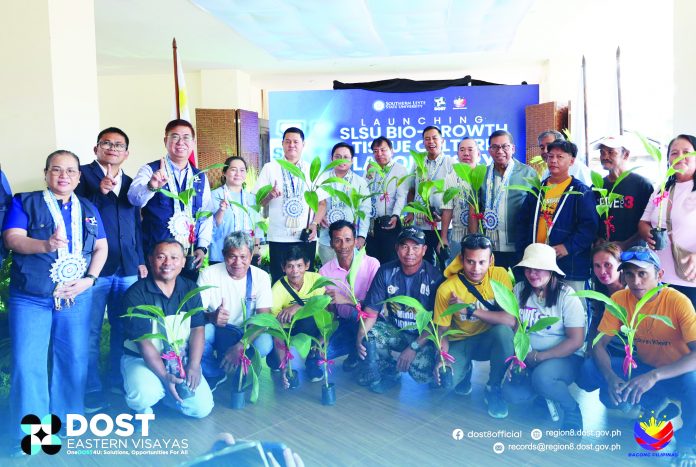
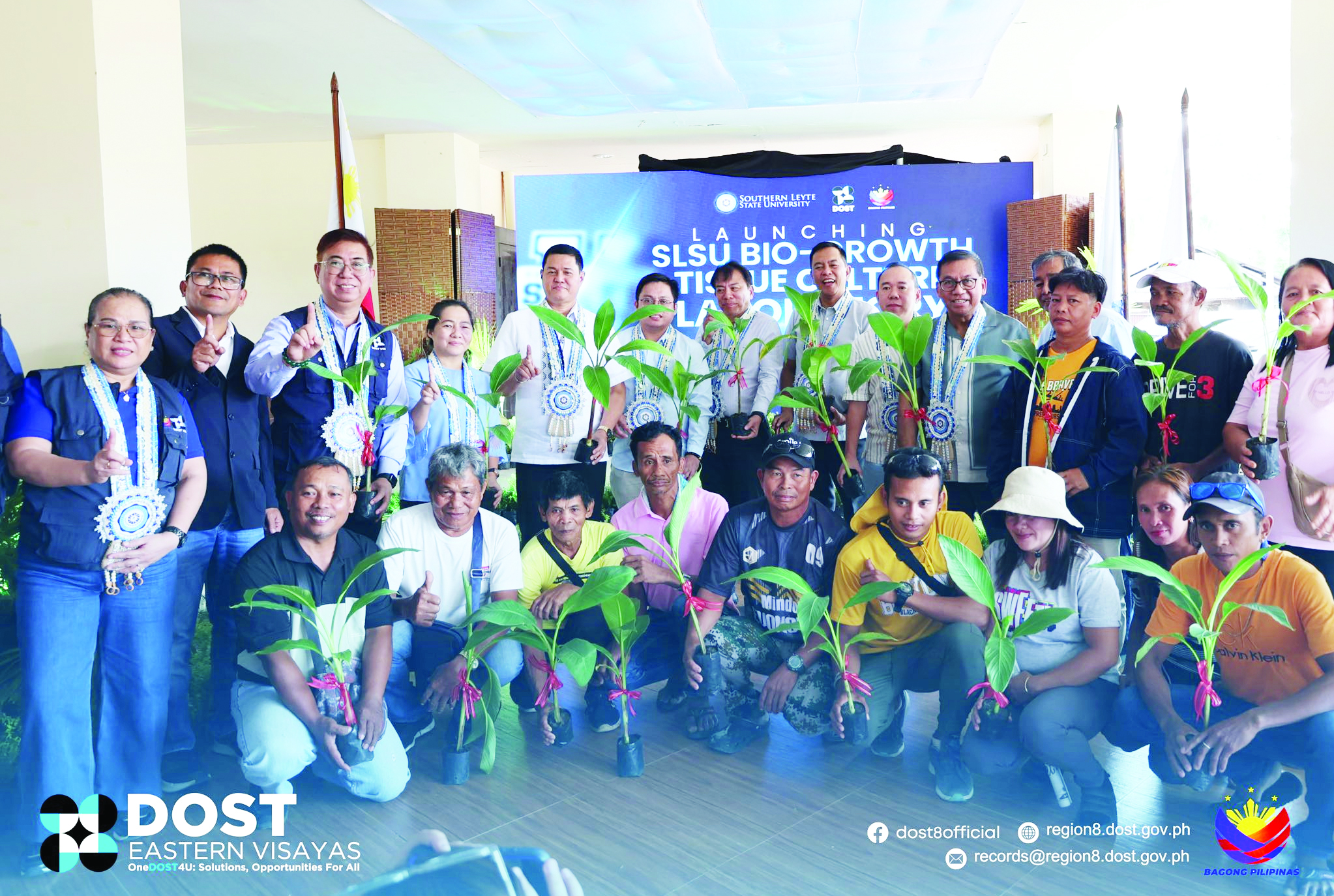
TISSUE CULTURE LAB. The Southern Leyte State University-Hinunangan Campus opened its BIO-GROWH tissue culture laboratory which is expected to improve agricultural research and improve the supply of high-quality planting materials in the province. The opening of the said facility was led by DOST Sec. Renato Solidum, Jr. held on Jan. 22. (DOST FACEBOOK)
TISSUE CULTURE LAB. The Southern Leyte State University-Hinunangan Campus opened its BIO-GROWH tissue culture laboratory which is expected to improve agricultural research and improve the supply of high-quality planting materials in the province. The opening of the said facility was led by DOST Sec. Renato Solidum, Jr. held on Jan. 22. (DOST FACEBOOK)
TACLOBAN CITY — In a move aimed at strengthening science-driven agriculture and supporting farmers in Southern Leyte, the Southern Leyte State University (SLSU)–Hinunangan Campus has formally opened its BIO-GROWTH Tissue Culture Laboratory, a facility expected to enhance agricultural research and improve the supply of high-quality planting materials in the province.
The laboratory was launched on January 22 in a ceremony led by Department of Science and Technology (DOST) Secretary Renato Solidum Jr., together with DOST Undersecretary for Regional Operations Sancho Mabborang, DOST Regional Director John Glenn Ocaña.
Also present were Southern Leyte 2nd District Representative Christopherson Yap, and Hinunangan Mayor Ymard Joseph Tocmo.
University officials present included SLSU Vice President for Research, Innovation, and Extension Services Francis Ann Sy, SLSU–Hinunangan Campus Director Ian Navarrete, and John Paul R. Gapasin, faculty dean and project leader of the tissue culture laboratory.
The BIO-GROWTH Tissue Culture Laboratory will focus on the production of disease-free and high-quality planting materials, particularly for abaca, one of Southern Leyte’s major agricultural commodities and a key source of livelihood for many farmers in the province.
SLSU officials said the facility is intended to help improve farm productivity and strengthen the local abaca industry through the application of modern biotechnology.
In his message, Solidum said tissue culture technology plays a critical role in enhancing agricultural resilience, improving yields, and addressing production challenges brought about by pests, diseases, and climate-related risks.
“With this tissue culture laboratory, we hope to further empower farmers, modernize agriculture, and help transform communities here in Hinunangan and across Southern Leyte. Leyte is proving that when science reaches the grassroots, progress truly takes root—and when it takes root, it bears fruit,” Solidum said.
He added that the facility is a strategic investment not only in research but also in the country’s broader agribusiness sector. “We ensure that our farmers stay in profit while promoting agricultural diversification. The tissue culture laboratory is not merely a facility—it is a strategic investment in the country’s agribusiness sector,” he said.
Local officials and university leaders expressed support for the project, citing its potential to generate long-term benefits for farmers, researchers, and the local economy.
SLSU said the establishment of the BIO-GROWTH Tissue Culture Laboratory underscores the university’s commitment to research-based solutions and its partnership with the DOST in advancing inclusive and sustainable agricultural development in Southern Leyte.
TACLOBAN CITY — As part of the government’s continuing peace and reconciliation efforts, 52 former rebels were issued amnesty safe conduct passes in a ceremonial activity held on January 22, 2026, at the headquarters of the 63rd Infantry Battalion in Barangay Guirang, Basey, Samar.
The activity was conducted in coordination with the Local Amnesty Board, led by Peace Program Officer Jazmine Odyssa Lutao to ensure the proper and orderly processing of the amnesty documents.
Lieutenant Colonel Ricky James Rosalejos, commanding officer of the 63rd IB, said the amnesty initiative underscores the government’s commitment to peace-building and national reconciliation, offering former rebels the opportunity to rejoin society and pursue lawful and productive lives.
“This program gives our former brothers and sisters in conflict a second chance to rebuild their lives and contribute positively to their communities,” Rosalejos said.
The issuance of the passes forms part of the government’s broader strategy to promote lasting peace by facilitating the safe return, reintegration, and normalization of former rebels within their respective communities.
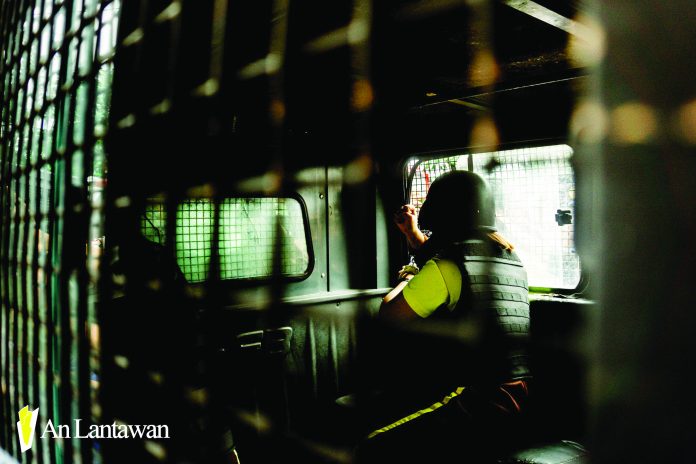
GUILTY. Community journalist Frenchie Mae Cumpio was convicted of financing terrorism by a Tacloban City court, a ruling that drew sharp criticism from media organizations. (AN LANTAWAN)
12 to 18 years imprisonment
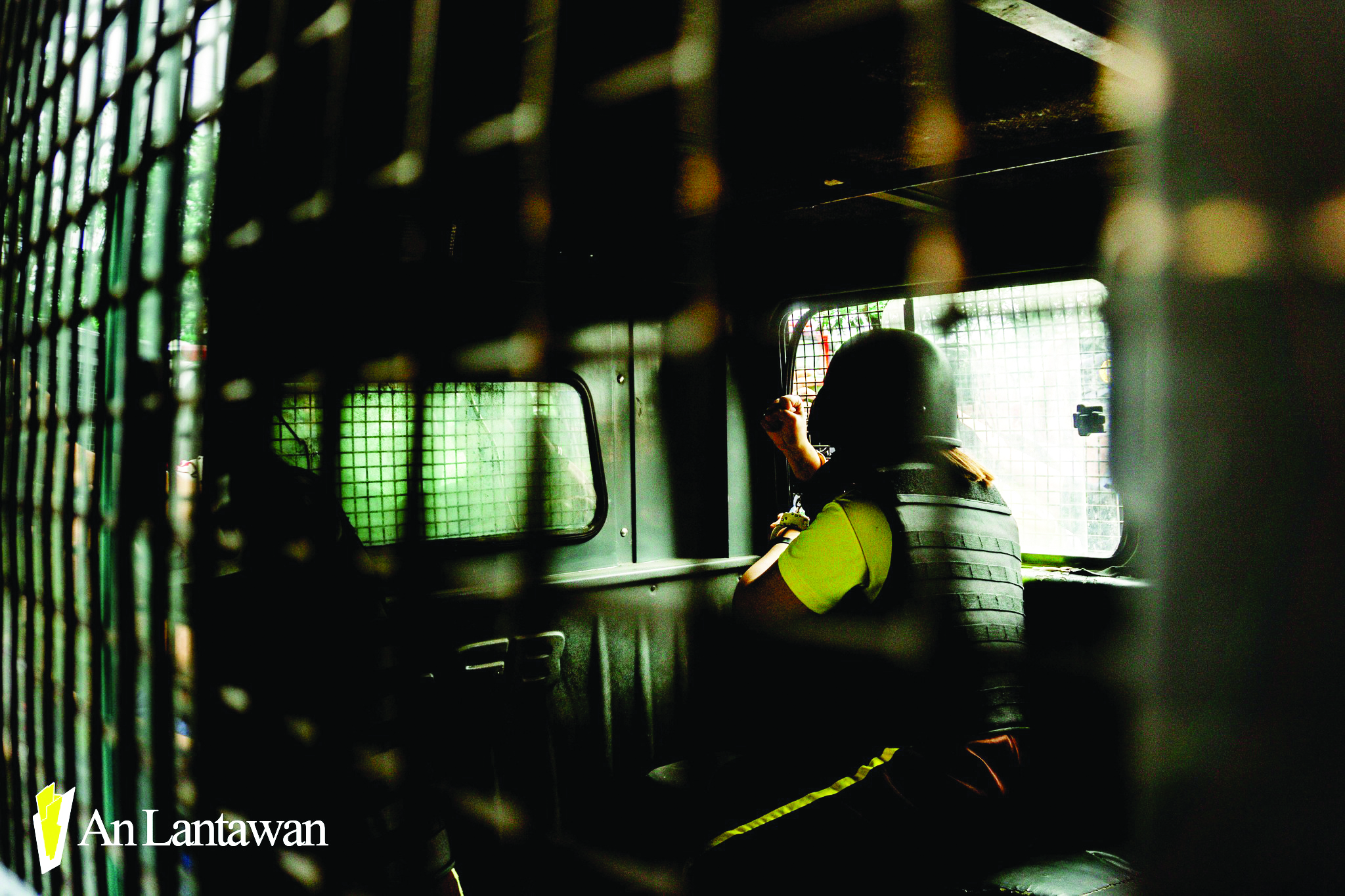
GUILTY. Community journalist Frenchie Mae Cumpio was convicted of financing terrorism by a Tacloban City court, a ruling that drew sharp criticism from media organizations. (AN LANTAWAN)
TACLOBAN CITY — A Regional Trial Court (RTC) here on Thursday, January 22, sentenced community journalist Frenchie Mae Cumpio to 12 to 18 years in prison after finding her guilty of financing terrorism, a ruling that drew condemnation from press freedom groups and shocked her family who had expected her acquittal after nearly six years in detention.
RTC Branch 45 presiding Judge Georgina Perez convicted Cumpio and her co-accused, Marielle Domequil, a worker of a church-based organization, for violating Republic Act 10168, or the Terrorism Financing Prevention and Suppression Act of 2012.
The court, however, acquitted both of charges of illegal possession of firearms, ammunition, and explosives, a non-bailable offense.
Cumpio, who turns 27 on Friday, January 23, and Domequil were immediately taken into custody and boarded onto a prison vehicle at around 8:30 a.m., under heavy guard by jail personnel.
Family members said they were unprepared for the conviction. Kyle Domequil, Mariel’s sister, said they had brought clothes to court, believing the cases would be dismissed.
“We prepared some clothing for them to wear because we were hoping that the cases would be dismissed by the judge,” she told reporters, adding that they were not even able to hug the two women before they were taken away.
Roxy Cumpio, Frenchie Mae’s mother, said the family had also planned to celebrate her daughter’s birthday. “Now, much as we want to visit her right away, we could not do that because Fridays are not open for jail visits,” she said, appealing for compassion and the possibility of bail.
Lawyers for Cumpio and Domequil said they are studying their legal options, including filing a motion for reconsideration, seeking bail, or elevating the case to a higher court.
The conviction sparked sharp criticism from local and international press freedom advocates.
Bi Lih Yi, Asia Program Coordinator of the Committee to Protect Journalists (CPJ), said the ruling has far-reaching implications. “This decision sets a precedent as Frenchie Mae is the first journalist in the world to be convicted of financing terrorism,” she said, warning of a chilling effect on journalists in the Philippines and abroad.
Yi described the verdict as “appalling and absurd,” arguing that terrorism charges are increasingly used to silence journalists critical of government policies. She said CPJ believes in Cumpio’s innocence and will continue campaigning for her and Domequil’s release.
The National Union of Journalists of the Philippines (NUJP) also denounced the ruling, reiterating its position that the charges were “trumped up” and rooted in what it described as a questionable arrest and testimonies from dubious witnesses. The group said the case has become emblematic of the state of press freedom and freedom of expression in the country.
The terrorism financing charge stemmed from allegations that Cumpio and Domequil traveled to Catbalogan City, Samar, on March 29, 2021, where they allegedly provided cash and other support to members of the New People’s Army (NPA), which the government has designated as a terrorist organization.
The case was filed on October 13, 2021, more than a year after the two were arrested on February 7, 2020, in Tacloban City for alleged illegal possession of firearms and ammunition. It was later transferred on June 10, 2022, to RTC Branch 45, the designated anti-terrorism court in Eastern Visayas.
Defense lawyers partly blamed the conviction on testimonies from what they described as “self-serving military assets.”
The Police Regional Office-8 (PRO-8), which filed the cases through the Criminal Investigation and Detection Group (CIDG), welcomed the ruling, saying it reflected judicial independence and the rule of law.
“The conviction for terrorism financing highlights the government’s firm commitment to combating terrorism and cutting off financial support to any terrorist activities,” PRO-8 said in a statement.
During the promulgation of the decision, police deployed about 197 personnel within and around the court premises. Police Col.
Analiza Armeza, PRO-8 information officer, said the heavy security was due to the high-profile nature of the case to ensure peace and order.
The Department of Justice, for its part, said the conviction underscores the government’s resolve to enforce anti-terrorism financing laws and disrupt financial support networks of terrorist organizations.
“During trial, the prosecution established that the accused were not merely a journalist and a lay worker, but were in fact finance officers of the Eastern Visayas Regional Party Committee (EVRPC), the regional arm of the CPP-NPA in Eastern Visayas. Evidence showed that, in their capacity as finance officers, they facilitated the delivery of cash and ammunition to CPP-NPA members in March 2019, the acts forming the basis of the indictment,” the DOJ said in a statement.