31.1 C
Tacloban City
September 24, 2026 - Thursday | 12:04 PM
Home Blog Page 705

Right solution

0

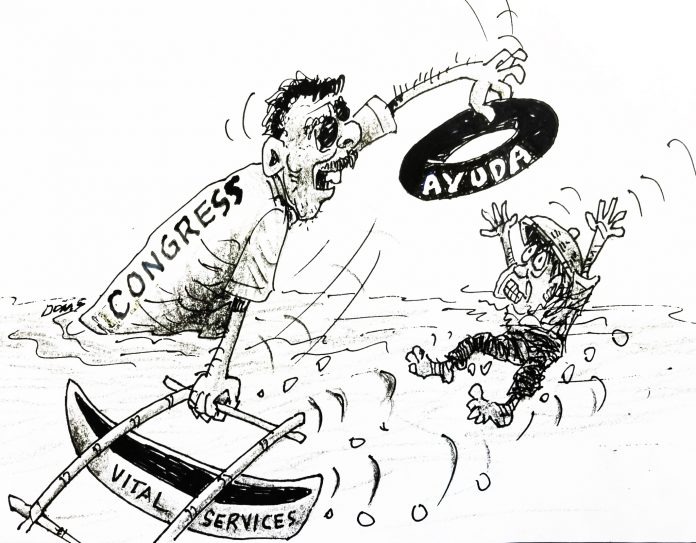
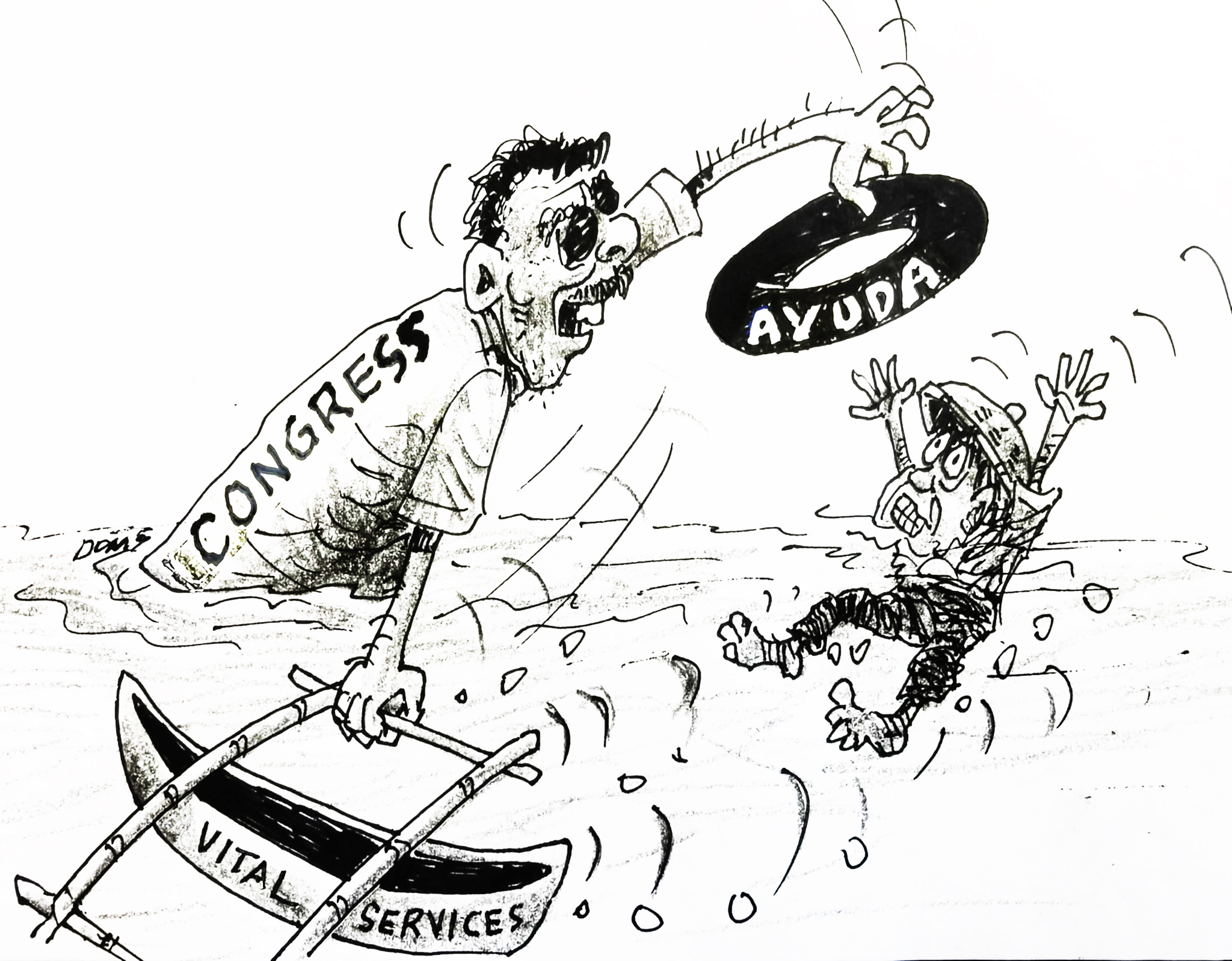
The vicious circle of poverty is perpetuated not just by a lack of resources but by systems that condition people to be dependent on dole-outs instead of their capacity to thrive. When citizens are reduced to recipients of relief aid and political favors, they are denied the dignity of self-reliance, becoming pawns in a transactional relationship that undermines democracy and personal freedom. The solution lies in empowering people with skills, opportunities, and access to government services to enable them to build their futures.

Relief aid perpetuates a vicious cycle of poverty wherein people remain mired in such conditions and cannot rise above their circumstances. Such skills training programs directed at community needs can break this vicious cycle. When people are given marketable skills and practical knowledge, they can earn a living. For instance, in vocational training in agriculture, technologies, and health services, the result is that the trainee becomes an active participant in becoming productive in society rather than a passive recipient of donated goods. Empowerment through education is not a charity; it is a basic fundamental right linked to self-sustenance and development.

The public and private sectors are to consider priority in providing jobs to avoid skill wastage acquired newly. Economic policies have to be channeled to attract those industries that provide sustainable employment, especially in backward areas. Infrastructure development of roads, power, and internet connectivity attracts investment with job opportunities. What it means is that such development should not be about handouts or temporary solutions, but about creating an environment where people get a chance to develop based on merit.

Government services need to be simplified and brought closer to the people so that the benefit reaches those who need them most. Bureaucratic inefficiency and corruption become barriers to basic services: healthcare, housing, and encouragement of small businesses. Services should be transparent, inclusive, and accessible to all citizens without any feeling of obligation toward politicians or middlemen for receiving what rightfully belongs to them. This nurtures a culture of accountability in governance and lessens the culture of dependency and political patronage.

The way forward is the institutionalization of empowerment programs sans political interference and sustained by long-term planning. Grassroots organizations, non-governmental groups, and local governments should join hands in implementing such programs. Only then can the citizens be provided with the wherewithal and opportunities to stand on their own two feet. A society that empowers its people breaks free from the chains of poverty and dependence, ensuring a future rooted in dignity and self-reliance.


Escalating tension

0
DOMS PAGLIAWAN
DOMS PAGLIAWAN

We are again witnessing chaos in the Middle East: with tension between Israel and Arab countries at a fever pitch; it is only but an invitation to catastrophe–a scenario I am not interested in for fear of damage in both urban areas and human lives and deterioration in mutual trust, dialogue, and self-involvement in vicious circles.

As I watch the news unfold, my mind cannot help but think about the complexity of the situation. The fall of the Assad regime in Syria left a vacuum, and Israel was quick to take advantage of it. They are concerned that weapons and military capabilities will fall into the hands of rebels who will use these against them. And who can blame them? The last thing they need is another enemy on their doorstep.

But let us not forget that this is also an opportunity for peace. This could be that chance, when the Assad regime is removed, to bring in a new government that will work with Israel and the other Arab countries toward a far more stable region. And yet, instead of seeing a solution, every single day is escalation, with each side digging deep into its trench and refusing to budge one inch.

I have always been interested in this idea of “enemies” in the Middle East. We hear about it in the news all the time, but what does it really mean? Is it just a name, something to explain our actions and clear us from guilt? Or is it deeper, some basic constituent of human nature that makes us divide into “us” and “them”?

I think it is the latter: we’re wired to perceive threats–real or imaginary–and to respond correspondingly. It’s a fundamental urge programmed into our brains. Yet, as humans, so are empathy and understanding. We can perceive beyond our interests and try to look for common ground.

Unfortunately, that is just not what we are seeing nowadays. What we see is a picture of both camps dug in, refusing to listen and even recognize each other’s humanity. It is as if they speak a different language, with words and concepts completely foreign to others.

And yet, amidst all this tension and hostility, there is still hope. A young Israeli and Palestinian boy, fast friends despite their differences; a group of activists from different backgrounds coming together to demand peace and justice. These are the small sparks that can ignite a greater movement for change.

What do we do? We could begin to listen more profoundly to one another, trying to understand the perspective and experiences of another person. We can begin to realize our biases and prejudices and work our way over them. Most importantly, we can begin by insisting on more from our leaders than the call for greater diplomacy, compromise, and courage in standing up against adversity. But then a more peaceful Middle East might just be realized.

Our baptism in Christ through the Spirit

0
FR. ROY CIMAGALA
FR. ROY CIMAGALA

As we enter the 3rd Sunday of Advent, we are reminded of how the people to whom John the Baptist preached, started asking what they should do to be worthy of being baptized. (cfr. Lk 3,10-18)

That’s when John the Baptist told them that while he would baptize them by water, there was someone else, referring to Christ, who would baptize them in the Holy Spirit and with fire. John the Baptist would refer to Christ as the Lamb of God who will be sacrificed for our sake.

We have to understand that the ideal condition for us to have is first to know and love Christ, because only then may we know and love ourselves and others properly. Thus, St. Augustine once said: “Noverim te, noverim me,” Latin for “May I know God, may I know myself.” It is when we know and love God, revealed fully in Christ, that we can know who we really are and ought to be.

God is our Creator and Father, and Christ is the Son of God in the Trinity of God who is the very image and likeness God has of himself. Since we have been created in God’s image and likeness, we can say that we are actually patterned after the Son who became man to offer us “the way, the truth and the life” we need to achieve our true dignity and ultimate identity.

How Christ is should also be how each one of us ought to be. This may be an incredible truth of faith before which we may feel awkward, but as long as we would just be guided by our faith, we know that that truth of faith can truly be applied to us.
Let’s just be like Mary, the Mother of Christ and our Mother, who simply said “Behold, the handmaid of the Lord, be it done to me according to your word,” when she was told that incredible piece of news that she was going to be the Mother of the Son of God.

With faith, we can do and achieve the impossible, because it would be God who will make impossible things possible. As mentioned in the Letter to the Hebrews, it was because of faith that those Old Testament characters like Abel, Enoch, Noah, Abraham, Sarah were able to do great, if not impossible things. (Heb 11)

And let’s remember that the ideal condition we ought to pursue in our relation with Christ is to gain intimacy with him. We have to do everything to have intimacy with Christ all the time.

It’s when we are intimate with Christ that we can really see ourselves and Christ as we truly are, in our rawest and unvarnished selves. Intimacy is where the most fundamental expressions of our humanity are made, where we become aware of our personhood, meant to enter in loving relation with Christ. It’s where we can truly feel we need Christ, and that he is everything to us!

Yes, intimacy is where we can achieve to the highest degree possible our unity and identification with Christ while here on earth. It’s where we can share what he has in the best way—his wisdom, goodness, compassion, patience, etc. etc.

We need to train all our human faculties—our reason, will, emotions, passions, appetites, memory, imagination, etc.—to get intimate with Christ. This, of course, will be lifelong process. But let’s see to it that everyday we are gaining ground in that direction. This should be the constant goal of our daily life.

The ethical tightrope: Considerations for entrepreneurs dealing with substandard products

0
MARIA JENILEEN CORDERO-ALANO

With Christmas approaching, you’ll likely observe a wide array of festive decorations adorning every corner. Despite our focus on budgeting, it’s common to perceive very affordable items as subpar. This suggests they may lack quality control, potentially compromising their durability and safety over time.

The entrepreneurial journey is often paved with challenges, and one of the most difficult ethical dilemmas involves the production and sale of substandard products. While the pursuit of profit is a driving force for many businesses, it should never come at the expense of consumer safety, well-being, and trust.

As an entrepreneur, while it may be tempting to capitalize on increased sales opportunities during the holiday season, compromising the quality and safety of your products can ultimately be detrimental. Sacrificing quality for quantity may lead to dissatisfied customers who perceive your products as substandard, resulting in potential long-term losses as customers lose trust in your brand and seek higher-quality alternatives. It’s essential to prioritize quality and safety to maintain customer satisfaction and loyalty, ensuring sustainable success in the long run.

Here are some ethical considerations for entrepreneurs grappling with this complex issue:

1. The Duty to Consumers:
– Safety First: A fundamental ethical obligation is to prioritize consumer safety. Entrepreneurs must ensure their products meet all applicable safety standards and regulations, even if it means higher production costs. Selling products that pose a risk to health or well-being is not only unethical but also potentially illegal.
– Transparency and Honesty: Being upfront about the quality and limitations of products builds trust with consumers. Avoid misleading claims or deceptive marketing practices that exaggerate the quality or performance of substandard goods.
– Fair Pricing: Consumers should be charged a fair price for the quality they receive. Selling substandard products at inflated prices is unethical and exploits consumers. Consider offering discounts or promotions to compensate for lower quality, but be transparent about the reasons for the price adjustment.

2. The Impact on Reputation and Trust:
– Long-Term Consequences: Selling substandard products can have lasting negative consequences for a business’s reputation and brand image. Rebuilding trust, once it has been broken, can be an immensely challenging task. The damage to a company’s reputation can outweigh any short-term financial gains.
– Ethical Leadership: Entrepreneurs set the tone for their businesses. By prioritizing ethical conduct and demonstrating a commitment to quality, they create a culture of integrity that permeates all aspects of the company. These fosters trust among employees, customers, and stakeholders.
– Industry Standards: Adhering to industry standards and seeking certifications can bolster a company’s reputation and demonstrate a commitment to quality. This can also help build trust with consumers and ensure that products meet minimum quality expectations.

3. The Responsibility to Stakeholders:
– Employee Well-being: While cost-cutting measures may seem necessary, they should not come at the expense of employee safety or well-being. Creating a workplace that prioritizes safety and ethical treatment is essential for building a strong and sustainable business.
– Supplier Relationships: Ethical entrepreneurs ensure that their suppliers adhere to fair labor practices, environmental standards, and ethical sourcing principles. This extends the company’s commitment to ethical conduct throughout the entire supply chain.
– Social Impact: Entrepreneurs have a responsibility to consider the broader social and environmental impact of their products. Selling substandard products can contribute to resource depletion, pollution, and a decline in overall quality of life. Striving to create products that are sustainable and beneficial to society is a key ethical consideration.

4. The Importance of Integrity and Accountability:
– Honoring Commitments: If a product is found to be substandard, entrepreneurs must take responsibility and address the issue promptly. This might involve offering refunds, replacements, or product recalls. Honoring commitments and making amends builds trust and demonstrates integrity.
– Learning from Mistakes: Every business makes mistakes. The key is to learn from them and implement changes to prevent similar issues from occurring in the future. This demonstrates a commitment to continuous improvement and a desire to uphold ethical standards.

Conclusion:
The ethical considerations surrounding substandard products are complex and require careful consideration. By prioritizing consumer safety, transparency, and integrity, entrepreneurs can build businesses that are both successful and ethical. Remember, the pursuit of profit should never come at the expense of ethical conduct, as it is the foundation of a sustainable and trustworthy business.
————–
If you have any questions or would like to share your thoughts on the column, feel free to send an email to jca.bblueprint@gmail.com. Looking forward to connecting with you!

The 7.2 billion worth of karag nga kan-on!

0
CLEMELLE L. MONTALLANA,DM, CESE ASSOCIATE PROFESSOR III
CLEMELLE L. MONTALLANA,DM, CESE
ASSOCIATE PROFESSOR III

It was one hearty lunch that as an officer of the Region Eight Administrators League I was part. The REAL 8 President pointed out to the fact that we need to finish our rice servings as he knew that an estimated 7.2 worth of Rice is being wasted every year. Talking about the wisdom of Dr. Max Aljibe and his agile and deep thinking, the kind of wit that creates initial puzzlement and then enlightenment. And just like that, I ventured into finding the reasons and cause of that estimate.

In terms of estimates, the Department of Agriculture (DA) reported that 255,000 metric tons of rice were wasted annually as of 2019. This amount could feed approximately 2.8 million Filipinos for a year. Efforts are being made to reduce this wastage, such as promoting the “half-cup rice” initiative, which encourages smaller rice servings to minimize leftovers.

Perhaps we can attribute this to the cultural wastage culture. Think about it , on Birthday buffet, we get a small mountain of rice and when we are full, we have left a pile of it on our plate. The presumed left-over is a result of our craving for carbohydrates yet after this craving is met and quenched, the rice we so desire before became unpalatable and to wastages it goes.

Another suspect of this Rice wastage is the lack of proper storage facility. Local farmers often needs to be given assistance in creating bodega of sorts so that stored grains will be safe from the elements. When Bernadette Reyes of GMA Network disclosed that every single Filipino wastes 2 spoons of rice per day, I realized that may be the case. And that when accumulated wastes are gathered, it may be worth 7.2 Billions of pesos.

I remember vividly our Grandparents penalizing us with one Our Father per 1 grain strewn in our table (nakarag). And it’s a sad thing because I was unable to impose the same to my kids. And perhaps most of us did not cascade the same to the next generation. This I swear is true, we were never as stern and as serious as they were before. Thus , we are wasting so much Rice this days.

Cool celebration

0
AL ELLEMA
AL ELLEMA

Beautiful dawns are back again as the Catholic Church goes into one revered tradition that is the Misa de Gallo. The practice is a challenge to every faithful as every pious soul responds to the wakeup call for nine cold morns. To many, it is a simple sacrifice of thanksgiving to the Holy Child that is to come on Christmas Eve. Waking up early for nine dawns to join in the offering of the Eucharistic Celebration is one good way of preparing the way as enjoined by that voice in the wilderness, the one from the precursor of the Messiah. It was John who led the coming of the Savior, calling upon all those who believe, to repent and cleanup the way for the Great One who is to come.

But joining the celebrations of the dawn masses is not enough welcome act of the Savior. It bears remembering that the call to all faithful is to clean the Lord’s way into every person’s heart. One must fulfill the condition of repenting in order to be worthy of the celebration. Without renewal for good, the celebration will all be empty and meaningless. Amid the preparations of decors, lights, food and wine, people must take a pause and reflect for a moment about the true meaning of the celebration. The risk of missing the real point and essence of Christmas is just tremendous as people are caught in many falsehoods and deceptions.

It is providential that the start of the Misa de Gallo falls coincidentally with the third Sunday of Advent. This will give people the rare opportunity to be reminded of the call for repentance as we commence the tradition towards the birth of Jesus. The cleansing process being asked may quite be far from being done. It is here that every faithful is invited to take confession and be reconciled with the Lord as one makes that one bold step to a new life. Being prepared in spirit through the act of repentance is the best way to complete our celebration.

What begun as a simple birth in a manger with Joseph, Mary and the shepherds who were awake to witness the birth of our Savior on that silent night, has now been radically transformed over the years. Our generation had adopted the strong social changes that are influenced by businessmen. The use of glittering Christmas decorations and colorful lights had year after year been the norm. It seems that Christmas is dull without such decorations. People would set aside part of their income to prepare for such decorations and special food that families would partake during Christmas eve in what Filipinos call Noche Buena.

But more importantly, it is being reconciled with the Lord by asking pardon and mercy for all our sins and shortcomings will give meaning to the significant event called Christmas. It bears making some changes that will make a difference in our lives so that our sacrifices in waking up early morn will make our Christmas meaningful. It is not much the food and the glittering decors that will make our Christmas bright but the peace of mind that we have cleaned our life in preparation for the coming of the Holy Infant who will be born this Christmas after the nine dawns of the Filipino tradition Simbang Gabi, a cool celebration.
comments to alellema@yahoo.com

Recent Posts

DALMACIO C. GRAFIL
PUBLISHER

ALMA GRAFIL
EDITOR-IN-CHIEF

ROMEO CEBREROS
OFFICE IN-CHARGE

OFFICE
BRGY. SONGCO, BORONGAN CITY

CONTACT NUMBERS
(055) 261 – 3319 | 0955 251 1533 | 0917 771 0320 | 0915 897 7439 | 0921 511 0010

DALMACIO C. GRAFIL
PUBLISHER

RICKY J. BAUTISTA
EDITOR

ALMA GRAFIL
BUS. MANAGER

OFFICE
RIZAL AVENUE, CATBALOGAN
(INFRONT OF FIRE DEPARTMENT, NEAR CITY HALL)

CONTACT NUMBERS
0917 771 0320 | 0915 897 7439 | 0921 511 0010

EMAIL
lsdaily2@yahoo.com

WEBSITE
www.issuu.com/samarweeklyexpress