FARM TO MARKET ROAD. The Leyte 2nd District Engineering Office reported on the completion of a 578 meter farm-to-market road in La Paz amounting to P14.8 million. The road is seen to help farmers from Barangays Catalyan and Bagacay West transport their goods to the market.
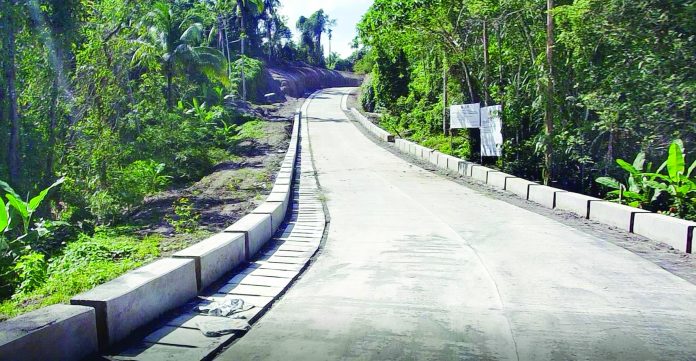
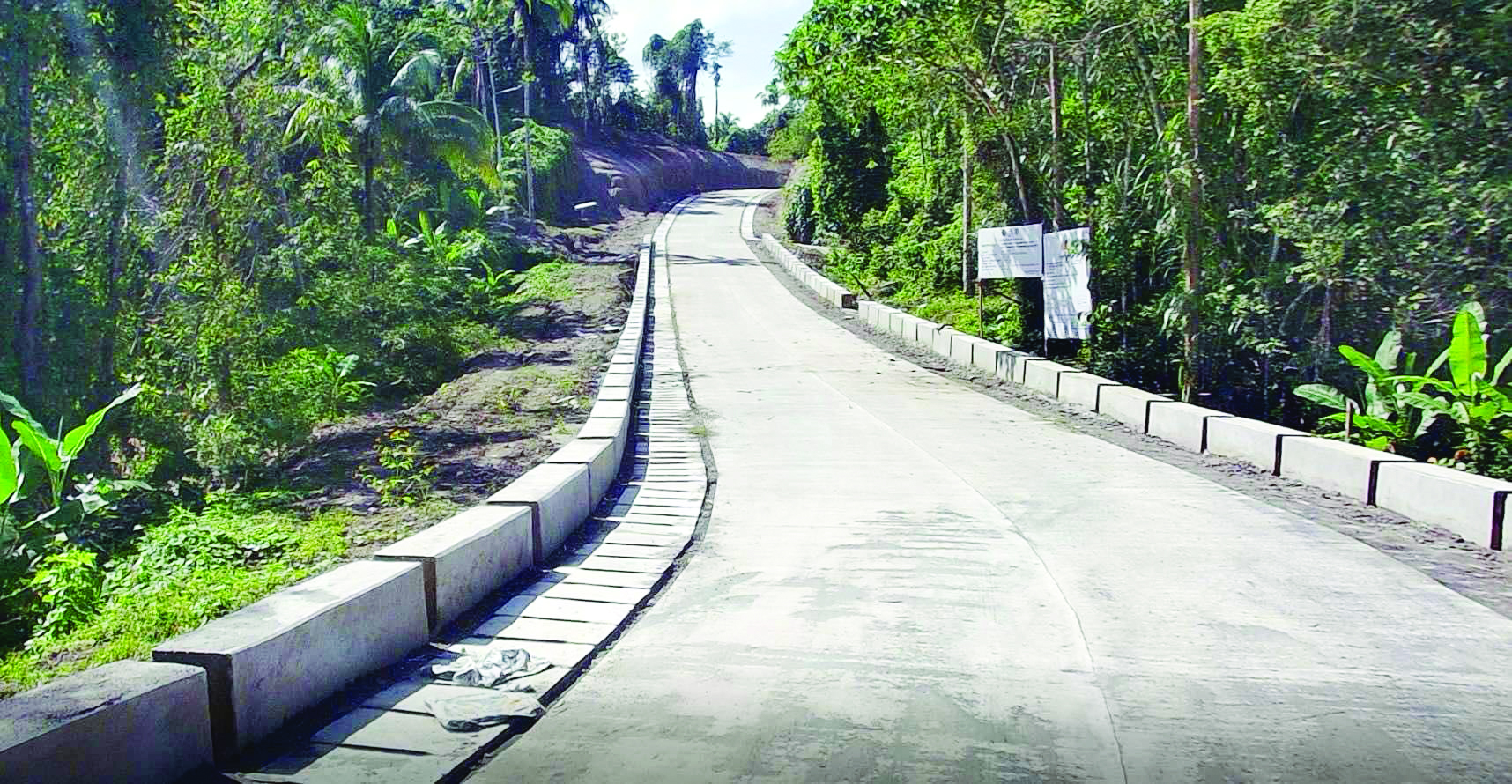
FARM TO MARKET ROAD. The Leyte 2nd District Engineering Office reported on the completion of a 578 meter farm-to-market road in La Paz amounting to P14.8 million. The road is seen to help farmers from Barangays Catalyan and Bagacay West transport their goods to the market.
TACLOBAN CITY – Farmers from the villages of Catalyan and Bagacay West in La Paz, Leyte, are now enjoying improved access to markets and towns, thanks to a newly constructed farm-to-market road that is enhancing their productivity and income.
The Leyte 2nd District Engineering Office (L2DEO) of the Department of Public Works and Highways (DPWH), in collaboration with the Department of Agriculture (DA), completed the construction of the 578-linear-meter road project with a lined canal for better drainage.
The road project aims to connect rural farming areas to commercial hubs, making it faster and more affordable for farmers to transport their produce while reducing post-harvest losses.
District Engineer Leo Edward Oppura highlighted the significance of the infrastructure, stating, “Farmers can now transport their agricultural products in a timely manner, reducing post-harvest losses and increasing income opportunities through the improved road network.”
Local residents also benefited from the project through job opportunities during its construction phase.
Cristy Natividad, one of the local workers hired for the project, shared how the initiative changed her family’s financial situation.
“This project brought a significant change. Before, we relied solely on monthly income from copra production. Now, we receive daily wages and earn P3,000 weekly. We can now pay for our motorcycle’s amortization and provide for our children. The road project has been a big help in improving our livelihood,” she said.
The P14.8-million road project, funded under the DPWH 2024 General Appropriations Act, was completed on October 4, 2024.
Farmers and residents alike continue to express their gratitude for the infrastructure, which has not only improved their access to markets but also opened more opportunities for economic growth in the area.
STATE OF CALAMITY. The province of Biliran has been placed under a state of calamity on Friday, Dec. 27, in the wake of the incident involving the Biliran Bridge which serves as the main link of the province to Leyte mainland.Traffic on the bridge has been controlled by the DPWH as part of its measures.
(BILIRAN ISLAND)
Due to bridge incident
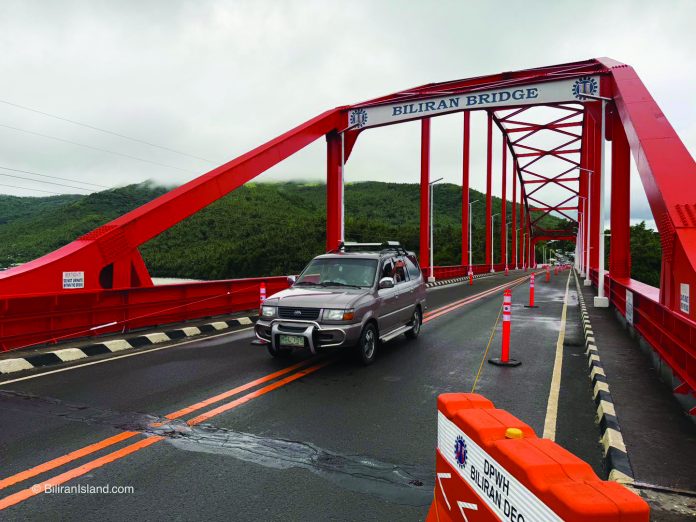
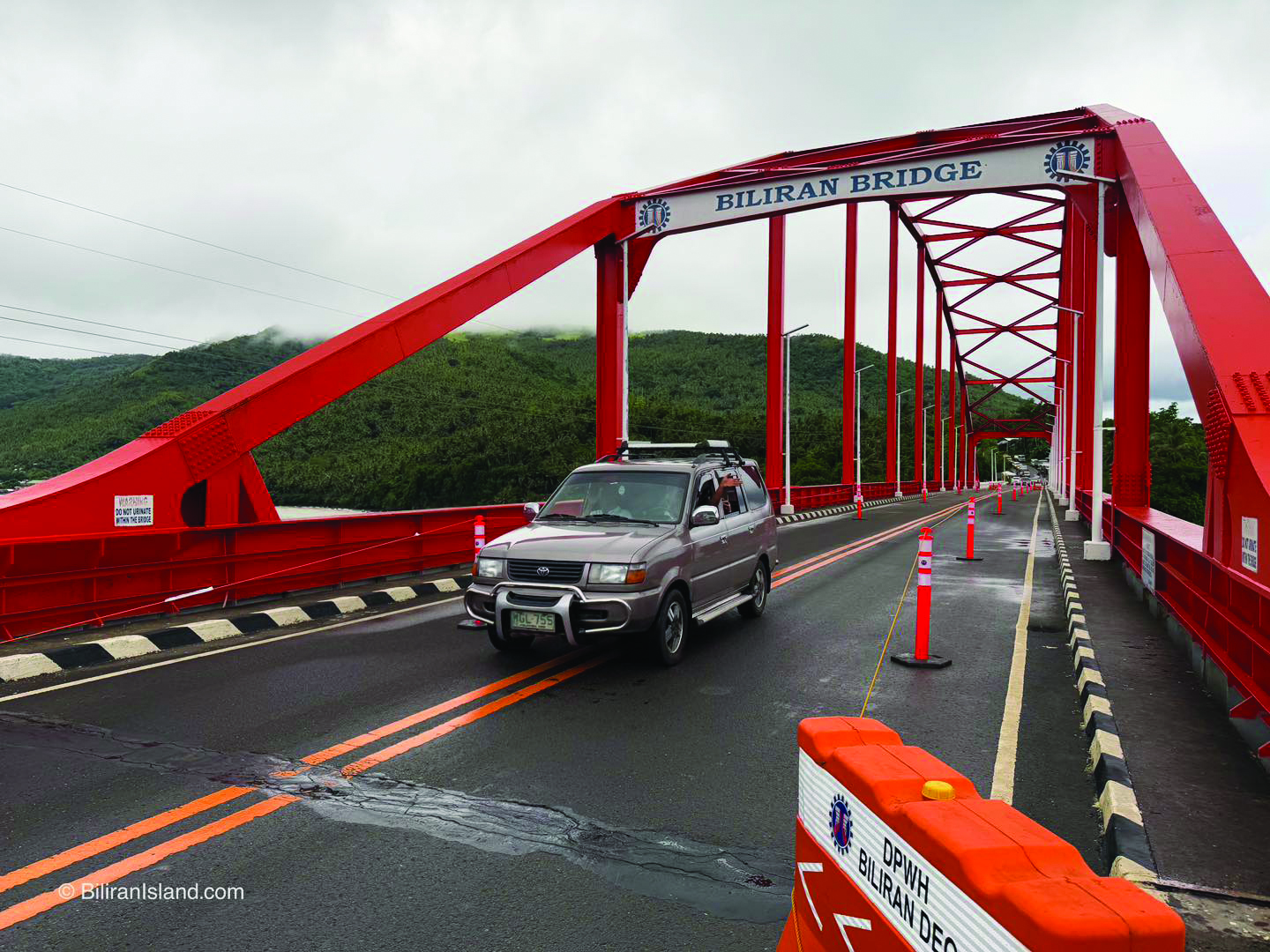
STATE OF CALAMITY. The province of Biliran has been placed under a state of calamity on Friday, Dec. 27, in the wake of the incident involving the Biliran Bridge which serves as the main link of the province to Leyte mainland.Traffic on the bridge has been controlled by the DPWH as part of its measures. (BILIRAN ISLAND)
TACLOBAN CITY– The province of Biliran has declared a state of calamity due to structural concerns surrounding the Biliran Bridge, a vital link between the island province and mainland Leyte.
Resolution No. 321, passed during a special session of the 11th Sangguniang Panlalawigan on Friday, Dec.17, highlights the significant economic and logistical disruptions caused by the incident related to physical condition of the 120-meters Biliran Bridge.
The declaration follows findings from a technical assessment by engineers from the Department of Public Works and Highways (DPWH), who identified damage to key components of the bridge, including bridge stringers, steel cross bracing, and loose nuts and bolts.
The damage, attributed to corrosion and continuous heavy loads, has led to restrictions on heavy vehicles and limited access to light vehicles on a controlled basis.
On Dec. 23, Governor Gerard Roger Espina had convened the Provincial Disaster Risk Reduction Management Council (PDRRMC) which he chairs and recommended to the provincial board that a state of calamity be declared in the province due to the incident.
The PDRRMC underscored the importance of the declaration, emphasizing the need to mobilize resources and implement measures to minimize adverse effects on the local economy.
“The declaration of the state of calamity will help in controlling prices and access to the calamity fund for bridge utilization,” Gov. Espina had said.
The Biliran Bridge, constructed in 1975(and not 1976 as earlier stated), serves as the primary conduit for goods, services, and people between Biliran and Leyte.
The restriction of heavy vehicles has disrupted the transport of essential commodities, leading to price increases and inflationary pressures within the province.
To mitigate these impacts, the resolution authorizes the provincial government to utilize calamity funds for immediate interventions, including implementing price control measures to stabilize the cost of goods and services; providing assistance to affected sectors, particularly those in trade and logistics; and undertaking immediate repairs and enhancing alternative transportation routes.
“The PDRRMC has assessed the situation and recommended the declaration of a state of calamity to address the economic and logistical challenges resulting from the restricted use and access to the bridge,” part of the resolution passed unanimously by the members of the provincial board, reads.
“Declaring a state of calamity will enable the Provincial Government to implement measures to stabilize prices of goods and essential commodities, ensure the uninterrupted delivery of goods and services, and mobilize resources to mitigate the adverse effects of the incident,” the resolution added.
The resolution also requests support from national government agencies, including the DPWH and the Department of Trade and Industry (DTI), to address both the structural issues and the broader economic consequences.
Recommendations from the DPWH include major repairs or replacements of damaged bridge components and the use of barges to transport heavy cargo.
Last Dec.23, a viral video showing the bridge, also known as Imelda Bridge named after former first lady Imelda Marcos, ‘swaying’ or waving.
Structural defects have been identified in the Biliran Bridge following a condition inspection conducted by the Department of Public Works and Highways-Biliran District Engineering Office (DPWH-BDEO).
This prompted for the regional DPWH office to conduct an inspection the following day or on Dec.24, which revealed defective components under the bridge’s deck slab, including issues with the bridge stringers, steel cross bracing, and built-up sections on span 4.
Also, loose nuts and bolts were discovered in the same span during the inspection.
These structural flaws have been linked to a phenomenon known as aero-dynamic flutter, potentially caused by the resonance between gusty wind frequencies and the combined forces acting on the bridge, such as moving loads, wind pressure, and the bridge’s own weight, it added.
Biliran District Engineering Office officer-in-charge District Engineer Irwin Antonio said that the deterioration of the bridge’s stiffness is largely attributed to its age and corrosion of steel components due to prolonged exposure to sea breeze.
Despite these issues, the inspection noted that the bridge’s bearing plates remain in fair condition.
To prioritize public safety, DPWH-BDEO has implemented temporary restrictions on heavy vehicles crossing the bridge.
Only vehicles weighing 5 tons or less are permitted to cross, and they must do so one at a time, adhering strictly to the center lane. For heavier cargo trucks transporting essential goods, perishable items, and fuel, the use of barge transportation has been advised.
CHEAP RICE.Around 1,500 bags of Bagong Bayaning Magsasaka (BBM) rice were sold at P29 per kilogram during the “Kadiwa ng Pangulo sa NIA” on December 27. The one-day event prioritized senior citizens, persons with disabilities, solo parents, and 4Ps beneficiaries. (TACLOBAN CITY INFORMATION OFFICE)
CHEAP RICE.Around 1,500 bags of Bagong Bayaning Magsasaka (BBM) rice were sold at P29 per kilogram during the “Kadiwa ng Pangulo sa NIA” on December 27. The one-day event prioritized senior citizens, persons with disabilities, solo parents, and 4Ps beneficiaries. (TACLOBAN CITY INFORMATION OFFICE)
TACLOBAN CITY – The National Irrigation Administration (NIA) in the region successfully held a one-day “Kadiwa ng Pangulo” event on December 27, 2024, at Rizal Plaza, this city, offering rice at a significantly reduced price of P29 per kilogram.
The initiative aimed to provide relief to residents burdened by rising rice prices, with 10-kilogram bags sold at the event.
Priority was given to vulnerable groups, including senior citizens, persons with disabilities (PWDs), solo parents, and Pantawid Pamilyang Pilipino Program (4Ps) beneficiaries. Each buyer was limited to one 10-kilo bag and required to present a valid ID.
For locals like Claudette Macawile from Sagkahan who works as a volunteer village watchman, the event was a welcome relief. “This is a big help for us because I was able to save today,” she said.”
Similarly, Marilyn dela Cruz of Brgy. 39, Calvary Hill, expressed her appreciation for the initiative, which allowed her to save significantly.
“This saved money will be used for other necessities,” she said.
The P290 she spent on a 10-kilo bag was half her usual expense of over Php 600. Her family of three consumes this amount of rice every two weeks.
According to Jean Sarah Francisco, NIA-8 information officer, the rice sold during the event was sourced from farmers in Abuyog and Javier who are part of the Bito River Irrigation System.
These farmers are beneficiaries of NIA’s “Farming Support Service Program,” which aims to increase agricultural productivity and farmer incomes.
Under this program, farmers receive a P50,000 support package comprising hybrid seeds, fertilizers, and labor cost assistance. In return, they provide NIA with five metric tons of rice per harvest. If a farmer’s yield falls short, the incentives are adjusted proportionately.
Although the event lasted only one day, Francisco assured the public that NIA plans to conduct more Kadiwa ng Pangulo events next year to reach more residents in the region.
This initiative underscores NIA’s dedication to supporting local farmers while ensuring that affordable rice is accessible to vulnerable communities, proving that partnerships between farmers and government programs can create meaningful change, she added. (ROEL T.AMAZONA)
TACLOBAN CITY – The local government unit (LGU) of Paranas in Samar, under the leadership of Mayor Eunice Babalcon, distributed materials under its ‘Kasilyas Program’ to 15 households in Barangay Pequit.
Launched in 2015, the Kasilyas Program aims to assist families in building sanitary toilets by providing essential construction materials.
Each beneficiary received 10 bags of cement, a toilet bowl, sand and gravel, steel bars, plywood, assorted nails, P-pipes, elbow pipes, and hollow blocks.
Beneficiaries were selected and validated two weeks before the turnover ceremony, with recommendations coming directly from the barangay to ensure aid reaches those most in need.
The construction process will be closely monitored by the Special Program Group (SPG) and barangay sanitation officers. Beneficiaries are expected to complete their toilets within 10 days to maximize the resources provided.
The Kasilyas Program aligns with the municipality’s zero open defecation (ZOD) ordinance, which mandates all households have proper sanitation facilities. This initiative underscores the LGU’s commitment to promoting health and sustainable development across the municipality.
Municipal sanitary inspector Joey Silawan shared that all 44 barangays in Paranas have been certified as ZOD G1, a significant milestone recognized by the Provincial Health Office, Unicef, and the Department of Health (DOH) Region 8 in November 2021.
Of the municipality’s 7,766 households, 7,394 have their own toilets, while the remaining families share facilities with relatives.
This latest turnover of the Kasilyas Program reaffirms Paranas LGU’s dedication to improving sanitation and ensuring all residents have access to basic health facilities. (ROEL T. AMAZONA)
ROAD UPGRADE. The Leyte 2nd District Engineering Office (DEO) of the Department of Public Works and Highways (DPWH) has completed the construction and upgrading, of drainage systems in Barangay Baybay, Carigara, Leyte at a cost of P9.75 million. (L2DEO)
T
ROAD UPGRADE. The Leyte 2nd District Engineering Office (DEO) of the Department of Public Works and Highways (DPWH) has completed the construction and upgrading, of drainage systems in Barangay Baybay, Carigara, Leyte at a cost of P9.75 million. (L2DEO)
ACLOBAN CITY – To ensure the safety and reliability of the national road system, the Leyte 2nd District Engineering Office (DEO) of the Department of Public Works and Highways (DPWH) has completed the construction, upgrading, and rehabilitation of drainage systems in Barangay Baybay, Carigara, Leyte.
District Engineer Leo Edward Oppura reported that the office has successfully installed a 910-millimeter reinforced concrete pipe culvert (RCPC) along with concrete sidewalks, curbs, and gutters. These improvements are designed to efficiently collect surface runoff from the pavement and channel it to the storm drain system.
Barangay Baybay is recognized as the busiest area in Carigara town, serving as its main commercial hub. It is home to various establishments such as grocery stores, pharmacies, food stalls, banks, ready-to-wear clothing shops, remittance centers, and hardware stores.
The road upgrades in this key commercial district are expected to enhance safety by reducing congestion and improving traffic flow. These improvements also aim to stimulate economic activity, potentially boosting the town’s revenue.
The project was completed on September 28, 2024. It had a total construction cost of P9.75 million and was undertaken by Viguz Construction. (LIZBETH ANN A. ABELLA)
ORMOC CITY-The Baybay City Police Station, under the leadership of Police Lt.Col. Nerro M. Hobrero, chief of police, apprehended four individuals on December 25, 2024, in Barangay Kabungaan, this city.
The suspects were involved in illegal cockfighting (“tari-tari”) and attacked a police officer who attempted to intervene.
The incident occurred when a police officer, on his way home, came across the illegal activity.
Upon identifying himself as a law enforcer, he was unprovokedly assaulted by one of the suspects. The other individuals joined in, inflicting injuries on the officer before fleeing the scene.
Prompt hot pursuit operations resulted in the arrest of the suspects, identified as alias “Albert,” 31, and alias “Timos,” 36, both residents of Brgy. Kabungaan; alias “Joseph,” 32, and alias “Dionesio,” 62, both residents of Brgy. Cabintan, Ormoc City.
The suspects are currently in police custody, along with the confiscated evidence.
PLt/Col.Hobrero praised the swift response of the officers and the community’s cooperation, underscoring the importance of respecting law enforcers and upholding public safety.
“This incident serves as a reminder of the risks our officers face daily in ensuring the law is upheld,” he said.
The injured officer is reportedly recovering, while the Baybay Police continues to reinforce its commitment to eradicating illegal activities and protecting the community.