25.1 C
Tacloban City
September 22, 2026 - Tuesday | 1:20 AM
Home Blog Page 672

DAR to showcase stories of beneficiaries in “PelikulAgraryo”

0

TACLOBAN CITY – The Department of Agrarian Reform (DAR) is tapping the youth to tell in their own perspective of a successful story relative to the implementation of the agrarian reform program in the country through a short film.

Late last year, DAR launched “PelikulAgraryo 2025,” a short film festival which offers an exciting platform for tertiary-level students nationwide to celebrate their passion for filmmaking and advocate for the promotion of the success stories of agrarian reform beneficiaries (ARBs), agrarian reform beneficiaries organizations (ARBOs) and projects of the DAR.

Stories must revolve around this year’s PelikulAgraryo theme, “Pag-ani sa mga Pangarap: Mga Kwento ng Pag-asa at Tagumpay sa Agraryo (Havest of Dreams: Agrarian Stories of Hope and Success).”

There are two categories to vie for, the ARB and the ARBO. All stories must be based on real life accounts of ARBs or ARBOs.

The competition is open to students currently enrolled in communication and media-related courses.

It will feature regional elimination rounds, followed by a national finals event with the awarding ceremony to be held on April 18 this year in Metro Manila.

Regional winners will receive P30,000 for the best film for each category, P15,000 for the second best film, and P10,000 for the third best film. For the winners of the best director, best actor, best actress, best cinematography, best editing and best screenplay will receive P10,000 each.

Winners for the best film of both categories will represent the region and have the chance to compete at the national level and vie for the P60,000 best film prize and other awards at stake.

Deadline for the submission of the regional entries is on February 28 this year.

In Eastern Visayas, interested parties may visit the DAR office in your area for additional information or you may contact the Regional Information Officer at 0920-803-8791.
(JOSE ALSMITH L. SORIA/PR)
Dagooc: Delayed regulatory approvals cause high electricity bill, unfair to blame it on NGCP*

0

A lawmaker asserted that delayed regulatory approvals are causing the high electricity prices being experienced by consumers, emphasizing that it is unfair to blame NGCP for it.
APEC Partylist Rep. Sergio Dagooc said charges collected by NGCP constitute a small portion of the electric bill, and focusing on the transmission grid operator will not address the issue of high electricity prices.

Generation and distribution costs account for 55 and 20 percent, respectively, while NGCP accounts for just 3 percent of the consumers’ electric bill.

“Ano ba immediate na pwede natin gawin na pwede ibaba? I don’t totally agree na tututukan natin si NGCP, bababa na agad iyong bill natin, kasi napakaliit nung kontribusyon ng transmission doon sa kabuang binabayaran natin,” Dagooc said during the hearing of the House Committee on Legislative Franchises.

Department of Energy (DOE) Undersecretary Sharon Garin acknowledged that some delays are due to projects still awaiting approval from the Energy Regulatory Commission (ERC).
Dagooc also questioned DOE for relying on the Transmission Development Plan (TDP) as a basis for identifying delays.

“If that’s the case sa pag-review, e papalpak talaga,” Dagooc said.

Philreca Party-List Rep. Presley De Jesus, for his part, welcomed Garin’s admission, saying it is unfair to place all the blame on NGCP for the project delays.

“In short, hindi lang ito solely fault ng NGCP, just to make it clear. Ang masama rito, we’re not trying to defend NGCP. We’re trying to level the playing field. Kasi ang dating, kasalanan ng NGCP kung bakit maraming delays,” De Jesus said.
(LIZBETH ABELLA)

Priest killed in a vehicular accident in Eastern Samar

0
Fr. Alejandro ‘Alex’ Galo Jr.

TACLOBAN CITY — A 66-year-old priest, Fr. Alejandro ‘Alex’ Galo Jr., was killed in a vehicular accident in Llorente, Eastern Samar, on Wednesday, January 15, at around 8:45 a.m.

According to the Llorente municipal police, Fr. Galo died on the spot after the motorcycle he was riding was hit by a sports utility vehicle (SUV) driven by a woman.

The incident occurred along a sharp curve in Barangay Naubay, a known accident-prone area in Llorente.

The woman driver, whose identity has not been disclosed except to say she was from Tacloban City and works in a nongovernment organization, is currently under the custody of the Llorente police.

The Diocese of Borongan expressed deep sorrow over the sudden death of Fr. Galo, who served as the head of the Commission on Church Properties for the diocese.

“We ask for your prayers during this difficult time as we honor the life and legacy of a remarkable servant of God. Let us come together in prayer, remembering Fr. Alex in our hearts and asking for God’s comfort for all who mourn his loss,” the diocese said in a statement through its chancellor, Fr. James Abella.

The diocese also assured the faithful that details regarding the wake, funeral masses, and burial arrangements will be announced soon.

Fr. Galo, a native of Maydolong, Eastern Samar, had been a priest for 39 years. He was known for his strong anti-mining advocacy in Eastern Samar, a stance that earned him both respect and recognition within the community.
(JOEY A. GABIETA)

Political Disarray

0

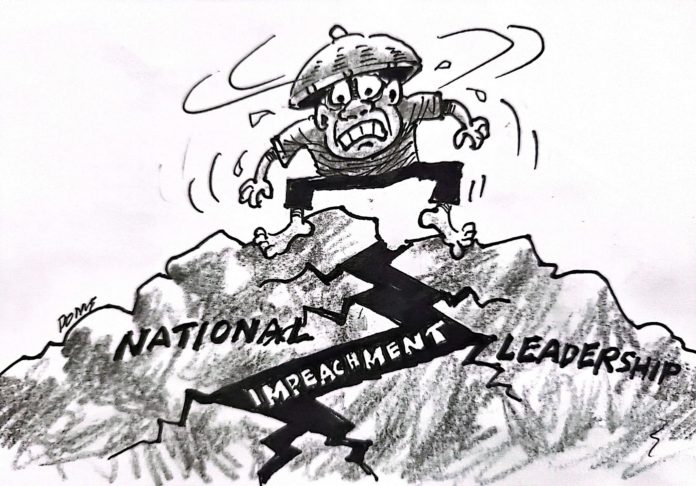
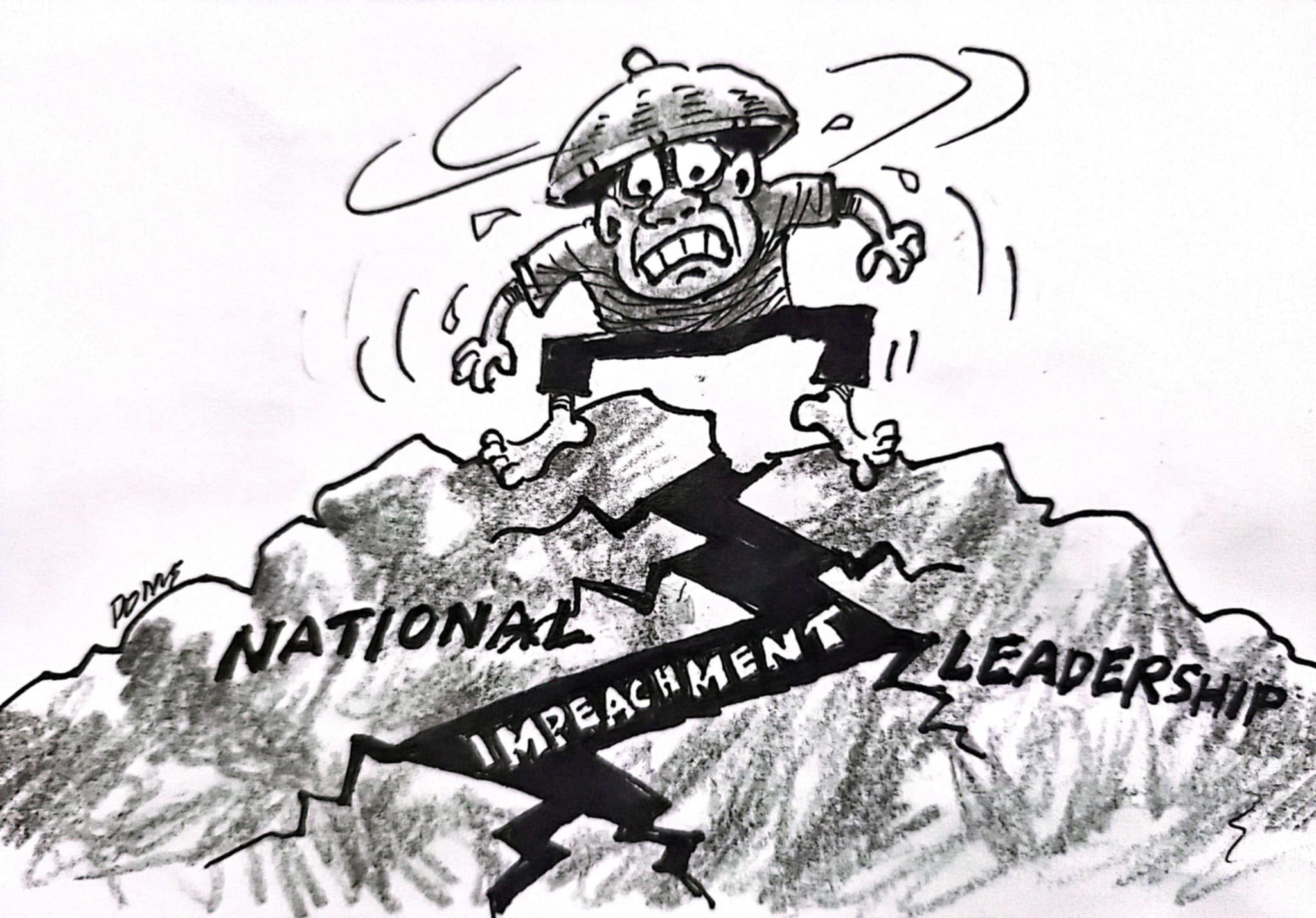
The country is in the throes of political turmoil, now that the impeachment of the vice president has become a polarizing spectacle. Such an opportunistic and divisive move can only deepen the already fragile state of the country, offering no solutions but rather compounding the turmoil. Such is the hallmark of the erosion of statesmanship in favor of vindictive power plays.

That has been the lynchpin of this political crisis: the use of impeachment as a tool, not for justice or accountability, but to annihilate a political opponent. The vice presidency, an institution that provides poise in governance, has now been reduced to being nothing more than a mere pawn in some sordid game of partisan interests. The process gets mired in questions of credibility, where lawmakers are turning a solemn constitutional mandate into a theater of personal vendettas. Such subversion of democratic institutions further impairs the nation strained by corruption, economic inequality, and faltering public services.

Worst of all, this political spectacle comes at the worst possible time. The country is mired in galloping inflation, a struggling economy, and festering social problems. Leaders are busy engaging in a power struggle that pulls away resources and attention from the pressing problems at hand. Every hour spent in hearings, every peso funneled into this circus, is stolen from the people, depriving them of much-needed governance.

But the implications go beyond the immediate political players. Such divisiveness sets a dangerous precedent in which future leaders will be taught that ambition outweighs collaboration and that discrediting one’s opponents is more valuable than uplifting constituents. The damage done to the political landscape risks long-term consequences, sowing cynicism among the young and further disillusioning the citizenry. Democracy, once a robust framework for dialogue and dissent, is at risk of becoming an empty ritual.

It will have to wrest this country from this disastrous course by reverting to accountability, dialogue, and service principles. Leaders, being above personal or partisan agendas, should address critical issues facing this nation with great competence and honor. Civil society, in its ways, also has a mandate—to insist on transparency, cohesiveness, and a definite focus on the common good. On such a note, the beginning of healing is possible, starting to regain what little semblance of order obtains in the chaos.

California wildfires

0

The wildfires, which are razing Los Angeles and leaving ash and heartbreak in their wake, have whipped up a firestorm of not just the winds of destruction but also a heated debate. Some claim this inferno is divine judgment—a celestial payback for what they see as the city’s moral decay. While I’m not dogmatic in declaring these fires to be God’s judgment, I won’t dismiss the notion that actions—collective or individual—often come with consequences. What I do know is what the Bible says: God should not be blasphemed (Galatians 6:7). History is replete with examples of people reaping the consequence of their mockery, and that’s worth reflecting on.

Let’s talk first about this whole “God’s judgment” theory. It’s a bold thing to say, isn’t it? Almost like saying God is up there, monitoring Hollywood’s every move, with a thunderbolt in one hand and a matchstick in the other. But if we’re being honest, it’s a bit simplistic. California wildfires are not new phenomena; they’re as much a part of the state as its beaches and celebrity sightings. The science behind them is solid—dry seasons, climate change, and human negligence. It’s not probably divine lightning striking these hills aflame; it’s usually just sparks from bad wiring or some careless camper’s smoldering firepit.

But there’s more to it than that. If you think about it, claiming these disasters as divine judgment can feel like scapegoating. It diverts attention away from our human failures: poor land management, urban sprawl, climate indifference—to a convenient narrative of “it’s God’s will.” That mindset is a smokescreen, pun intended. It takes us off the hook for being poor stewards of the earth, a role we were called into in Genesis. If the world is groaning, it’s not always due to someone else’s moral decisions; more often than not, it’s a result of our communal neglect of the environment.

Yet there’s some truth to the thought that to mock God—or rather, to live in rebellion against His principles—comes with a price. The world celebrates ways of life that are based on excess, games of power, and self-focus. The unbridled pursuit of fame, money, and influence is not what leads to flourishing communities; most often, it breeds alienation and chaos. Perhaps the fires are not divine judgment, but they are most certainly a glaring reminder of how quickly things we idolize can go up in flames—literally and metaphorically.
And then there’s the irony of the very people who claim to be God’s mouthpieces during these disasters. They cry, “judgment! “ from pulpits or social media platforms but are suspiciously quiet when it comes to offering practical help. It’s easier to wag a finger at Hollywood than to roll up your sleeves and rebuild homes. Meanwhile, firefighters—modern-day Davids facing the Goliath of infernos—work tirelessly, risking life and limb. These are the unsung heroes.

If judgment belongs to anyone, it’s probably not armchair theologians with apocalyptic soundbites. Remember when you heard the same judgmental comments after the Yolanda devastation when some people claimed it was God’s judgment upon Taclobanons? How did you feel? Did you agree with all your heart? Even if we interpret these disasters as a wake-up call, it’s not our job to hold the gavel. It’s our job to be first responders—not to fires but to pain and loss.

We live in a broken world. Fires, floods, hurricanes—they happen, and often strike indiscriminately. Whether they are divine judgments or the natural consequence of living in a fallen creation is a mystery we may never fully untangle. Maybe the best response isn’t to argue whether the fires are divine retribution but to consider how we respond. Do we rebuild with humility? Do we confront the human factors that are exacerbating these tragedies? Do we offer grace to those suffering instead of judgment? If God is speaking through these disasters, it’s probably less about wrath and more about a call to reflection, stewardship, and love—the kind that rebuilds more than just burned-out homes.

“Whatsoever he shall say to you, do ye”

0

WORDS of Mary to the servants at the wedding in Cana. (cfr. Jn 2,1-11) While the festive celebration was going on, the mother of Christ noticed that wine was running out. She approached him to inform him of the problem, but her request at first was denied. “Woman, what is that to me and to thee? my hour is not yet come,” he told her. But Mary knew how to handle that situation, and in the end Christ’s first miracle took place.

This is a beautiful story that highlights the fact that a good son would always try his best to accommodate whatever his mother would ask even if such request may involve some difficulty. Mary did not force him to accede to her request. She simply made things easy for such request to be eventually granted.

It cannot be denied that mothers somehow enjoy certain privileges with their children, if they are good children. Thus, Mary did not make an issue of the denial she at first received.

It’s this privilege that Mary enjoyed and continues to enjoy with Christ that a saint once said that she is “the safest, easiest, shortest, and most perfect way of approaching Jesus.” It would be a pity if we fail to realize how effective Mary can be as an intercessor for us. Not only that, she actually can anticipate our needs as dramatized at the wedding in Cana.

Indeed, Mary is the epitome of motherhood who knows how to be a mother even to God and to all of us. All of that because of her perfect identification of her will with the will of God, giving us a concrete example of how a human being can be so identified with God’s will that she becomes God’s perfect image and likeness as God wants her and also us to be.

We are often incredulous, even skeptical, about this possibility. But she managed to do it. Obviously, she was given the necessary graces for that. But she also corresponded to those graces with everything that she had, reflecting in the most perfect way the redemptive mission, full of suffering, of her son. How our Lady was and continues to be should also be how we should be.

And she is all there to help us achieve that dignity of being true children of God who can even be a mother of God and a spouse of God as our Lady was the most dutiful daughter of the God the father, mother of God the Son and spouse of God the Holy Spirit.

Let us just imitate our Lady’s perfect faith shown especially when she said, “Fiat mihi secundum verbum tuum,” (Be it done to me according to your word) during the Annunciation. With that faith which for sure she could not understand completely, she put herself entirely under the designs and dynamics of God’s will of love, of redemption, toward mankind.

Let’s see to it that our devotion to her grows. And if it is practically dormant if not dead, then let’s stir it up to life again. She is important to us. In fact, she is indispensable to us. She cannot be treated as an optional feature in our spiritual life, nor something decorative or appendical only.

While she is not God and, therefore, not to be accorded with the worship that is only due to God (latria), she rightly deserves to be given the highest form of veneration (hyperdulia) among all the saints who are already with God in heaven.

Recent Posts

DALMACIO C. GRAFIL
PUBLISHER

ALMA GRAFIL
EDITOR-IN-CHIEF

ROMEO CEBREROS
OFFICE IN-CHARGE

OFFICE
BRGY. SONGCO, BORONGAN CITY

CONTACT NUMBERS
(055) 261 – 3319 | 0955 251 1533 | 0917 771 0320 | 0915 897 7439 | 0921 511 0010

DALMACIO C. GRAFIL
PUBLISHER

RICKY J. BAUTISTA
EDITOR

ALMA GRAFIL
BUS. MANAGER

OFFICE
RIZAL AVENUE, CATBALOGAN
(INFRONT OF FIRE DEPARTMENT, NEAR CITY HALL)

CONTACT NUMBERS
0917 771 0320 | 0915 897 7439 | 0921 511 0010

EMAIL
lsdaily2@yahoo.com

WEBSITE
www.issuu.com/samarweeklyexpress