
26.9 C
Tacloban City
September 21, 2026 - Monday | 7:14 PM
Home Blog Page 666

Three arrested in Sta. Rita drug bust

0

ORMOC CITY– A buy-bust operation conducted by the Station Drug Enforcement Team (SDET) in Barangay San Pedro, Sta. Rita, Samar, led to the arrest of three individuals on January 20.

The police identified the suspects as alias “Ben,” 25, single, unemployed; alias “Kaye,” 21, with a common-law husband, jobless; and alias “CJ,” 18, single, also jobless—all residents of Barangay San Pedro.

The operation initially targeted alias “Ben,” who was the primary suspect. However, during the operation, two other individuals known within the local drug community, alias “Kaye” and alias “CJ,” were also apprehended.

Authorities recovered one sachet of suspected shabu purchased by an operative for P500 from Ben and four additional sachets of suspected shabu he placed in a candy container.
Upon further search, law enforcement officers discovered one sachet of suspected shabu in the possession of each of the two other suspects.

Charges for violating Section 5 (selling illegal drugs) and Section 11 (possession of illegal drugs) under the Comprehensive Dangerous Drugs Act of 2002 were filed against the suspects. They are currently detained at the Sta. Rita Municipal Police Station.

(ROBERT DEJON)

Barangay leader injured in Sinulog Festival incident in Maasin City

0

ORMOC CITY– A private employee is now in police custody after allegedly assaulting a barangay chairman during a Sinulog festival event at around 9:20 p.m. on January 19, in Purok Sambag, Barangay Asuncion, Maasin City.

The victim, identified as alias “Den,” 33, married, and the village chairman of Asuncion, sustained injuries from the altercation. The suspect, identified as alias “Lonny,” 24, single, and a resident of Brgy. Nasaug, is reportedly a private employee.

According to an investigation by the local police, the victim had organized an event to celebrate the Sinulog festival. During the festivities, the victim noticed the suspect attempting to harm another attendee and intervened to defuse the situation.

The police stated that the suspect became aggressive, leading to his initial arrest. However, while handcuffed, the suspect managed to escape briefly. When cornered, the suspect suddenly attacked the barangay chairman, punching and kicking him.

The suspect was later subdued and brought to the Maasin City Police Station for proper disposition. Meanwhile, the barangay chairman was taken to a local hospital for treatment of his injuries.
(ROBERT DEJON)

BFAR issues red tide advisory affecting some EV waters

0
RED TIDE ADVISORY. The Bureau of Fisheries and Aquatic Resources reported that several bodies of water in the region continues to have the red tide toxin, urging the public not to consume ‘tahong’ and clean thoroughly fish before eating.

TACLOBAN CITY-The Bureau of Fisheries and Aquatic Resources (BFAR) Region 8 has issued the latest advisory on red tide occurrences in Eastern Visayas, based on laboratory examinations conducted by the BFAR Regional and National Fisheries Laboratories.

RED TIDE ADVISORY. The Bureau of Fisheries and Aquatic Resources reported that several bodies of water in the region continues to have the red tide toxin, urging the public not to consume ‘tahong’ and clean thoroughly fish before eating.

BFAR announced that seawater samples collected from San Pedro Bay in Basey, Samar are now negative for the dinoflagellate Pyrodinium bahamense. This means it is safe to consume all types of shellfish and Acetes sp., locally known as “Alamang” or “Hipon,” from this area.

However, laboratory tests revealed that shellfish meat samples collected from Leyte, Leyte tested positive for Paralytic Shellfish Toxin (saxitoxin). To safeguard public health and protect the shellfish industry, BFAR has issued a strict warning to the public to refrain from gathering, selling, eating all types of shellfish and Acetes sp. from this area. Consumption of contaminated shellfish can lead to Paralytic Shellfish Poisoning (PSP).

BFAR has also maintained the shellfish ban in the following areas due to the presence of toxins beyond the regulatory limit: Daram Island, Samar;Irong-Irong Bay, Catbalogan City; and Matarinao Bay, Eastern Samar (covering General MacArthur, Quinapondan, Hernani, and Salcedo).

Harvesting, eating, and collecting all types of shellfish and Acetes sp. “Alamang” from these areas remain strictly prohibited. Violators of the shellfish ban will face penalties.
Filtered seawater samples from the following areas were found positive for Pyrodinium bahamense, a dinoflagellate that produces red tide toxin (saxitoxin).

The public is similarly advised against the gathering, selling, and consumption of shellfish and Acetes sp. from these areas to prevent PSP.

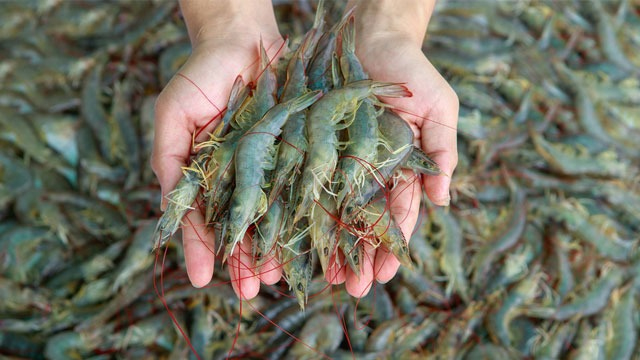
Despite the presence of red tide toxins in these areas, fish, squid, shrimp, and crab are safe to consume, provided they are fresh; their internal organs, such as intestines and gills, are removed and thoroughly cleaned.
(LIZBETH ANN A. ABELLA)

Investigate this matter

0

The reported anomaly in the 2025 national budget, with alleged blank amounts in some critical sections, must be acted upon immediately. This, if true, could only be a forewarning of more deliberate efforts toward enabling corruption that is yet to come, unlocking the doors to future irregularities that may ravage public resources and trust.

There is no overstatement of the seriousness needed here. A budget with blank amounts is not an oversight; it is a pointer to a basic breakdown in accountability mechanisms for public spending. Whoever has allowed this to happen, through design or neglect, has set the table for the misuse of funds on a massive scale. If not addressed, this issue would defeat the very purpose of the budget: transparent and responsible financial planning for the country.

Such an anomaly raises concerns over who benefits from these blank spaces. Diverting public funds into private hands becomes a real threat. If these blank sections are not fully explained, one can’t help but wonder if the powers that be are just trying to obscure or distort the real financial requirements of all these government projects. This pattern of behavior is nothing new in the history of government budgets, and it has generally been the prelude to serious financial scandals with devastating effects on the very people most in need.

The bigger picture, however, makes the urgency of addressing this issue even clearer: what is at stake is the very basis of trust between citizens and their government, which begins with the national budget. It is a fragile bond of trust, unique to the system, which is easily broken by anomalies like these. Lack of transparency can only invite suspicion and speculation, feeding a narrative that officials are out to milk the system for personal gain. This must be responded to quickly so that the integrity of public service is not damaged any further.

An independent investigation should be launched to find out the persons behind this submission of blank budget documents, and if found guilty, such persons should be dealt with severely by the law to act as a deterrent to others. The case must be dealt with under maximum transparency since any attempt to cover up or delay accountability will worsen the crisis of confidence. The public deserves a full explanation and assurance that such an oversight—or worse, an intentional omission—will never happen again.

Wisdom of overseas trips

0

The wisdom of visiting other countries, particularly the more economically developed ones, is both a privilege and an opportunity, but this is not entirely without its complexity. In this increasingly interconnected world of technology and trade, a physical move outside one’s border remains one of the most important ways to broaden your horizon and reflect on the gap and potential at home. To turn one’s back on this opportunity is to willfully close one’s eyes to what could otherwise be a transformative personal and societal awakening.

There’s a truth in the power of seeing something better than what you are used to, which is irrefutable. My daughter, Daisy, remembers the first time she walked down the impeccably organized streets of Singapore, where jaywalking seemed almost a mythical offense. It struck her, not just as a traveler, but also as somebody who came from a place where crossing the road often felt like a game of chicken. The city wasn’t just clean; it was efficient and disciplined, almost as if it had collectively read a manual on how life should work. In those moments, she realized that while patriotism is good, romanticizing mediocrity is not. We can love our country and still admit we have much to learn.

Traveling to more progressive countries, one can equate it to peeping into a neighbor’s backyard—not out of envy but curiosity. You see how they water their plants, manage their garbage, and keep their fences intact. In Japan, for example, their waste segregation system is so well enforced it’s an art form. They do not merely sort out refuse; they humanize it—treating with respect every piece of paper, every can. It made me reconsider how we toss up disposing of garbage as if the earth were a bottomless pit. And there are lessons that no documentary or classroom can teach: standing amidst them, something that goes deeper than words.

Traveling also shines an uncomfortable light on our shortcomings. In Germany, even tiny villages are linked by efficient public transportation. Trains arrive and depart with a precision that borders on obsessive, ensuring people aren’t stranded or late. It makes me wonder why, in our own country, a commute that should take thirty minutes often feels like a battle involving gridlocks, smoke-belching jeepneys, and motorbikes that weave through traffic like mosquitoes dodging swats. It’s humbling, even embarrassing, to see how others have mastered systems that we still fumble with—but it’s also motivating. If they can, why can’t we?

These trips don’t just change your view on governance and infrastructure; they also nudge you to reconsider personal habits. The French, for example, treat mealtime as a sacred ritual—a time to truly relish both food and company. It is an unwritten rule not to be caught scrolling mindlessly through your phone while dining as if each bite deserves your full attention. Contrast that with our fast-food culture, in which meals are inhaled, not enjoyed—you begin to wonder if the lack of mindfulness overflows into other aspects of our lives.

Businesses, too, can gain from benchmarking. Companies readily send employees overseas for conferences, or even on observation tours merely to see how things work in more progressive economies—not on a junket but as an investment in their work. For example, a factory supervisor from the Philippines who has seen how automation works in South Korea will be inspired by ideas on how to streamline work and boost efficiency. Some will lobby their company for upgrade technology. Indeed, the knowledge acquired appears intangible, but it transforms workplaces and industries with ripple effects.

Yet there is always the risk, even with subtlety, of the blind imitation that everything done elsewhere is working right at home. The temptation to copy without understanding the local context is a trap many fall into. The goal should not be to replicate but to adapt—to take what’s applicable and mold it to fit our unique circumstances. Not only is a park in Copenhagen well-designed, but also it is used and respected by people. It would be like planting a tropical tree in the Arctic and expecting it to bloom if the physical park is imported without the cultivation of the mindset that supports it.

The true wisdom of travel—at its very core—was that it could stir up both gratitude and restlessness. Gratitude for all we already have: the warmth of home, the quirks of our culture, the resilience of our people; and restlessness for what we could become. It is that gentle but insistent nudge to aim higher, dream bigger, and demand better not only from our leaders but from ourselves. Travel reminds us that though the grass may look greener elsewhere, our own can flourish, too, if we tend to it with care and intention.

Perhaps the best way to handle this would be for us to travel not as tourists but as students—eager to learn, not consume. We should approach each visit with a disposition of humility, knowing that it is not about seeing but, rather, understanding—and later on, acting. The ultimate goal, after all, is not so much about admiring other countries but making ours the kind of place that others would love to visit and learn from someday.

“Your words, Lord, are spirit and life”

0

THAT’S what St. Paul said in his Second Letter to Timothy. The complete text is: “Our Savior Jesus Christ has destroyed death and brought life to light through the Gospel.” (1,10)

With this assurance, we really would have no reason to fear death. Any fear of death is actually without basis. If we are consistent to our Christian faith which we should not only profess but should also live out, we know that when it comes and however it comes, it is the time when God, our Father and Creator, wants us to be with him.

We know that death is just a transition from our earthly life of trial to our definitive home with God in heaven. The crucial point is that we try our best, with the help of God’s grace, to do well in our earthly life. That is to say, that we manage to develop the love we are meant to have—the love of God and love of neighbor.

That’s when death can be considered like a rose in bloom that the gardener now decides to cut in order to put it in his house. Otherwise, or when we fail in our test of love in this earthly life, we also can be cut by the gardener but as a weed to be thrown out or burned.

We need to examine how our attitude is towards death which is unavoidable in our life here on earth. It’s, of course, a worthwhile exercise because many of us today have a wrong understanding of death that would lead us to unnecessary fears. Also, the many riveting concerns we have at the moment often prevent us from doing this important and crucial exercise.

Death should be understood, first of all, as a consequence of sin. In the beginning when our first parents were still in the state of original justice, death was an unknown. They were not supposed to die. Their and our immortality was supposed to cover not only our spiritual life but also our bodily life.

But death as a consequence of sin has been redeemed by Christ already. Remember what St. Paul said about this: “Where, O death, is your victory? Where, O death is your sting?” (1 Cor 15,55) With the passion, death and resurrection of Christ, the curse of death has been removed.

And so, we should not be afraid of death anymore. As long as we have the same attitude that Christ had toward death, we will consider death as a liberation, a transition to our eternal life of bliss with God in heaven, a happy conclusion of our creation and redemption by Christ.

Our attitude toward death should the same as that of Christ who freely accepted death as way of bearing all the sins of men, so that the death of Christ, who is the Son of God made man, can fully repay the debt that man cannot repay due to his sin against God.

That is why Christ welcomed death. He did not avoid it. He went to it when it was the time to die. “I lay down my life, that I may take it again,” he said. “No one takes it from me, but I lay it down of my own accord, I have power to lay it down, and I have power to take it again.” (Jn 10,17-18)

With Christ’s death, the sting of death as a consequence of our sin has been removed. The eternal death that was due to us because of our sin has been conquered with Christ’s resurrection to the eternal life. Intriguing indeed to consider that with Christ’s own death, he destroyed death!

Recent Posts

DALMACIO C. GRAFIL
PUBLISHER

ALMA GRAFIL
EDITOR-IN-CHIEF

ROMEO CEBREROS
OFFICE IN-CHARGE

OFFICE
BRGY. SONGCO, BORONGAN CITY

CONTACT NUMBERS
(055) 261 – 3319 | 0955 251 1533 | 0917 771 0320 | 0915 897 7439 | 0921 511 0010

DALMACIO C. GRAFIL
PUBLISHER

RICKY J. BAUTISTA
EDITOR

ALMA GRAFIL
BUS. MANAGER

OFFICE
RIZAL AVENUE, CATBALOGAN
(INFRONT OF FIRE DEPARTMENT, NEAR CITY HALL)

CONTACT NUMBERS
0917 771 0320 | 0915 897 7439 | 0921 511 0010

EMAIL
lsdaily2@yahoo.com

WEBSITE
www.issuu.com/samarweeklyexpress