26.7 C
Tacloban City
September 11, 2026 - Friday | 6:20 PM
Home Blog Page 493

Leyte breaks ground on first tourist rest area in Eastern Visayas

0

TACLOBAN CITY – The Department of Tourism (DOT) officially broke ground on the first tourist rest area (TRA) in Eastern Visayas on Tuesday, June 17, marking a milestone in the region’s efforts to boost tourism infrastructure.

Located in Inopacan, Leyte, the facility is a joint initiative of the DOT, the Office of Congressman Carl Cari, and the Municipality of Inopacan. It is designed to provide travelers with a safe, clean, and convenient space to rest and refresh during their journey.

Once completed, the TRA will offer free shower rooms, restrooms, charging stations, and a Pasalubong Center. It will also serve as a waiting area for tourists heading to the nearby Cuatro Islas Protected Landscape and Seascape (CIPLS), one of the town’s top attractions.
Strategically positioned beside the baywalk, the TRA is expected to enhance the overall experience of both local and international tourists, while promoting Eastern Visayas as an emerging destination.

Rep. Cari thanked DOT Secretary Christina Garcia-Frasco and other key officials for supporting the project. “This initiative will provide travelers a more comfortable and memorable experience as they explore our region’s rich natural beauty,” he said.

(LIZBETH ANN A. ABELLA)

Leyte Pilipinas makes historic podium finish at Taiwan’s Ocean Rise Cup

0
VICTORY FOR PH. The team from Leyte landed the second runner-up honors during this year’s NTOY Ocean Rise Cup International Basketball Tournament held in Taiwan from June 13 to 17. (PHOTO COURTESY)

KEELUNG CITY, Taiwan – Team Leyte Pilipinas has carved a remarkable chapter in Philippine basketball history, clinching 2nd runner-up honors in the NTOU Ocean Rise Cup International Basketball Tournament held at National Taiwan Ocean University (NTOU) from June 13 to 17, 2025.

Competing against 10 elite Taiwanese squads and a strong Malaysian team, Leyte Pilipinas finished with a commanding 6-2 win-loss record, earning global recognition and pride for the country.

Led by head coach Michael Cinabre and assistant coaches Cliff Tesocan, Anton Grabriola, and Mark Anthony Ochea, the team brought discipline, heart, and high-level play that won the admiration of international fans and scouts alike.

In a groundbreaking development, one of Leyte Pilipinas’ standout players received offers from three top Taiwanese universities, making him the first Filipino athlete to be recruited for collegiate basketball in Taiwan as a direct result of this tournament.

More than just a sporting triumph, the tournament became a platform for cultural exchange and showcased the world-class potential of Filipino basketball talent on the global stage.
Leyte Pilipinas may have arrived as underdogs—but they leave Taiwan as pioneers, opening doors for future generations of Filipino athletes to dream and compete beyond borders. (PR)

Fire broke in a public school in Leyte

0

TACLOBAN CITY– A fire broke out at Pawing National High School in Barangay Guindapunan, Palo, Leyte, on the evening of June 18, destroying three classrooms and causing an estimated P1.26 million in damages.

The Bureau of Fire Protection (BFP) reported that the incident was first alerted at 8:15 pm, with fire trucks arriving at the scene just two minutes later.

The blaze was initially declared under first at 8:18 pm, before being escalated to second alarm at 8:22 pm who later declared the fire under control at 8:52 pm and fire out at 9:08 pm.

No injuries or fatalities were reported.

The fire completely gutted three classrooms, a faculty room, and a makeshift canteen, where the fire was suspected to have started.

Responding units included five fire trucks from the BFP, three fire volunteer units, and support from the Municipal Disaster Risk Reduction and Management Office (MDRRMO) and the Philippine National Police (PNP).

The cause of the fire is still under investigation by authorities.

Mariza Magan, Leyte schools superintendent, said that she felt sad on the incident involving the school. She said that she would ask for possible assistance from the local government unit on the construction of the burned classroom which was occupied by Junior high school students.

She also said that she would check if the affected students could temporarily use classrooms at the nearby Pawing Elementary School.

(JOEY A. GABIETA)

Bring them home

0

The Overseas Filipino Workers currently trapped in the escalating Iran-Israel conflict must be repatriated immediately. The worsening tension in the region places their lives in grave danger, and a delay in action is not just irresponsible—it is inhumane.

These workers were sent abroad not to be human shields in geopolitical warfare but to earn an honest living for their families. Their contributions to the Philippine economy through remittances are undeniable, but their worth goes far beyond monetary value. They are citizens whose rights, safety, and dignity deserve absolute protection. No economic gain can justify their exposure to missile strikes and gunfire. The government must not treat their predicament as a footnote in diplomatic negotiations.

Time and again, the Philippines has witnessed how overseas conflicts can spiral out of control. Past wars in the Middle East have shown how quickly civilian areas become war zones. The state must act ahead of catastrophe, not in reaction to body counts. Relying on vague assurances of temporary calm from conflicting forces is reckless. There must be no hesitation in organizing flights, issuing evacuation orders, and working with international partners for safe passage.

Their families here endure sleepless nights, holding onto faint signals of communication and fragile hopes. Each day that passes without decisive action is a cruel extension of their agony. The burden must not fall on these families to beg for government action. The responsibility lies squarely with state agencies tasked with protecting the lives of every Filipino, regardless of their location in the world.

The repatriation of these OFWs must be treated as a matter of national urgency. Human life must always come first, especially when danger is no longer just a possibility, but a reality unfolding by the hour. Above all, politics should not be set aside in securing their safety.

Brink of annihilation

0

When Israel and Iran exchanged hundreds of missiles and drones in the past few days, they did not start a war—they created an international tectonic realignment of power. The entire world is bracing itself as these two bitter enemies glare at each other with fire in their hearts and nothing to lose. Should the other powers get involved, it’s no longer a regional war—it’s going to be World War III.

It is frightening to consider that our shared destiny hangs in the balance of how some stubborn leaders respond to a few slurs. The danger is not merely in the Iranian provocative threats and Israeli defensive strikes, but also in the speed at which some coalitions could be ignited. Iran has danced for decades with the Russians and Chinese; Israel, however, has the army and diplomatic muscle of the United States and its Western allies behind it. These are not shadowy militias across from each other in an oasis. These are countries that are connected to global pipelines of military power, diplomatic intrigues, and old wounds that never actually healed. It’s more than just a Middle Eastern rivalry—it’s an animosity ignited alongside a warehouse full of fuel barrels.

What makes this moment more terrifying than previous clashes is the sheer ability to devastate with modern weapons. We’re not speaking of rifles and tanks slopping across borders anymore. We’re discussing nuclear payloads, hypersonic missiles, AI-guided drones, and electromagnetic pulses that can bring entire cities down. If the apocalypse does come—our nations lining up on an international chessboard like pawns on a board—we’ll not merely be witnessing burning cities. We’ll witness entire continents blackened. There’s no verse in that, only ash.

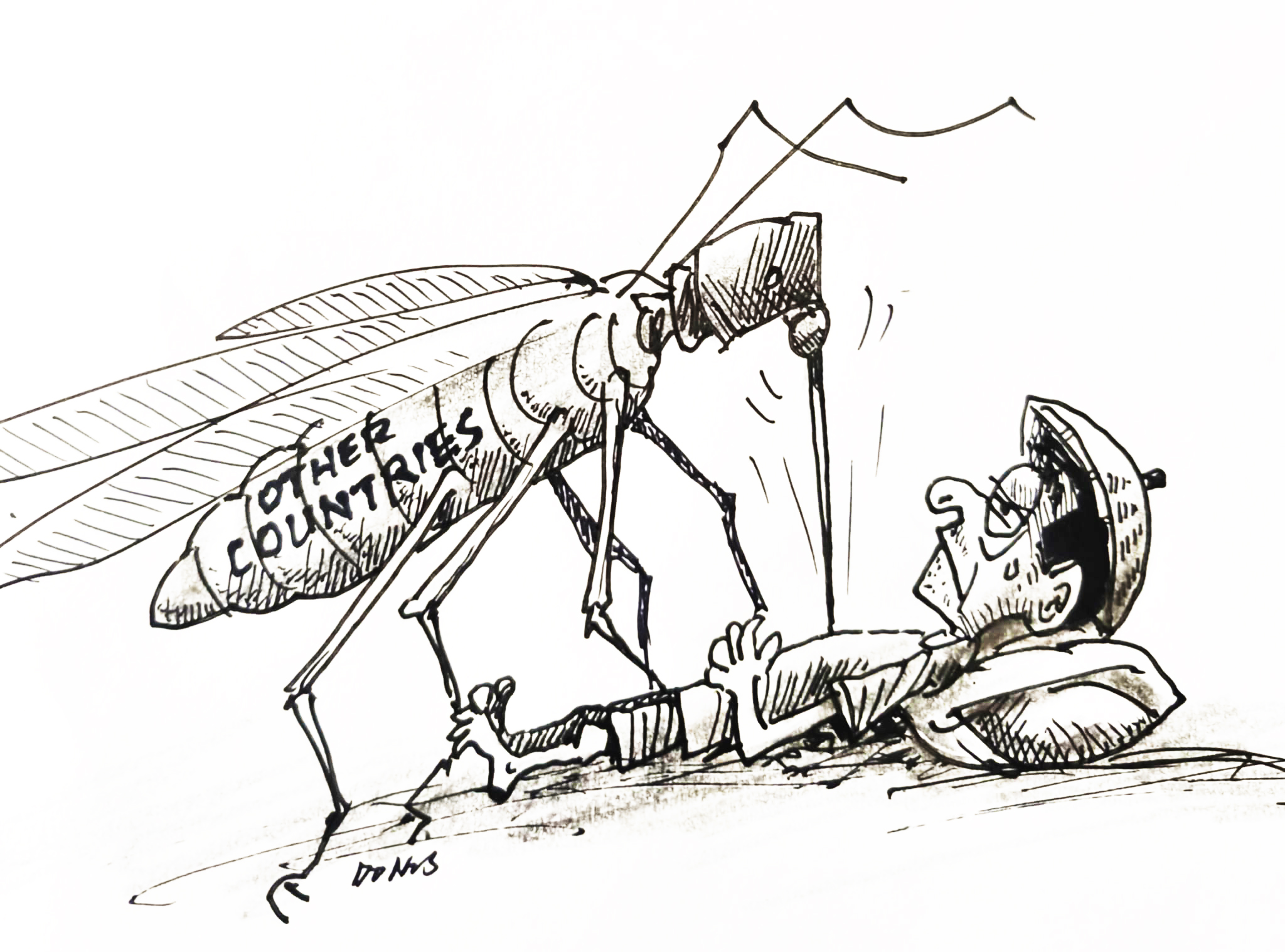
And yet, other countries still toy with intervention. Out of loyalty, pride, economic interest, or ego, they threaten to intervene. But it’s not a sport where you root for your favorite from the stands. This is a war that, if pursued, will have no one cheering. One mistake, one retaliatory blow, and we may be looking down the gun barrel of history’s bitterest lesson. It is staggering how, in a global world so connected by trade, technology, and misery, some politicians still bluster and brag as though their countries are islands of invincibility.

And then there are the civilians—people like you and me—whose lives are broken by each missile launched. Farmers in south Lebanon, kids in Tel Aviv, students in Tehran, businessmen in Gaza, laborers in Haifa—they’re the ones who are taking cover when egos clash. Don’t leave out the OFWs swept up in the middle of all this lunacy, hundreds of miles from home and caught between evacuating for their lives or staying behind to support their families. Wars are not kind to the nameless. The ones who decide to wage them are rarely the ones who pay the price.

What’s terrifying is that this war might “normalize” itself like Ukraine and Gaza do—seemingly continuously burning, yet no longer news-worthy. The world has become oddly at ease with perpetual war. It’s as though, in our haste to scroll, tweet, and forget, we permit the gradual decay of global empathy. If Iran-Israel war escalates into a worldwide hostility, it won’t be because people didn’t know—it will be because people no longer care. That avalanche of human empathy might prove more fatal than any nuclear bomb.

Heads of state can get cool, but only if they’re not wrapped in flags or cooled by politics. The powers of the world need to fight against the lowest tendency to side with one and, instead, side with peace. It is not weakness to pass on a war that will kill us all—it is the very last shred of strength we possess as a species. Let diplomacy stretch until its tendons ache. Let egos ache before bodies hurt. Let leaders bet with their polls, not our planet.

Sometimes the dampest thing that a superpower can do is nothing. Let war rain itself out, like a storm that tires of its own thunder. We cannot afford a third world war—not now, not ever, not when the weapons they’ve built no longer aim to conquer but to erase.

Navigating the sharp edges: Managing blunt employees

0

Blunt employees, those who communicate directly and sometimes offensively, can be a challenge in any workplace. While directness can be a valuable asset, unchecked bluntness can damage morale, hinder collaboration, and create a hostile work environment. This article explores strategies for effectively managing blunt employees, focusing on understanding their behavior, setting clear expectations, and fostering constructive communication.

Understanding the Root of Bluntness

Before addressing the behavior, it’s crucial to understand its potential underlying causes. Bluntness isn’t always intentional rudeness; it can stem from various factors:
– Communication Style: Some individuals simply have a direct communication style ingrained in their personality. They may not intend to offend but lack the social skills to soften their delivery.

– Cultural Differences: Cultural norms significantly influence communication styles. What’s considered blunt in one culture might be perfectly acceptable in another.

– Lack of Social Awareness: Some employees may lack the social awareness to understand the impact of their words on others. They may be genuinely unaware that their comments are hurtful or offensive.

– Stress and Pressure: High-pressure environments can exacerbate bluntness. Stressed individuals may resort to direct, even abrasive, communication as a coping mechanism.
– Insecurity or Low Self-Esteem: Paradoxically, bluntness can sometimes mask insecurity.

An employee might use directness as a defense mechanism to avoid vulnerability.

– Poor Training or Feedback: A lack of training on effective communication and constructive feedback can contribute to bluntness. Employees may not know alternative ways to express their opinions or concerns.

Strategies for Managing Blunt Employees

Addressing bluntness requires a multifaceted approach that combines understanding, clear communication, and consistent feedback:

1. Private and Constructive Feedback: The first step is to address the issue privately. Avoid public confrontations, which can be embarrassing and counterproductive. Focus on specific instances of bluntness, describing the behavior and its impact without making personal attacks. For example, instead of saying “You’re always so rude,” try “During yesterday’s meeting, your comment about Sarah’s presentation was perceived as dismissive. It impacted her confidence and the team’s overall morale.”

2. Set Clear Expectations: Clearly communicate acceptable communication standards within the team or organization. Emphasize the importance of respectful and considerate communication, even when delivering critical feedback. Provide examples of constructive criticism and alternative phrasing to help employees understand how to communicate more effectively.

3. Role-Playing and Training: Consider providing training on communication skills, conflict resolution, and emotional intelligence. Role-playing exercises can be particularly helpful in teaching employees how to deliver feedback constructively and empathetically.

4. Coaching and Mentorship: Pair the blunt employee with a mentor or coach who can provide guidance and support. The mentor can help the employee develop their communication skills and build self-awareness.

5. Focus on the Behavior, Not the Person: Maintain a focus on the specific behaviors rather than labeling the employee as “blunt” or “rude.” This avoids creating a defensive reaction and allows for a more productive conversation.

6. Consistent Enforcement: Consistency is key. If you set clear expectations, you must consistently enforce them. Failure to address repeated instances of bluntness can undermine your authority and create a sense of unfairness.

7. Document Everything: Keep a record of instances of bluntness, including dates, times, and specific examples. This documentation can be valuable if further disciplinary action is required.

8. Seek Mediation if Necessary: If attempts to address the issue directly are unsuccessful, consider involving HR or a mediator. Disputes can be resolved more effectively with the help of a neutral third party.

9. Consider Personality Differences: Recognize that some individuals are naturally more direct than others. While aiming for constructive communication is important, it’s also crucial to acknowledge personality differences and strive for a balance between directness and respect.

When to Take Stronger Action

In some cases, despite best efforts, the blunt behavior may persist and negatively impact the work environment. If the employee is unwilling or unable to change their behavior, stronger action may be necessary, including formal warnings or disciplinary measures. This should always be a last resort, taken only after exhausting all other options.

Managing blunt employees requires patience, understanding, and a consistent approach. By focusing on constructive feedback, clear expectations, and ongoing support, you can help these employees improve their communication skills and create a more positive and productive work environment for everyone. Remember that the goal isn’t to eliminate directness entirely but to channel it into constructive and respectful communication.
————–
If you have any questions or would like to share your thoughts on the column, feel free to send an email to jca.bblueprint@gmail.com. Looking forward to connecting with you!

Recent Posts

DALMACIO C. GRAFIL
PUBLISHER

ALMA GRAFIL
EDITOR-IN-CHIEF

ROMEO CEBREROS
OFFICE IN-CHARGE

OFFICE
BRGY. SONGCO, BORONGAN CITY

CONTACT NUMBERS
(055) 261 – 3319 | 0955 251 1533 | 0917 771 0320 | 0915 897 7439 | 0921 511 0010

DALMACIO C. GRAFIL
PUBLISHER

RICKY J. BAUTISTA
EDITOR

ALMA GRAFIL
BUS. MANAGER

OFFICE
RIZAL AVENUE, CATBALOGAN
(INFRONT OF FIRE DEPARTMENT, NEAR CITY HALL)

CONTACT NUMBERS
0917 771 0320 | 0915 897 7439 | 0921 511 0010

EMAIL
lsdaily2@yahoo.com

WEBSITE
www.issuu.com/samarweeklyexpress