CATARMAN, Northern Samar — About 100 residents identified with cataracts undergo free eye surgery as part of a four-day medical mission aimed at bringing specialized eye care closer to communities in Northern Samar.
The eye surgical mission, spearheaded by the Northern Samar provincial government, was held at the Northern Samar Provincial Hospital (NSPH), following a visual screening conducted Sept. 1 at the Capitol Gym in Catarman.
Lennette Lapara, Provincial Health Office Inclusive Eye Health Program coordinator, said around 200 residents underwent visual acuity tests and screening for various eye problems on the first day of the activity.
Of those screened, about 100 cataract patients were identified for free surgical procedures at the NSPH. Other participants were provided with prescription eyeglasses based on the results of their eye examinations.
The initiative is a joint undertaking of the Bobon-Catarman-Lope de Vega (BobCat LoVe) Inter-local Health Zone and the provincial government through the Provincial Health Office and NSPH.
It is also supported by CBM Global, Eye Hear Foundation, Resources for the Blind Inc., the National Committee on Sight Preservation through its iStrength Project, and the Eastern Visayas Medical Center (EVMC).
During a courtesy visit by the partner groups to the provincial government, Vice Gov. Clarence Dato, representing Gov. Harris Ongchuan, expressed appreciation to the organizations and medical teams involved in the mission.
Among those recognized were the EVMC Ophthalmology team led by Medical Center Chief Dr. Joseph Michael Jaro, Resources for the Blind Executive Director Amelia Torrente, local optometrist Dr. Jennifer Ladeño-Dante, and other members of the participating organizations.
The provincial government said the initiative seeks to improve access to eye care services for Nortehanons, particularly those who may have difficulty obtaining specialized eye treatment.
The mission provides a range of services, from eye screening and diagnosis to treatment and surgery, allowing residents to receive essential eye care without having to travel outside the province.
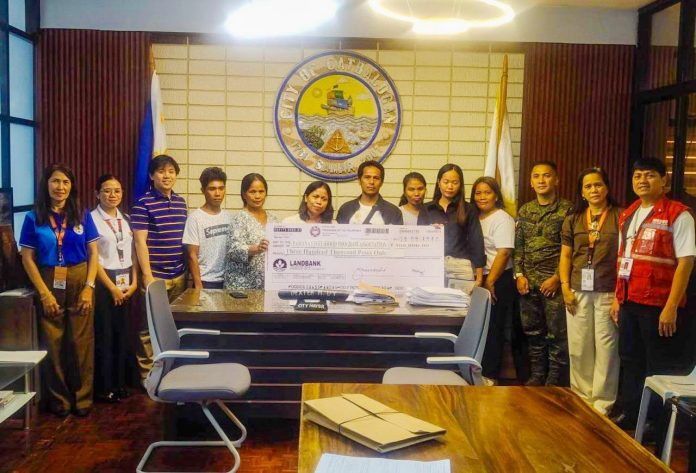
LIVELIHOOD SUPPORT. Farmers’ and irrigators’ associations from Motiong, Jiabong and Catbalogan City receive livelihood assistance under the Payapa at Masaganang Pamayanan (Pamana) program through the Office of the Presidential Adviser on Peace, Reconciliation and Unity, DSWD Field Office 8, local government units and the Philippine Army’s 3rd Infantry Battalion. The assistance aims to strengthen community enterprises, increase household income and promote self-reliance in geographically isolated communities.(3rd IB Facebook)
LIVELIHOOD SUPPORT. Farmers’ and irrigators’ associations from Motiong, Jiabong and Catbalogan City receive livelihood assistance under the Payapa at Masaganang Pamayanan (Pamana) program through the Office of the Presidential Adviser on Peace, Reconciliation and Unity, DSWD Field Office 8, local government units and the Philippine Army’s 3rd Infantry Battalion. The assistance aims to strengthen community enterprises, increase household income and promote self-reliance in geographically isolated communities.(3rd IB Facebook)
TACLOBAN CITY — Seven farmers’ and irrigators’ associations in Samar province have received livelihood assistance under the government’s Payapa at Masaganang Pamayanan (Pamana) program to help boost their income and strengthen community-based enterprises.
The assistance was distributed to people’s organizations from Motiong, Jiabong and Catbalogan City through the joint efforts of the Office of the Presidential Adviser on Peace, Reconciliation and Unity (OPAPRU), Department of Social Welfare and Development (DSWD) Field Office 8, local government units and the Philippine Army’s 3rd Infantry Battalion.
The beneficiary groups are the Nagbac Integrated Pamana Farmers Association, Cristina Farmers Pamana Association, Bugho Farmers Pamana Association, Pusongan Pamana Farmers Association, Calapi Irrigators Pamana Association, Cagusipan Farmers Pamana Association and Cagutian Farmers Pamana Association.
The organizations, which were established and developed in geographically isolated and disadvantaged areas (GIDAs), are expected to use the assistance to establish or expand livelihood enterprises based on the needs and available resources in their respective communities.
The Philippine Army said the program seeks to strengthen community-based livelihoods, increase household income and improve the economic well-being of beneficiaries.
As part of the assistance, members of the farmers’ and irrigators’ groups also underwent financial literacy training facilitated by DSWD project development officers.
The training covered budgeting, financial management, proper handling of organizational funds and sustainable enterprise development to help beneficiaries manage the assistance effectively and sustain their livelihood activities.
The 3rd Infantry Battalion said the initiative demonstrates how socioeconomic interventions can complement peace and security efforts by addressing livelihood concerns and helping communities become more resilient and self-reliant.
The Pamana program is among the government’s peace-building initiatives that support communities affected by conflict and other socioeconomic challenges, particularly those in geographically isolated and disadvantaged areas.
The Army said it will continue working with LGUs, national government agencies and people’s organizations to promote inclusive development and support sustainable peace in Samar.
TACLOBAN CITY– A ranking New People’s Army (NPA) leader was killed in a brief clash with government troops Tuesday afternoon in the hinterlands of Barangay Caridad, Baybay City, Leyte, the military reported.
The 8th Infantry Division(ID), which is based in Catbalogan City, Samar, said the encounter occurred on Sept. 8 after soldiers received information from a resident about the presence of armed men allegedly collecting money and food from communities in the area.
Troops from the 802nd Infantry Brigade(IB) proceeded to the area to verify the report, resulting in a firefight that lasted about five minutes, according to the military.
Killed was Erwin Murillo Maceda, alias “Romnick,” who was identified by the Army as the vice team leader of the NPA’s Island Committee Levox under the Eastern Visayas Regional Party Committee.
An M16 rifle was also recovered from the encounter site, the 8th ID said.
Brig. Gen. Pompeyo Jason Almagro, commander of the 802nd IB, said Maceda and his group had allegedly been involved in extortion, threats against residents and business owners, and attacks on government security installations in Leyte.
“The people of Leyte have endured years of fear, intimidation, and disruption caused by armed groups. We will not allow these conditions to return to communities that have worked hard to achieve peace,” Almagro said in a statement released on Wednesday.
The military said the encounter followed reports of armed NPA members attempting to regain their presence in communities where government authorities have declared stable peace and security conditions.
The Army also credited residents’ cooperation and timely reporting for enabling government forces to respond to the reported presence of armed men.
“The cooperation of our communities is critical. Their timely reporting allows government forces to respond before threats can escalate,” Almagro said.
The 8th ID renewed its call for remaining NPA members to abandon armed struggle and surrender, saying government programs are available to assist former rebels who return to civilian life.
The military said it would continue operations in areas where armed groups are reported to be operating while encouraging NPA members to return peacefully to their families and communities.
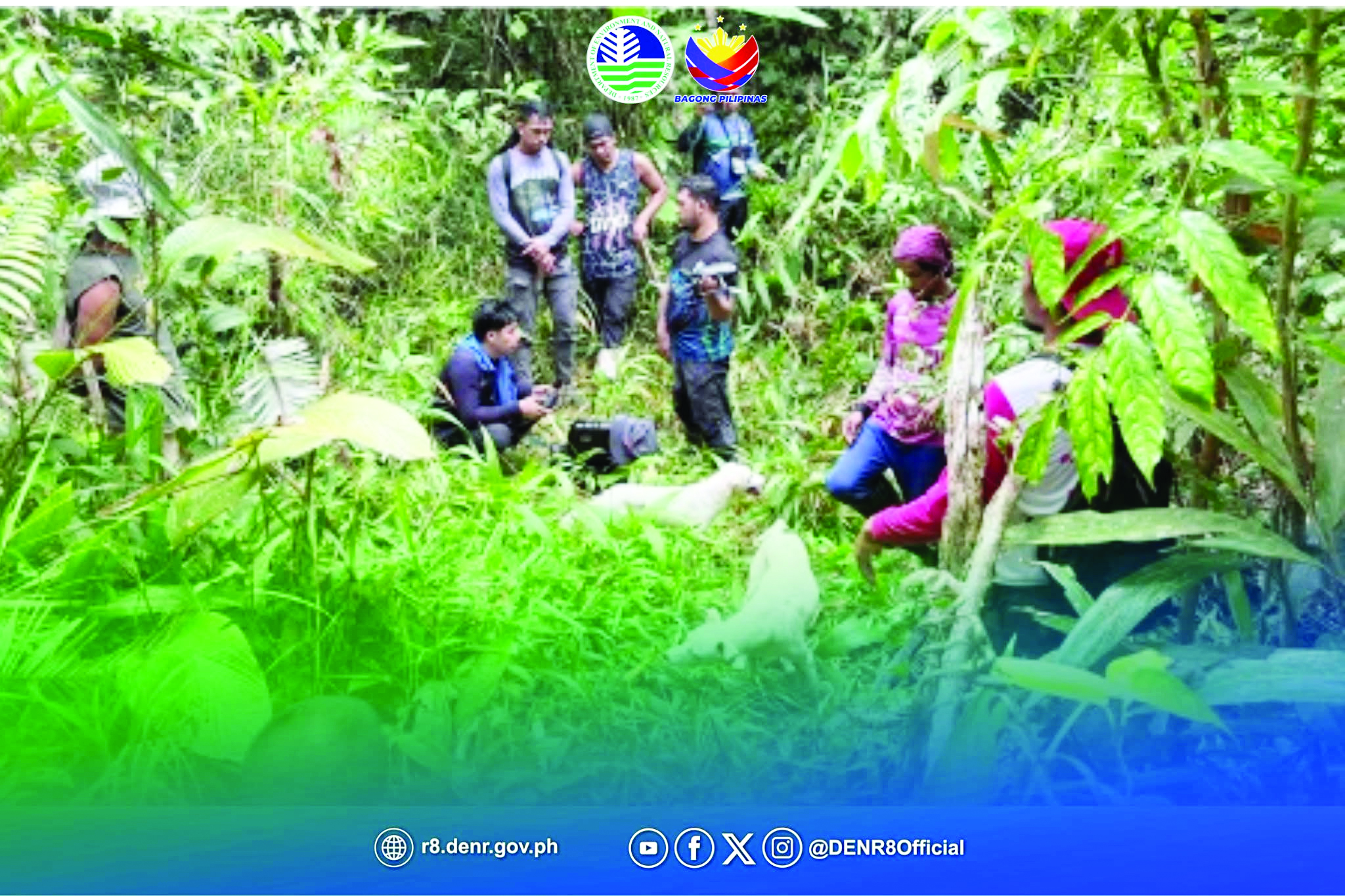
FOREST PARTNERS. Representatives of the Department of Environment and Natural Resources, Energy Development Corporation and the Visares and Sto. Niño Farmers Association join hands for a 60-hectare reforestation project in Barangay Visares, Capoocan, Leyte, where 37,500 indigenous tree seedlings will be planted beginning December. The three-year initiative aims to restore the Palaypay watershed and Kahamtikan river system while providing livelihood opportunities to local farmers.(DENR-8)
FOREST PARTNERS. Representatives of the Department of Environment and Natural Resources, Energy Development Corporation and the Visares and Sto. Niño Farmers Association join hands for a 60-hectare reforestation project in Barangay Visares, Capoocan, Leyte, where 37,500 indigenous tree seedlings will be planted beginning December. The three-year initiative aims to restore the Palaypay watershed and Kahamtikan river system while providing livelihood opportunities to local farmers.(DENR-8)
TACLOBAN CITY — Sixty hectares of land in Capoocan, Leyte will be restored as forest beginning December as farmers, government environmental officials and a renewable-energy company join forces to revive a watershed and strengthen protection of the area’s biodiversity.
The three-year reforestation project in Barangay Visares will involve the planting of 37,500 indigenous tree seedlings, turning an area within the Palaypay watershed and Kahamtikan river system into a developing forest under the “Forest for Life: 5 Million Trees by 2028” program.
The Department of Environment and Natural Resources (DENR), Energy Development Corporation (EDC) and the Visares and Sto. Niño Farmers Association (VisFA) are partnering in the project, which also aims to provide livelihood opportunities to members of the local community.
Tree planting is scheduled to begin in December during the rainy season, when soil moisture and rainfall are expected to improve seedling survival and establishment.
Among the species to be planted are yakal, nato, manaybanay and hindang, all indigenous trees suited to the area. The partners are targeting at least an 85 percent seedling survival rate throughout the project.
Unlike a one-time tree-planting activity, the initiative will include three years of maintenance, protection and monitoring to ensure that the seedlings develop into a viable forest.
VisFA members will serve as the primary community partners, providing labor for planting and maintenance while conducting regular patrols and monitoring the reforested areas. The project is expected to provide employment and income opportunities to about 45 farmers.
The DENR will provide technical and regulatory assistance, including site assessment and delineation, as well as monitoring of the project’s progress and environmental impact.
EDC, which operates geothermal facilities in the area, will provide financial and logistical support for seedling production, planting, maintenance, protection and environmental information activities.
The location of the project gives the reforestation effort importance beyond increasing tree cover. The Palaypay watershed and Kahamtikan river system help support the ecological health of surrounding communities, while a healthier forest can improve the landscape’s ability to retain water, reduce soil erosion and runoff, and limit sedimentation in waterways.
Restored forest areas can also provide habitats for wildlife and other native species while absorbing carbon from the atmosphere, contributing to broader efforts to address climate change.
“This partnership demonstrates how renewable-energy development and environmental conservation can work together,” DENR 8 Assistant Regional Director Dario Suarez said in a statement. “By restoring these 60 hectares, we are protecting biodiversity and watersheds while supporting communities and the sustainability of clean-energy operations.”
A technical working group composed of representatives from DENR, EDC, VisFA and the local government of Capoocan will oversee the project to coordinate its implementation and ensure its long-term sustainability.
Suarez said the involvement of VisFA is crucial because the farmers will be responsible not only for planting the trees but also for helping protect and maintain them after the initial planting.
The project reflects a broader shift toward community-based forest restoration, where local residents become active partners in protecting restored areas. Such approaches can help address one of the biggest challenges in reforestation—ensuring that newly planted trees survive and are maintained long enough to become established forests.
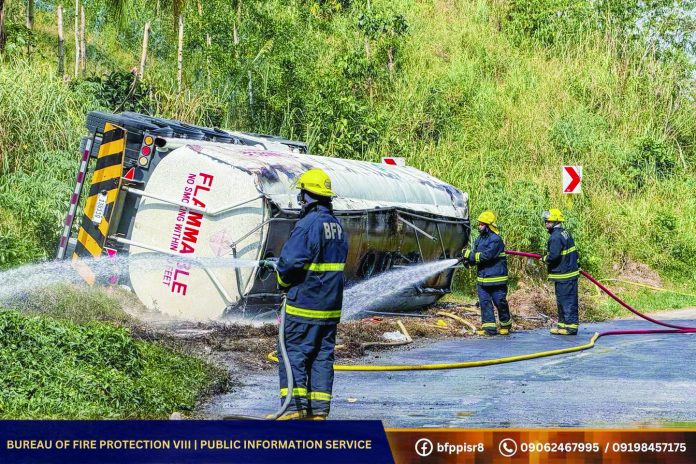
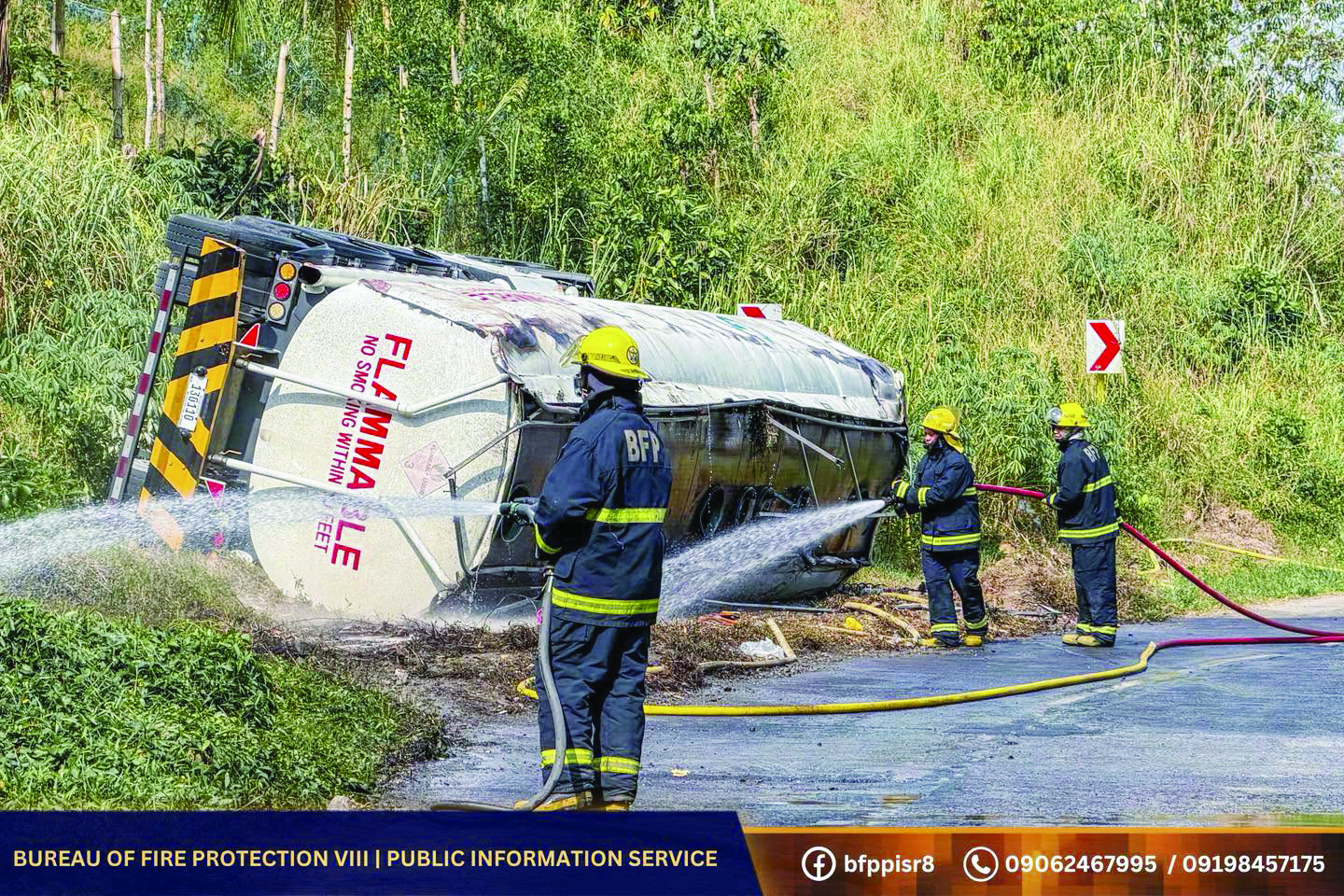
FUEL TANKER INCIDENT. Personnel from the Bureau of Fire Protection Region 8 Regional Special Rescue Force, Tacloban City Fire Station, Sta. Fe Fire Station, Sta. Fe Municipal Police Station and MDRRMO Sta. Fe respond to an overturned fuel tanker truck along the Tigbao–Pulak–Sta. Fe Road on Monday, Sept. 7, 2026. Responders immediately carried out mitigation measures to contain the fuel leak and flushed the affected area with water to reduce the risk of fire and other hazards to motorists and nearby communities.(BFP-8)
FUEL TANKER INCIDENT. Personnel from the Bureau of Fire Protection Region 8 Regional Special Rescue Force, Tacloban City Fire Station, Sta. Fe Fire Station, Sta. Fe Municipal Police Station and MDRRMO Sta. Fe respond to an overturned fuel tanker truck along the Tigbao–Pulak–Sta. Fe Road on Monday, Sept. 7, 2026. Responders immediately carried out mitigation measures to contain the fuel leak and flushed the affected area with water to reduce the risk of fire and other hazards to motorists and nearby communities.(BFP-8)
TACLOBAN CITY — A 17-year-old student who survived the June 22 shooting at San Jose National High School (SJNHS) is facing another major surgery this week, with her family appealing for at least P40,000 to help pay for her continuing medical treatment.
Joan Viñas, a Grade 10 student, is scheduled to undergo a cranioplasty at the Eastern Visayas Medical Center (EVMC) as she continues to recover from a severe gunshot wound to the head sustained during the school shooting nearly three months ago.
Her mother, Rowena Viñas, said the family has already received assistance from government agencies, organizations and private individuals but still needs additional financial help for Joan’s medical expenses.
“We are appealing for help for financial assistance as Joan will undergo another surgery,” Rowena said.
Joan was among the students wounded when a 14-year-old student, identified as “Nash,” allegedly opened fire inside SJNHS on June 22. The shooting left three students dead and 20 others injured, prompting renewed concerns over security and safety in schools.
Joan suffered a serious gunshot wound to the head. The bullet reportedly entered her head and exited through her right eye, causing severe injury to her eye and requiring continuing medical treatment.
She spent 12 days confined at EVMC following the shooting.
Her medical ordeal is not expected to end with the cranioplasty. Joan is scheduled for another operation in November to address the injury to her right eye, with the family again expecting to spend nearly P40,000 for the procedure and hoping that it could help restore her eyesight.
The timing of the eye surgery is especially significant for Joan because it is expected to coincide with her 18th birthday, or debut.
Rowena said the family has received assistance from the Department of Social Welfare and Development through Tingog party-list, as well as from individuals and groups who helped Joan during her hospitalization.
However, she said the assistance has not been enough to cover the expenses of her succeeding surgeries and other medical needs.
Rowena has no regular employment, while her husband, Joseph, works as a job order employee of the Tacloban City government. Joan is the youngest of their eight children.
Despite surviving the shooting, Joan continues to struggle with the emotional impact of the incident.
“There are still times that the incident haunts [me],” she said.
Joan recalled that she was inside her classroom when the shooting began. She ran to another classroom to check on her cousin, fellow Grade 10 student Yuriza Ay-ay, when she was struck by the bullet.
Rescuers later found Joan badly wounded and rushed her to the hospital for treatment.
While grateful to have survived, Joan said she continues to struggle with the trauma caused by the shooting.
She also expressed frustration over reports that Nash has not been charged in connection with the incident.
“I want him also to be charged. I want him to suffer for what he did to us,” Joan said.
Nash’s companion, identified as “Rod,” 15, has been charged with murder. Both minors are currently under the custody of a Department of Social Welfare and Development rehabilitation facility in Tanauan, Leyte.
Two other students who suffered gunshot wounds have since returned to school, but Joan has yet to resume classes at SJNHS as she continues her recovery.
Despite the physical and emotional scars left by the shooting, Joan remains hopeful of returning to school and pursuing her dream of becoming a nurse.
For now, her family’s priority is to raise enough money for her upcoming surgeries and give her the opportunity to continue her recovery and eventually return to the classroom.
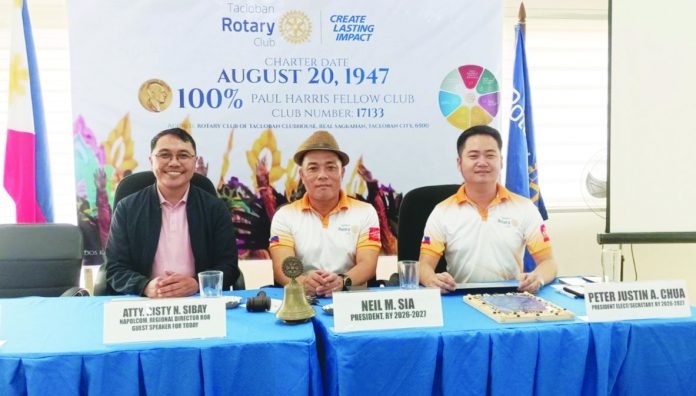
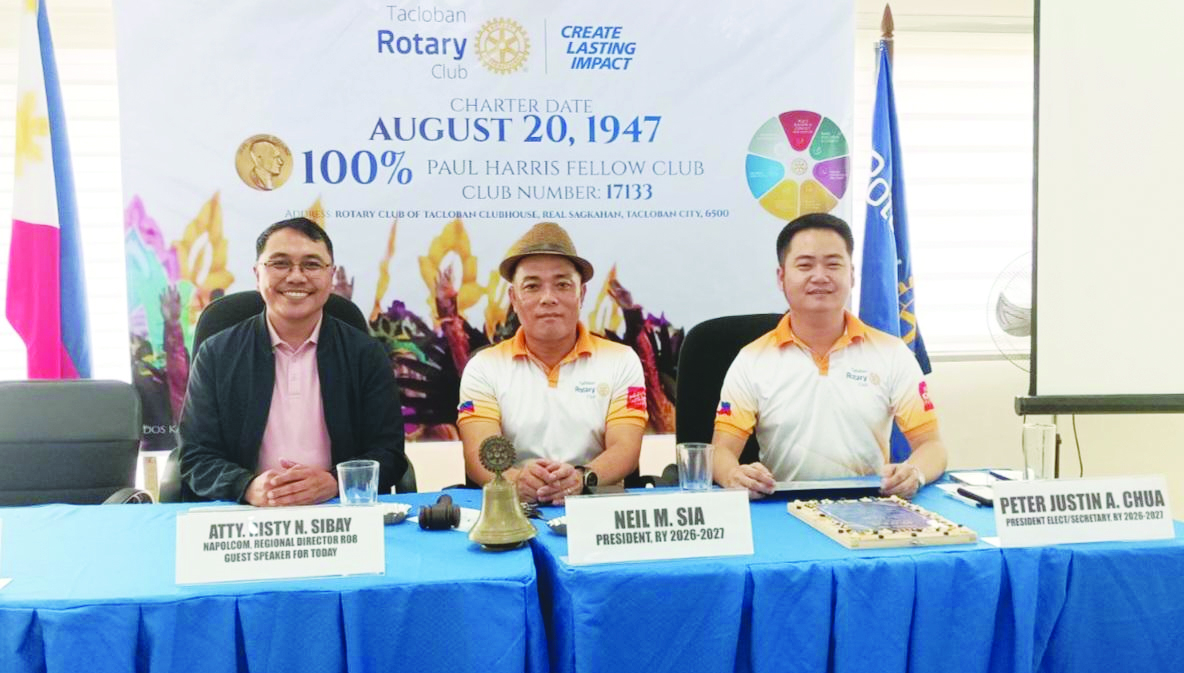
BUILDING PEACE THROUGH DIALOGUE. Rotary Club of Tacloban President Atty. Neil Sia meets with NAPOLCOM Region VIII Director Atty. Risty Sibay during the club’s regular meeting in Tacloban City on September 3. Their dialogue focused on strengthening community safety, improving access to police services and supporting peacebuilding efforts in the city. (PHOTO COURTESY OF ROTARY CLUB OF TACLOBAN)
BUILDING PEACE THROUGH DIALOGUE. Rotary Club of Tacloban President Atty. Neil Sia meets with NAPOLCOM Region VIII Director Atty. Risty Sibay during the club’s regular meeting in Tacloban City on September 3. Their dialogue focused on strengthening community safety, improving access to police services and supporting peacebuilding efforts in the city. (PHOTO COURTESY OF ROTARY CLUB OF TACLOBAN)
TACLOBAN CITY — The Rotary Club of Tacloban is strengthening its peacebuilding and conflict-prevention efforts through closer dialogue with law enforcement agencies, with improved community safety and access to police services identified as key foundations for lasting peace.
The civic organization discussed these efforts with National Police Commission (NAPOLCOM) Region VIII Director Atty. Risty Sibay during its regular meeting on September 3, where both sides explored ways to promote safer and more resilient communities in Tacloban City.
The dialogue also focused on the city’s need for additional police precincts, particularly in communities that remain far from existing police stations.
Sibay said NAPOLCOM can help secure funding for the construction of additional police facilities, but the lack of available lots remains a major challenge.
He said the Philippine National Police (PNP) and NAPOLCOM, in coordination with the Tacloban City government, are already discussing plans to establish three additional police stations in the city.
The proposed stations are intended to bring police services closer to residents, improve response to criminal complaints and encourage the reporting of incidents.
Sibay said stronger police presence in communities could help build public confidence in law enforcement while allowing authorities to respond more promptly to crimes, including cybercrimes and other serious offenses.
He noted that some incidents may remain unreported because residents are discouraged by the distance they have to travel to reach existing police stations.
For the Rotary Club of Tacloban, the issue goes beyond law enforcement and is directly linked to its peacebuilding mission.
Rotary Club President Atty. Neil Sia said community safety, access to justice and trust in law enforcement are important components of peacebuilding and conflict prevention.
“His message resonates strongly with Rotary International’s Peacebuilding and Conflict Prevention area of focus,” Sia said, referring to Sibay’s presentation.
Sia said establishing police precincts within communities would make protection and justice more accessible, particularly as residents face increasingly complex threats such as cybercrimes.
He also expressed support for the ongoing coordination among NAPOLCOM, the PNP and the city government to establish the three additional police stations.
However, Sia acknowledged that the lack of available lots remains a significant hurdle even when funding for police facilities can be secured.
He said the Rotary Club of Tacloban is prepared to explore ways it can help address the challenge and contribute to the realization of the proposed police facilities.
The meeting formed part of Rotary’s continuing effort to engage government agencies and other community stakeholders in addressing issues that affect peace, security and the welfare of residents.
Sia said the dialogue with NAPOLCOM reflects the shared objective of fostering peace, preventing conflict and strengthening community resilience.
The Rotary Club’s peacebuilding efforts also emphasize collaboration with public institutions, recognizing that creating peaceful communities requires not only law enforcement but also cooperation, trust and active participation from civic organizations and residents.
By maintaining dialogue with NAPOLCOM and other stakeholders, the Rotary Club of Tacloban seeks to support initiatives that improve public safety while strengthening the relationship between communities and government institutions.