ALBUERA, Leyte– A 27-year-old woman is now detained at the local police station after she was caught inside the residence of a Swiss national in Sitio Gungab, Barangay Poblacion, while allegedly attempting to steal valuables early morning Sunday, September 1.
Police identified the suspect only as “Tepa,” a married resident of Barangay Damula-an, Albuera. The victim was identified as “Cel,” 66, a Swiss national holding an Alien Certificate of Registration and residing in Barangay Poblacion.
According to Albuera police officer-in-charge PCPT Jose E. Bayona, the suspect allegedly gained entry to the victim’s home through the bathroom window at around 5:50 a.m. She was caught in the act and restrained by the homeowner before authorities arrived.
The incident was first reported by a family friend, alias “Leon,” who was monitoring the household’s CCTV system in real time. He immediately called the police after seeing the woman enter the house and take a wallet from the dining area.
Responding officers found the suspect still inside the residence. A body search yielded P2,088 in mixed denominations, including a P500 bill, one P1,000 bill, three P100 bills, and coins placed inside a black coin pouch.
CCTV footage corroborated the account, showing the suspect loitering outside the house before entering through the bathroom window.
The woman is now facing theft charges and remains in custody at the Albuera Municipal Police Station.
RISK REDUCTION. Different government agencies entered into an agreement for the implementation of the GeoRiskPH Integrated Platform aim to provide accessible, accurate, and timely hazard information to local governments, planners, and even ordinary citizens. The signing served as the highlight of the Regional Science and Technology Week (RSTW) in Eastern Visayas held in Tacloban City. Science and Technology Sec. Renato Solidum Jr. was the main guest of the event.
TACLOBAN CITY-With the country’s vulnerability to natural disasters that continue to intensify over time, the Department of Science and Technology (DOST) cited the importance of GeoRiskPH Integrated Platform at the weeklong celebration of the 2025 Regional Science and Technology Week (RSTW) in Eastern Visayas.
Launched in collaboration with the Department of Science and Technology-Philippine Institute of Volcanology and Seismology (DOST-Phivolcs), the GeoRiskPH, which includes tools like HazardHunterPH, GeoAnalyticsPH, GeoMapper and PlanSmart Ready-to-Rebuild, is designed to strengthen community resilience through science-based risk assessment.
At the opening ceremony of the 2025 RSTW in Eastern Visayas, a memorandum of agreement was signed for the regional adoption of the GeoRiskPH which encourages local government units to utilize the integrated platforms and take advantage of tools that aid in enhancing disaster preparedness through data-driven planning and decision-making, improving resource allocation through efficient utilization of funds for disaster risk reduction, stronger institutional capacity through comprehensive training on data management and analysis, and integrated efforts for sustainable development by incorporating risk reduction into local planning processes.
“This platform is more than just data, it’s about saving lives. We are building our collaboration with our local governments and communities to use this technology to prepare better, build smarter, and respond faster,” DOST Secretary Renato U. Solidum Jr. said.
The GeoRiskPH Integrated Platform was developed to provide accessible, accurate, and timely hazard information to local governments, planners, and even ordinary citizens.
The program is designed for various stakeholders involved in disaster risk reduction and management in the Philippines, including government agencies, private sector organizations, non-governmental organizations (NGOs), and the general public.
Anchored on the national theme, “Siyensiya, Teknolohiya at Inobasyon: Kabalikat sa Matatag, Maginhawa at Panatag na Kinabukasan,” and the regional focus “Building Smart and Sustainable Communities,” this year’s RSTW underscores the role of science, technology and innovation in addressing pressing community needs and driving inclusive development. (ACR/PIA Leyte)
4Ps graduates. The Department of Social Welfare and Development in the reported that about 400 members of the Pantawid Pamilyang Pilipino Program have ‘graduated’ from the program.(DSWD-8)
TACLOBAN CITY – Three hundred families in this city have officially “graduated” from the government’s Pantawid Pamilyang Pilipino Program (4Ps), marking a milestone in their journey from poverty to self-sufficiency.
The Department of Social Welfare and Development (DSWD) honored the families in a Pugay Tagumpay ceremony, which recognized their successful completion of the program after years of receiving conditional cash grants along with livelihood and skills development interventions.
Among the graduates were the families of Jenneth Sabulao of Barangay 48-A and Kimberly Monterozo of Barangay 31, who both credited 4Ps for transforming their lives.
Monterozo, a former child-grantee, recently passed the licensure examination for teachers after finishing college with the help of the program. “This program has transformed not only my life but also my entire family, giving us a chance to prioritize education and health without worrying too much about finances,” she said. Four of her nine family members are now employed, significantly improving their household income.
For Sabulao, the program provided not only financial assistance for her children’s schooling but also skills training that helped her and her husband become more resilient parents. Nearly a decade after joining 4Ps, she now works as a regular employee at the Department of Education Tacloban City Division. “Attending family development sessions helped us believe in ourselves, learn to socialize, and gain knowledge in disaster preparedness, financial management, health, and leadership skills,” she said.
Though the 300 families are now formally exiting the program, the DSWD emphasized that government support will continue. The agency has partnered with institutions such as the Technical Education Skills and Development Authority (TESDA), Department of Trade and Industry (DTI), Department of Science and Technology (DOST), Department of Environment and Natural Resources (DENR), and Department of Agriculture (DA), and private companies to provide sustainable livelihood opportunities and after-care interventions.
“We need sustainability even after you have exited from the program. The government will continue to assist you through the support of local chief executives,” said 4Ps National Program Manager Gemma Gabuya during the ceremony.
As part of the transition, DSWD turned over the case folders of the exited beneficiaries to the Tacloban City government through its City Social Welfare and Development Office for continued monitoring.
Launched in 2008 and institutionalized in 2019 through Republic Act No. 11310, 4Ps is the country’s flagship poverty reduction strategy, providing conditional cash transfers for up to seven years to improve the health, nutrition, and education of children in poor households.
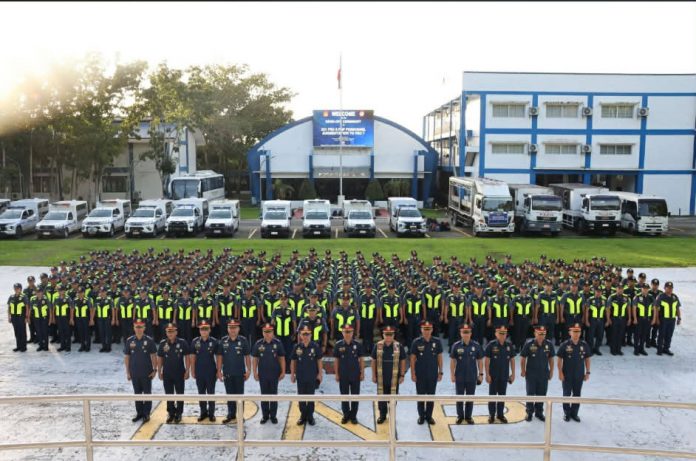
TACLOBAN CITY – The 801st Infantry Brigade of the Philippine Army’s 8th Infantry Division (8ID) welcomed its new commander, Col. Arlino Sendaydiego, during a change of command ceremony held at Camp Daza, Hinabangan, Samar.
Sendaydiego, the former chief of staff of the 8ID Division, succeeded Col. Oliver Alvior, who had been serving as acting brigade commander. Alvior will now assume the post of Deputy Brigade Commander.
In his acceptance speech, Sendaydiego thanked God, his family, and senior military leaders for their trust, vowing to lead the brigade with integrity, transparency, and discipline. He emphasized that achieving lasting peace and progress in Samar requires a shared effort between the military and the people.
“Peace and progress are not the tasks of soldiers alone—they are shared responsibilities. I pledge transparency, collaboration, and open communication as we move forward together,” he said.
Alvior, in his message, described his stint as acting commander as a “homecoming” and lauded the troops for their dedication during his tenure.
“Leadership is stewardship. The successes we achieved were because of our unity. I am proud to have led this unit and I look forward to continuing our mission as Deputy Brigade Commander,” he said.
Presiding over the ceremony, Major General Adonis Ariel Orio, commander of the 8ID, underscored the importance of continuity in military leadership.
“While commanders may change, the mission and the trust of the Filipino people remain. Col. Alvior upheld the standards of this brigade with competence and resolve. To Col. Sendaydiego, you now carry the trust of your soldiers and the hopes of the people. Lead with courage—and with a heart for the people we serve,” Maj. Gen. Orio said.
He further reminded the new commander to uphold the brigade’s proud tradition as “Bantay at Gabay” of the people of Samar and Eastern Samar.
RESILIENCE. Eastern Visayas has the biggest number of recipient local government units under the Philippine Community Resilience Project of the Department of Social Welfare and Development, a three-year nationwide initiative aimed at strengthening disaster preparedness and reducing poverty through community-driven projects.(DSWD-8)
TACLOBAN CITY – Eastern Visayas will have the biggest share of local government units (LGUs) implementing the Department of Social Welfare and Development’s (DSWD) Philippine Community Resilience Project (PCRP) – Panahon ng Pagkilos, a three-year nationwide initiative aimed at strengthening disaster preparedness and reducing poverty through community-driven projects.
Of the 500 municipalities selected across the country, 107 are from Eastern Visayas—the highest number among all regions. The program, carried out under the Kapit-Bisig Laban sa Kahirapan–Comprehensive and Integrated Delivery of Social Services (Kalahi-CIDSS), will run from 2026 to 2028.
Under the scheme, 1st to 3rd class municipalities will receive a P50-million grant with a P10-million local counterpart, while 4th to 6th class municipalities will get a P70-million grant with a P14-million counterpart. LGUs can provide their share in cash or in-kind, with possible projects including flood control, drainage, small-scale irrigation, pre- and post-harvest facilities, and storage facilities.
Local leaders have expressed strong support, highlighting the program’s participatory approach. Matag-ob, Leyte Mayor Bernandino Tacoy said community consultation is key to ensuring projects respond to actual needs. His town has identified seven flood- and landslide-prone villages as potential beneficiaries, with the LGU expected to provide a P14-million counterpart as a 4th class municipality.
“Projects must begin with the people themselves—those directly affected and who will benefit from them. They should be part of identifying and implementing what they truly need,” Tacoy said.
In Jipapad, Eastern Samar, Mayor Benjamin Ver welcomed the project as “timely,” given the town’s constant flooding problem. He said the municipality is likely to propose erosion control measures in riverbank barangays and water system projects to improve resilience.
Jipapad has already benefited from earlier Kalahi-CIDSS programs, with completed projects such as pathways, a health station, community water systems, and farm-to-market roads—evidence of how the “community-driven development” approach empowers people to lift themselves out of poverty.
The PCRP–Panahon ng Pagkilos includes a Community Resilience Implementation Process (CRIP) Roadmap and a Local Counterpart Contribution (LCC) scheme. DSWD has conducted orientation sessions with participating LGUs to ensure effective partnerships and smooth rollout of projects.
Corruption in the Philippines is not seasonal but a chronic disease that constantly thrives. Hence, vigilance against it must not stop; instead, it must intensify and be sustained at all costs. To relent is to concede, and concession only feeds the rot.
Corruption is never stagnant—it grows, multiplies, and evolves with time. When officials get away with it, they become bolder, brazen, and inventive in their schemes. This unchecked progression makes corruption far more insidious than a single act of theft; it transforms into a culture that poisons institutions and robs the people of justice and dignity.
Even when the old faces of corruption are removed, new ones quickly rise to take their place. This generational breeding is one of the gravest dangers, for it creates a lineage of officials who inherit the power and the vice of abusing it. Young leaders, exposed early to compromised systems, are taught that corruption is not a crime but a norm. The cycle repeats itself endlessly unless it is broken with relentless opposition.
The fight against corruption, therefore, must not only depend on the exposure of scandals or the removal of individuals but must be rooted in systemic reform. Laws should not be toothless pronouncements but sharp instruments that enforce accountability. Every transaction in government, big or small, must be subjected to the light of transparency. Only when processes are fortified with safeguards can the avenues of corruption be narrowed, if not completely closed.
There should be an unyielding culture of accountability that permeates every corner of public service. Citizens must be vigilant, watchdog institutions must be strengthened, and leaders must be compelled to act under constant scrutiny. Corruption thrives in silence and indifference, but it crumbles when confronted with a society that demands honesty and transparency at every turn. We must weaken the chains of corruption that have long enslaved us.