ORMOC CITY-An argument between two siblings while attending a wake of a relative turned tragic after the elder brother was hacked to death by his younger sibling Monday, (Oct. 10) in Basey, Samar.
Basey chief of police, Lt. Geoffrey Bantule, identified the victim as Erwin Padoc, 26 while the suspect was identified as Merwin, 22, both farmers and residents of Barangay Bulao of said town.
Initial investigation conducted by the local police disclosed that the siblings were having a drinking spree at a wake of a relative when a heated argument ensued between the two.
This resulted for the suspect to hack his older brother using a long-bladed weapon described as samurai hitting his left shoulder and buttocks.
The victim was brought first to the Basey District Hospital for treatment. However, because of the severity of the hacked wounds he incurred from the hacking, he was subsequently referred to Eastern Visayas Regional Medical Center in Tacloban City but was died.
The suspect remains at-large. (ROBERT DEJON)
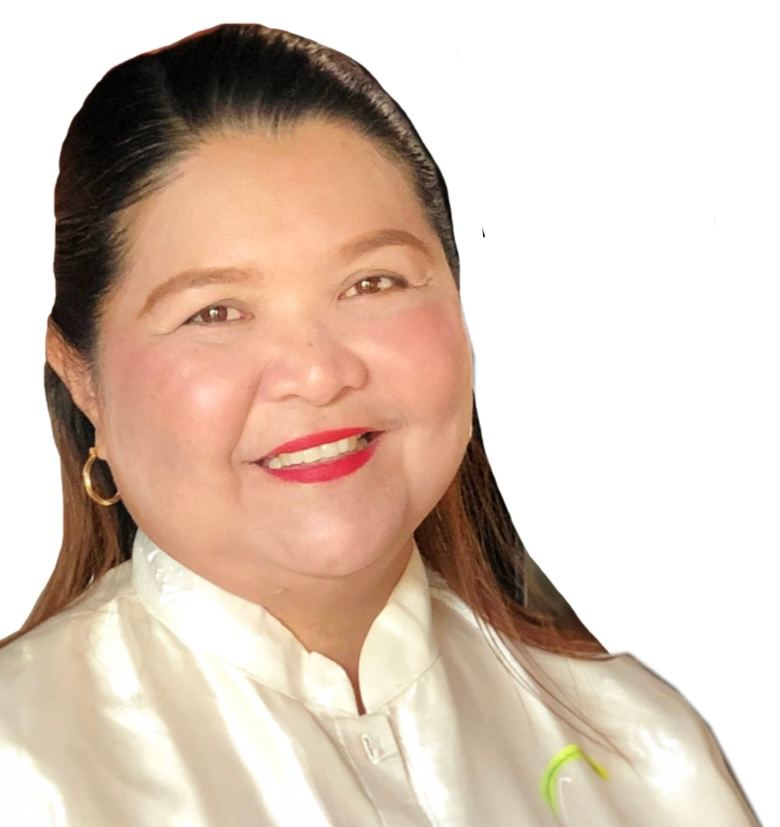
CAN-AVID, Eastern Samar – The mayor of this town, Vilma Germino, vowed to deliver more projects and programs that will result in its development and improvement of the lives of its people.
The mayor made this commitment as she delivered her state of the municipality address on Monday (Oct.10), coinciding her 100 days in office.
During her speech, Germino also expressed her gratitude to the late vice mayor and her predecessor, Gil Norman Germino, who died due to a lingering illness last Sept 26 saying he had paved the way for Can-avid’s goal towards development.
Mayor Germino, who is serving her first term in office, enumerated the accomplishments of her administration since she took office last June 30.
“This 100 days is an opportunity for us to show unity, cooperation, and to celebrate a life of gratitude and to mark the beginning of a journey towards development,” she said.
Among the accomplishments mentioned by the mayor was the implementation of a solid waste management program in their town as she disclosed that her administration intends to have its own sanitary landfill.
In disaster risk reduction, the municipal government turned over communication and rescue equipment to all of its 28 barangays as several non-government organizations also pledged to provide assistance to the municipality in disaster preparedness.
The Phivolcs, she added, will install an earthquake intensity meter in the town this year.
She also announced that the town has already reached 85% of its vaccination campaign against coronavirus disease, making Can-avid among areas in Eastern Samar with the highest inoculation rate.
The town mayor added that the Department of Health(DOH) also allocated P5 million fund to be used for the expansion of their rural health unit as she declared that she want to avail the agency’s ‘Doctors to the barrio program’ to provide health needs of the residents living in remote barangays.
Mayor Germino also disclosed that they have already generated P7.85 million income which is higher compare to their target for this year of P5.6 million. (ROEL T. AMAZONA)
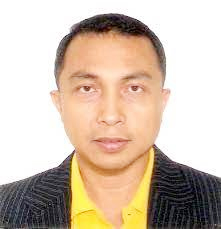
TACLOBAN CITY– The Department of Public Works and Highways (DPWH) in Eastern Visayas has welcomed back Engr. Edgar Tabacon as its regional director.
Tabacon, who served as DPWH regional director for two years which ended in 2018, formally assumed the post upon his designation by Sec. Manual Bonoan on Sept.27 of this year.
From years 2018-2022, he was assigned as head of the DPWH Region 7 in Cebu City.
Tabacon was welcomed by DPWH officials and employees during a ceremony at the DPWH Regional Office in Palo, Leyte on October 10, 2022. (RONALD O. REYES)
TACLOBAN CITY-The Person with Disability Affairs Office (PDAO) here in the city has heightened its monitoring activities of establishments to encourage them the granting of discounts and incentives for persons with disabilities (PWDs).
As mandated by Republic Act 9442, the act amending the Magna Carta for Disabled Persons or RA 7277, PWDs are entitled to discounts on their medicine or school supply purchases.
“Dire kuno hira maaram nga may PWD discount…Amo nga kun nabisita kami hin establishment gintatagan namon hira hin kopya han R.A. 9442 (They are not aware of the PWD discount…that’s why we give them a copy of R.A. 9442 whenever we visit an establishment),” said Claire Eden Tacazon, PDAO officer in charge.
In a report from the City Information Office, the official disclosed that most complaints they received “are about the refusal of some business establishments to grant discounts to PWDs when they purchase medicines and school supplies.”
PWDs are entitled to a 20% discount on medicine and medical supplies and a 5% discount on school supplies when they present their PWD identification cards (IDs), the city government said.
PDAO is in-charge in the distribution of PWD ID for free.
PWDs need to register and submit documents, such as a photocopy of a valid ID or certificate of live birth; a certificate of barangay residency/indigency; a photocopy of a medical certificate indicating the cause and type of disability; and two pieces of 1×1 ID picture.
Meanwhile, the city government warned that establishments that will not comply with the law risk getting their permits revoked and paying a maximum penalty ofP100,000 and imprisonment.
As this developed, PDAO also started its validation of the 3,300 registered PWDs in the different barangays of Tacloban. (RONALD O. REYES)
“Oh you Pharisees! Although you cleanse the outside of the cup and the dish, inside you are filled with plunder and evil.” (Lk 11,39)
This is the typical reaction of Christ toward the rigid rules of the Pharisees, who make a big issue out of little things while ignoring the bigger and more important things. Remember Christ accusing them with these words: “You blind guides! You strain out a gnat but swallow a camel.” (Mt 23,24)
We need to be careful with our tendency to fall into this predicament that we call as hypocrisy, inconsistency, or not seeing the forest for the trees. This can only happen when we are not with Christ who as God knows everything, both the small and the big things, and as man shows us how to deal with that tendency so as not to get lost, confused, and more, how to maintain the proper unity of life despite the many and often conflicting things we have to consider.
We have to understand that only with Christ can we aspire to have unity and consistency in our life, one that is not rigid. Rather it is a consistency and unity that knows how to adapt itself properly given the different and changing conditions and circumstances of our life.
So, we really have to earnestly pursue the effort of living and defending our Christian identity all the time. We should not be afraid to show our Christian identity at all times and in all situations. We should not be Christian by name only, but also by our thoughts, desires and deeds, and in all aspects of our life. We should not be Christian in good times only, but also, and most especially, in bad times. We should not be Christian only in our sacred moments, but also in our mundane activities.
This does not mean that we have to flaunt our Christian identity or to exude some kind of a triumphalistic aura. In fact, we have to be most natural and discreet about it. But it should not be hidden because of fear or shame.
Remember Christ saying: “Everyone who confesses Me before men, I will also confess him before My Father in heaven. But whoever denies Me before men, I will also deny him before My Father in heaven.” (Mt 10,32-33)
That Christ is the Son of God who became man to redeem us means that God in Christ through the Holy Spirit identifies himself with each one of us at all times. This is the basis for keeping a consistency in our Christian identity.
This is what our Catechism teaches us clearly: “Christ enables us to live in him all that he himself lived, and he lives it in us. ‘By his Incarnation, he, the Son of God, has in a certain way united himself with each man.” (Catechism 521)
Let us remember what Christ said so clearly. He is the vine, we are the branches. We can only have life, let alone, consistency and fruitfulness in our life, if we are united to him. Outside of him, we can only expect death, inconsistency and sterility.
Yes, only in and with Christ can we have the real principle of unity and fruitfulness in our life. We would be fooling ourselves if we fail to recognize this basic truth about ourselves.
CLEMELLE L. MONTALLANA,DM, CESE ASSOCIATE PROFESSOR III
Everytime we humans partake food, someone has to die.
The plants we uproot and we cut, dies. The animals we have to slaughter and dismembered. The Fishes we uproot from the seas and we hooked, choked and eventually boil. The fowls we shot and decapacitate and the species of flora and sfauna who shows up our table are sacrificial lambs to appease our hunger and entertain us. Creating nourishment and emotional security. They die so we may live.
We humans are never lacking of anything, the Earth provides. It gives food, shelter and furthermore, it gives wonder. It allows survival and creates hope.
While we wantonly destroys natures way of maintaining our survival , we seldom gets an epiphany, we miss the lessons, we never recognize the pedagogy and the methods of natures teaching. We harvest more, we gather beyond our carrying capacity we use too much and plant too little.
We fast track processes that takes decades to complete , we exploit resources and never worry of the fiture, we need to have more today. We call this Earth as Mine not ours! That is why there is Mining and its root word is Mine, not Ours.
Everytime, we partake in a meal we are reminded that living things had died so you will have your fill. Everytime , we see and eat the delicious Peking Duck and Baby Back Ribs we fail not to see the sacrifice of that pitiful fowl and that gentle beast.
We must be grateful for the furtherance of our lives, someone or something has to stop living.
Next time you have your good fill in that sumptuous banquet, remember to be grateful.