29.1 C
Tacloban City
December 03, 2025 - Wednesday | 12:07 PM
Home Blog Page 105

Eastern Visayas tops DSWD list for community resilience project rollout

0
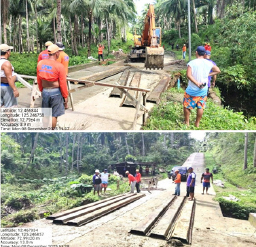
RESILIENCE. Eastern Visayas has the biggest number of recipient local government units under the Philippine Community Resilience Project of the Department of Social Welfare and Development, a three-year nationwide initiative aimed at strengthening disaster preparedness and reducing poverty through community-driven projects.(DSWD-8)

TACLOBAN CITY – Eastern Visayas will have the biggest share of local government units (LGUs) implementing the Department of Social Welfare and Development’s (DSWD) Philippine Community Resilience Project (PCRP) – Panahon ng Pagkilos, a three-year nationwide initiative aimed at strengthening disaster preparedness and reducing poverty through community-driven projects.

Of the 500 municipalities selected across the country, 107 are from Eastern Visayas—the highest number among all regions. The program, carried out under the Kapit-Bisig Laban sa Kahirapan–Comprehensive and Integrated Delivery of Social Services (Kalahi-CIDSS), will run from 2026 to 2028.

Under the scheme, 1st to 3rd class municipalities will receive a P50-million grant with a P10-million local counterpart, while 4th to 6th class municipalities will get a P70-million grant with a P14-million counterpart. LGUs can provide their share in cash or in-kind, with possible projects including flood control, drainage, small-scale irrigation, pre- and post-harvest facilities, and storage facilities.

Local leaders have expressed strong support, highlighting the program’s participatory approach. Matag-ob, Leyte Mayor Bernandino Tacoy said community consultation is key to ensuring projects respond to actual needs. His town has identified seven flood- and landslide-prone villages as potential beneficiaries, with the LGU expected to provide a P14-million counterpart as a 4th class municipality.

“Projects must begin with the people themselves—those directly affected and who will benefit from them. They should be part of identifying and implementing what they truly need,” Tacoy said.

In Jipapad, Eastern Samar, Mayor Benjamin Ver welcomed the project as “timely,” given the town’s constant flooding problem. He said the municipality is likely to propose erosion control measures in riverbank barangays and water system projects to improve resilience.
Jipapad has already benefited from earlier Kalahi-CIDSS programs, with completed projects such as pathways, a health station, community water systems, and farm-to-market roads—evidence of how the “community-driven development” approach empowers people to lift themselves out of poverty.

The PCRP–Panahon ng Pagkilos includes a Community Resilience Implementation Process (CRIP) Roadmap and a Local Counterpart Contribution (LCC) scheme. DSWD has conducted orientation sessions with participating LGUs to ensure effective partnerships and smooth rollout of projects.

(ROEL T. AMAZONA)

Sustain vigilance

0

Corruption in the Philippines is not seasonal but a chronic disease that constantly thrives. Hence, vigilance against it must not stop; instead, it must intensify and be sustained at all costs. To relent is to concede, and concession only feeds the rot.

Corruption is never stagnant—it grows, multiplies, and evolves with time. When officials get away with it, they become bolder, brazen, and inventive in their schemes. This unchecked progression makes corruption far more insidious than a single act of theft; it transforms into a culture that poisons institutions and robs the people of justice and dignity.

Even when the old faces of corruption are removed, new ones quickly rise to take their place. This generational breeding is one of the gravest dangers, for it creates a lineage of officials who inherit the power and the vice of abusing it. Young leaders, exposed early to compromised systems, are taught that corruption is not a crime but a norm. The cycle repeats itself endlessly unless it is broken with relentless opposition.

The fight against corruption, therefore, must not only depend on the exposure of scandals or the removal of individuals but must be rooted in systemic reform. Laws should not be toothless pronouncements but sharp instruments that enforce accountability. Every transaction in government, big or small, must be subjected to the light of transparency. Only when processes are fortified with safeguards can the avenues of corruption be narrowed, if not completely closed.

There should be an unyielding culture of accountability that permeates every corner of public service. Citizens must be vigilant, watchdog institutions must be strengthened, and leaders must be compelled to act under constant scrutiny. Corruption thrives in silence and indifference, but it crumbles when confronted with a society that demands honesty and transparency at every turn. We must weaken the chains of corruption that have long enslaved us.

Ready to erupt

0

Concerned government officials, once again caught red-handed in anomalous deals, are walking away unscathed while ordinary Filipinos toil under backbreaking taxes. This has sparked outrage, reaching a point where patience is fraying thin and the nation teeters on the edge of collective fury. The Filipino public, weary and betrayed, is no longer inclined to turn the other cheek.

We have seen corruption before, yes—but never has it metamorphosed so openly, so shamelessly, in the public eye. Senators embroiled in pork barrel scandals, cabinet members tainted by overpriced projects, and local leaders fattening their pockets from ghost projects: these are no longer whispers of rumor but facts laid bare by investigative reports, COA audits, and even Senate hearings broadcast live. The brazenness is staggering. Politicians have become so accustomed to impunity that they parade their wealth with vulgar display—convoys of SUVs, lavish mansions, children studying abroad—while millions of Filipinos line up at community pantries just to get by.

Corruption in this country is not a hidden termite gnawing quietly at the foundations. It is a ravenous beast that devours in broad daylight, daring anyone to stop it. And the people, after decades of endurance, may finally be sharpening their claws. Indonesia has already shown the way, with students and workers taking to the streets in Jakarta to protest against leaders who enriched themselves while the nation suffered. We Filipinos are not blind neighbors. We are watching, comparing, measuring our own patience against theirs. The trigger has not been pulled here yet, but the hand is trembling.

What makes this situation unbearable is not merely the stealing of money. It is the stealing of futures. Every peso lost to corruption is a classroom not built, a hospital left in ruins, a rice subsidy that never reaches the hungry. Worse, these debts balloon with the passing of time. And when the last centavo is accounted for, the corrupt will be gone—jetting off to safer havens, their loot stashed in foreign banks—leaving the poor farmer in Leyte and the street vendor in Tacloban to shoulder the burden of repayment. It is the same old story of betrayal, repeated across administrations, a cycle that corrodes the very idea of governance.

At this stage, Filipinos are not simply angry—they are exhausted. The daily grind already demands so much, yet they must also watch as their hard-earned taxes vanish like smoke. The erosion of patience is near total; citizens no longer believe that “good governance” is possible within the present setup. This cynicism is dangerous, for once faith in institutions collapses, people will seek other ways to right the wrongs. History tells us that revolts are not born from hunger alone but from the insult of injustice heaped upon it.

I cannot help but note the symbolism of volcanoes in our land. They lie dormant for decades, even centuries, gathering pressure in silence, until the day they erupt with unrelenting force. The Filipino spirit is much the same—quiet, forgiving, endlessly patient. But every dormant volcano has its breaking point. And when it happens, it will not be a polite negotiation but an explosion that reshapes the landscape. Corrupt leaders who ignore this truth do so at their own peril.

Humor, too, creeps in amidst the rage. One wonders: do these corrupt officials think they are invisible? Their swollen bellies and sudden fortunes say otherwise. They are like carabaos trying to disguise themselves as goats—obvious, lumbering, impossible to hide. And yet, the absurdity is that many still get reelected, as if the electorate has resigned itself to a cruel joke. But even jokes, when repeated too often, stop being funny.

So where do we go from here? Certainly, violent upheaval is a path that comes with enormous risk, but neither can we sit idle as corruption continues to metastasize. The wiser course is sustained vigilance: mass mobilization, stronger laws, public accountability, fearless journalism, and a citizenry unafraid to demand justice in the streets if all else fails. Let the corrupt hear this clearly—the Filipino has been patient, yes, but not endlessly so. The volcano rumbles, and the people are listening to its call.

Moral momentum

0

In the social media the storm is gathering speed , gathering mass and it’s the moral awakening of Filipinos against the systemic corruption of flood control projects and other malaise.

In the heart of Southeast Asia, a quiet storm is brewing—not of typhoons or monsoons, but of people rising with conviction. From the flood-prone barangays of the Philippines to the bustling streets of Jakarta, citizens are demanding accountability, transparency, and justice. What drives this collective unrest? It’s more than politics—it’s a moral phenomenon rooted in lived experience and philosophical belief.

In the halls of the Senate, the Senators themselves are tiptoeing on the ledge as the problems can burn them, expose them in a way.

In the Philippines, flood control has become a symbol of broken trust. Billions of pesos allocated to protect communities from disaster have vanished into ghost projects—roads that lead nowhere, drainage systems that never functioned. For residents in places like Eastern Visayas, this isn’t just a budget issue—it’s personal. Every rainy season brings fear, displacement, and loss. When the government fails to deliver, it’s not just infrastructure that collapses—it’s dignity.

For most of the Filipinos the indignation is confined in the Socmed arena . In Indonesia , it’s a more of a hands-on reality . Protesters storming houses of officials . Meanwhile, in Indonesia, the streets echo with chants for reform. The death of Affan Kurniawan, a young man killed during a protest, became a rallying cry. Students, workers, and everyday citizens are calling out systemic abuse, from police brutality to elite impunity. Their resistance is not rooted in ideology alone—it’s grounded in a shared sense of injustice.
With us the, shaming of the Nepo babies are there, but not enough to create a major stir, just enough to scratch the surface of the malady called corruption.

It is my hope that the Moral Momentum will go higher than the usual trending of which it ebbs down to become a thing of the past . Its my hope that we can muster at least half of Indons courage.

The best deal is when we give our all

0

WE should have no doubt about this. We may at first be scared when Christ told his disciples, and now us, “If any man come to me, and hate not his father, and mother, and wife, and children and brethren, and sisters, yes and his own life also, he cannot be my disciple. And whosoever does not carry his cross and come after me, cannot be my disciple.” (Lk 14,26-27)

We have to be most careful when considering these strong words of Christ who even went to the extent of commanding us to love our enemies. What he is actually trying to tell us that is that for us to be truly his disciple, to be fully identified with him, especially in the task of continuing the work of human redemption, we have to give our all to him. Nothing and no one should undermine that proper relation we ought to have with him.

We have been assured that as long as we are with him, everything else in our life will be taken care of. “Seek first the kingdom of God and his righteousness,” he said, “and all these things shall be added to you. Therefore, do not worry about tomorrow, for tomorrow will worry about its own things. Sufficient for the day is its own trouble.” (Mt 6,33-34)
God, who created everything and loves them all the way, even to the extent of becoming man and offering his life for us and for our sins, cannot tell us to hate anyone or anything. When Christ says about “hate,” referring to our parents and loved ones, he must have meant it as us not making anyone and anything to undermine our love for him.

To be a true disciple of Christ, to be a full Christian as we should be, involves a certain detachment from people and things, a certain emptying of ourselves to be properly filled with what is proper to us—the very spirit of God in whose image and likeness we have been created, and in whose life and nature we meant to share.

Yes, in a certain sense, our life here on earth can be described as a matter of emptying ourselves of our own selves, of our own egos, and of any worldly attachment, so we can be filled with God, with love, which is what is proper to us.

We can somehow know that we are truly emptying ourselves properly when we can also see a certain growth of love and practical concern for the others, even if great sacrifices are involved. It’s when we would be willing to complicate our life for God and for the others that we can say we properly emptying ourselves and filling ourselves with the spirit of God.
To be sure, to give ourselves completely to God and to others is not easy. We need nothing less than the grace of God and our generous and prompt correspondence to it. But it’s not impossible.

We just have to learn to give ourselves to God and others more and more each day. We can ask ourselves, for example, “Today, what can I give more to God and to the others?” “What else have I been keeping to myself rather than giving it away to God and to the others?”

For sure, we will have some answers to those questions and start to act on them. In this way, the attitude and practice of giving our all, even if in instalment basis, can be achieved.
Let us not fail to see the best deal Christ is proposing to us.

Convergence (really) works!

0

After almost four years of hiatus due to the Covid-19 pandemic, members of the Eastern Visayas Technical Working Group—the “workhorses” behind the Regional Convergence Initiative for Sustainable Rural Development (RCI-SRD)—finally gathered again. They took part in the NCI-SRD National Secretariat Bill Advocacy Rollout held on September 2-4, 2025 at Hotel Alejandro in Tacloban City.

The timing could not have been more fitting, as controversies hound flood control projects in Congress. While lawmakers deliberate in both Houses, the NCI-SRD National Secretariat is busy pushing for the institutionalization of the National Convergence Strategy for Sustainable Rural Development (NCS-SRD).

This regional rollout follows similar advocacy activities in Mindanao and Luzon. Its purpose: to present the salient features of the proposed law and secure the support of local legislators for a strategy that has long proven its worth in bringing government agencies together to transform rural communities.

The NCS-SRD is a joint effort of four key agencies—the Department of Agriculture, Department of Agrarian Reform, Department of Environment and Natural Resources, and the Department of the Interior and Local Government (DA-DAR-DENR-DILG).

In her opening remarks, Dr. Jenny Lyn R. Almeria, RTD for Research and Regulations of DA-RFO 8, welcomed guests from the central offices and local participants from the region’s congressional districts. Representing Regional Executive Director Andrew Rodolfo T. Orais, she underscored the importance of learning more about convergence, recalling how the initiative first took root in Eastern Visayas through the highly successful LCAEC municipal model in Javier, Leyte.

Director Karen Kristine Roscom, head of the NCI-SRD National Secretariat, explained the long-standing push to institutionalize the program through various House and Senate bills—among them HB 0262, 3566, 5981, 7114, 7995, and SB 2918 filed by Senator Jinggoy Ejercito Estrada. These measures aim to secure dedicated funding for convergence activities, ending the piecemeal practice of sourcing funds through attribution.

Roscom commended the strong participation of local government representatives, agency heads, and other stakeholders. Messages of support from mayors, congressmen, and even Senator Estrada’s office reinforced the momentum for institutionalization. A manifesto of support, signed by key participants, capped the event—symbolizing renewed commitment to convergence as a nationally recognized strategy for rural development and watershed management.

A notable highlight was Roscom’s assurance of expanding convergence efforts beyond Javier to the neighboring towns of Abuyog and MacArthur. The updating of CADPs for these areas is expected this year, with writeshops involving local stakeholders already being planned.

If successful, this expansion could replicate the remarkable transformation of Javier—from a sleepy town into a thriving rural community under then Mayor Sandy Javier, who championed the NCI-SRD model in 1999 and turned his municipality into an economic success story within nine years.

As one of the original members of the Regional Technical Working Group, and now alternate focal for RCI-SRD under RED Orais, I feel proud to witness this renewed vigor.
Our battle cry remains: Convergence Works! And today, we add: USWAG OTSO, PADAYUN!

Recent Posts

DALMACIO C. GRAFIL
PUBLISHER

ALMA GRAFIL
EDITOR-IN-CHIEF

ROMEO CEBREROS
OFFICE IN-CHARGE

OFFICE
BRGY. SONGCO, BORONGAN CITY

CONTACT NUMBERS
(055) 261 – 3319 | 0955 251 1533 | 0917 771 0320 | 0915 897 7439 | 0921 511 0010

DALMACIO C. GRAFIL
PUBLISHER

RICKY J. BAUTISTA
EDITOR

ALMA GRAFIL
BUS. MANAGER

OFFICE
RIZAL AVENUE, CATBALOGAN
(INFRONT OF FIRE DEPARTMENT, NEAR CITY HALL)

CONTACT NUMBERS
0917 771 0320 | 0915 897 7439 | 0921 511 0010

EMAIL
lsdaily2@yahoo.com

WEBSITE
www.issuu.com/samarweeklyexpress