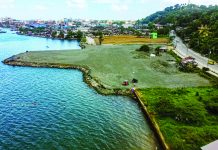
From Allen to Matnog
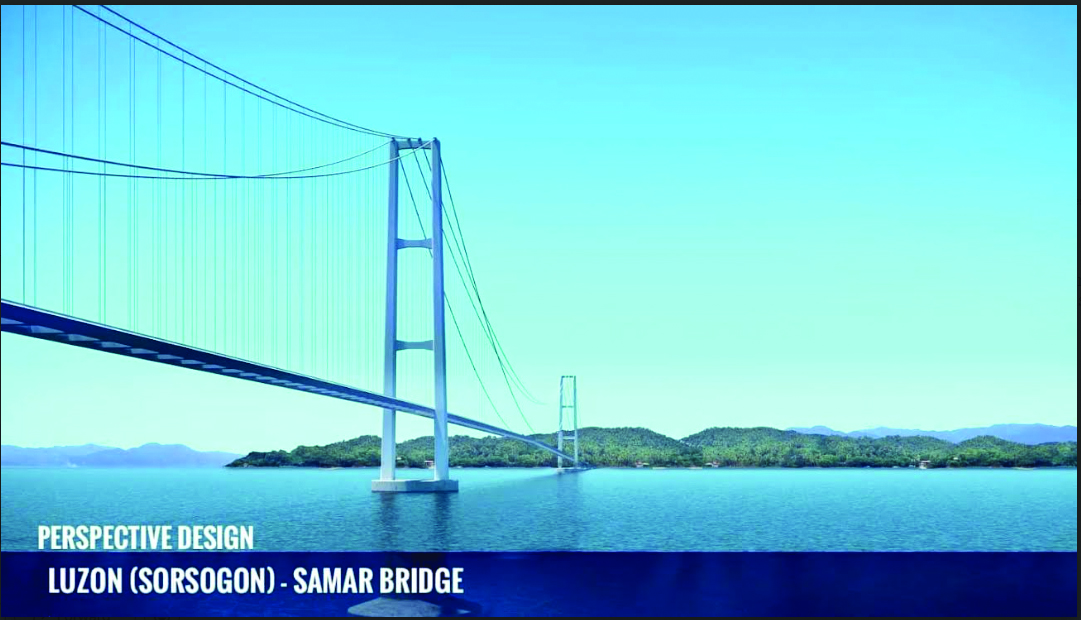
TACLOBAN CITY — The long-proposed fixed link connecting Luzon and the Visayas—either through a bridge or an undersea tunnel—is likely to be pursued as a foreign-assisted project, with international lenders such as the Japan International Cooperation Agency (JICA) and the Asian Development Bank (ADB) expected to play a key role in financing and oversight, House Minority Leader Marcelino “Nonoy” Libanan said.
Libanan said the project is envisioned to follow the foreign-assisted project (FAP) model, similar to major infrastructure developments such as the Metro Manila Subway and Cebu’s Marcelo Fernan Bridge, to ensure transparency, discipline, and protection from political interference and corruption.
“We are counting on foreign development partners such as JICA and the ADB to help finance and oversee the tunnel or bridge project to insulate it from political interference and corruption,” Libanan said. “This will ensure discipline, transparency, and foreign donor scrutiny from day one.”
Renewed calls for a permanent Luzon–Visayas connection followed severe congestion at the Port of Matnog in Sorsogon during the recent Christmas and New Year travel rush, when the roll-on/roll-off (RoRo) ferry system was overwhelmed, leaving passengers and vehicles stranded in long queues for hours and even days.
“The bottleneck at Matnog is not just an inconvenience—it is a structural weakness in our national transport network,” Libanan said. “Every holiday season, the same problem repeats itself, disrupting mobility, trade, and emergency access between Luzon and the Visayas.”
The proposed 2026 General Appropriations Act, which President Ferdinand Marcos Jr. is expected to sign into law in early January, allocates P130 million for a feasibility study of the Luzon–Visayas bridge or tunnel project.
The fixed link is proposed to cross the San Bernardino Strait, spanning approximately 28 kilometers between Sorsogon and Northern Samar. Once completed, it is expected to provide an all-weather, uninterrupted connection for the movement of people and goods, unlike the existing ferry system that is frequently suspended due to adverse weather conditions.
Libanan explained that foreign-assisted projects come with built-in safeguards, including strict procurement rules, independent technical and financial reviews, and the release of funds only after verifiable milestones are achieved.
“Foreign-assisted projects are widely regarded as among the cleanest forms of infrastructure spending,” he said. “The presence of international donors creates a double layer of accountability. Every peso is tracked, every contract is scrutinized, and every delay or deviation is questioned.”
He cited the Metro Manila Subway Project, largely financed through Japanese Official Development Assistance via JICA, and the Marcelo Fernan Bridge, also funded by Japanese ODA, as examples of large-scale infrastructure projects implemented under strict donor standards.
“These projects demonstrate that when donor safeguards are in place, infrastructure can be delivered efficiently, transparently, and with public confidence,” Libanan said.
LIZBETH ANN A. ABELLA