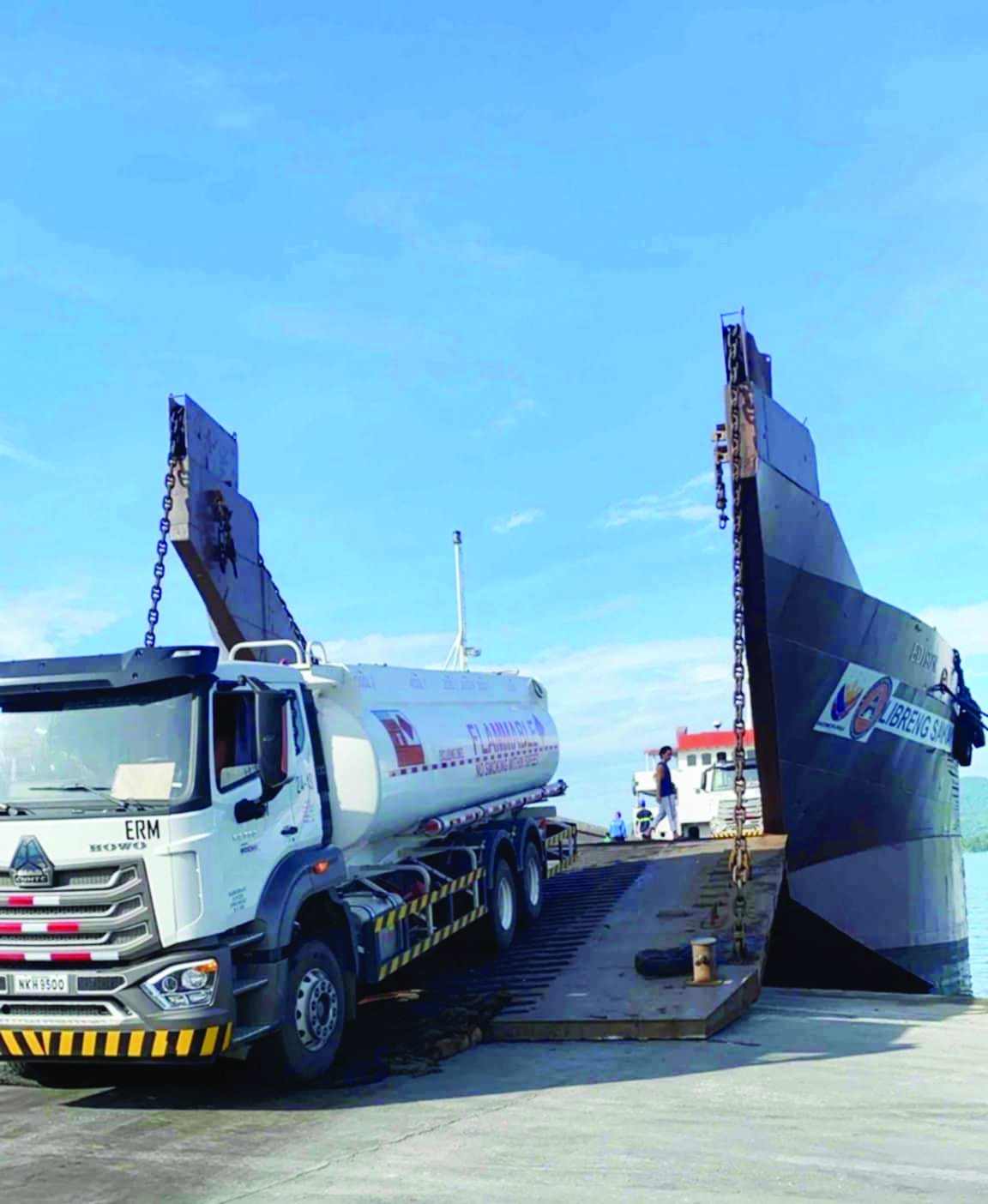
TACLOBAN CITY – After more than five months of providing free transportation assistance to affected motorists, the Regional Inter-Agency Coordinating Cell (RIACC)–8 announced that the Libreng Sakay program will officially conclude its operations this Sunday, November 30.
The initiative was launched on June 18 as an emergency transport intervention following the implementation of stringent weight restrictions on the San Juanico Bridge due to structural concerns.
The limitations resulted in mobility challenges for cargo trucks and fuel tankers—key carriers of essential goods across Samar and Leyte—prompting government agencies to create a temporary support mechanism to ensure the continued flow of supplies.
According to RIACC–8, only 19 remaining trips are scheduled before the program’s full closure.
Office of Civil Defense (OCD) Region 8 Director Rey Gozon reported that the project has transported a total of 4,550 cargo trucks from Tacloban City to Basey, 4,138 cargo trucks moving from Basey to Tacloban, and 676 fuel tankers since its rollout. Government and humanitarian vehicles engaged in disaster response were also accommodated.
RIACC–8 noted that commercial transport options have gradually stabilized, while adjustments to the bridge’s load limit are expected in the coming weeks—developments that signal improving mobility conditions across the route.
“With commercial transport services now available and traffic movement normalizing, the Libreng Sakay has served its purpose. We extend our sincere appreciation to all commuters, partner agencies, LGUs, and stakeholders for their support throughout the program’s implementation,” the coordinating body said.
The inter-agency group added that while the program is ending, it remains committed to monitoring the transport situation in the region and will continue coordinating with concerned agencies to ensure safe, accessible, and reliable mobility for the public.
The free transport service has played a vital role in supporting the continuous flow of food products, medicine, drinking water, animal feeds, fuel, and other essential supplies between Leyte and Samar during the height of bridge restrictions.
(ROEL T. AMAZONA)