TACLOBAN CITY — In a bid to strengthen food security and reduce poverty in vulnerable communities, the Sustainable Livelihood Program (SLP) has convened government agencies, state universities, and development partners in Eastern Visayas to intensify collaboration under its Zero Hunger initiative.
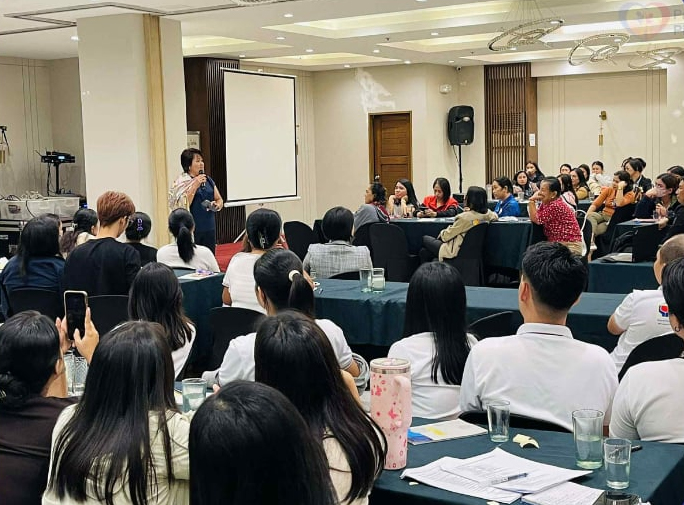
The convergence meeting, held on February 6, 2026 at The Tropics in MacArthur Park, gathered representatives from 12 national government agencies to align plans and resources for the program’s Convergence Budgeting Project.
The SLP, a flagship poverty-alleviation initiative of the Department of Social Welfare and Development (DSWD), aims to provide capacity-building and livelihood assistance to low-income households.
Its zero hunger initiative complements the national government’s broader food security agenda by integrating livelihood support with agricultural productivity, skills training, and enterprise development.
Among the participating agencies were the Department of Agriculture–Agricultural Training Institute, the Bureau of Fisheries and Aquatic Resources, the Department of Science and Technology, the Department of Trade and Industry, and the Technical Education and Skills Development Authority, along with other institutions supporting community-based development.
State universities and colleges also took part in the discussions, including Samar State University, Leyte Normal University, Eastern Visayas State University, and Visayas State University.
The academic institutions committed to contribute research, technical expertise, and extension services to ensure science-based and sustainable interventions.
The meeting sought to harmonize inter-agency efforts over the next four years through SLP’s Five-Phases Sustainability Plan. Participants worked on crafting a unified strategic framework that would make partner programs more coordinated, resource-efficient, and responsive to local conditions.
A key outcome of the activity was the drafting of the Project Briefer for the Zero Hunger Convergence Budgeting Project for Calendar Year 2026, with initial target areas identified for 2027 implementation. Stakeholders emphasized pooling resources and consolidating interventions to boost food production, diversify livelihoods, and improve overall community well-being.
As part of the strategy, partners agreed to identify one common target municipality per province where integrated services and assistance will be rolled out. These commitments will be formalized through a Partnership Agreement under a Specific Implementation Agreement.
Implementation models, including initiatives in Baybay City, were presented as reference points for scaling up the program. Municipal-level coordination meetings are scheduled in the coming months to strengthen local government engagement and ensure closer monitoring at the grassroots level.
Organizers underscored that sustained collaboration among national agencies, the academe, and local stakeholders will be crucial in achieving long-term food security and lifting vulnerable families out of poverty across Eastern Visayas.
(LIZBETH ANN A. ABELLA)